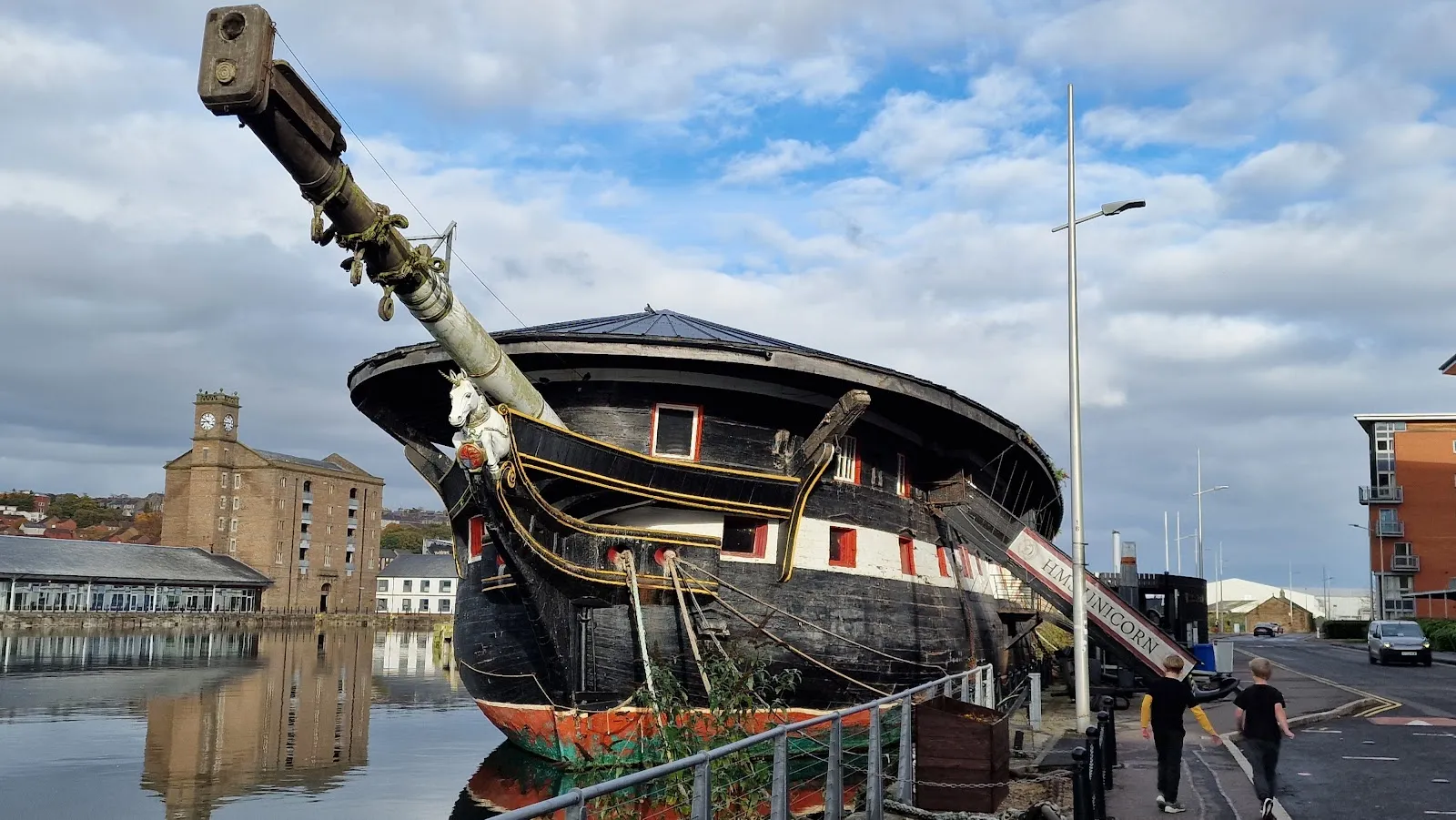
HMS Unicorn is a preserved Royal Navy frigate moored at Victoria Dock in Dundee. Launched in 1824, it is one of the oldest ships still afloat and offers a close look at life aboard an early 19th-century warship. You can explore four decks, see original fittings and artefacts, and try interactive activities, including a children’s quiz. Staff can answer questions about the ship and its history. Steep ladders and very low ceilings make the lower decks difficult to navigate for some visitors.
A frigate launched in 1824
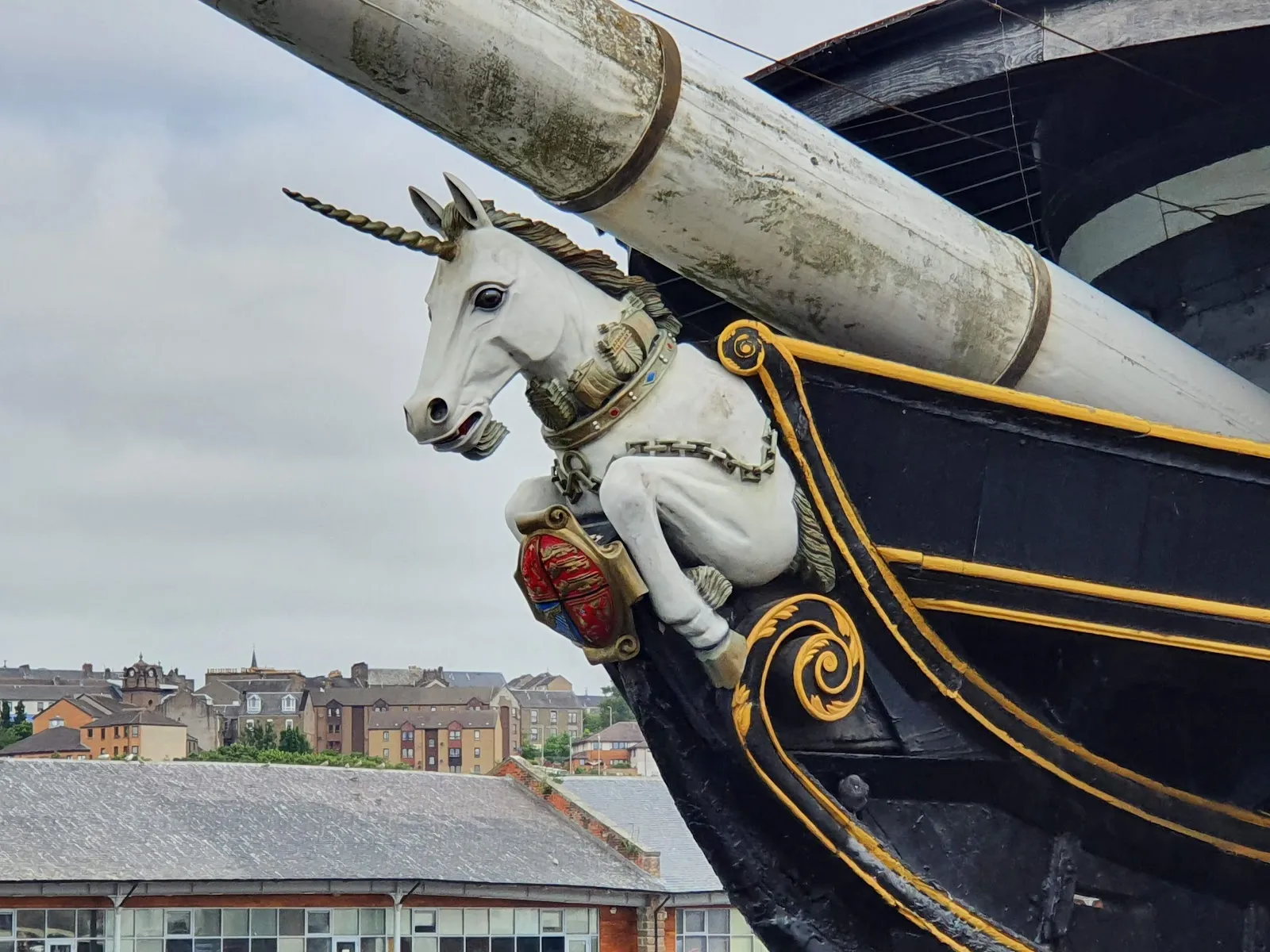
HMS Unicorn was built for the Royal Navy and launched at Chatham in 1824. It was designed as a sailing frigate, but the ship was never rigged. After its launch, it was towed to Dundee, where it later served as a training ship. The vessel is now preserved at Victoria Dock as a museum.
The ship’s age is part of the experience, but so is its unusual degree of survival. Much of the vessel remains close to its original form, giving you a chance to see the construction and spaces of a wooden warship rather than a later replica. Its preservation also means moving carefully through the ship and taking note of the changing headroom between decks.
Four decks to explore
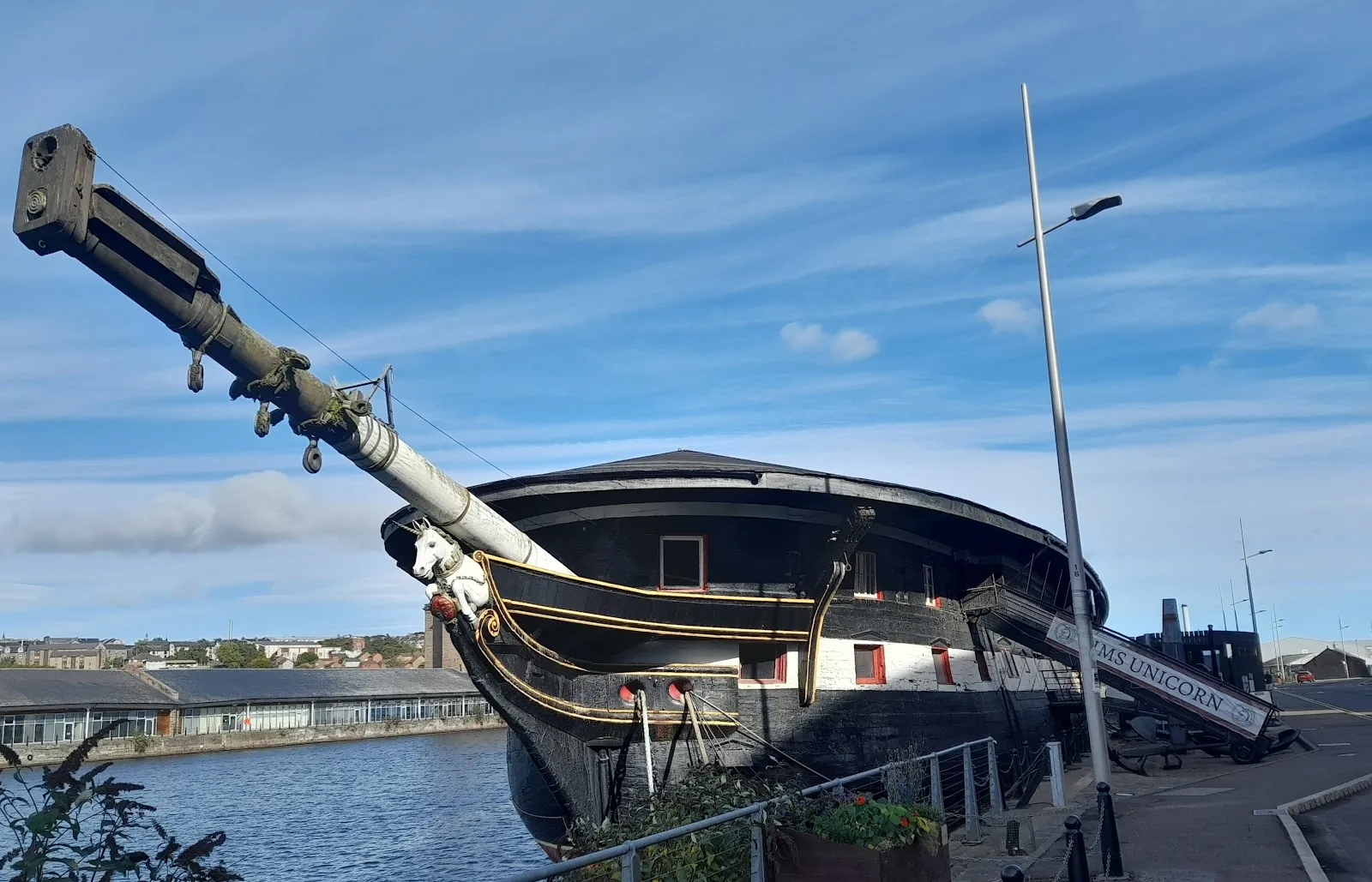
Visitors can access four levels: the Gun Deck, Upper Deck, Mess or Lower Deck, and Orlop Deck. The Gun Deck is the entry point and is easier to reach. The other levels are connected by steep, original ladders, so going below deck involves climbing rather than using a modern stairway.
As you descend, the spaces become more confined. The lowest deck has particularly little headroom, and taller visitors may need to bend substantially. Hard hats are available on the lower decks. Take your time on the ladders, and consider how comfortable you are with tight spaces before heading all the way down.
There are details to notice throughout the ship, including cannons, original fittings and objects that help explain its working life. Some exhibits encourage hands-on exploration, and children can follow a quiz as they move around. Staff and volunteers are on hand to explain what you are seeing and answer questions about life aboard.
The ship’s life beyond the museum
Unicorn was built shortly after the naval wars against Napoleon ended, during a period of peace. It did not go into battle. Its later use as a training ship meant it remained part of naval life for many years, even though it never sailed under its own rig. The ship’s history is presented through displays and material connected with its time in service.
HMS Unicorn is listed as part of the National Historic Fleet. Its preserved wooden structure and surviving interior make the ship a record of naval design and shipboard spaces from the early 19th century. Rather than seeing only objects behind glass, you can walk through rooms and decks built for a working vessel.
The interior is the main focus of a visit. The ship’s exterior has weathered, while the inside is maintained for visitors. If you have limited mobility or find steep ladders and low ceilings difficult, you may not be able to see every deck. The Gun Deck is the most accessible level, and staff can help you understand the layout before you decide how far to explore.
Perguntas frequentes
When was HMS Unicorn launched?
HMS Unicorn was launched in 1824 at Chatham, England.
How many decks can you visit?
Four decks are open to visitors: the Gun Deck, Upper Deck, Mess or Lower Deck, and Orlop Deck.
Are the lower decks accessible?
The lower decks are reached by steep, original ladders and have low ceilings. Hard hats are provided on the lower levels, but the layout can be difficult for people with mobility needs.
Did HMS Unicorn fight in a war?
No. The frigate was launched during peacetime and was never rigged for sailing under its own power. It was later used as a training ship.