
In Lisbon’s Belém district, Jerónimos Monastery is a former religious complex and one of Portugal’s best-known examples of Manueline architecture. Its carved stonework brings maritime details such as ropes and anchors together with religious and natural motifs. Inside, look closely at the cloister’s columns and arches, then visit the church, where the tombs of navigator Vasco da Gama and poet Luís de Camões are found. The monastery is a UNESCO World Heritage Site and a fitting stop for understanding Belém’s links to Portugal’s seafaring past.
A monastery shaped by Portugal’s seafaring era
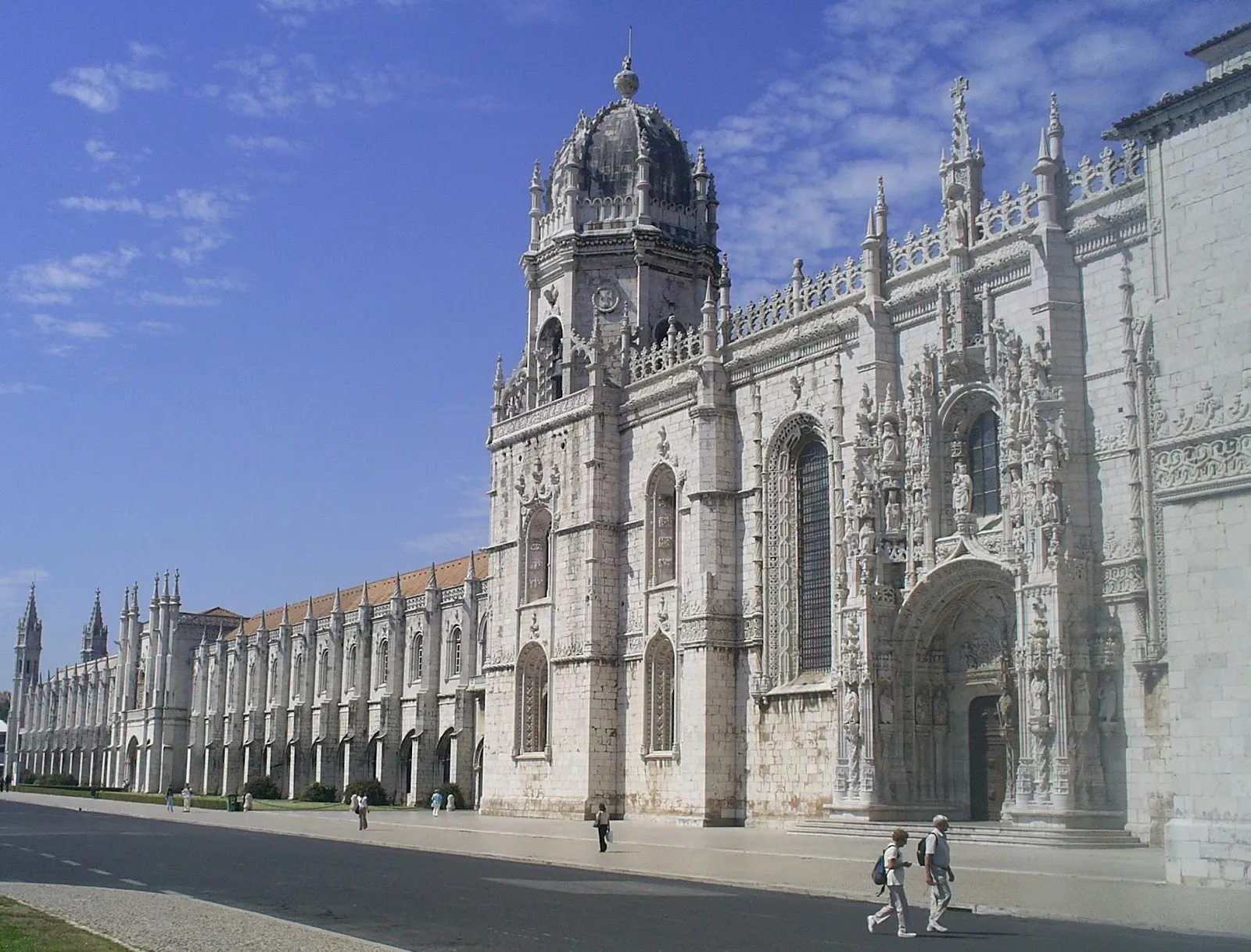
Construction began in the early 16th century under King Manuel I and took about a century to complete. The project was linked to Portugal’s expansion by sea and to Vasco da Gama’s voyage to India. The monastery’s former residents, the Order of Saint Jerome, provided spiritual support to sailors and prayed for the king. The building’s ornate decoration also reflects the wealth of the Portuguese kingdom during this period, with funding connected to trade in spices.
The site stands in Belém, near the Tagus River and Lisbon’s historic port. Its place in the district’s maritime history is visible in the architecture: stone ropes, anchors and other sea-related forms appear among religious and botanical details. The monastery survived Lisbon’s 1755 earthquake. UNESCO added it, along with Belém Tower, to the World Heritage List in 1983.
The cloister and its carved stonework
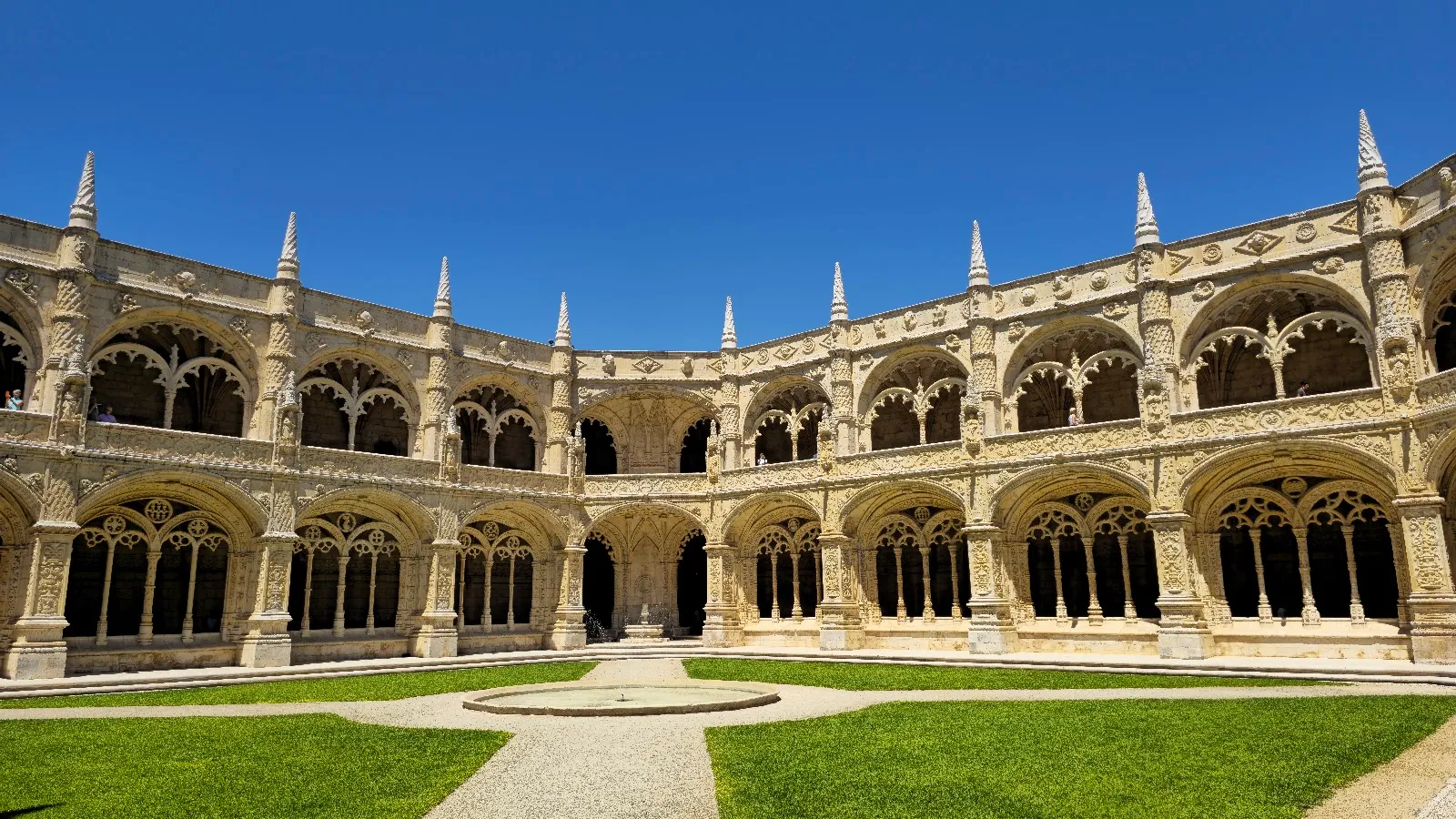
The cloister is a central part of the visit. Pause at the columns, arches and inner walls, where the carved decoration combines Manueline forms with other influences, including European, Moorish and Eastern motifs. The details are easy to miss if you move quickly, so take time to look closely at different sections rather than treating the courtyard as a single view.
The monastery’s architecture is primarily Portuguese Late Gothic, often called Manueline after King Manuel I, with Gothic and Renaissance elements. Its sculptural work draws on both religious subjects and the country’s maritime history. The complex is also associated with a chapel and the church of Santa Maria de Belém. The church contains the tombs of Vasco da Gama and the poet Luís de Camões; Fernando Pessoa is also associated with a tomb in the cloister.
Planning your visit
The monastery is a popular stop in Belém, and queues may lengthen as the morning goes on. Book an e-ticket in advance if you can, and check the time slot when arranging entry. The online booking process may include Portuguese-language sections even when you select English, so allow time to work through it.
You can make the monastery part of a wider Belém visit, with landmarks, museums and gardens nearby. Pastéis de Belém is close by and is a practical breakfast stop before sightseeing. For a different view of the monastery, the viewpoint at the Monument to the Discoveries looks toward it from beside the river. The monastery is closed on Mondays; check its official website for current visitor information before setting out.
Perguntas frequentes
Where is Jerónimos Monastery?
It is at Praça do Império in the Belém district of Lisbon, near the Tagus River.
How long should you spend at Jerónimos Monastery?
Allow around 30 to 60 minutes for a visit, with extra time if you want to examine the cloister’s carved details.
Is Jerónimos Monastery closed on Mondays?
Yes. It is closed on Mondays.
What can you see inside Jerónimos Monastery?
The cloister has intricate carved stonework, and the church contains the tombs of Vasco da Gama and Luís de Camões.


