
Castelo de São Jorge crowns a hill above Alfama in Lisbon, with ramparts looking out over the city and the Tagus River. Walk the old walls and towers for changing views of rooftops, historic districts and the river, then explore the archaeological remains and museum displays. Peacocks roam the grounds, where gardens and quieter corners offer a pause between the viewpoints. The climb through Alfama is steep, so plan your route if you would rather save your energy for exploring the castle.
A stronghold above Alfama
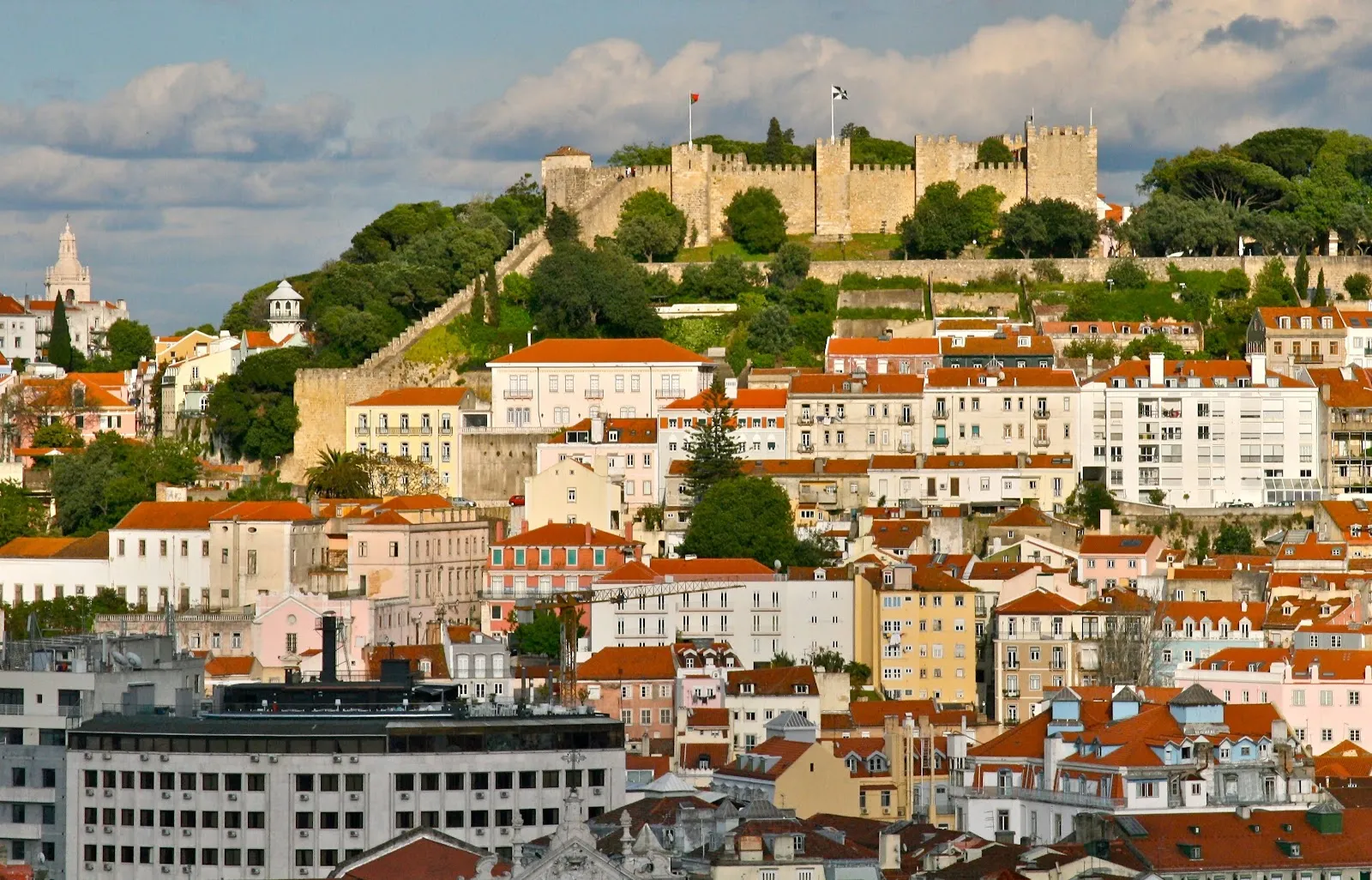
The hill beneath Castelo de São Jorge was fortified before the castle took its familiar medieval form. Romans, Visigoths and Moors each held or strengthened the site over the centuries. The visible fortifications are associated with the Moorish period in the 11th century, when the hilltop position gave defenders a view across Lisbon.
In 1147, Portugal's first king, Afonso Henriques, captured Lisbon from the Moors. A statue of the king stands just beyond the main entrance. The castle later served as a royal residence, and its history also includes military use. Its position above the old city made it a strategic point as well as a seat of power.
What remains inside the walls
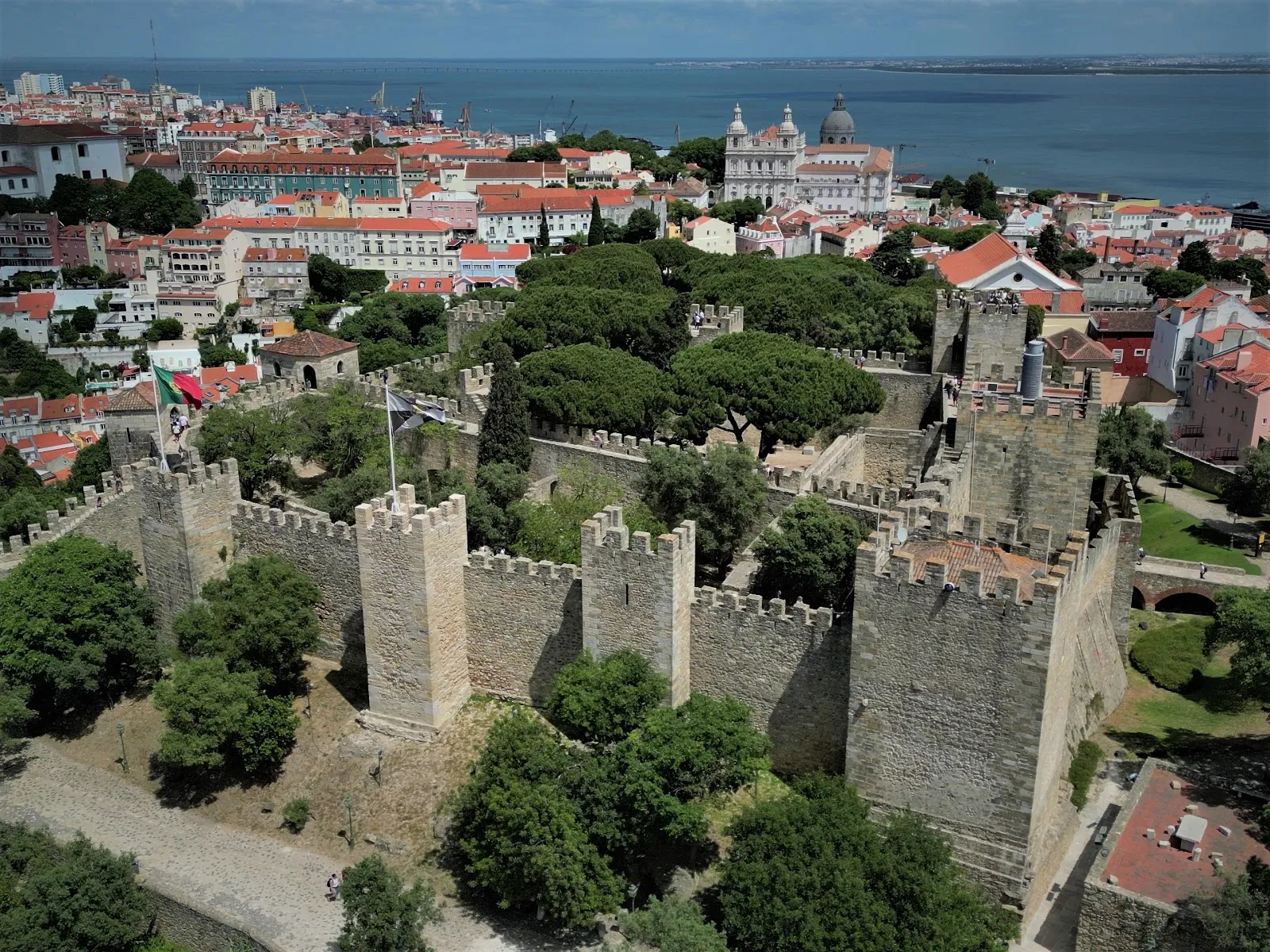
Expect a fortified site, not furnished royal rooms. The castle complex includes walls, towers, courtyards and remains of the former palace. Much of the structure was damaged in the 1755 Lisbon earthquake, and the present visit centres on its surviving fortifications, archaeological remains and open grounds.
The archaeological site preserves traces of earlier periods, including Roman and Moorish occupation. The museum displays finds from the site, with objects such as pottery and tiles. Take time to look at the remains as well as the museum: together they give a sense of how the hill was used across different eras.
The ramparts and towers are among the most active parts of a visit. Paths along the walls reveal different angles on the castle and the city below. Some steps are steep and uneven, so move carefully, particularly when climbing or walking along the fortifications.
Views from the ramparts
From the elevated walls, the view takes in Alfama's red rooftops, the central districts and the Tagus. On a clear day, the panorama reaches landmarks including the 25 de Abril Bridge and Cristo Rei. As you move around the complex, the outlook changes from the riverfront to the narrow streets and roofs close to the castle.
The site is also known for peacocks that wander freely through the grounds. Gardens and shaded corners provide a quieter place to pause between the museum and the ramparts. If you want to see the city in changing light, visit towards sunset; the castle remains open into the evening during the warmer part of the year.
Planning the visit
The approach through Alfama follows steep lanes and cobbled streets. If you prefer not to walk the full climb, tram 28 and bus 737 are among the transport options described for reaching the castle area. The tram can be busy, so booking admission ahead and choosing your route in advance can help you spend more of your time on the hilltop.
Allow time to explore both the archaeological remains and the walls rather than treating the castle as a single viewpoint. The complex is extensive, and quieter spots can be found away from the main paths. Food and drink are available around the grounds, though snacks nearby can cost more than elsewhere in the city.
Perguntas frequentes
Where is Castelo de São Jorge?
It stands on a hill above Alfama in Lisbon. The address is R. de Santa Cruz do Castelo.
What can you see inside Castelo de São Jorge?
Explore the fortification walls, towers, palace remains, archaeological site and museum displays. Peacocks also roam the grounds.
Can you see the Tagus River from the castle?
Yes. Views from the ramparts look over Lisbon and the Tagus River, with landmarks such as the 25 de Abril Bridge visible on clear days.
Is the walk up to Castelo de São Jorge steep?
Yes. The route through Alfama includes steep, cobbled streets. Tram 28 and bus 737 are transport options for reaching the castle area.


