
Auckland Museum sits in Auckland Domain, a short walk from the city centre, with galleries on Māori and Pacific heritage, New Zealand history, nature and military campaigns. Look for the full-sized Māori meeting house and waka, then explore the natural history displays and the interactive volcano room, which recreates the effects of an eruption. The museum also holds objects from ancient Greece, Egypt and the Americas. Its scale rewards a half-day visit, and the surrounding park gives you room for a walk before or after the galleries.
A museum in Auckland Domain
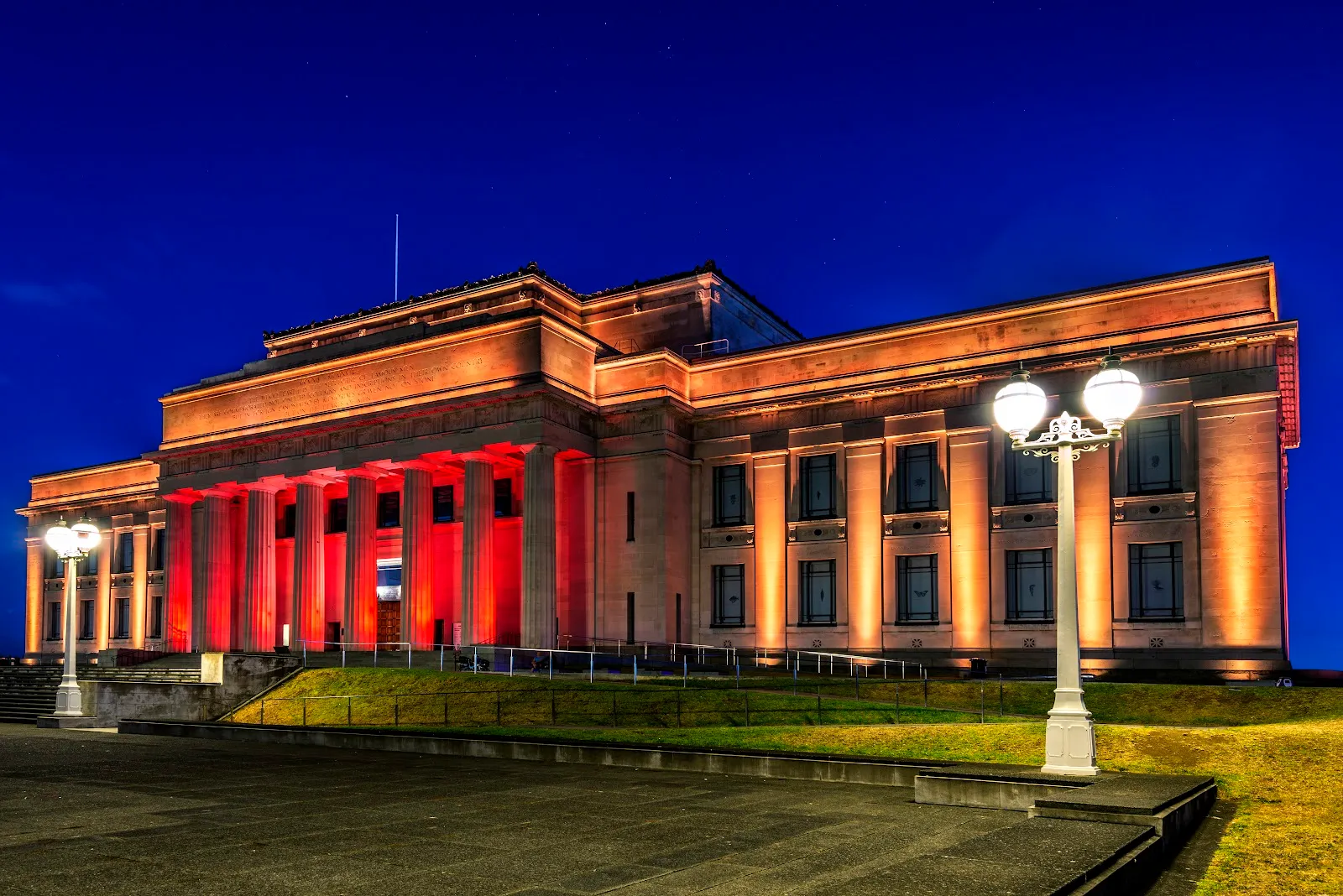
Auckland Museum stands in Auckland Domain, the city’s oldest park, on the site of a dormant volcano. The neoclassical building was constructed in the 1920s and opened in 1929. From its position above the park, the museum looks across the city towards Waitematā Harbour.
The museum’s collections tell stories of New Zealand, its people and the country’s place in the Pacific. The displays range from natural history and Māori heritage to military history and objects from overseas. Its setting makes it easy to pair the galleries with a walk through the Domain.
Māori and Pacific galleries
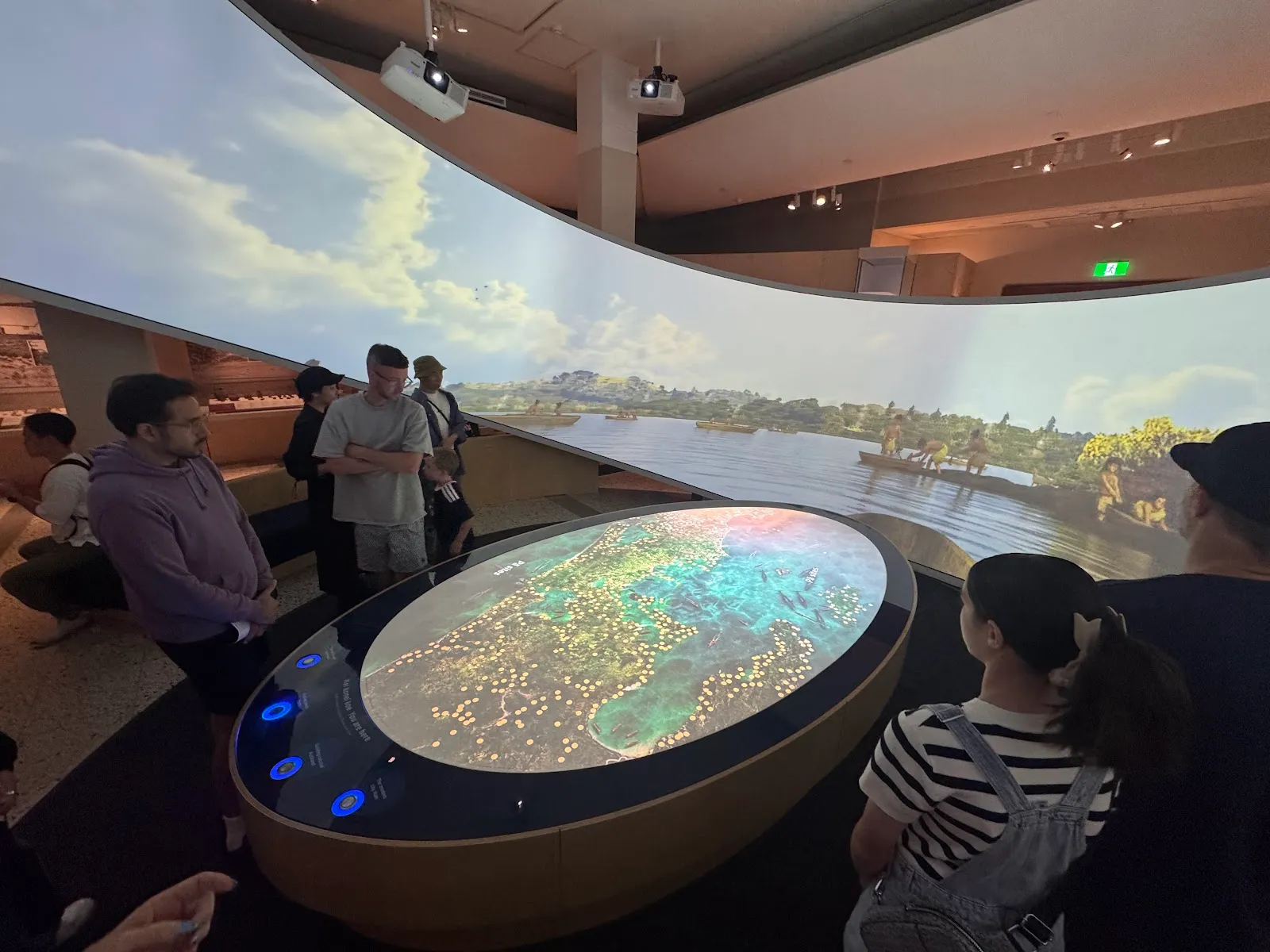
The Māori galleries bring together taonga, or treasures, including carvings, clothing, weapons and other cultural objects. A full-sized meeting house and a waka help give a sense of the scale and craft of Māori architecture and voyaging. The Tāmaki Herenga Waka galleries trace Auckland’s past and present through the experiences of the people who have made the city home.
Pacific collections and displays on Polynesian migration place New Zealand within a wider regional history. Cultural performances and guided visits are also held at the museum; check the current programme if you would like to include one in your visit.
Natural history and the volcano room
Natural history displays cover New Zealand’s wildlife, plants and landforms. Dinosaur replicas and other exhibits give younger visitors something to look for, while interactive sections make some of the science accessible to children.
The volcano room recreates what an eruption might mean for a house in Auckland. It is one of the museum’s hands-on displays and works well as a pause between the larger galleries. Temporary exhibitions change over time, so check the museum’s programme for what will be showing during your visit.
Military history and the memorial
Military galleries examine New Zealand’s involvement in wars and conflicts, including the First and Second World Wars and the New Zealand Wars. The museum is also a war memorial, with a Hall of Memories dedicated to New Zealanders who died in the World Wars. These displays offer a substantial part of the visit, so leave time if military history is a priority.
Planning your visit
The museum has several floors, with lifts and stairs between them. Its collections are extensive, and a few hours may not be enough to see everything; choose the galleries that matter most to you if you have limited time. Families can look out for interactive exhibits and children’s activities.
Auckland residents can access free entry with proof of address. The museum’s website has current admission details, exhibitions and performance information. Parking is available, but spaces can be scarce during school holidays; consider taking a bus, which stops close to the entrance.
Perguntas frequentes
How long should you spend at Auckland Museum?
Allow at least half a day to explore several floors. The collections are extensive, so you may need to choose which galleries to prioritise.
Is Auckland Museum free for Auckland residents?
Auckland residents can request free entry with proof of address. Check the museum website for current admission details.
What can you see at Auckland Museum?
The museum covers Māori and Pacific heritage, New Zealand history, natural history and military campaigns. Highlights include a full-sized meeting house and waka, and an interactive volcano room.
Is there parking at Auckland Museum?
Parking is available, but spaces can be scarce during school holidays. A bus stops near the entrance.


