The Almoravid Koubba is a small 12th-century monument near the Museum of Marrakech and Ben Youssef Mosque. It is the city’s surviving example of Almoravid architecture, set below today’s street level. Look up at the carved cedar dome and its floral patterns and calligraphy, then see the nearby remains of a cistern and fountains. The site is a brief stop for anyone interested in Marrakech’s early history; pair it with Ben Youssef Madrasa to see another nearby historic site.
A monument below street level
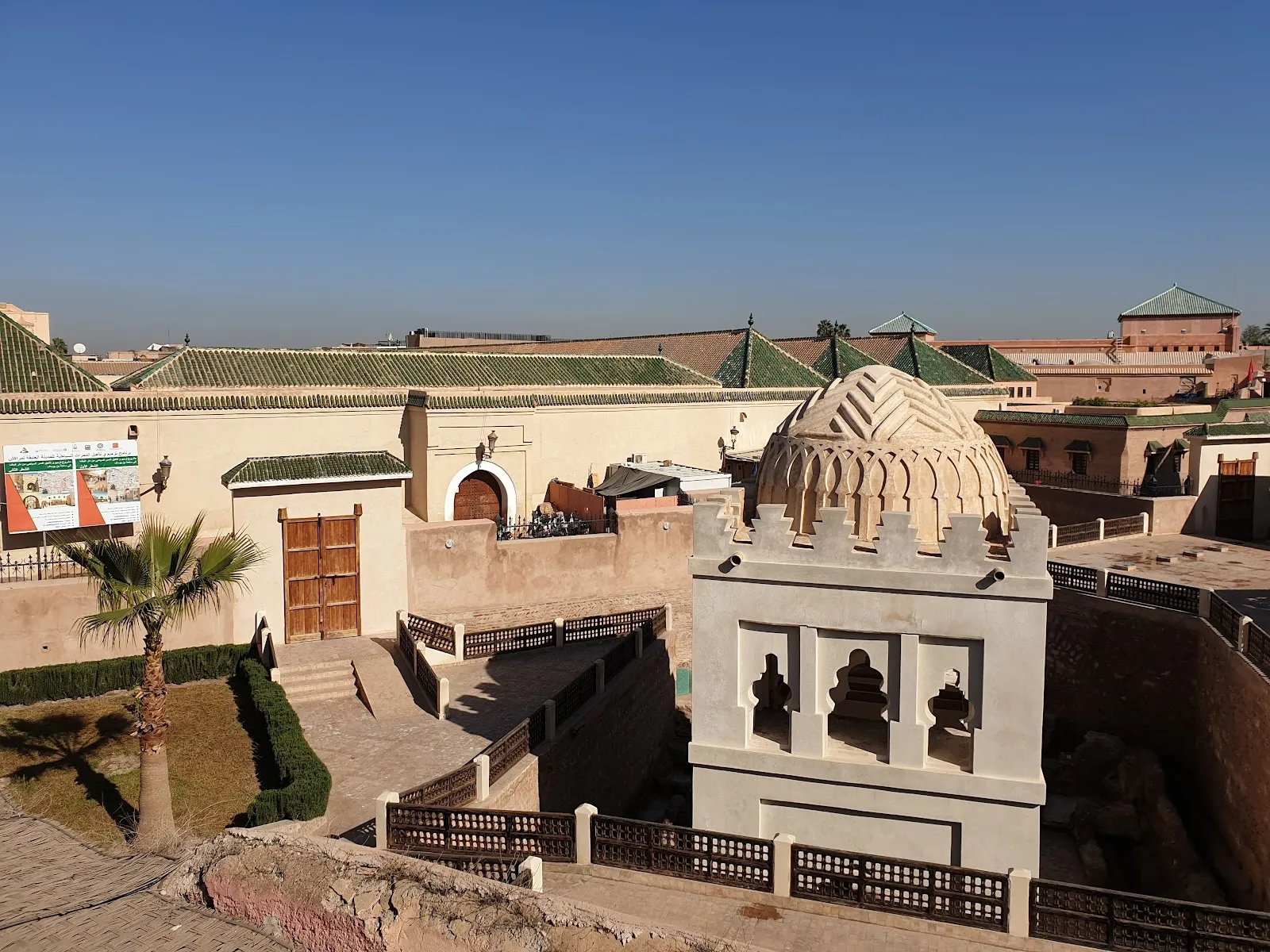
The Almoravid Koubba, also called the Koubba Ba’adyin, sits beside the Museum of Marrakech and about 40 metres south of Ben Youssef Mosque. The building is below the level of the modern street. Visitors descend to reach it, a reminder that Marrakech’s ground level has risen over time as rubble and earth covered earlier structures.
Built in the 12th century, the Koubba is the only surviving example of Almoravid architecture in Marrakech. The Almoravids founded the city in the 11th century, and their architectural style influenced later Moroccan building. The monument was altered in later centuries and renovated in 1952.
Carved cedar and traces of water
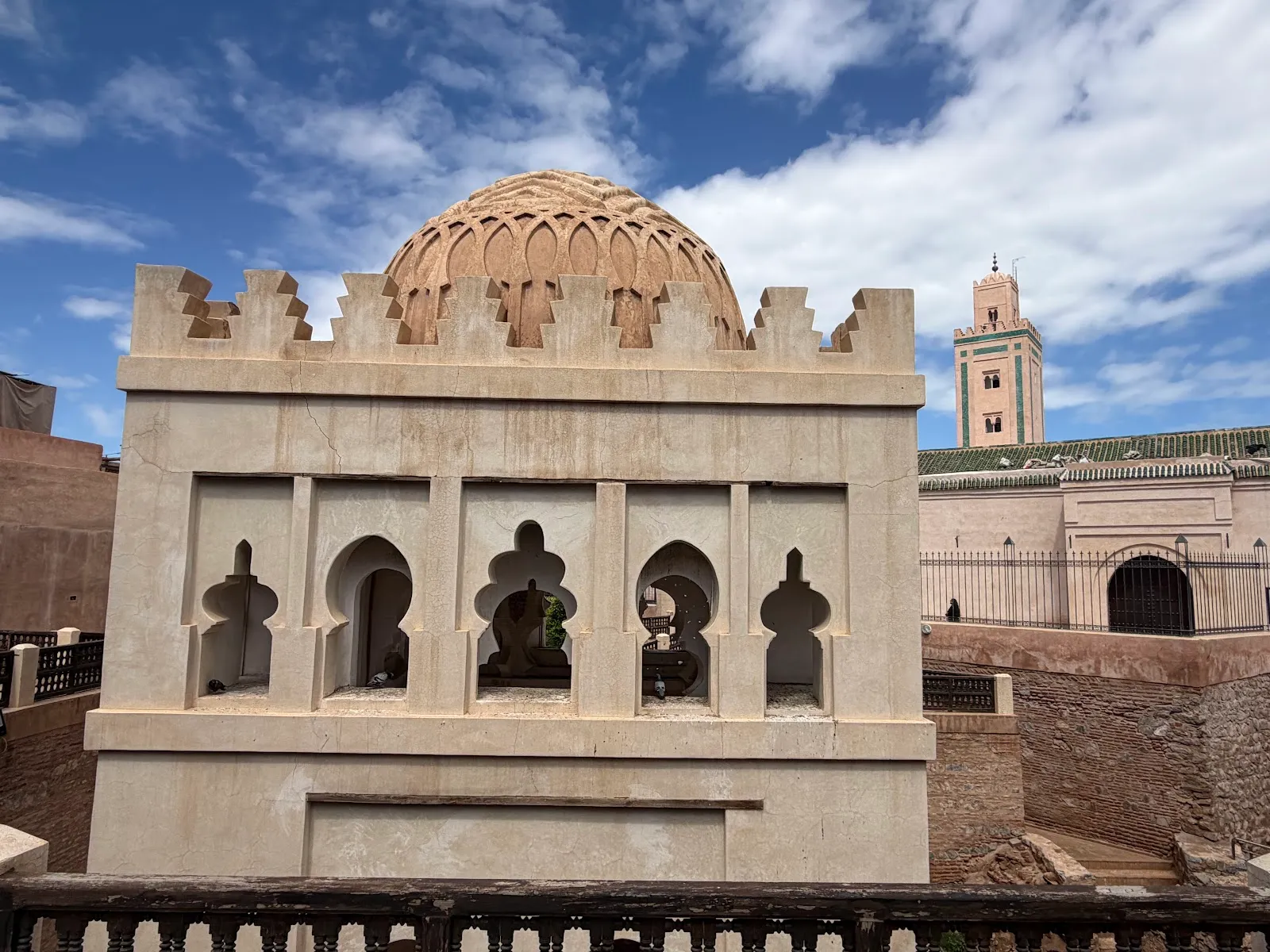
Inside, cedar wood is carved with floral designs and calligraphy. The decoration includes an example of cursive Maghrebi script identified as the oldest known in North Africa.
The remains around the structure help explain its place in a wider religious complex. Below ground are a large cistern, traces of fountains, latrines and water pipes. The fountains are associated with ablutions before prayer, although the precise function of some of the underground features is not clearly established in the available information.
Planning a short visit
The Koubba is compact, so allow time for a brief look rather than a long museum visit. Its value lies in seeing an unusually old building in person and noticing details that are easy to miss from the street, especially the carved interior and the remains below ground.
Ben Youssef Madrasa and the Museum of Marrakech are close by, so the Koubba fits naturally into a walk between historic sites. A guide can help explain the architecture and the complex’s history; if visiting independently, read about the Almoravids beforehand to put the remains in context.
Perguntas frequentes
Where is the Almoravid Koubba?
It is beside the Museum of Marrakech and about 40 metres south of Ben Youssef Mosque.
How old is the Almoravid Koubba?
It dates to the 12th century and is the only surviving example of Almoravid architecture in Marrakech.
How long should I spend there?
The visit is brief. Allow about 5 to 10 minutes to see the building and nearby remains.
What can you see inside the Koubba?
The interior has carved cedar with floral patterns and calligraphy. Nearby are remains of a cistern, fountains and underground water pipes.