
The Musée océanographique sits on the cliff edge of Le Rocher in Monaco-Ville, in a Baroque Revival building that opened in 1910 under Prince Albert I. The lowest floor is given over to fish, from Mediterranean species to tropical ones, and to the Shark Lagoon, a coral reef tank where sharks and reef fish share the water. Upstairs you find the history of oceanography, the Whale Room skeletons and an immersive submarine film on the top floor. Finish on the rooftop terrace, where Turtle Island looks out over the Mediterranean and Monaco. Allow two to three hours.
A museum built into the cliff
Prince Albert I, known as the Navigator Prince for his passion for the sea, founded the museum, and it opened in 1910. He built it to house specimens gathered on his own expeditions. The Baroque Revival building took 11 years to complete and used about 100,000 tons of stone from La Turbie, a village in the hills above Monaco. Its façade rises roughly 85 metres above the water along a sheer cliff face.
Look at the frieze on the façade before you enter. Prince Albert I chose twenty well-known oceanographic research vessels, and their names are carved there.
Jacques-Yves Cousteau directed the museum from 1957 to 1988, and the museum still shows finds from his explorations alongside those of Albert I. The institution remains a research and conservation body, and its stated aim is to teach people to know, love and protect the oceans.
The aquariums and the Shark Lagoon
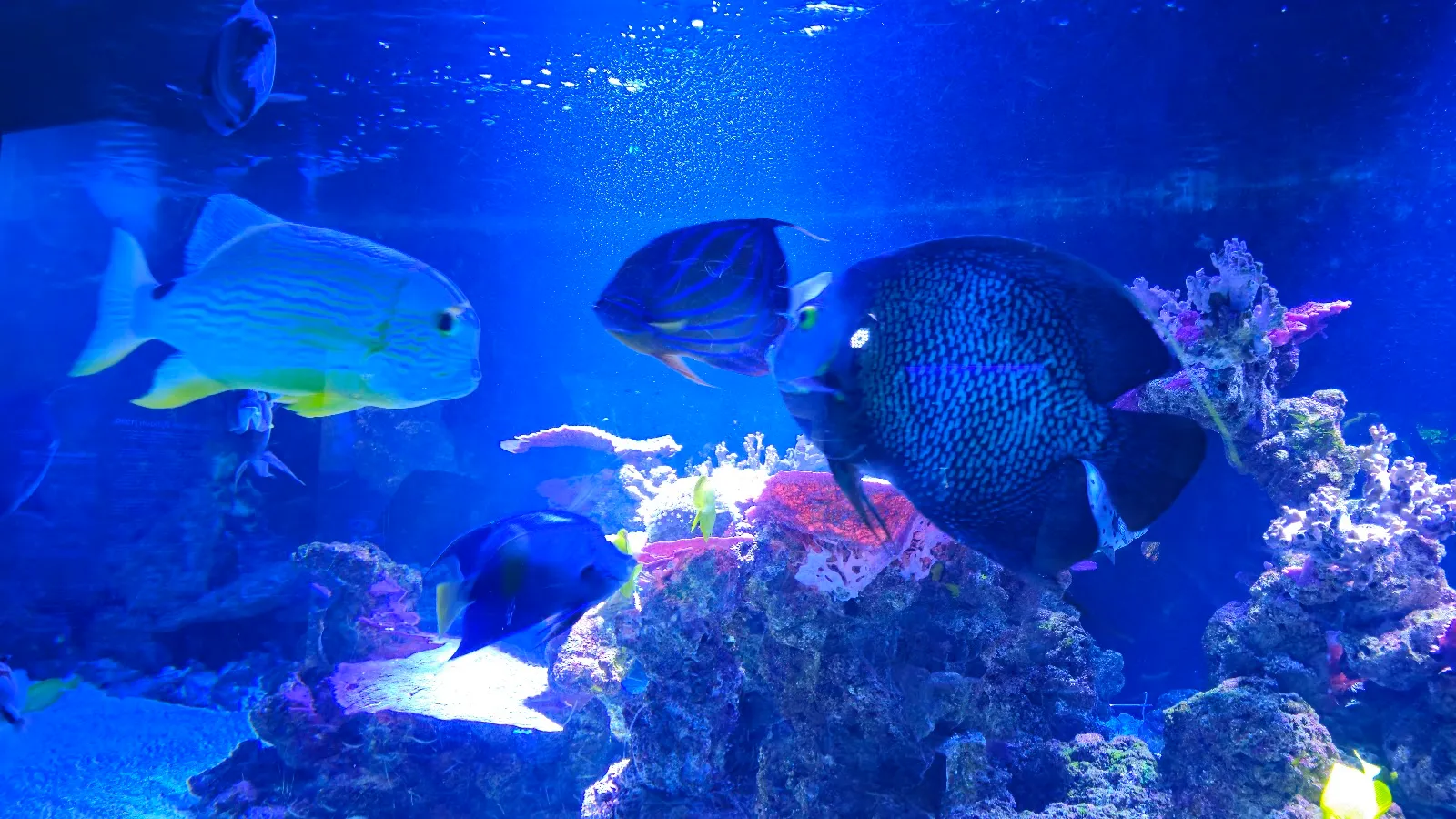
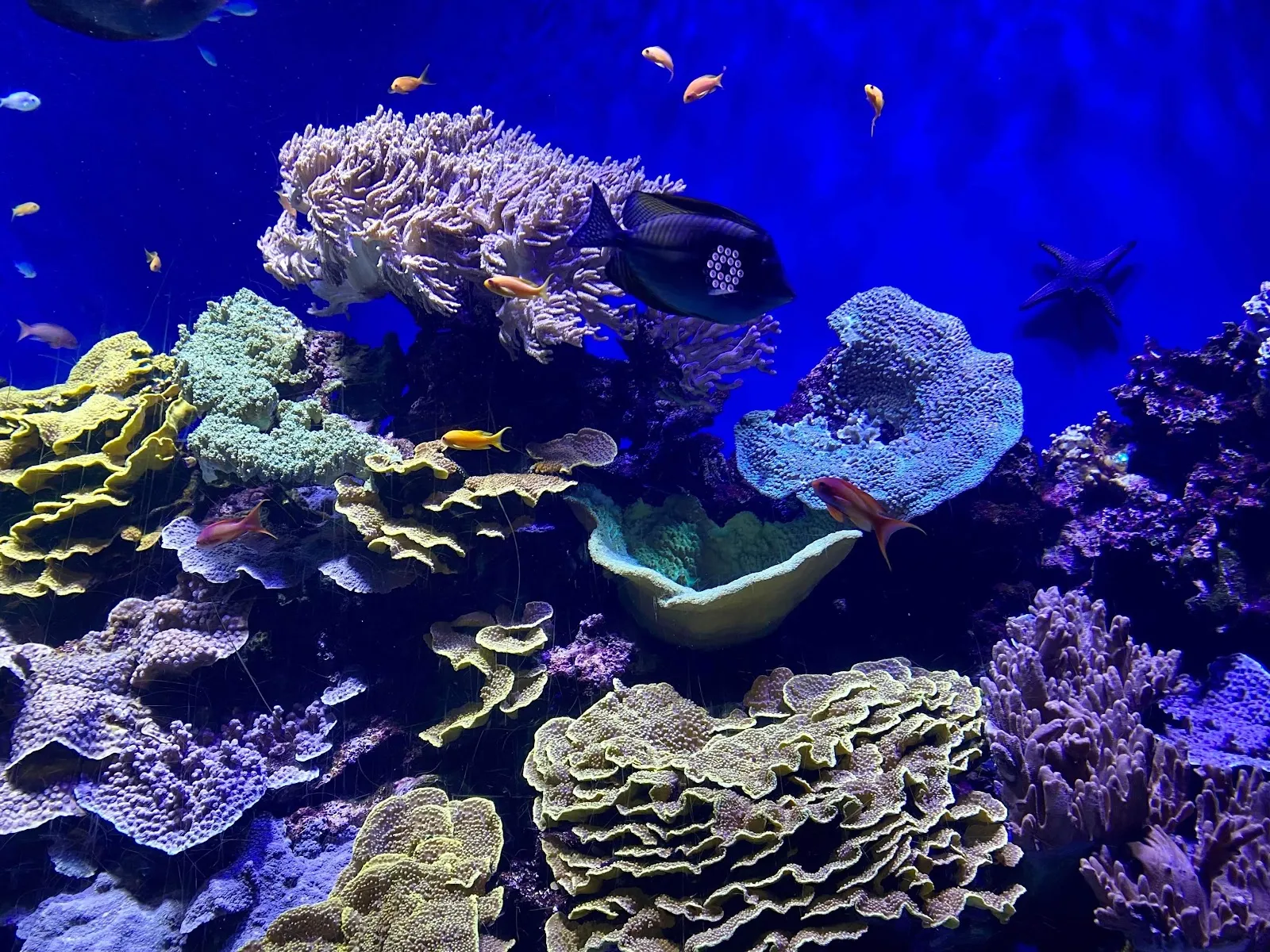
This is a museum with aquariums rather than an oceanarium with endless tanks, so set your expectations accordingly. The lowest floor is devoted to fish and other sea life, and it is the part younger visitors tend to remember.
The Tropical Aquarium and the Mediterranean Aquarium hold around 350 species between them, among them seahorses, jellyfish, starfish, rays and turtles. The Shark Lagoon is the largest installation. It is a deep reef tank, about 6 metres, where sharks and other predators swim on one side of a coral reef while colourful tropical fish stay on the other.
There is also a touch pool, and feeding times let children watch the fish being fed. Turtle Island, a habitat on the panoramic terrace, is a newer addition.
Galleries, skeletons and the submarine show
Upstairs, the museum turns to the science and history. The Whale Room holds skeletons and taxidermy of very large sea creatures, together with early submarines and diving gear that goes back to the Middle Ages. Two large colonnaded rooms trace the history of oceanography and marine biology, and the part Prince Albert I played in it, through photographs, old instruments, specimens and a few interactive displays.
In total the collection runs to more than 60,000 scientific and historical objects. They cover marine life, exploration and navigation, and include models of ships.
On the top floor, Oceano Odyssey is a submarine installation that is part film, part ride. Its visuals and orchestral score are built to immerse you, and it is a good place to slow down after the galleries.
The rooftop terrace and visiting with children
The terrace looks over the Mediterranean, the Principality and the mountains behind. You can take an ice cream or a drink up there, and a restaurant with a children's playground is on the same level.
The museum suits families. It has changing tables, kid-friendly activities, a discount for children, and a wheelchair accessible entrance, restroom and parking lot. A gift shop sits on site.
Getting there and what to combine it with
The museum stands near the Cathedral of Monaco, and the Jardins Saint-Martin lead you there on foot in a few minutes. The gardens have shaded corners and sea breezes, so they work as a break before or after your visit. The Monaco zoo is a 15-minute walk away, and the Prince's Palace is close by.
The museum is also a sensible choice for a rainy day in Monaco, since almost everything inside is under cover.
Perguntas frequentes
Is there an entry fee at the Musée océanographique de Monaco?
Yes, there is an admission fee. Buying tickets in advance is recommended, and entry before 11 am or after 5 pm is discounted.
How long do you need at the museum?
Plan two to three hours. That gives you time for the aquariums, the galleries, the submarine installation and the terrace at an easy pace.
Is the museum open every day?
It opens daily except 25 December and the weekend of the Formula 1 Grand Prix. The page shows current opening hours.
Is it a good visit with children?
Yes. There is a touch pool, fish feedings, Turtle Island and a playground at the rooftop restaurant, plus changing tables and a discount for children.
Is parking available?
There is parking on site and nearby, but spaces can be hard to find at busy times. Walking up through the Jardins Saint-Martin is a simple alternative.
Is the museum wheelchair accessible?
The entrance, the restroom and the parking lot are all wheelchair accessible.


