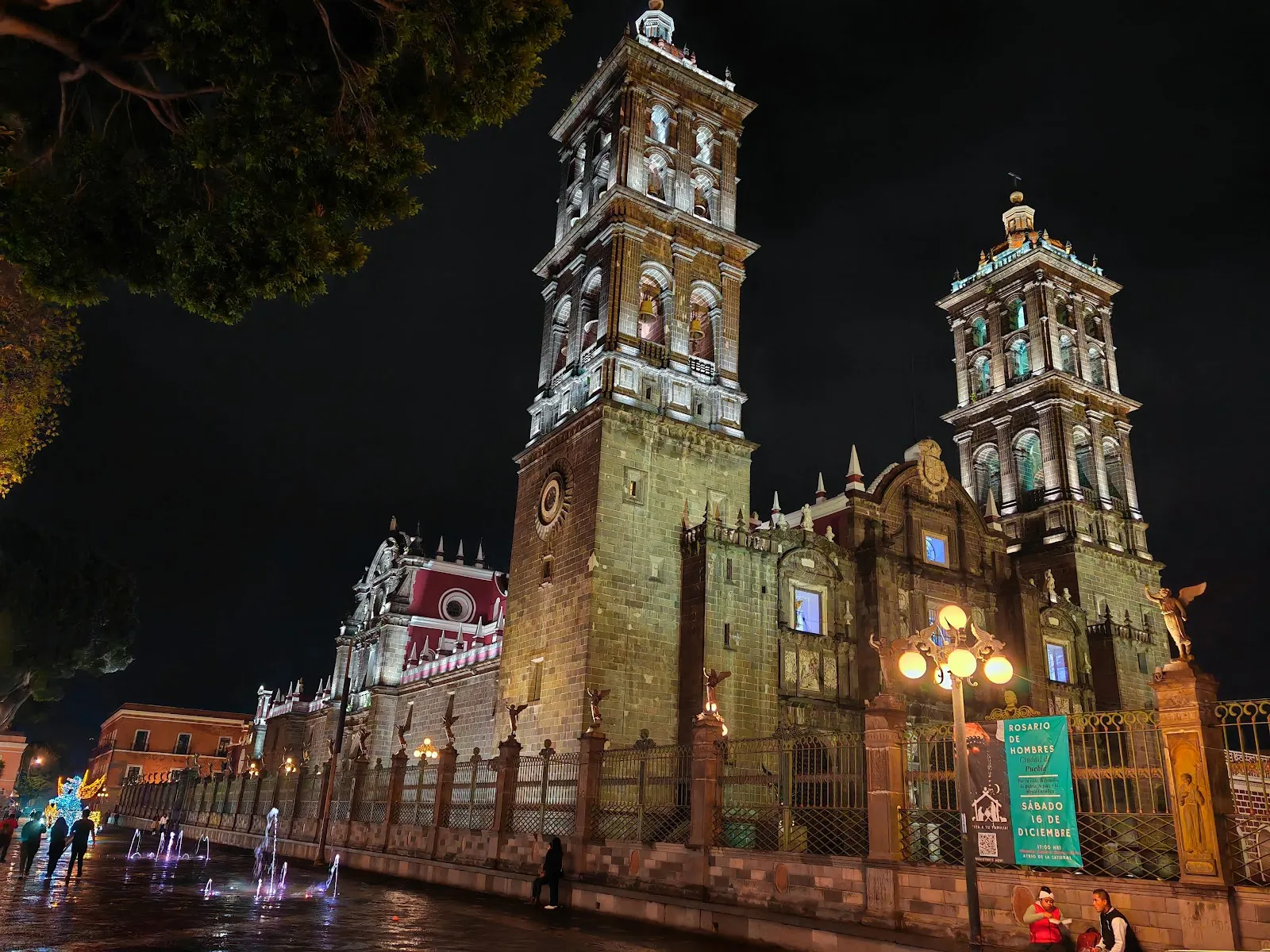
The Catedral de Puebla, also called the Cathedral Basilica of Our Lady of the Immaculate Conception, fills the block south of the zócalo, at 16 de Septiembre and 5 Oriente. Its twin towers are the tallest on any cathedral in Mexico. The façade is dark volcanic stone and gray limestone, and the interior is gilded altars, carved wood, a large organ and 14 chapels. Entry is free. It is still a working church, so you may find a mass under way. After dark the exterior is lit with LED lights.
Where it stands and how it looks from outside
The cathedral occupies the entire block on the southern side of the zócalo, on the corner of 16 de Septiembre and 5 Oriente. It is part of the historic center of Puebla, which is a World Heritage Site, and it is the seat of the Archdiocese of Puebla. Its image appears on Mexico's 500 peso note.
The façade is made of black tezontle, a volcanic stone, and gray limestone. The dark stone gives it a severe look that some visitors compare to European cathedrals. The two bell towers are the tallest of any cathedral in Mexico. The original design called for four towers, but only two were built, and the south tower was not completed until 1768.
From the site's earlier use to the consecration in 1649
The cathedral stands on a former pre-Hispanic ceremonial site. It was consecrated in 1649, ahead of the Metropolitan Cathedral in Mexico City, which was dedicated in 1653. Most of the construction took place in the 1640s under Bishop Juan de Palafox y Mendoza, who helped finance the building. Additions and finishing work continued until about 1690.
The result mixes styles. The severe Herreresque and Renaissance lines of the early design meet early Baroque ornament, and later work added more. A local legend says that when the cathedral was finished, its architects could not work out how to raise a bell of more than 8 tons into the tower, until the bell was found in place one morning. The story is tied to the city's original name, Puebla de los Ángeles.
Inside: gold, chapels and the dome
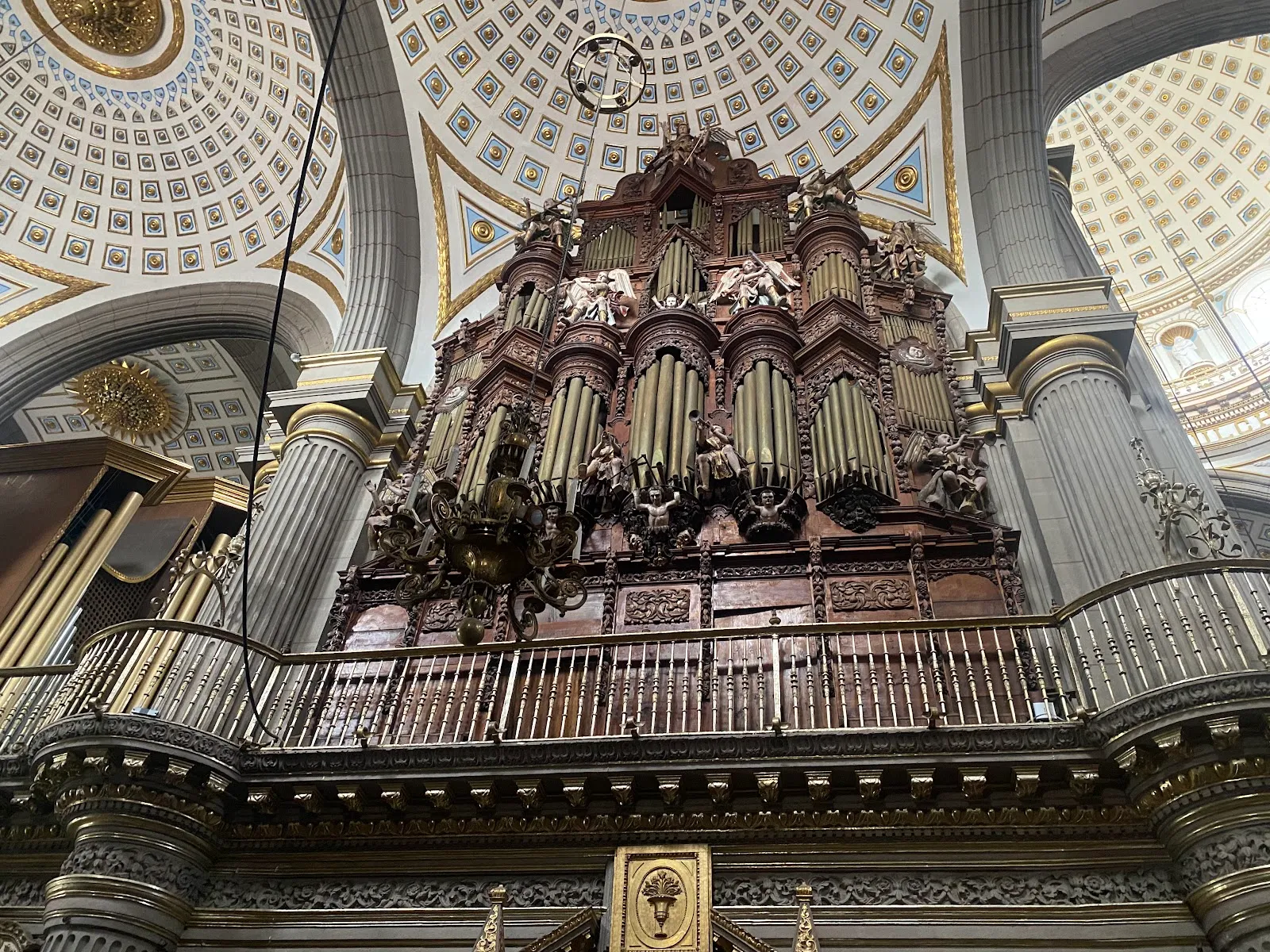
Inside, the cathedral is a different world from the somber exterior. Gilded altars, carved wood, frescoes and a large organ fill the nave, and the wooden doors are very tall. There are 14 chapels, each in its own style, and most carry bilingual signs that explain their history and meaning.
The Altar de los Reyes was designed by Manuel Tolsá. The painted dome of the chapel is also worth looking up at, and the main dome is said to be inspired by Michelangelo's designs for St. Peter's Basilica. Natural light enters the building and falls on the gilding, so a visit by day shows the detail well.
Visiting a working cathedral
Masses take place here, and some include moments such as couples renewing their vows. Keep to the sides while a service is on, and keep your voice down. Photography is allowed, but flash is not.
The zócalo around the cathedral has the Palacio Municipal, shops and restaurants, and a restaurant across the street has a view of the church. The square can be crowded on weekends. At dusk the lights come on and the cathedral takes on a different look, so many visitors plan a second pass in the evening.
Perguntas frequentes
Is there an entry fee for Puebla Cathedral?
No, entry is free.
Where is Puebla Cathedral?
It is on the south side of the zócalo in Puebla's historic center, on the corner of 16 de Septiembre and 5 Oriente.
Can you take photos inside?
Yes, but flash photos and flash videos are not allowed.
Is the cathedral lit up at night?
Yes. The exterior is lit with LED lights after dark, and the zócalo is a good place to see it.
Is Puebla Cathedral wheelchair accessible?
The entrance and exit are wheelchair accessible. There are no restrooms inside the cathedral.