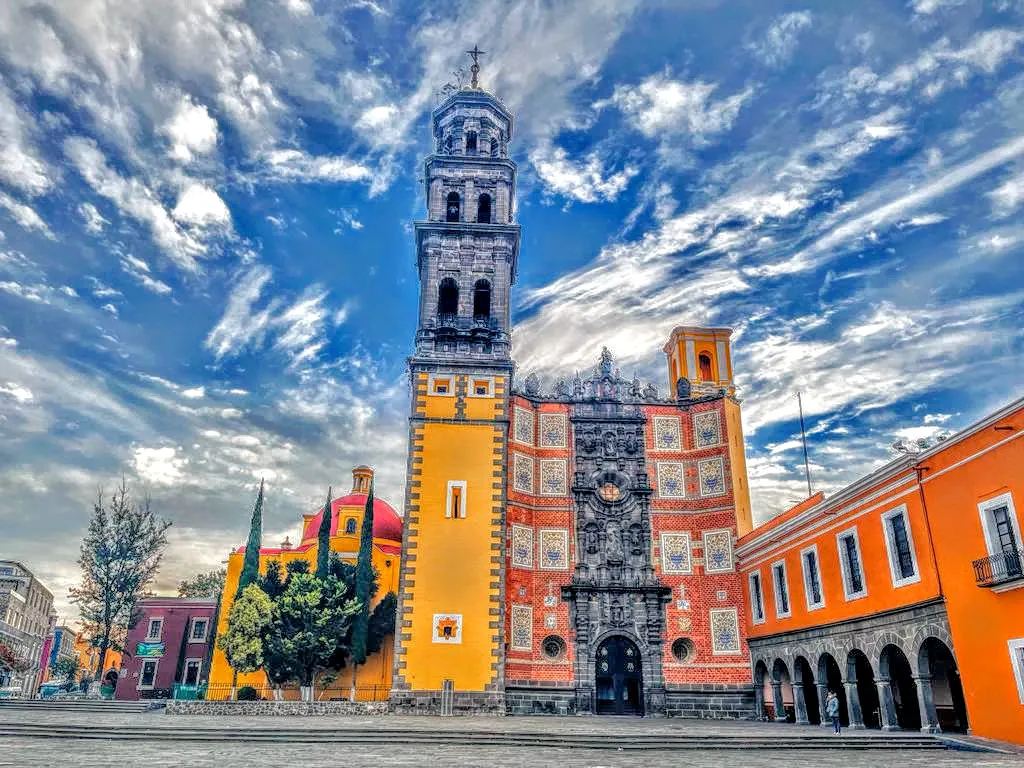
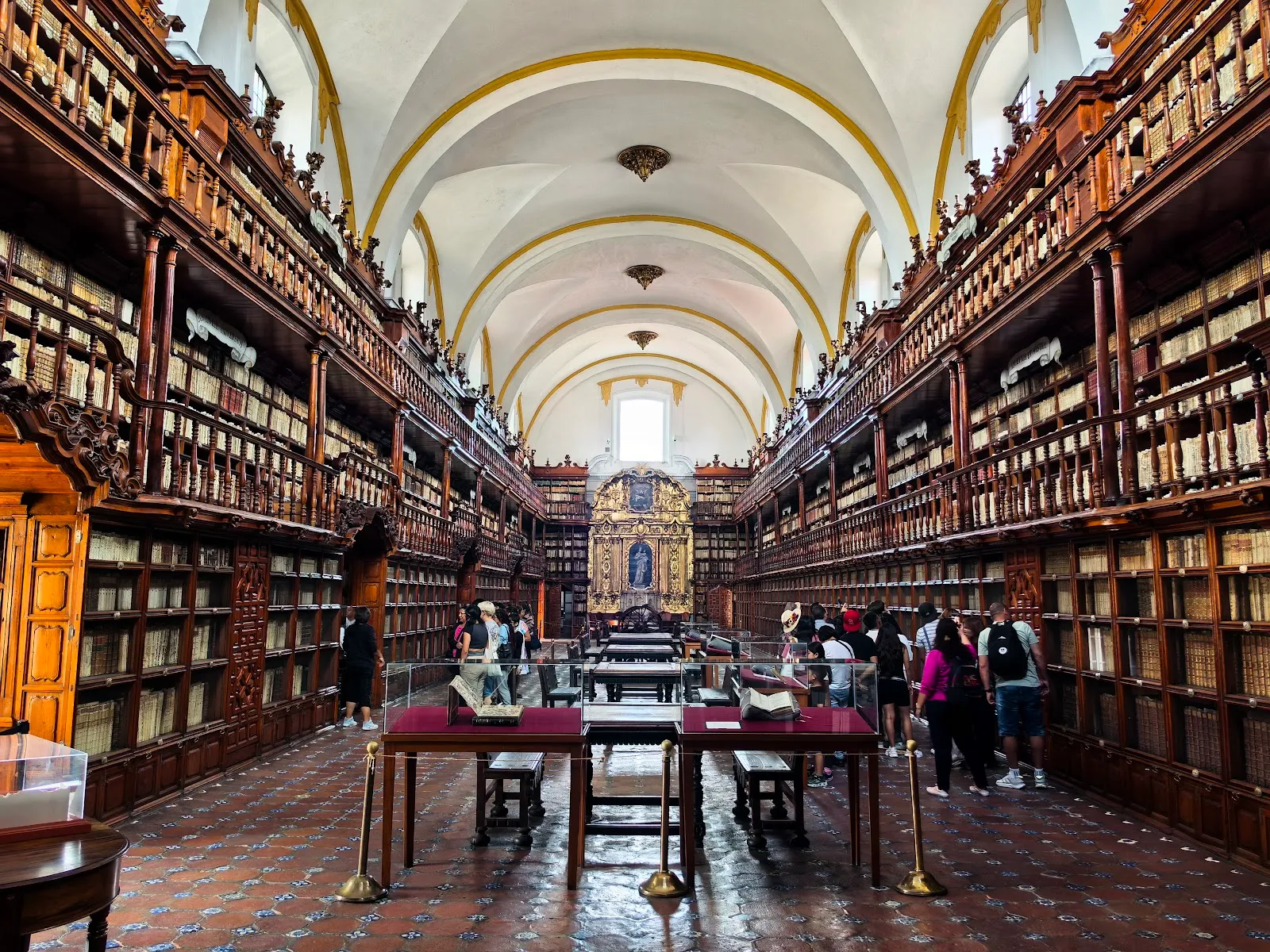
Museo Amparo sits in the historic center of Puebla, a few blocks from the Zócalo, in two colonial-era buildings joined to a modern annex. The core of the museum is a private collection assembled by the banker and philanthropist Manuel Espinoza Yglesias, with nearly 5,000 pre-Hispanic artifacts from across Mexico. The galleries move from ancient ceramics and carved stone to colonial painting and decorative objects, and a small modern section includes works by Diego Rivera and Frida Kahlo. Give time to the timelines that place Mesoamerica beside the rest of the world, then finish on the rooftop café.
A collection built by one collector
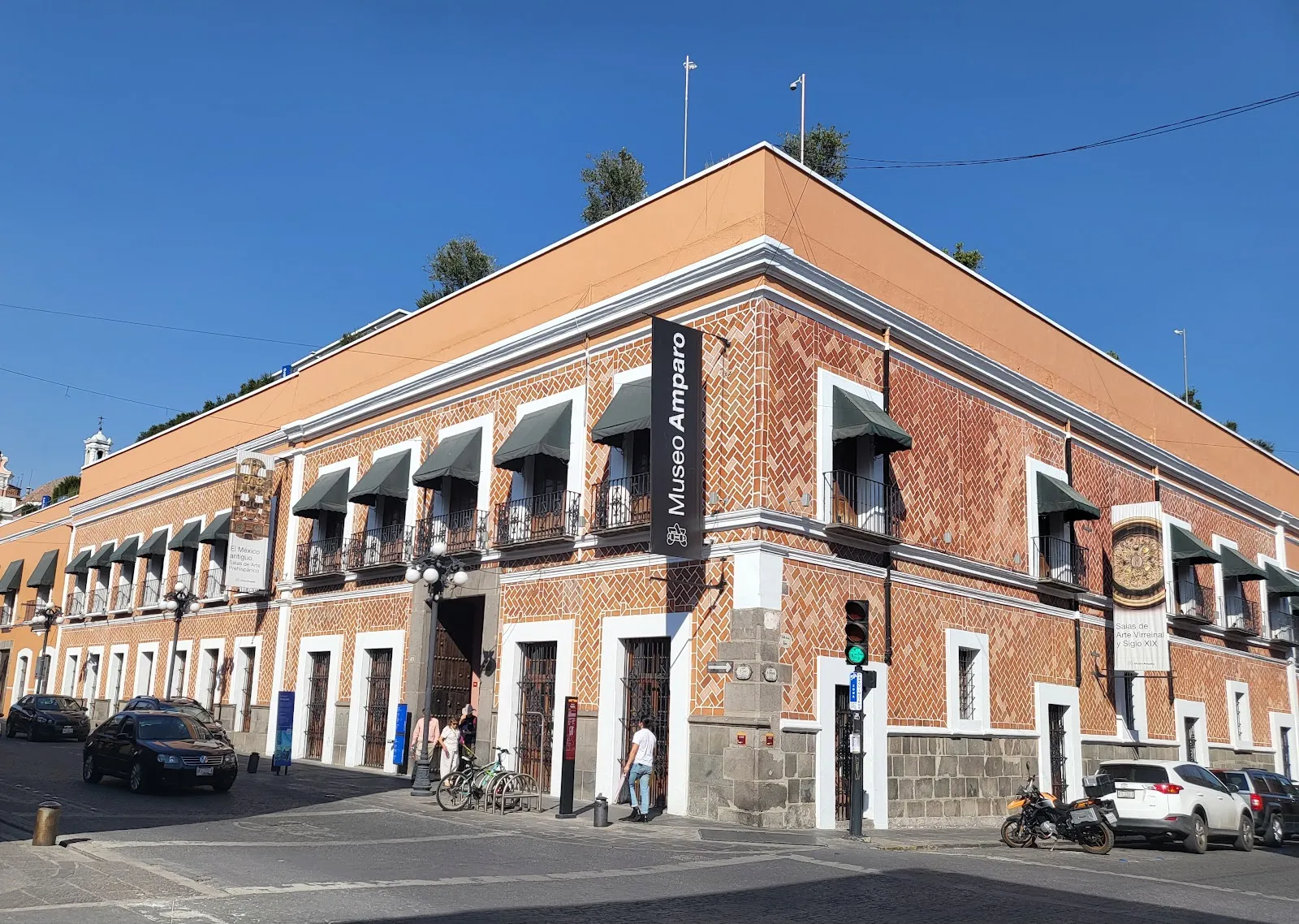
The museum grew out of the private collection of Manuel Espinoza Yglesias, a banker and philanthropist. It opened in 1991 and has since become one of the best-known museums in Puebla.
The collection goes beyond archaeology. Alongside the pre-Hispanic pieces are colonial-era paintings, sculpture, silver objects and examples of talavera poblana, the glazed ceramic that Puebla is known for. A selection of modern and contemporary painters completes the holdings.
Pre-Hispanic galleries and timelines
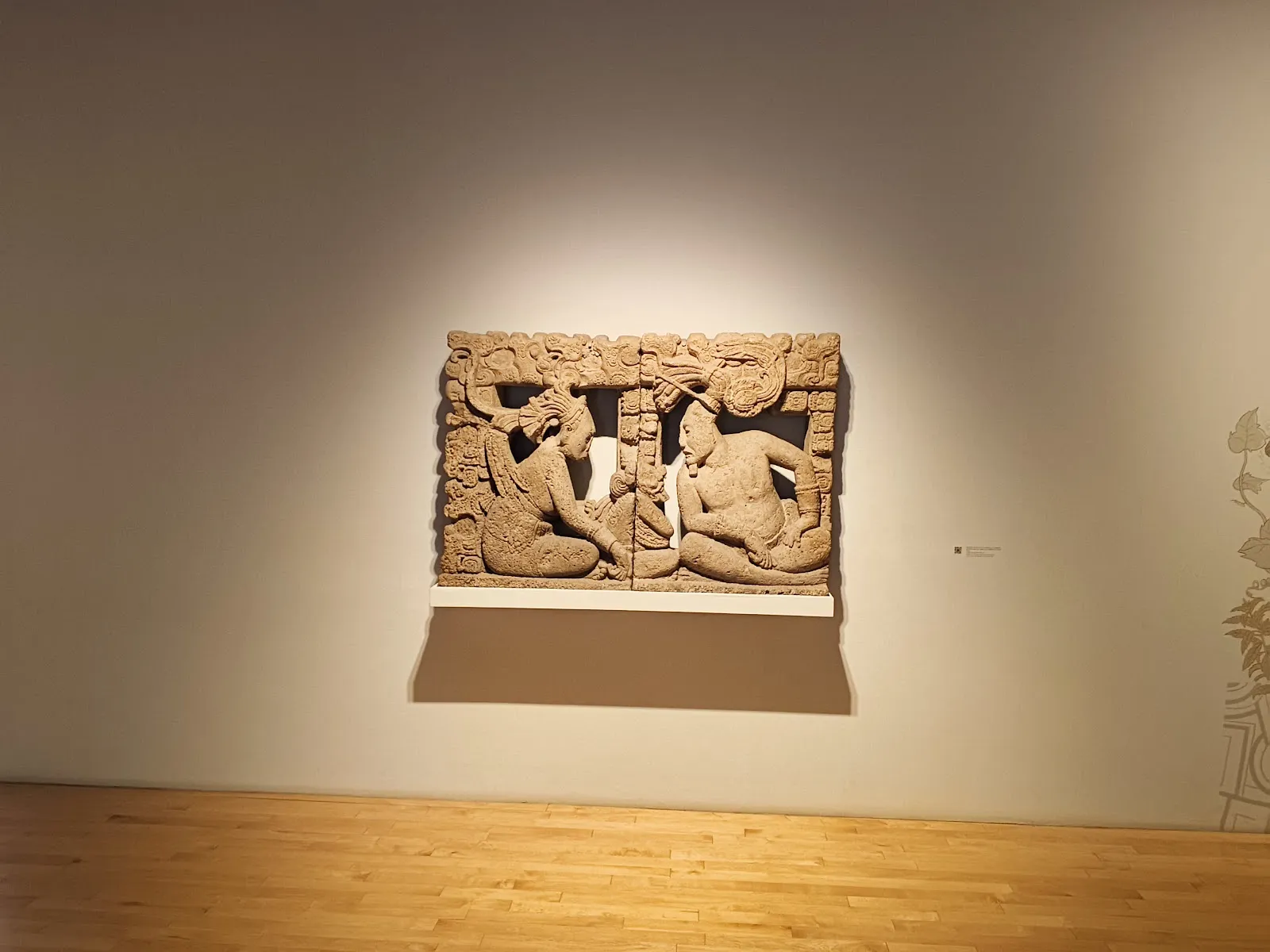
The ancient section covers the Maya, Aztec, Olmec, Zapotec, Teotihuacan and Huastec civilizations. Several rooms have pictorial timelines that show what was happening in Mesoamerica at the same time as events elsewhere in the world, which helps with dates and sequence.
The same motifs appear again and again across different pieces, so a visitor starts to notice the design thread that runs through Mexican art. Among the skull heads in the collection, some look strikingly like the candy skulls sold for Día de Muertos.
The exhibition on Mexican architecture is also worth time. It explains how buildings were designed and built, which adds context to the rest of the museum.
The colonial buildings
The museum occupies two linked colonial buildings, one of which was the city's first hospital. Inside, a contemporary atrium joins the galleries, and courtyards sit between the rooms, so the route through the museum is easy to follow.
One section has been restored to look as it did about 200 years ago. Other parts of the building use a modern, stylish interior, so the contrast between old walls and new fittings is part of the experience.
Modern and temporary exhibits
The permanent galleries are complemented by temporary shows of contemporary art, which can include sculpture, painting, photography, installation and textiles. The modern collection includes works by Miguel Felguérez and Vicente Rojo alongside Rivera and Kahlo.
The museum also hosts film series, art workshops, concerts and educational programs, such as clay-making classes.
The rooftop café
The rooftop terrace has glass walls, a café and views across the Zócalo and the rooftops of the historic center. Visitors who have seen it in the evening on weekends describe the churches lit up below and live music on the terrace.
The coffee is a good place to pause after the galleries, and the view makes the stop worth it even if you only stay for a drink.
Access and facilities
The entrance, restrooms, seating and parking lot are wheelchair accessible. There is a changing table, a gender-neutral restroom and an on-site restaurant. Private events are also held at the museum.
Perguntas frequentes
Is there an entry fee?
Admission is free on Sundays. Fees have been listed differently in the past, so check the official website for the current price.
How long do you need?
About 90 minutes is enough to see everything at a steady pace.
Is the museum open on Tuesdays?
No. The museum is closed on Tuesdays.
Is the museum wheelchair accessible?
Yes. The entrance, restrooms, seating and parking lot are wheelchair accessible.