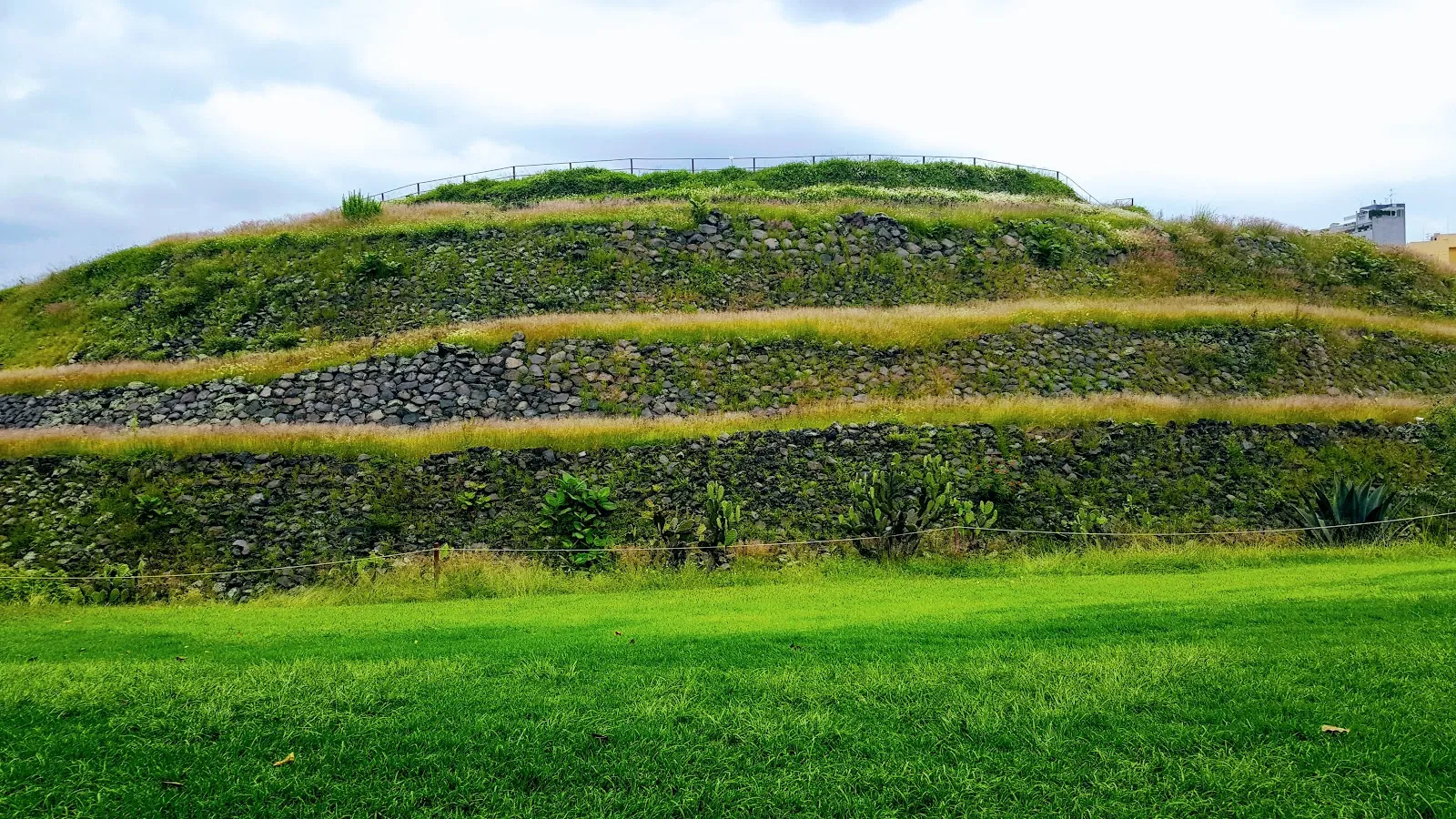
The Metropolitan Cathedral stands on the north side of the Zócalo, in Mexico City's Centro Histórico. It is the largest and oldest cathedral in Latin America and the seat of the Archdiocese of Mexico. Building began in the 1570s and ran for roughly 240 years, so Baroque, Renaissance and Neoclassical styles share the same walls. Inside are the Altar of the Kings, a large pipe organ, paintings, statuary and many chapels. Entry is free. Much of the stone came from the Templo Mayor, whose excavated ruins lie right next door.
Built from the Templo Mayor
After the Spanish conquest, the new city was raised over the old Aztec capital of Tenochtitlan. The cathedral stands in what was an Aztec sacred area, and much of its stone was taken from the Templo Mayor. Remains of the Pyramid of Tonatiuh are known to lie underneath the area, and many ruins in the centre have not been uncovered because colonial buildings still stand over them.
A first, earlier church was soon judged unworthy of such an important city. The cathedral that replaced it was first planned with seven naves, inspired by the Cathedral of Seville. The plan was dropped when the authorities realised that so heavy a building would have serious structural problems on the swampy ground of Mexico City.
Two centuries and several styles
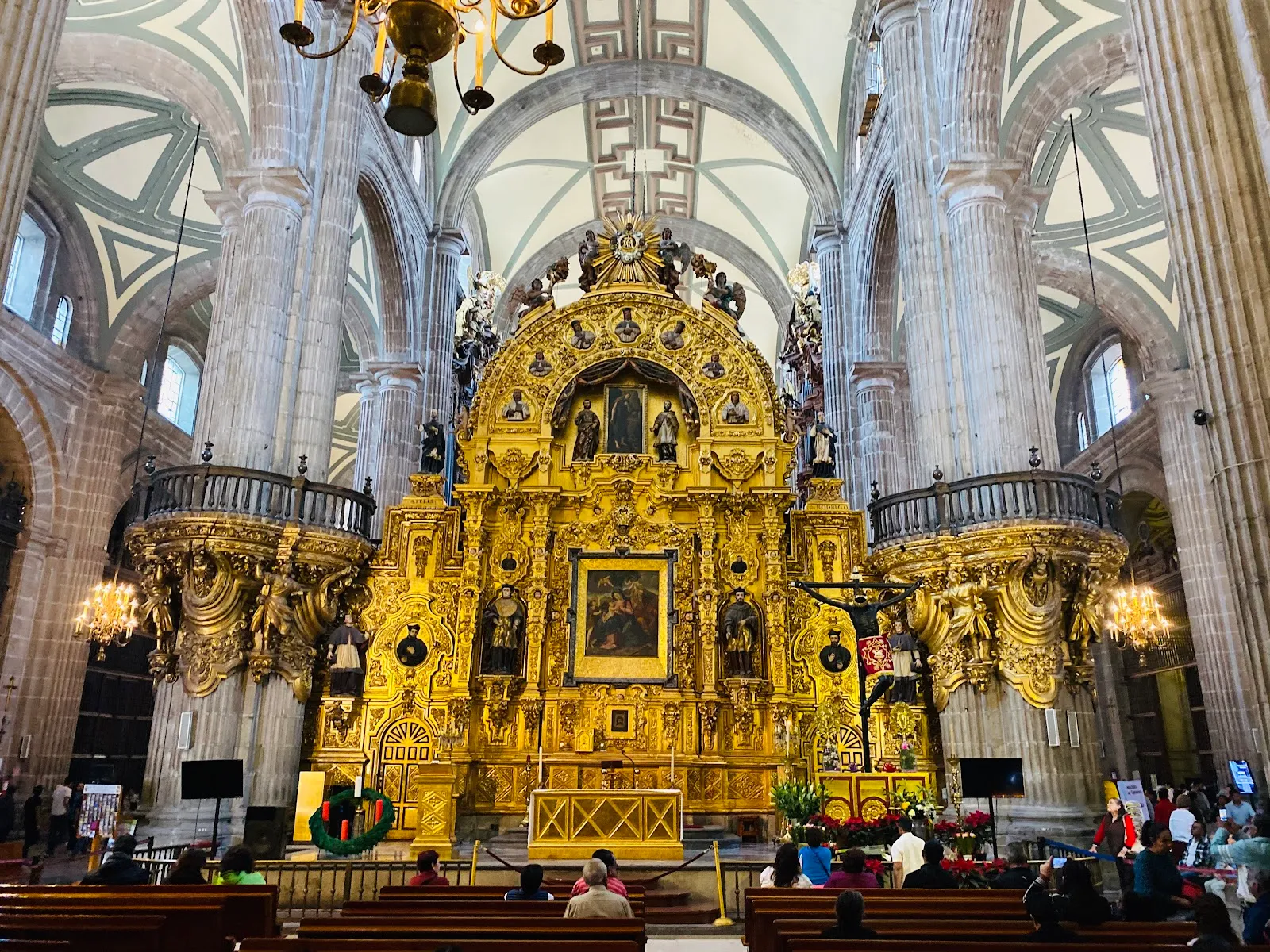
Construction began in the 1570s and continued for roughly 240 to 250 years. Because the work spanned so long, the building shows the styles that were fashionable at each stage. Baroque, Renaissance and Neoclassical elements are the ones most often named.
The ground has left its mark. The cathedral leans slightly because of subsidence and earthquake damage, and it has survived several quakes. It was restored in the 1900s. It is dedicated to the Assumption of the Virgin Mary and is the seat of the Archdiocese of Mexico.
The exterior
The facade is built of grey sandstone and basalt. The building has four facades, bell towers and statues of Faith, Hope and Charity. At the entrance stand Ceschiatti's Four Disciples statues. The bell towers can be visited on some tours, which give a view across the historic centre.
The cathedral occupies a very large part of the Zócalo's northern edge, and the National Palace faces it across the square. Outside, you may see people carrying out traditional cleansing practices.
Inside the cathedral
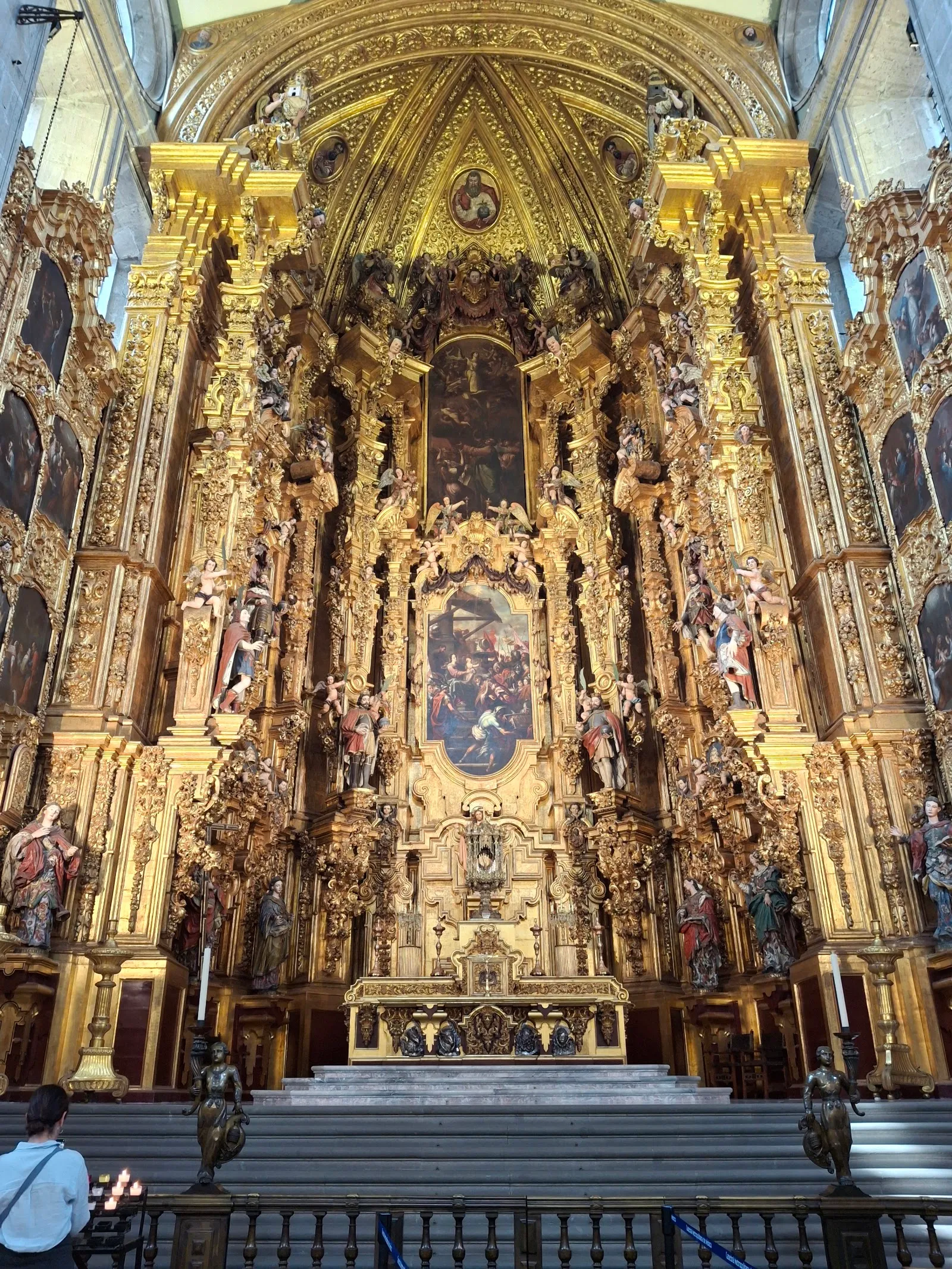
The interior holds many altars, chapels, choirs and organs. The Altar of the Kings is the large, ornate centrepiece, and the main altar is made with sterling gold. You will also find a gilded tabernacle, a collection of paintings and statuary, and an Assumption painting. Ceschiatti also made the aluminium angels that hang inside.
The cathedral contains the Christ of Poison and the remains of the Mexican emperor Agustín de Iturbide. The pipe organs are among the largest in the Americas. The interior stays cool on hot days, and a gift shop sells souvenirs.
Mass on Sundays is a major occasion, with hundreds of candles and the sound of the choir filling the nave. The Midnight Mass at Christmas is also well known.
Around the square
The Templo Mayor ruins and museum sit between the National Palace and the cathedral. Plan at least an hour for the museum. The cathedral also appeared as a filming location in the James Bond film Spectre.
Perguntas frequentes
Is there an entry fee for the Metropolitan Cathedral?
No. Entering the cathedral is free, though you may want a few coins to light a candle or buy a postcard.
What should I wear?
Dress modestly. Shorts are discouraged, and visiting during Mass is not encouraged for sightseeing.
Can you go up the bell towers?
Some tours include the bell towers and their view of Centro Histórico. Check the cathedral's website for current arrangements.
Why does the cathedral lean?
It was built on Mexico City's swampy ground, and subsidence and earthquake damage have left it slightly lopsided.
What is near the cathedral?
The Templo Mayor ruins and museum, the National Palace and the Zócalo are all next to it, within easy walking distance.