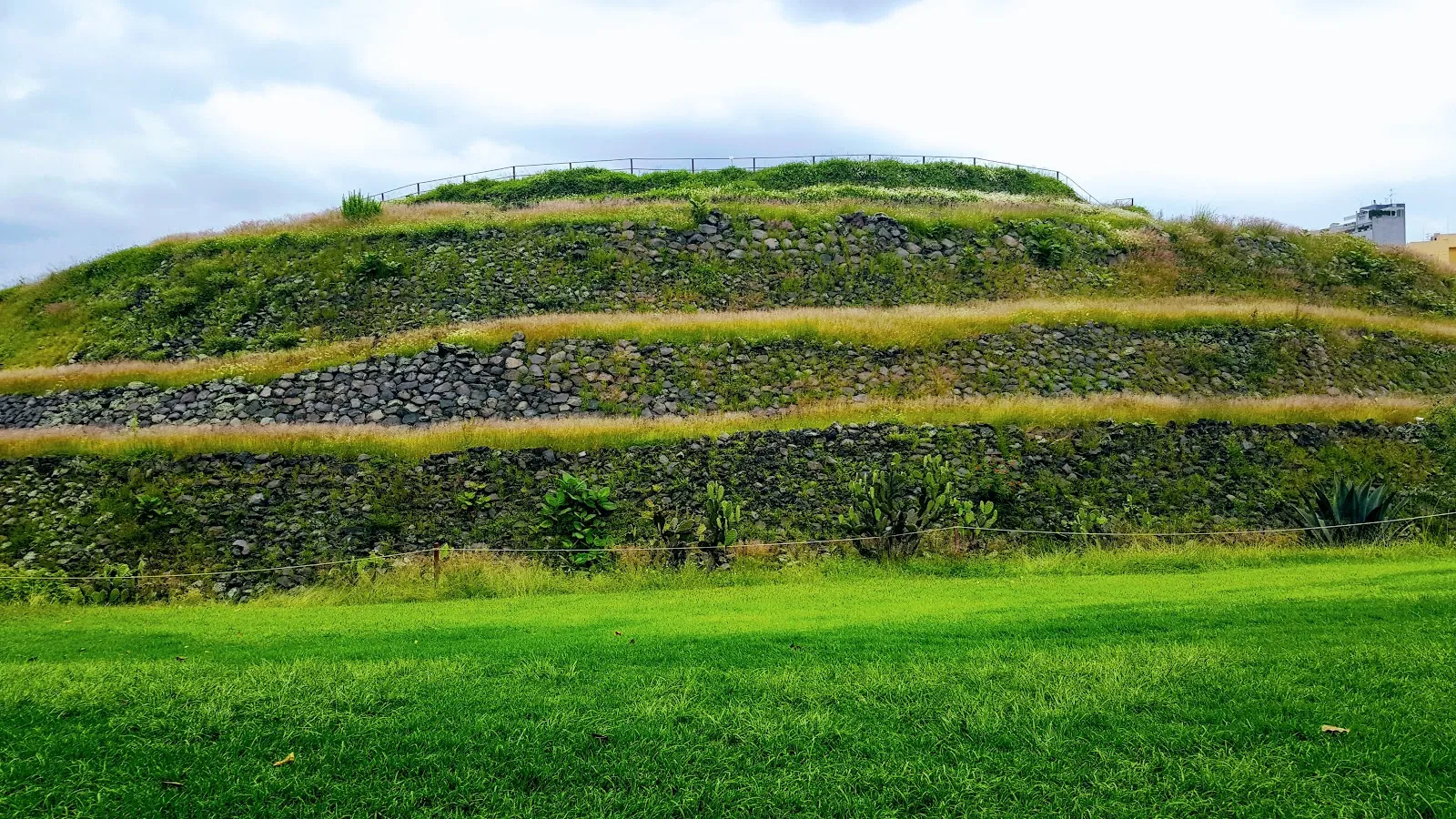
Chapultepec Castle sits on top of Chapultepec Hill in the first section of Chapultepec Park, Mexico City. Work began in the late 18th century on a residence for a Spanish viceroy. The building later held a military college, the court of Emperor Maximilian and Empress Carlota, and the homes of Mexican presidents. Since 1939 it has been the National Museum of History, with period rooms, murals, stained glass and a terrace that looks over Paseo de la Reforma. It is the only castle in North America that housed a sovereign. You reach it by a short uphill walk through the park.
From sacred hill to national museum
Chapultepec comes from a Nahuatl word usually translated as grasshopper hill, and the hilltop was sacred in Aztec times. Grasshopper images appear throughout the castle as a reference to that name.
Viceroy Bernardo de Gálvez ordered the building in the late 18th century as a retreat in the woods. In 1806 it passed to the Mexico City council. In 1840 it became the seat of the Heroic Military College, and the cadets' part in the defence against the US intervention of 1847 is remembered through the story of the Niños Héroes.
In 1864 Emperor Maximilian and Empress Carlota made it their residence during the Second Mexican Empire. That is why it is described as the only castle in North America to have housed a sovereign. From 1884 to 1934 it was the official residence of Mexico's presidents, and in 1939 it was declared a museum. Over the years it has also served as an observatory.
Inside the National Museum of History
The museum fills the castle's rooms with paintings, clothing, documents, photographs, prints, jewelry and military costumes and regalia. The permanent galleries run from the pre-Columbian era through the conquest, empire, independence and the Mexican Revolution. Special exhibitions change through the year in various galleries.
The carriage used by Maximilian and Carlota in the 19th century is on display. Some rooms are given over to the history of the Mexican armed forces, including the navy, and go through battles and the castle's own role in them.
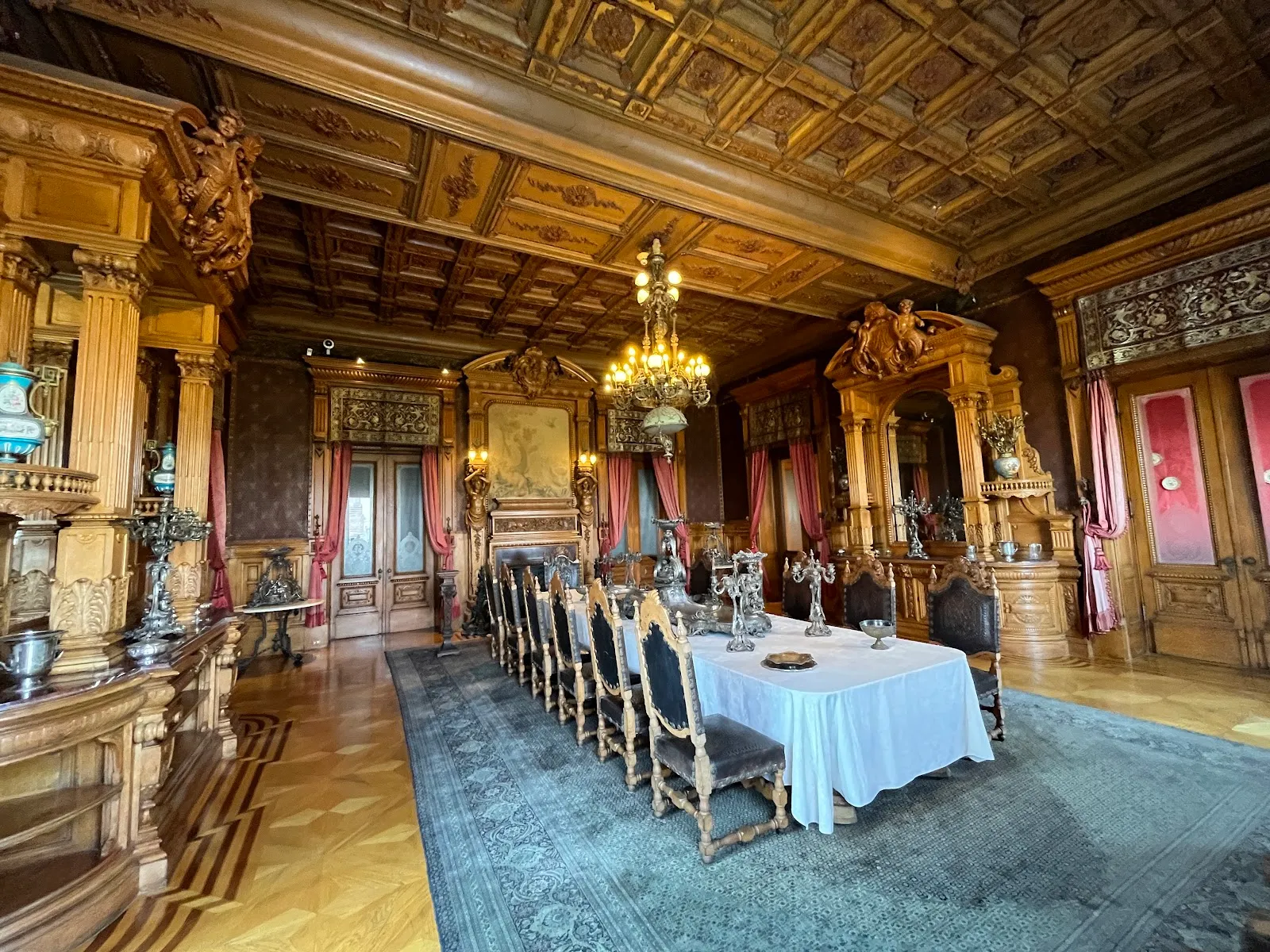
Other rooms are kept as the imperial residence, with European-style decoration, furniture, tapestries and 17th and 18th century paintings. Marble stairs, sculptures and busts of historical figures line the corridors.
Murals, stained glass and tiled floors
Mural painting is one of the castle's main attractions. The dome over the main entrance carries The American Intervention by Gabriel Flores. Eduardo Solares painted Allegory of the Revolution in the main stairway. In the Siqueiros Room you find Porfirismo to Revolution by David Alfaro Siqueiros. Works by Orozco are also part of the collection.
The stained glass is the other draw. The windows are spread through the building, and the hallway on the top floor is the most photographed. Black and white tiles cover floors inside and out.
Terrace, gardens and views
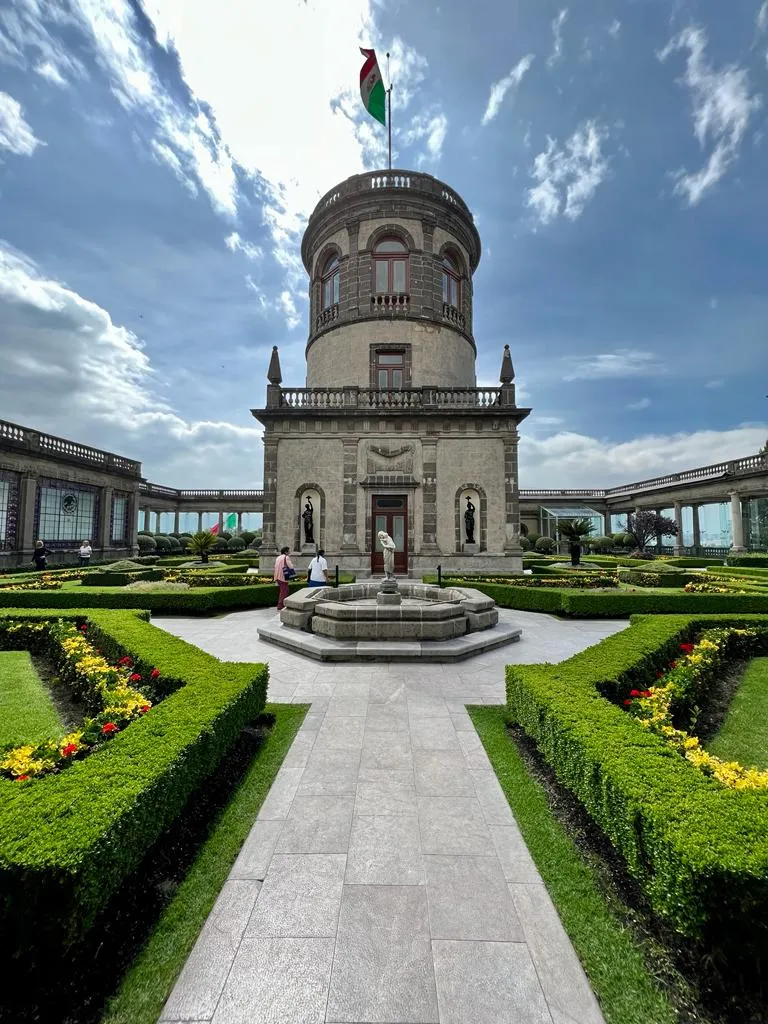
The marble terrace and the rooftop garden are the castle's open-air spaces, and the terrace tends to be crowded. From the viewpoints you see the forest of Chapultepec Park and Paseo de la Reforma, with the Angel of Independence on the skyline. Fountains, statues and flower beds fill the gardens around the building.
The views are also popular around sunset, when the sky colors over the park.
Planning the visit
The castle is on the highest point of the park, a short uphill walk from the paths below. A small tourist train also runs up the hill. The building has a wheelchair accessible entrance and restroom, and an assisted listening system. It is also suitable for children.
Chapultepec Park holds much more than the castle: the zoo, two lakes, pre-Hispanic ruins and several museums, including the Museum of Anthropology, the Museum of Modern Art and the Rufino Tamayo Museum. Because the park is large, many visitors pair the castle with the Anthropology Museum and choose the rest by interest. Current opening details and ticket information are on the museum's website, mnh.inah.gob.mx.
Perguntas frequentes
Is Chapultepec Castle open on Mondays?
No. It is closed on Mondays and open the rest of the week during daytime hours. Buying tickets in advance is recommended.
Is there an entry fee?
Yes, a small fee of a few dollars. Check the museum's website, mnh.inah.gob.mx, for the current price.
What is inside Chapultepec Castle?
It houses the National Museum of History, with paintings, clothing, documents, military regalia and Maximilian and Carlota's carriage. It also has murals, stained glass windows, furnished period rooms, gardens and a terrace.
How do you get up to the castle?
It stands on top of Chapultepec Hill, reached by a short uphill walk in the park. A small tourist train also goes up.
Is the castle wheelchair accessible?
It has a wheelchair accessible entrance and restroom, accessible seating and assisted listening devices.