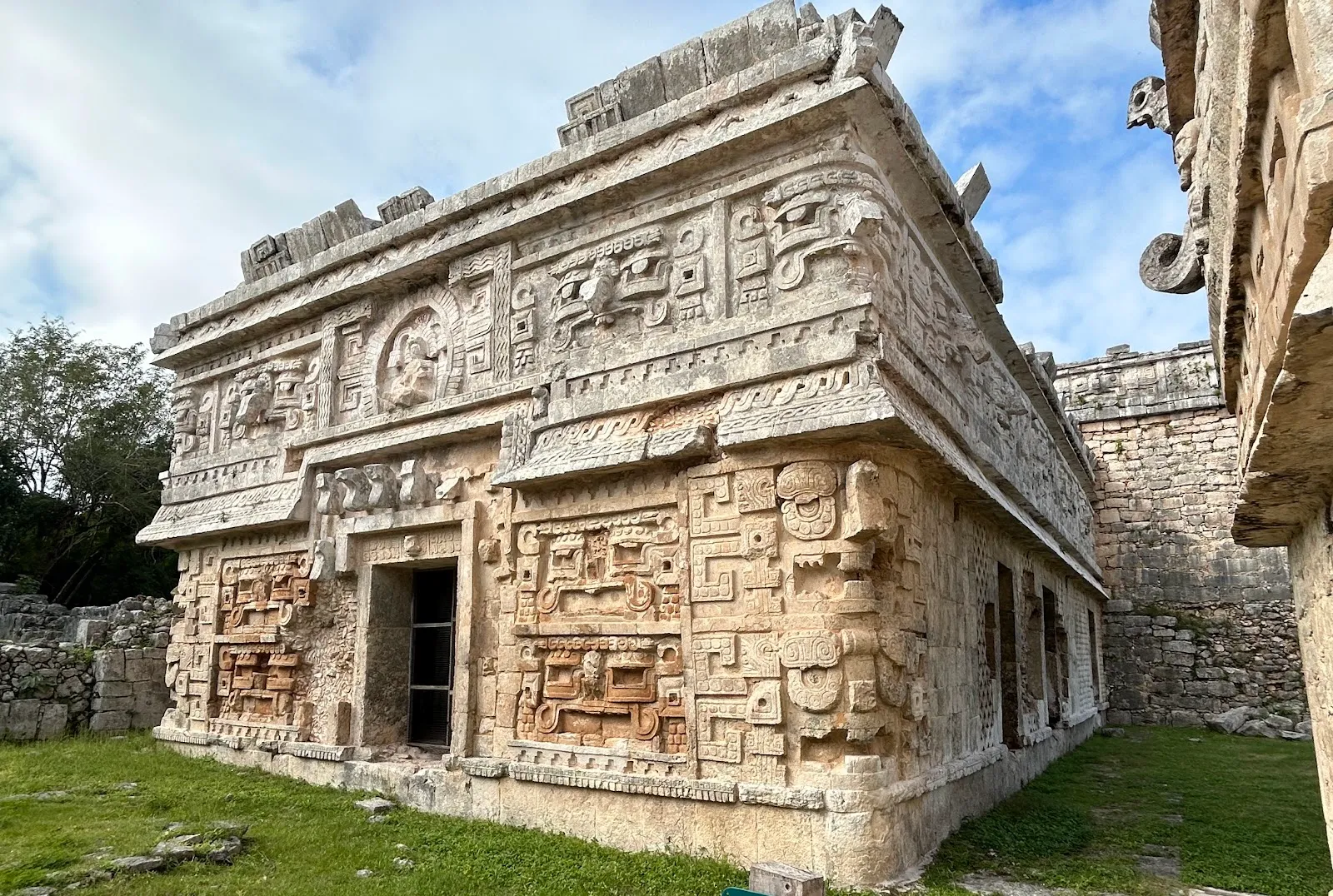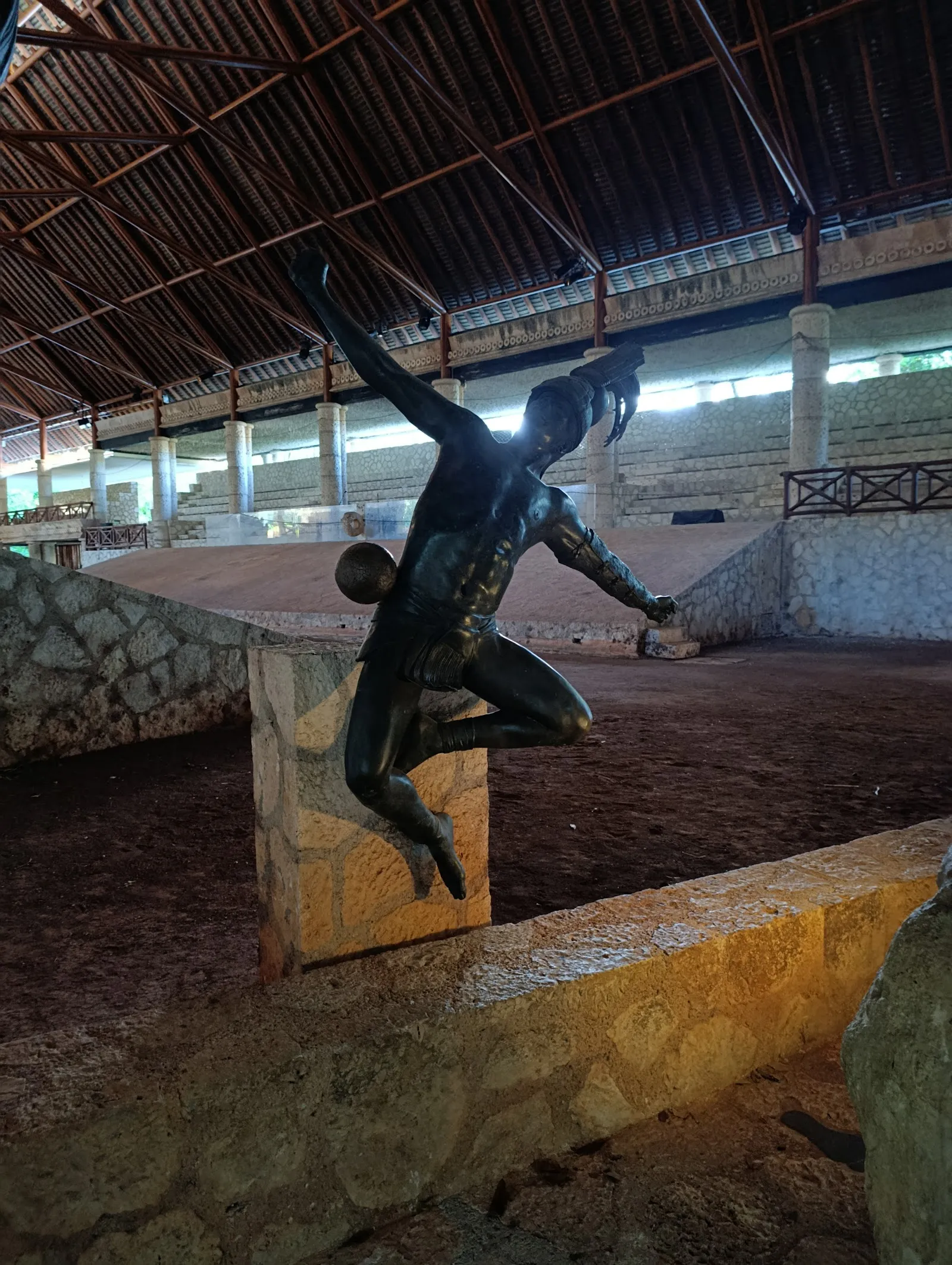
The Gran Juego de Pelota is the main Maya ball court at Chichén Itzá, northwest of El Castillo. At 168 metres long and 70 metres wide, it is the largest and best-preserved court in Mesoamerica. Two high walls frame the open playing area, with carved stone rings set high above the ground and reliefs showing ball players. The court’s acoustics are striking: a clap can echo across the space. Take time to look at the carvings and listen from the centre of the court.
The scale of the court
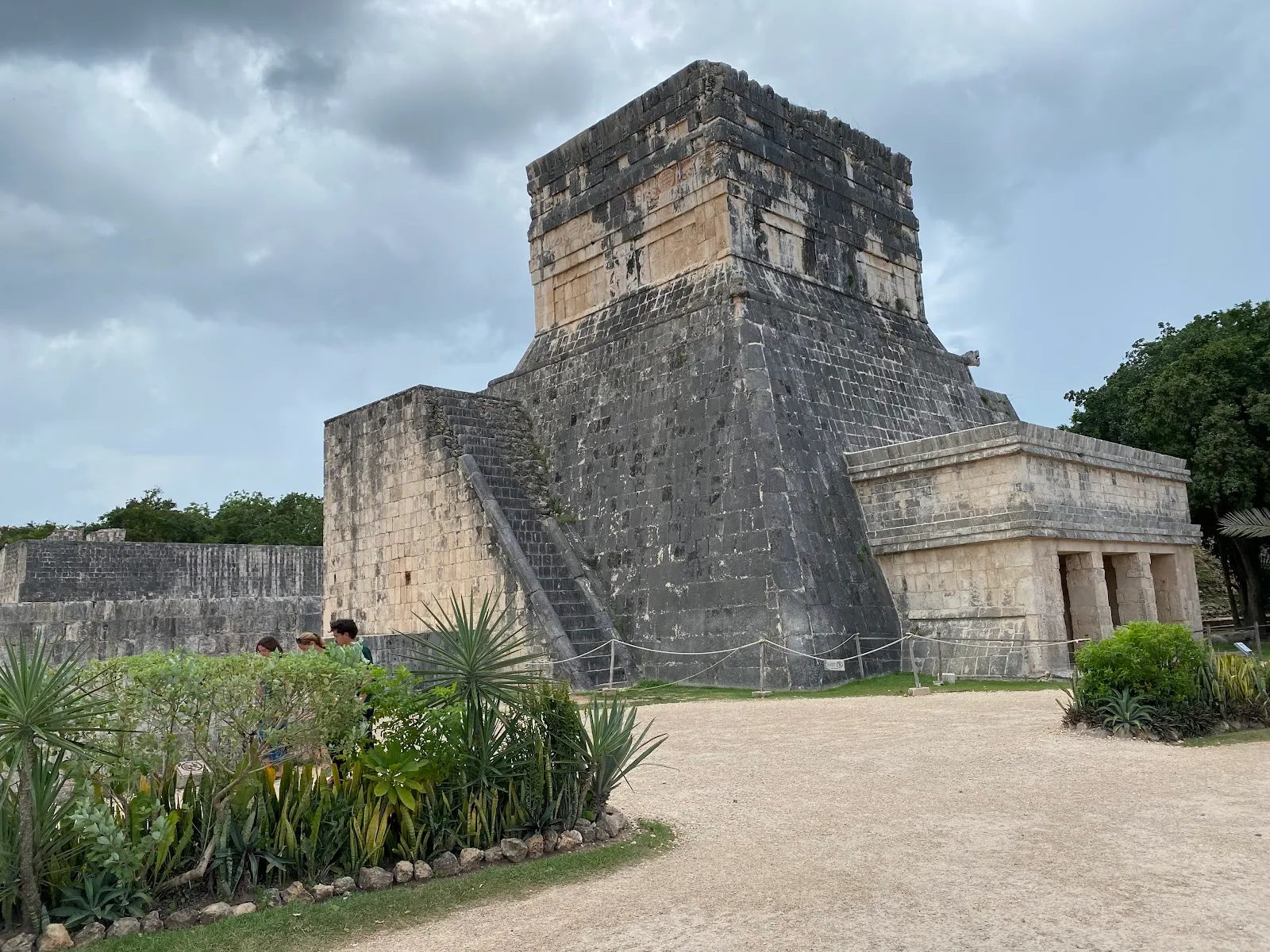
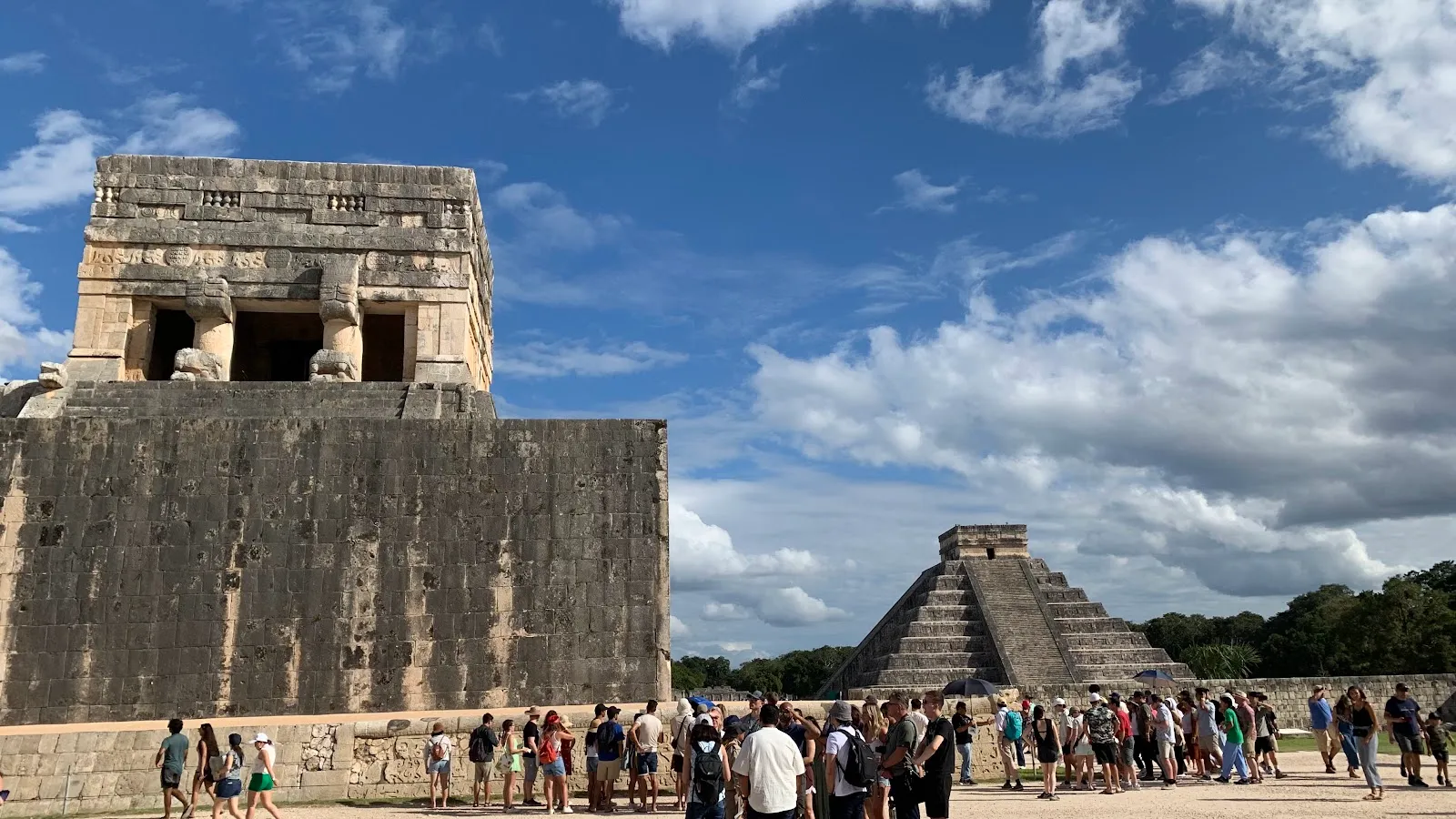
The Gran Juego de Pelota is northwest of El Castillo and is the largest of the ball courts at Chichén Itzá. Its playing area measures 168 metres long and 70 metres wide. Walls about eight metres high run along its sides, enclosing a long, open space that makes the court’s scale easy to grasp from the centre.
Stone rings are fixed high on the long walls, around six metres above the court. Carved with entwined feathered serpents, they were the targets of the game. Reliefs along the walls show figures dressed as ball players, some wearing protective padding. Take a closer look at the scenes as you walk along the court; they offer details of the game as well as its ceremonial setting.
Pok-Ta-Pok and its ritual meaning
The Maya ball game is known as Pok-Ta-Pok or Pitz. It combined competition with religious meaning, and the court’s carved scenes connect play with ritual. The game used a solid rubber ball, and players tried to keep it in motion and, if possible, send it through a stone ring. The rings were high above the playing area, making a successful shot difficult.
Accounts of the rules are incomplete. Reconstructions describe players striking the ball with parts of the body such as the hips, shoulders, elbows and knees, rather than their hands or feet. Teams could include two to seven players and used protective gear such as belts and pads. Carvings at the court include a headless player, but the precise consequences of a match are not certain enough to reduce the game to a single outcome.
Carvings, temples and acoustics
The playing area is bordered by parallel walls, with platforms at its ends. Reliefs depict players and scenes associated with the game. On the east side, the Temple of the Jaguars includes a sculpted chamber with coloured representations of warriors, priests, animals and aquatic plants. These images point to the court’s religious character as well as its role as a place for competition.
The court is also known for how sound travels through it. A clap from within the space can produce a sharp echo that carries across the walls. Pause near the centre and listen before moving on; the acoustics are part of what makes this site distinct among Chichén Itzá’s structures.
Perguntas frequentes
How large is the Gran Juego de Pelota?
The court measures 168 metres long and 70 metres wide. Its walls are about eight metres high.
What was played at the Gran Juego de Pelota?
The Maya played a ball game known as Pok-Ta-Pok or Pitz. It had both competitive and ritual significance.
How long should I spend at the ball court?
Allow around 30 to 60 minutes to walk through the court, examine the carvings and listen to the acoustics.
When is a good time to visit the court?
Go early in the morning or later in the afternoon for cooler light and fewer crowds.