At the tip of Birgu, also called Vittoriosa, Fort St Angelo guards the entrance to Malta’s Grand Harbour. Its medieval core and later defences trace the island’s military history, from the Knights of St John to the British Navy. Inside, exhibits and restored areas bring different periods to life; from the bastions, you can look across the harbour towards Valletta, Senglea and Cospicua. Allow time to explore the fort at your own pace, and consider pairing it with a walk through Birgu’s historic streets.
A stronghold at the harbour entrance
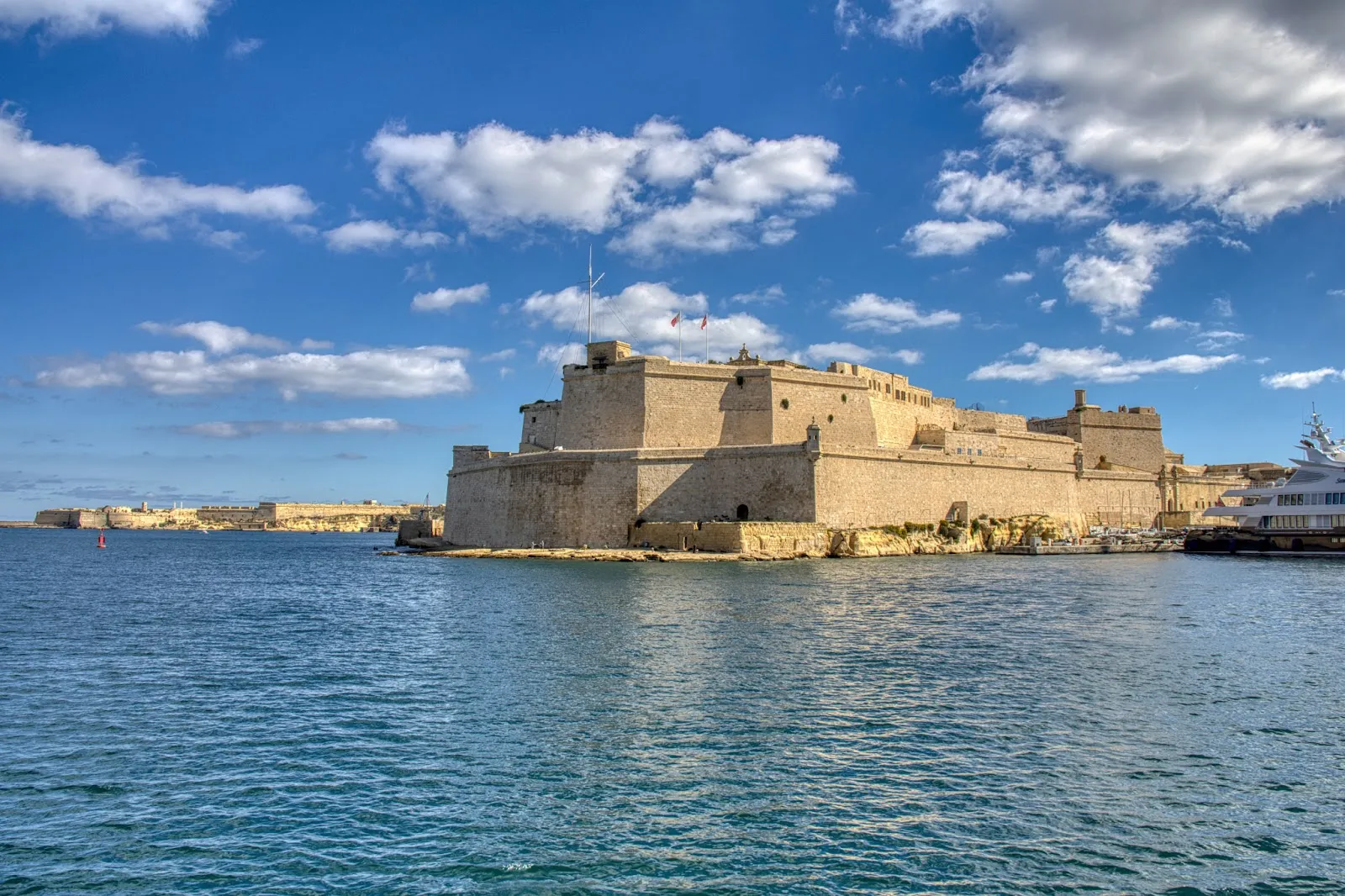
Fort St Angelo stands at the end of Birgu’s peninsula, at the centre of the Grand Harbour. Its position made it a key point in the defence of the harbour and the settlements around it. The fort’s medieval origins are linked to the name Castrum Maris, meaning Castle by the Sea, and it is described as Malta’s oldest fortification with a medieval core.
The Knights of St John arrived in Malta in 1530, settled in Birgu and made the fort their headquarters. They strengthened and remodelled the existing stronghold, and it became the seat of the Grand Master until 1571. During the Great Siege of 1565, the fort served as a central defensive position against the Ottoman forces. After the siege, the Knights began building Valletta across the harbour and moved their headquarters there.
Defences shaped by successive rulers
The fort continued to change as control of Malta shifted. In 1690, the engineer Don Carlos de Grunenberg added further defences. After the Knights were ousted in 1798, the fort became the headquarters of the French army under Napoleon, then later a base for the British Navy. The British retained a naval base there after Malta declared independence in 1964, and Fort St Angelo was the last part of Malta handed over by them.
The layers of military use are visible in the fort’s bastions and defensive works. Restored sections are open to the public, with exhibits that cover the fort and Malta’s history. Multimedia displays and interactive interpretation help explain how the site developed and why its position above the harbour mattered.
Look across the Three Cities
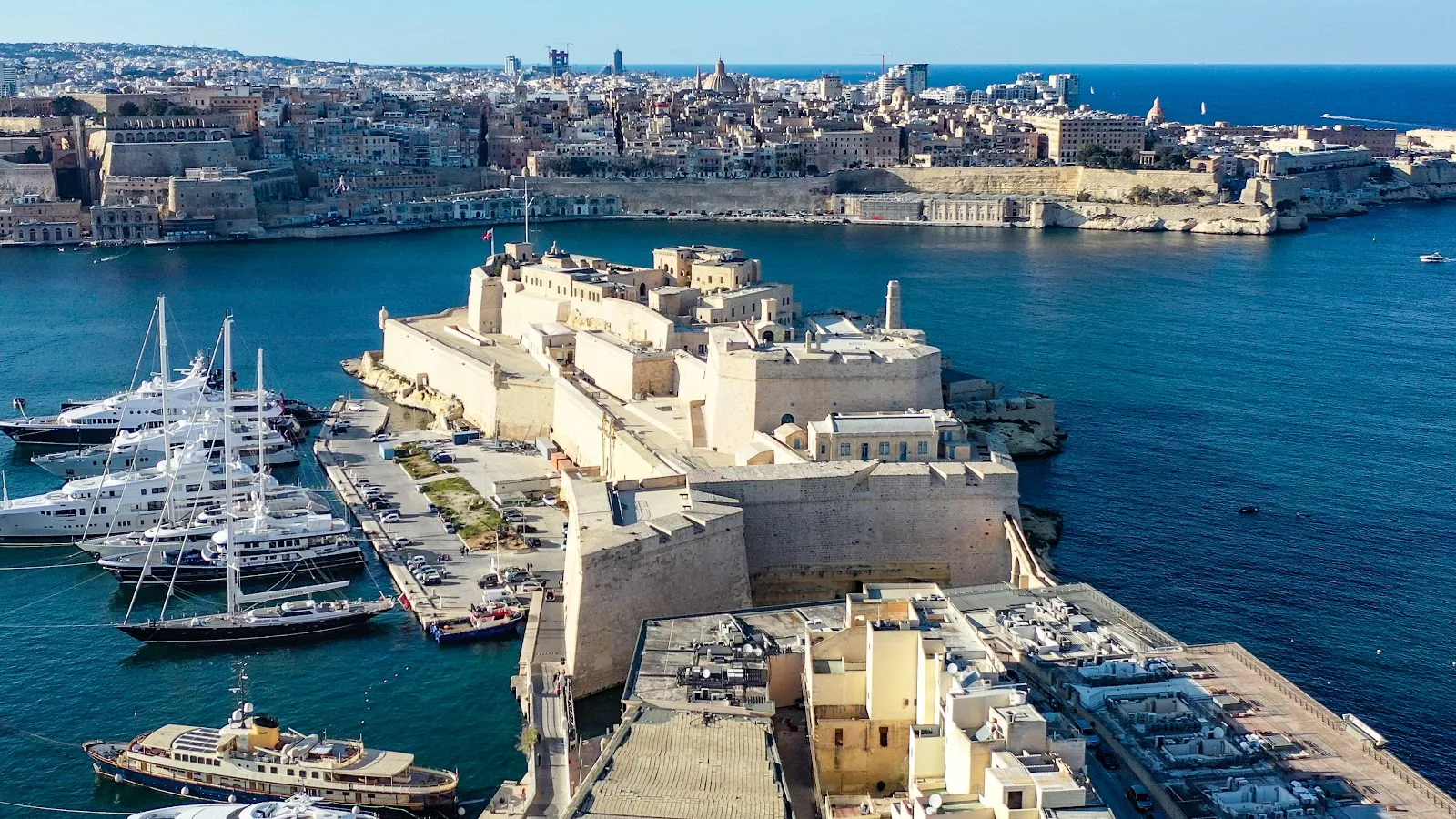
The fort’s elevated position gives views over the Grand Harbour and Valletta, as well as towards Senglea and Cospicua, the other two cities across the water. The gardens at the outer bastions are another place to take in the harbour. Their watchtower, known as the Vedette or Guardiola, is marked with carved symbols of an eye, an ear and a pelican, associated with keeping watch over the harbour.
A self-paced audio guide can add context as you move through the fort. A cafe partway up provides a place to pause during the visit, and cannon salutes are another feature to look out for. For more history on the same outing, continue into Birgu, where the fort sits among the city’s winding streets and waterfront.
Perguntas frequentes
Where is Fort St Angelo?
It is at the tip of the Birgu peninsula in Vittoriosa, overlooking the Grand Harbour.
What can you see at Fort St Angelo?
Explore restored sections, bastions and exhibits about the fort’s history. The upper position also looks across the harbour towards Valletta, Senglea and Cospicua.
Can you use an audio guide at Fort St Angelo?
Yes. A self-paced audio guide is available to help explain the site’s history.
Is it worth visiting Fort St Angelo on a clear day?
A clear day is recommended for the views across the harbour and towards Valletta.