State Guest House Akasaka Palace is a Western-style palace in Tokyo’s Minato City, built in 1909 as a residence for the Crown Prince and now used to receive overseas dignitaries. Its Neo-Baroque exterior, grand reception rooms and Japanese garden make a visit a chance to see how European forms and Japanese details meet. Walk the landscaped grounds to the fountains, then explore the main building if it is open. Indoor photography is not allowed, so take time to notice the ceilings, artwork and gold-toned decoration in person.
From Crown Prince’s residence to state guest house
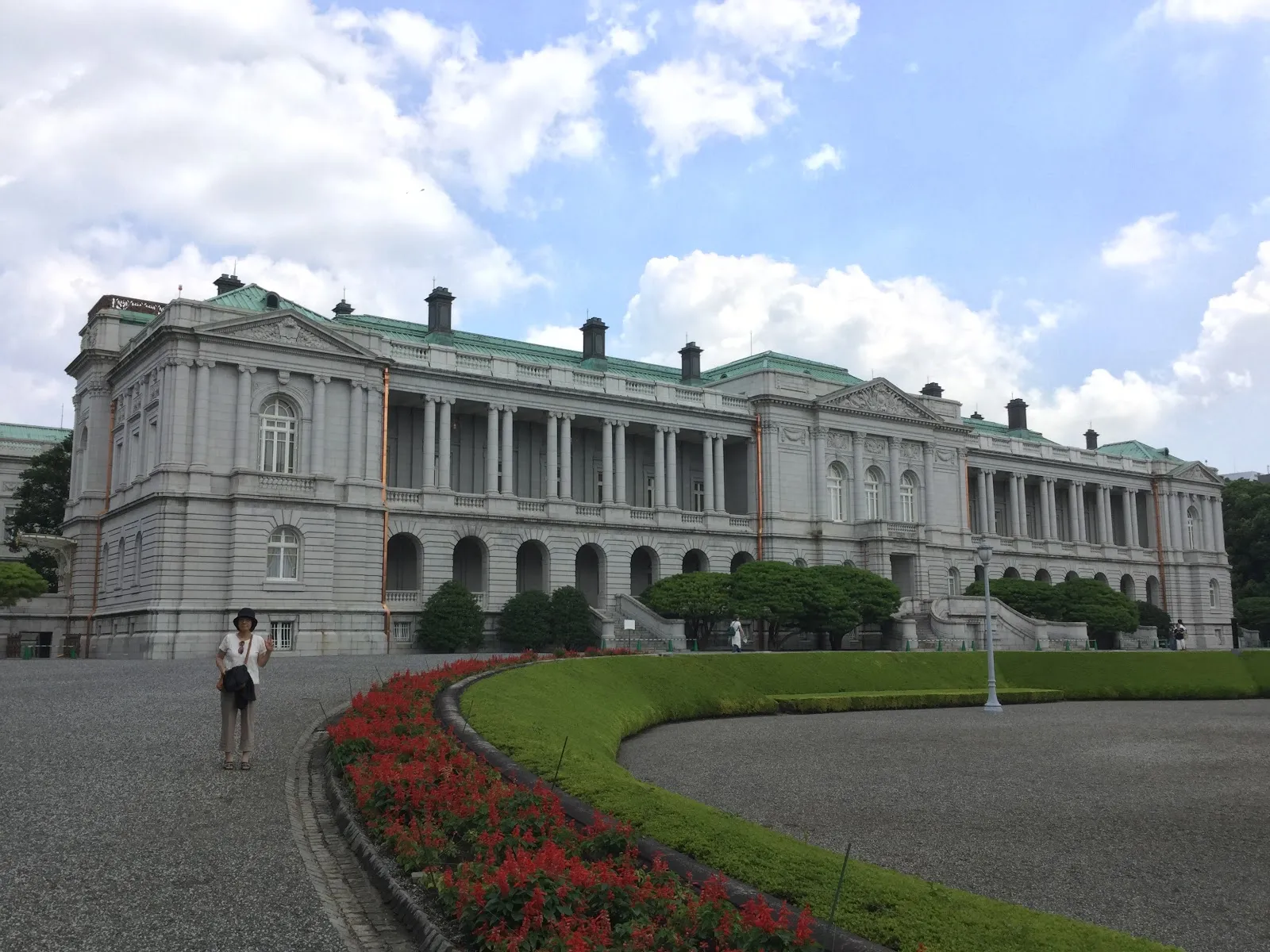
Completed in 1909, Akasaka Palace was built as a residence for the Crown Prince on land formerly associated with the Kishu Tokugawa family. Its role later changed: it became a venue for diplomatic activities and now welcomes state guests and other dignitaries from overseas.
The building is a rare example of Western-style Neo-Baroque architecture in Japan. Its formal stone exterior recalls European palaces, while Japanese motifs appear among the architectural details. The design dates to a period when Japan was engaging more closely with the international community. The palace is a National Treasure, the first cultural property from the Meiji era to receive that designation.
The main building and its reception rooms
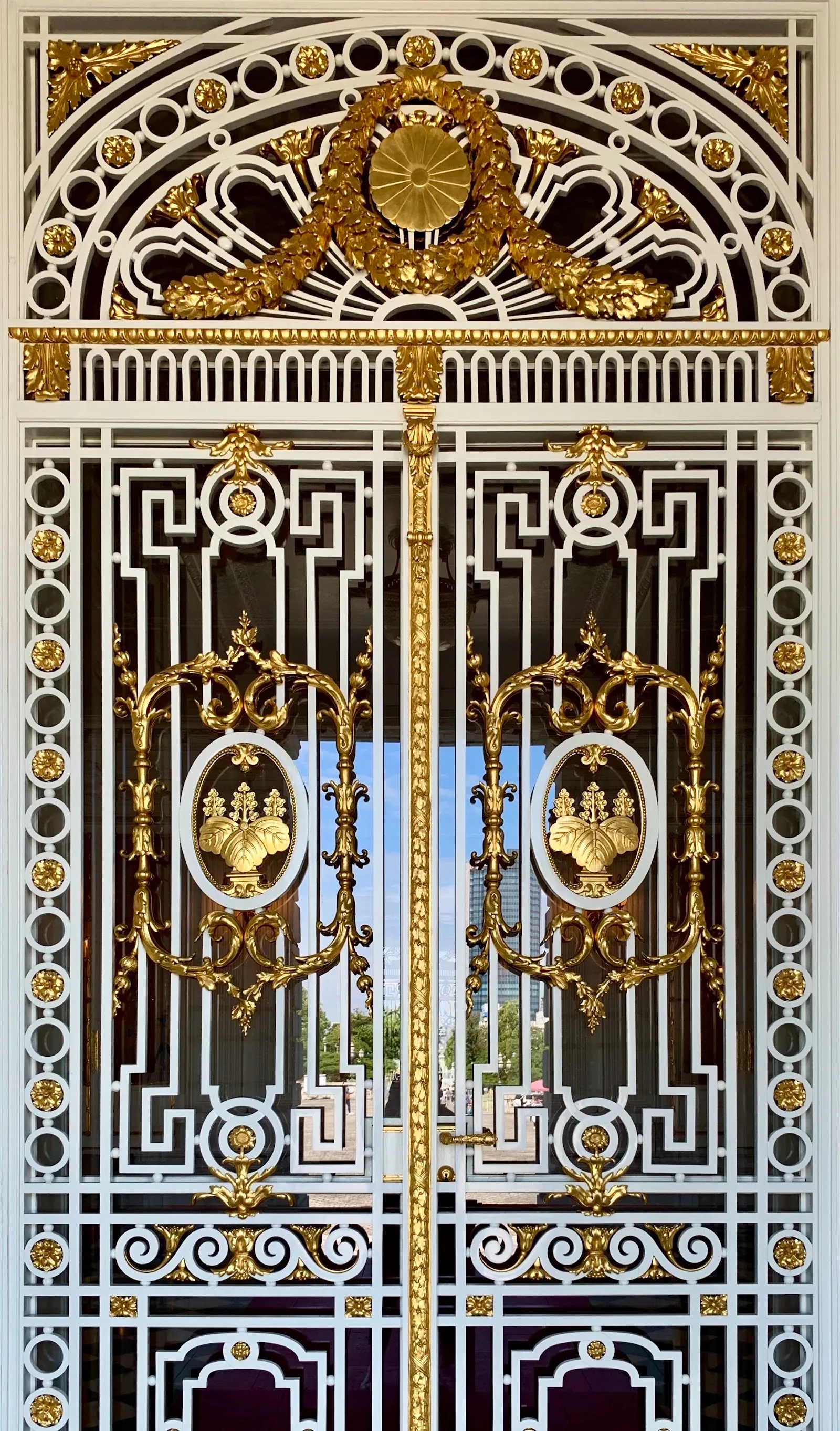
When public access to the main building is available, visitors can walk through its state rooms on a self-guided tour. The rooms have different themes, with high ceilings, carefully preserved interiors and decorative details in white and gold. Look closely at the artwork and the Japanese elements incorporated into the European-style setting.
Photography is not permitted inside, and visitors must not touch the furnishings. Diplomatic use and scheduled tours can affect access, so check the official schedule before travelling. Guided tours are available for some parts of the grounds, including the Japanese garden, but advance reservation is required for those tours.
The grounds and garden
The palace grounds offer space to walk among manicured greenery and formal landscaping. The fountains are a focal point, arranged with a symmetry that suits the building’s European design. The Japanese garden adds another setting to explore within the estate.
Although the palace is in central Tokyo, the grounds are described as quiet and suitable for a slower visit. The building can take on a golden appearance in the light near dusk. On hot days, bring a parasol and water; access rules mean you may need to drink before entering. Check current arrangements online, particularly if you plan to see the interior as well as the gardens.
Perguntas frequentes
Can you visit inside Akasaka Palace?
The main building is open to visitors at times, with self-guided tours of its state rooms. Diplomatic events and scheduled tours can affect access, so check the official website before you go.
Can you take photos inside Akasaka Palace?
No. Photography is not allowed inside the main building.
Do you need to book a visit to Akasaka Palace?
Advance booking is recommended to help secure access to the buildings and garden. Some guided tours require reservations.
How do you get to Akasaka Palace from Yotsuya Station?
The palace is about a 10-minute walk from Yotsuya subway station.