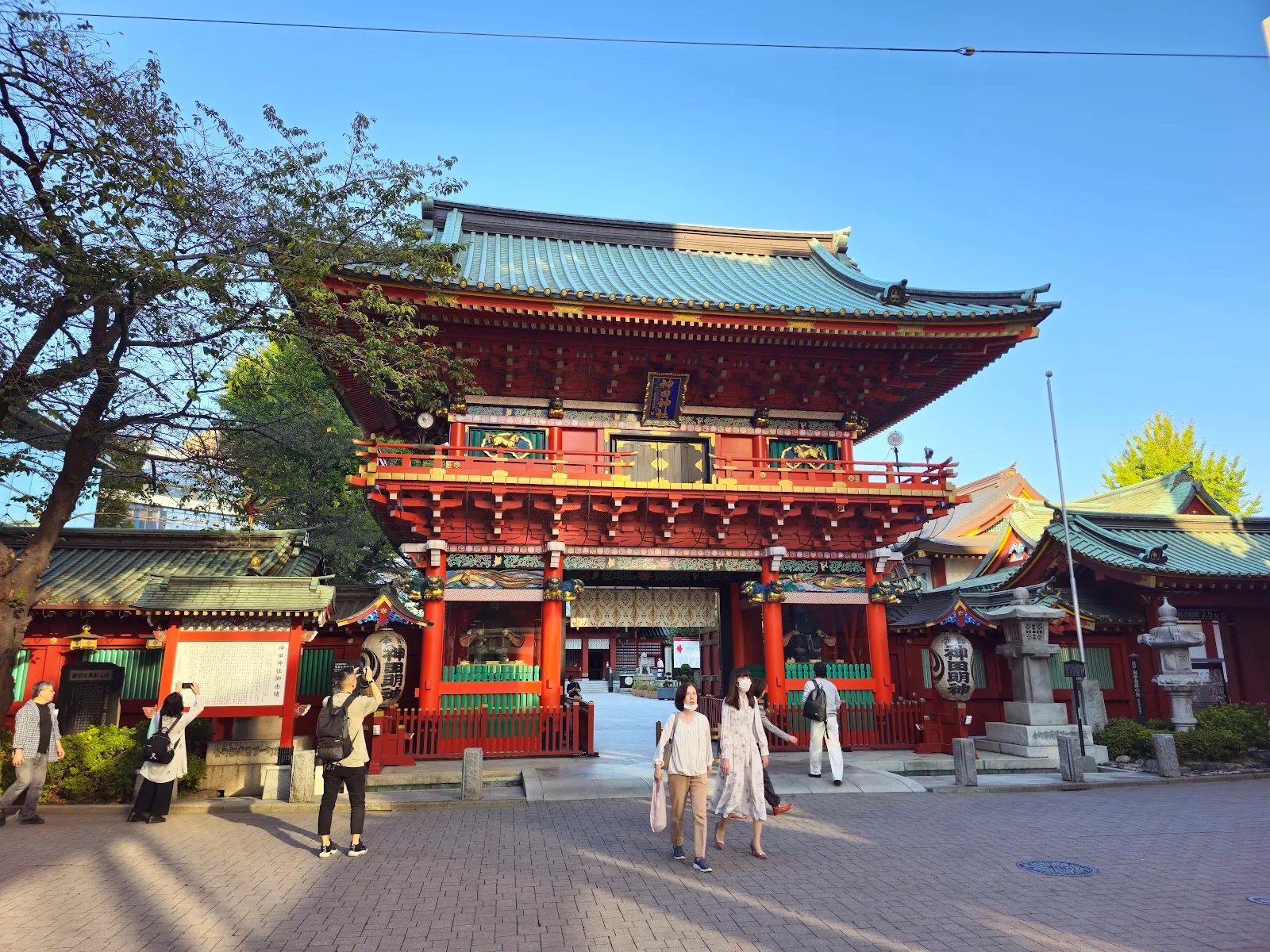
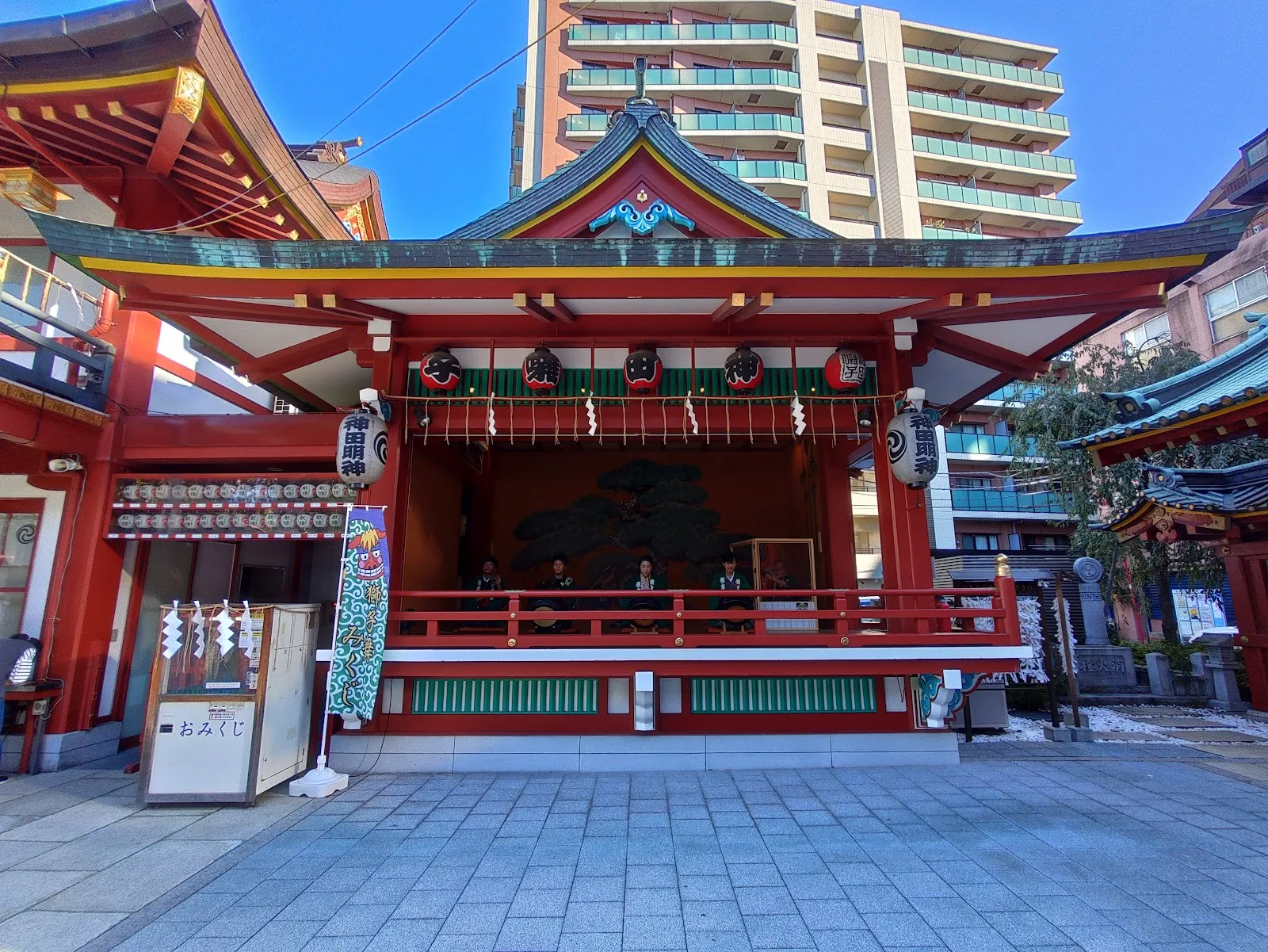
Kanda Myoujin is a Shinto shrine in Tokyo’s Chiyoda City, close to Akihabara. Founded in 730, it is linked to prayers for business success, good fortune and relationships. Its vermilion main building, decorated with paper lanterns and traditional carved details, gives the grounds a vivid character. Look for omamori, including charms made to protect electronic devices, a modern touch that suits the shrine’s location near Akihabara. The shrine is also the starting point for Kanda Matsuri, held in May in odd-numbered years.
A shrine with roots in early Tokyo
Kanda Myoujin traces its origins to 730, when it was established in Shibasaki, an area now associated with Otemachi. The shrine moved to Kanda in 1616, when it took on a role as protector of Edo and the Tokugawa regime. Shogun Tokugawa Ieyasu is among the notable figures connected with its history.
The present main building dates to 1934. Its vermilion colour and rows of paper lanterns stand out among the shrine’s decorative details. The buildings reproduce an earlier architectural style in concrete; they were rebuilt after the Great Kanto Earthquake of 1923.
What people pray for
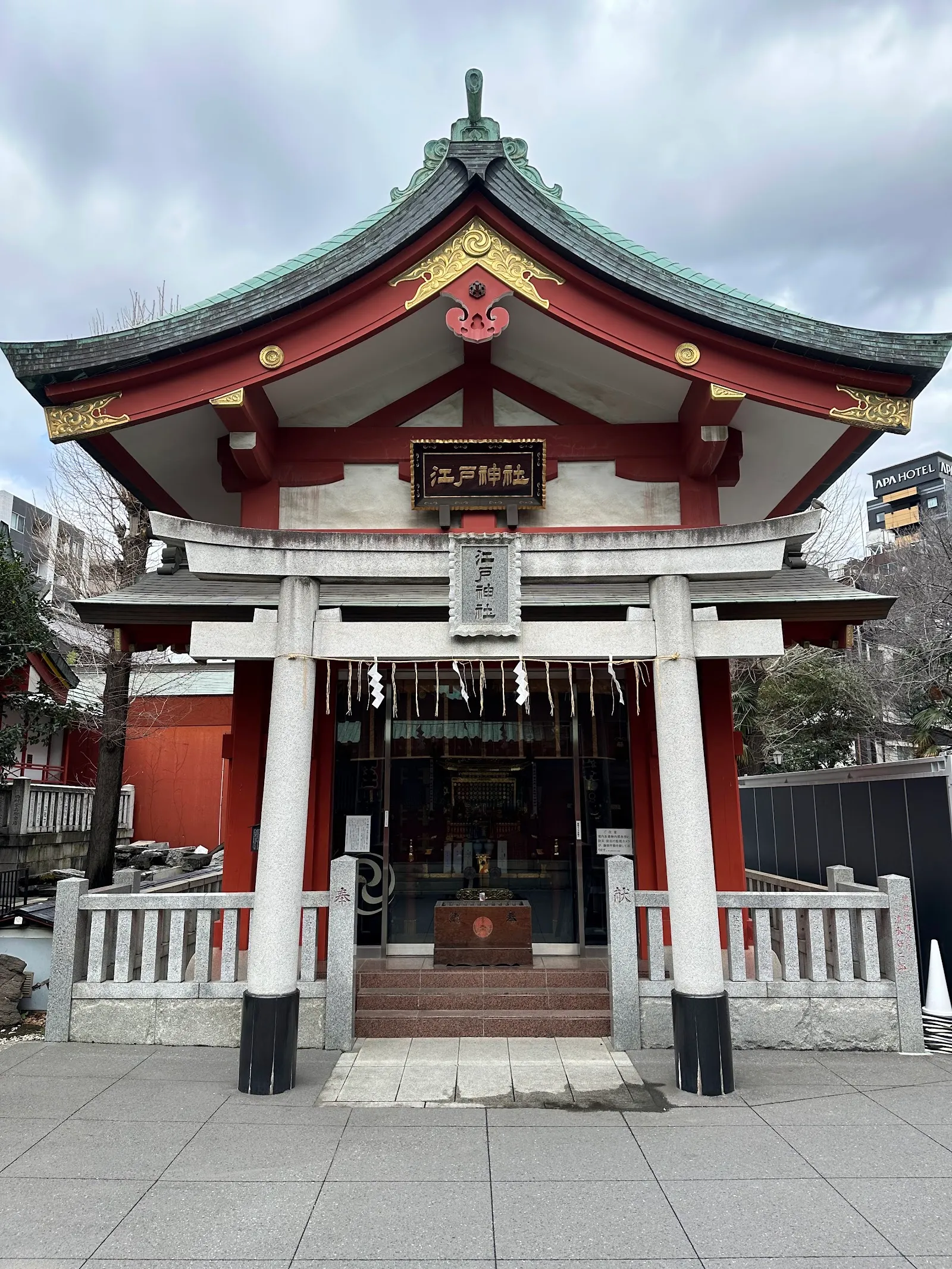
Three deities are enshrined here: Daikokuten, Ebisu and Taira no Masakado. Daikokuten is associated with good fortune, harvests and marriage, while Ebisu is connected with fisheries and business. People visit to pray for prosperity, business success, good luck and relationships. Masakado is also revered as a protector.
The shrine’s connection with Akihabara appears in its omamori. Alongside charms associated with good fortune, you can find ones intended to protect computers and smartphones. The shrine shop also sells blessed souvenirs.
Kanda Matsuri
Kanda Myoujin is the home of Kanda Matsuri, a major Tokyo festival held in May in odd-numbered years. The procession sets out from the shrine and passes through central districts including Nihonbashi and Otemachi. The parade links the shrine’s history with the streets and business areas it has long been associated with.
The festival draws large crowds. Access to the shrine and some streets along the route can be difficult during the event, so check local information for parade locations and movement around the area before you go.
A visit near Akihabara
The shrine offers a change of pace close to Akihabara’s busy streets. Allow time to walk around the grounds and notice the carved details on the buildings, as well as the lanterns around the main structure. The grounds are lit at night, offering a different setting for photographs.
Ochanomizu Station is about a five-minute walk away. A visit can also fit into a trip to Akihabara, especially if you are interested in the shrine’s technology-themed charms or its connections to local business and festival traditions.
Perguntas frequentes
What is Kanda Myoujin Shrine known for?
It is known for its long history, prayers for prosperity and business success, technology-themed omamori, and Kanda Matsuri.
When is Kanda Matsuri held?
The festival takes place in May in odd-numbered years. Its parade travels from the shrine through central Tokyo districts including Nihonbashi and Otemachi.
What can you pray for at Kanda Myoujin?
People pray for prosperity, business success, good fortune and relationships. The three enshrined deities are Daikokuten, Ebisu and Taira no Masakado.
How do you get to Kanda Myoujin Shrine?
The shrine is about a five-minute walk from Ochanomizu Station.