Peace Park is a memorial park in Nagasaki, created in 1955 near the hypocenter of the atomic bomb dropped on 9 August 1945. Its centerpiece is the Peace Statue, nearly ten meters tall, by sculptor Seibo Kitamura: one hand points to the threat of nuclear weapons, the other to eternal peace. Around it are the Fountain of Peace, sculptures donated by many countries, and quiet paths lined with greenery. Entry is free, and the Atomic Bomb Museum sits next door.
Why the park was built
On 9 August 1945, at 11:02 in the morning, an atomic bomb was dropped on Nagasaki. Peace Park was created in 1955 near the hypocenter, the point beneath the explosion, to put forward hopes for world peace so that the tragedy of war is never repeated. Nagasaki was the second city to be hit by an atomic bomb during World War II.
The park covers about 18.6 hectares and is divided into five zones: the Zone of Hopes, the Zone of Prayers, the Zone of Learning, the Sports Zone and the Plaza Zone. Each zone has its own purpose, from facing what happened to declaring the value of peace.
The Peace Statue
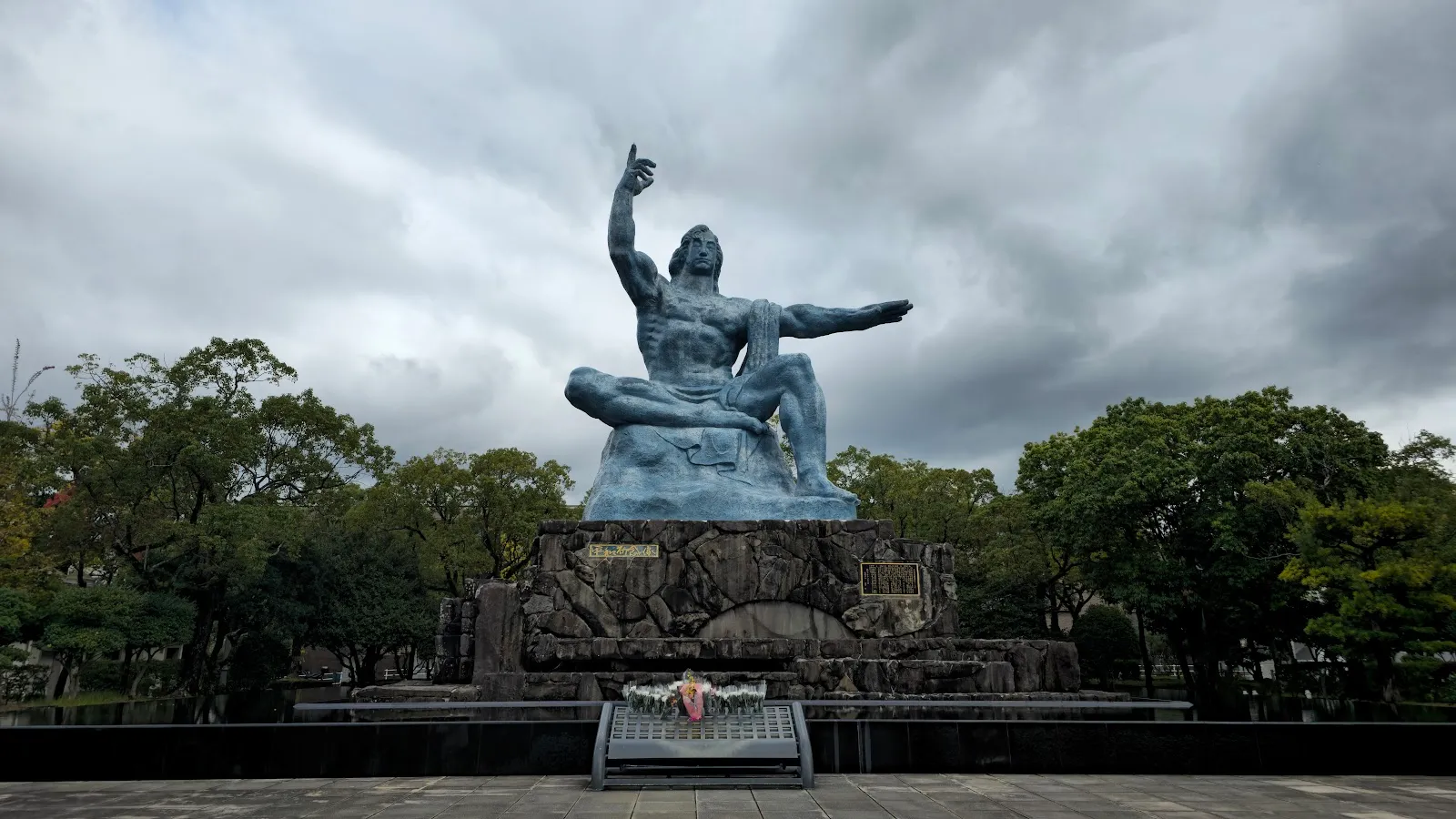
The Peace Statue is the park's main monument. It is nearly ten meters tall and cast in bronze, the work of Nagasaki sculptor Seibo Kitamura, who designed it in 1955. The right hand is raised toward the sky, pointing to the threat of nuclear weapons. The left hand is held out flat, representing eternal peace. The eyes are closed in prayer for the victims.
A plaque near the statue carries the sculptor's own words about the work.
The Fountain of Peace and the donated works
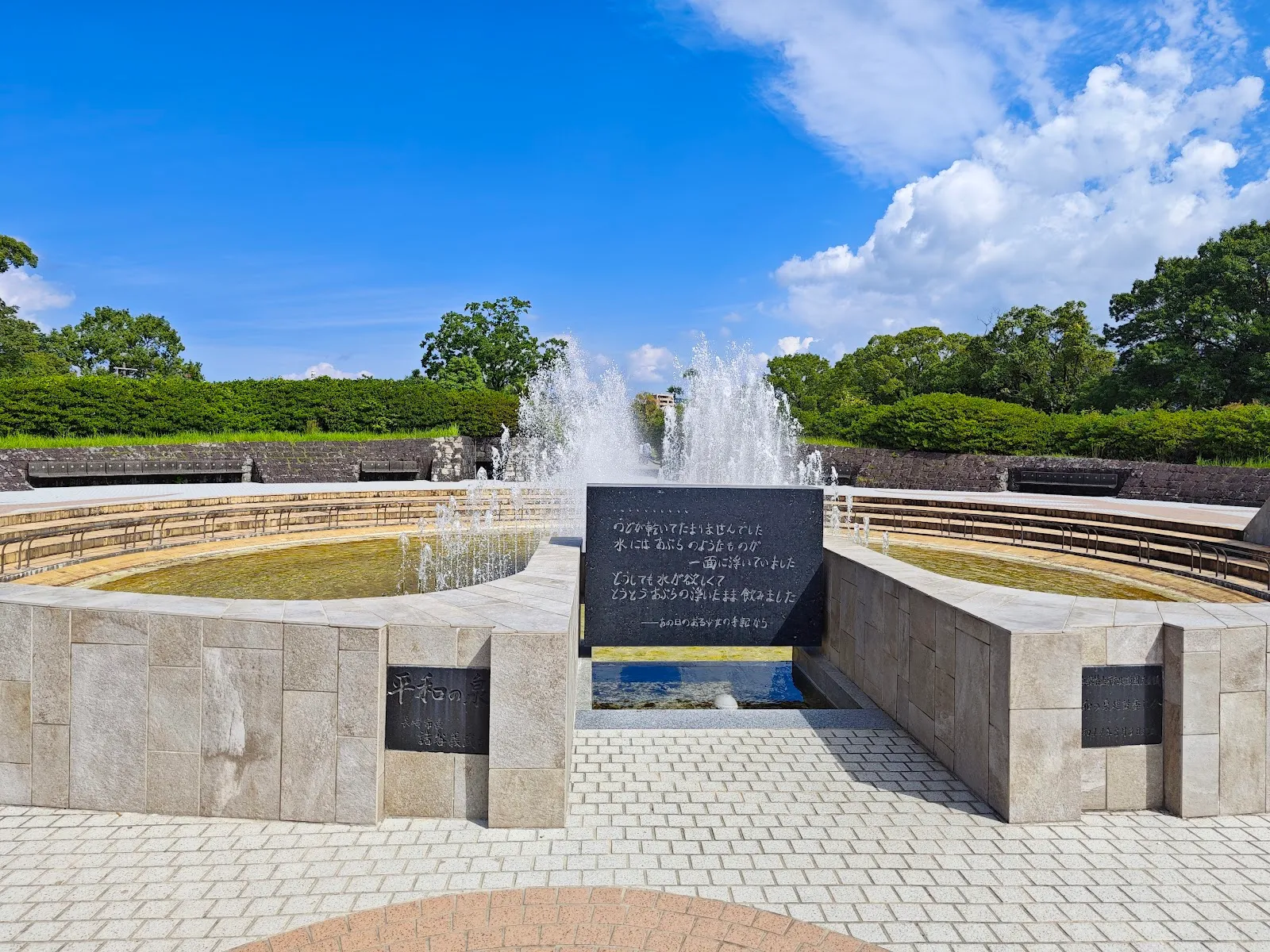
The Fountain of Peace sits closer to the Urakami River. Its shape recalls the wings of doves and cranes, and it was built in 1969. It honors the victims who died searching for water after the bomb fell. Visitors leave containers of water, including plastic bottles, near the statues as offerings.
Memorials and sculptures given by countries and sister cities are placed throughout the park. The Peace Symbol Zone gathers works on the theme of peace from around the world. Monuments also remember Korean and Chinese victims of the bombing.
Walking the grounds
The park sits on higher ground, so a set of escalators runs up from the street. Paths wind between green lawns, flowering trees and the river. Benches are few, so plan rest stops. In spring, the grounds have colorful flowers and cherry blossoms.
The usual route starts at the Atomic Bomb Museum and passes the monument that marks the center point of the bombing before reaching the park. The two sites are a short walk apart.
Nearby sites and 9 August
The Atomic Bomb Museum is next to the park. It opened in 1996, and it is somewhat smaller than the museum in Hiroshima. The Nagasaki National Peace Memorial Hall is also nearby. A wall of the former Urakami Cathedral, damaged in the bombing, can still be seen.
Each year on 9 August, a peace memorial ceremony is held in front of the Peace Statue. An antinuclear protest is held close enough to the official ceremony to be heard. If you plan to visit that day, expect both.
Getting there
From Nagasaki Station, take a tram to the Matsuyamamachi stop, about 10 minutes away. The Heiwa Koen stop and Peace Park Station are both served by tram lines 1 and 3. A one-day tram pass covers all the rides you need for the day, and you can buy it at the tourist office before you set out.
The entrance and seating are wheelchair accessible, and there is accessible parking.
Perguntas frequentes
Is there an entry fee?
No. Peace Park is free to enter and is open 24 hours a day.
How do I get to Peace Park from Nagasaki Station?
Take a tram to the Matsuyamamachi stop, about 10 minutes away. Tram lines 1 and 3 also serve Peace Park Station.
Is the park wheelchair accessible?
The entrance, seating and parking are wheelchair accessible. A lift is available, but check that it is running before you go, and use the escalator from street level if it is not.
Where is the hypocenter in relation to the park?
The hypocenter is not inside Peace Park. It is a short walk away, across a small side street near the entrance, and is marked by Hypocenter Park.