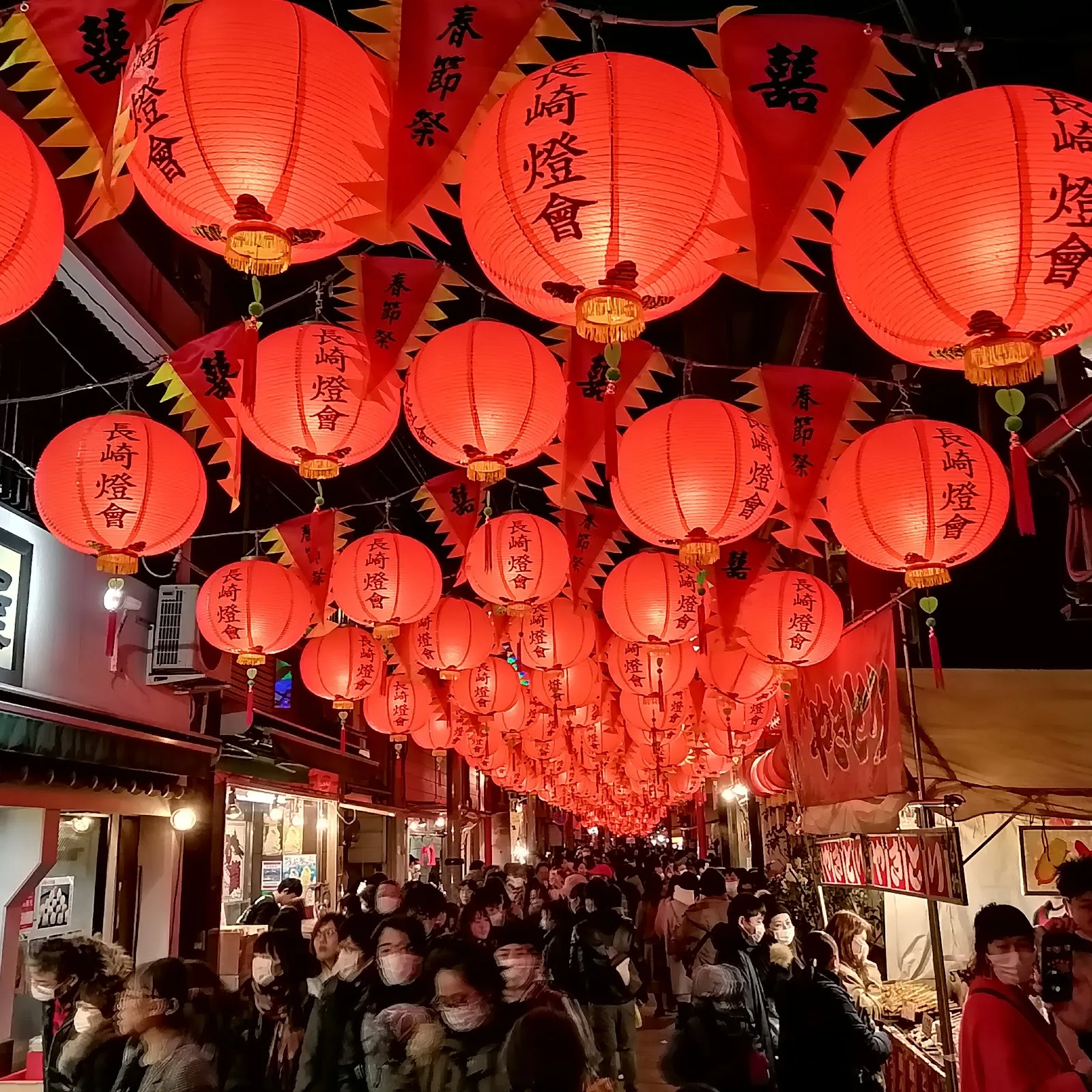
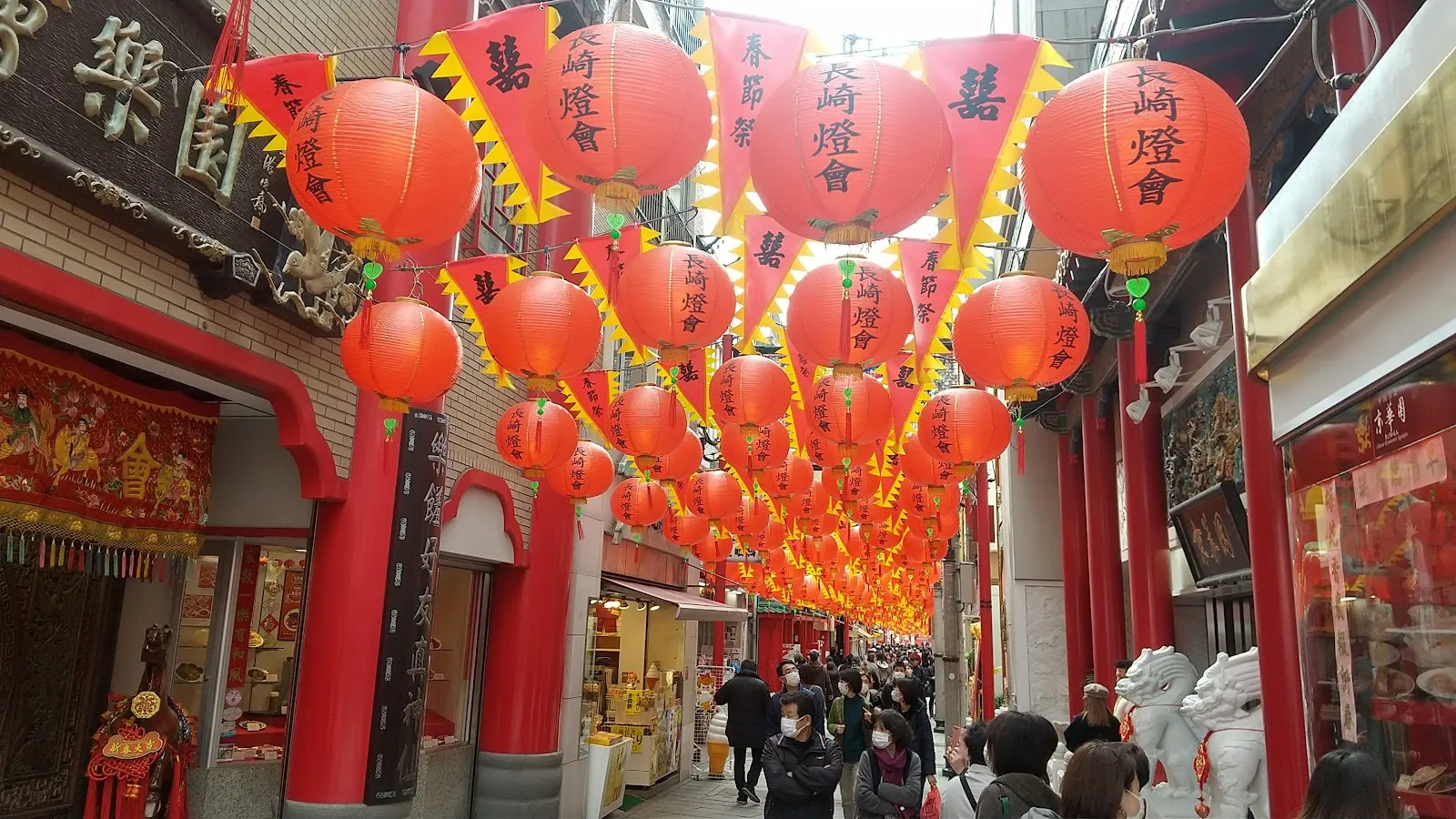
Nagasaki Shinchi Chinatown is Japan's oldest Chinatown and one of its three largest, alongside Yokohama and Kobe. Four red gates mark the entrances, and a crossroads about 250 meters long holds around 40 shops and restaurants. Browse the lantern-lit streets for Chinese snacks, fresh fruit, souvenirs and glassware, then sit down for champon, a noodle dish with pork, seafood and plenty of vegetables. The lights come on in the evening, which is the best time to walk the streets. The Lantern Festival at Chinese New Year fills the district with lanterns.
Getting there and what is nearby
The Chinatown address is 10-13 Shinchimachi, Nagasaki. The streetcar stop Tsukimachi is a few minutes' walk north of the entrance, and a tram ride from there reaches the Oura Tenshudo area in about five minutes.
Megane Bridge, a 17th-century stone bridge, is a few blocks north-east of the district. Furukawamachi, behind the bridge, has small boutiques, bakeries, cafes and wagashi shops, so the two areas make a good pairing on one afternoon. The Nagasaki Peace Park lies further north, in the Urakami district.
The district is compact, so it is easy to walk the main streets on foot. Wheelchair users can use the wheelchair accessible parking lot.
Why the district exists
The area grew out of trade in the Edo period. Chinese ships brought goods to Nagasaki, and the land reclaimed from the sea was used for warehouses that stored those goods. The site of those warehouses, called Shinchikurasho, is marked by a monument in the middle of Chinatown.
While Japan was largely closed to outsiders, Chinese traders and sailors were allowed to do business here. They were required to remain within the district and were not allowed to leave it in the evening. Over time the area became the place to come for Chinese food and goods, and that role continues today.
The stone paving of the crossroads was laid with help from Fujian, a sister region of Nagasaki. Many of the Chinese families in the district trace their roots to Fuzhou.
Gates, temples and the street
Four large red gates stand at the cardinal points of the district, and each is guarded by an animal figure. Passing through the gates, the street feels like a small piece of southern China, with lanterns strung overhead and signboards in Chinese characters.
The Guandi Temple is built in the Fujian style, and stone lions stand at its entrance. Along the same streets, the upturned eaves of temple roofs sit beside Western-style buildings, which reflects the mix of cultures that shaped Nagasaki.
The temples are places of worship. Dress modestly, keep your voice low inside, and treat the people praying with respect. The Nagasaki Koshibyo Confucius Shrine, close by, hosts cultural performances during the Lantern Festival.
Shopping for souvenirs
The stalls and shops sell Chinese clothing, packaged foods, decorative objects and tourist trinkets. Fresh fruit is sold from carts, and several shops sell Chinese crafts and ornaments.
The glassware shops are worth a look. Some display detailed art pieces, and visitors have found good prices for small gifts. Haggling is not part of the usual pattern, so judge the price against what you would pay at home before you buy.
Because the shops are close together, it is easy to browse several before choosing. Compare a few before you buy the same item twice.
Food and how to order
Champon is the dish to order. It is a noodle soup with pork, seafood and a large amount of vegetables, cooked together in a savory broth. The flavor is different from ramen, so it is worth trying even if you know Japanese noodles well.
Sara udon is a related dish, with noodles fried until crisp and topped with the same kind of seafood and vegetables. Kakuni manju, a steamed bun filled with braised pork, is a common snack from the street stalls.
The restaurants serve Chinese dishes beyond the local specialties too, including steamed buns, dumplings and Chinese sweets. Portions can be modest at some stalls, so order a few items to share if you want to try more than one dish.
The Lantern Festival
The Lantern Festival is held here at Chinese New Year and runs for about 15 days. It follows the lunar calendar, so it falls around late January to mid-February in the modern calendar, and the dates change from year to year. Check the schedule before you travel.
The district is covered in lanterns, and around 15,000 lanterns and lights are reported to light the streets during the festival. Dragon dances and illuminated decorations fill the crossroads, and many of the people in the crowds are local families who have attended for years.
The festival is the most lively time to visit. If you can only come once, plan the trip around these dates.
Perguntas frequentes
Is there an entry fee?
Walking through the streets is free, and the area is free to visit. Getting tickets in advance is recommended for some events.
What is the best time to visit?
Go in the evening, when the lights come on. The Lantern Festival at Chinese New Year is the other high point of the year.
How do I get there?
Take the streetcar to Tsukimachi Station, then walk a few minutes south. The address is 10-13 Shinchimachi, Nagasaki.
Is it open every day?
The listed hours cover all seven days of the week, but individual shops and restaurants may close early or keep their own hours.
Is it wheelchair accessible?
There is a wheelchair accessible parking lot. Check the official website for further details about the streets.