
At the foot of Kyoto’s Higashiyama mountains, Nanzen-ji is a large Zen temple complex established in 1291 by Emperor Kameyama. Its grounds bring together the towering Sanmon gate, gardens and a striking red-brick aqueduct from the Meiji era. The central precinct is free to enter; separate fees apply to some buildings and subtemples. Walk among the trees and stone paths, then visit the Hojo garden or climb to the Sanmon’s upper level for views over Kyoto. Spring blossoms and autumn maples add seasonal color.
A temple founded on an imperial retreat
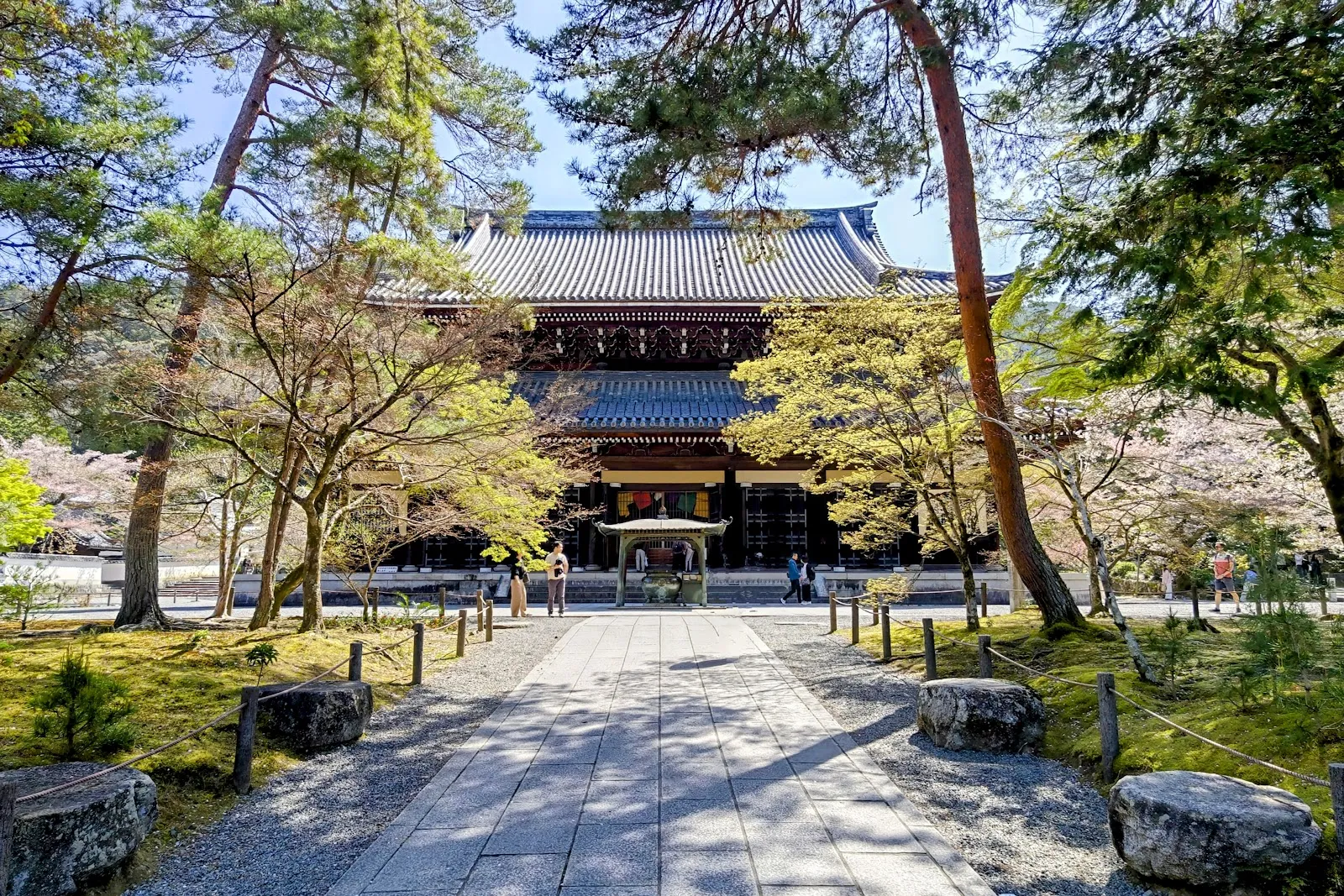
Nanzen-ji began in 1291, when Emperor Kameyama established a Zen temple on the site of his former retirement villa. It became one of Kyoto’s major temples and is associated with the Rinzai school of Zen Buddhism. The complex includes several subtemples as well as the main precinct, so the name refers to a broad collection of buildings and gardens rather than a single hall.
The grounds lie at the base of the Higashiyama mountains, on Kyoto’s eastern edge. Paths pass through trees and landscaped spaces, with historic structures appearing among the greenery. The main precinct is open without an admission charge, while some buildings and subtemples require separate tickets.
The Sanmon gate and its upper level
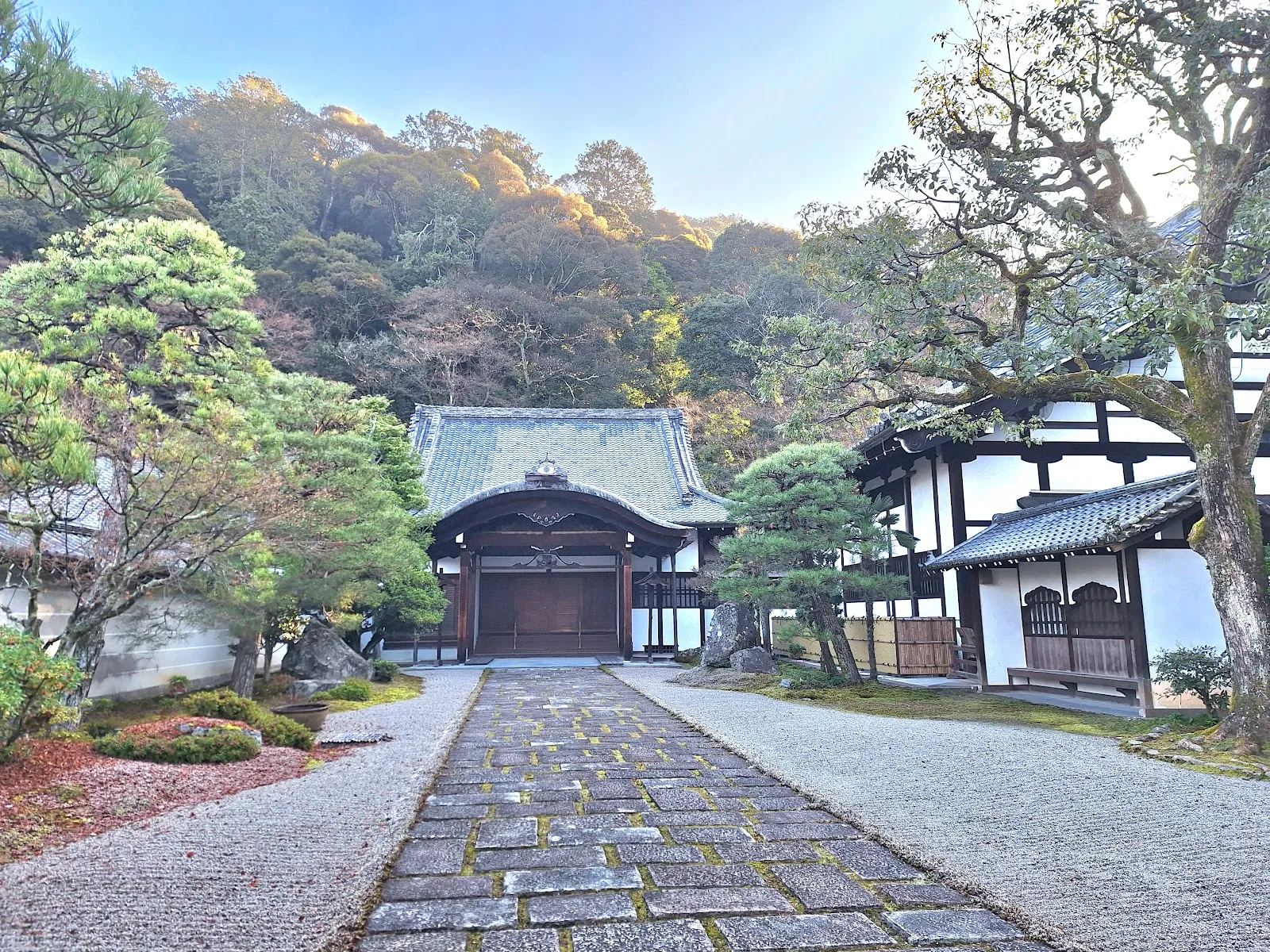
The large Sanmon gate stands at the entrance to the temple grounds. Built in 1628, it is one of Nanzen-ji’s most prominent structures. Visitors can climb the stairs to its upper level for a view across Kyoto and the surrounding mountains. The climb is steep, so take care on the steps.
The gate is also a useful landmark as you make your way through the complex. Beyond it, the paths lead toward temple halls, gardens and the aqueduct. If you plan to enter buildings, be ready to remove your shoes and follow the instructions on site.
The Hojo and its garden
The Hojo is the former residence of the temple’s head priest. Its main hall was once part of the Kyoto Imperial Palace and was rebuilt at Nanzen-ji in 1611. Inside, painted sliding doors depict tigers among bamboo. The adjoining rock garden is traditionally known as the Leaping Tiger Garden; its rocks are said to suggest tigers crossing water.
The Hojo garden is one of several distinct garden spaces within the complex. Others include the Ryugin Garden, and the wider grounds also contain ponds, streams, trees and paths. Access to particular buildings or gardens may require a separate admission ticket.
The Suirokaku aqueduct
A red-brick aqueduct runs through the temple grounds, creating an unusual contrast with the wooden temple buildings and gardens. It is part of the Lake Biwa Canal system and was completed in 1888. The canal carried water from Lake Biwa toward Kyoto, and the arched structure remains a distinctive stop within the precinct.
Walk alongside the brick arches and look at how the aqueduct passes through the landscape. The structure is especially striking among the changing maple leaves in autumn, but it is a notable feature of the grounds throughout the year.
Planning a visit
Nanzen-ji is close to the southern end of the Philosopher’s Path, so the two can be combined on foot. The temple grounds are spacious, and their paths include slopes and stairs. A city bus is one option for reaching the area; account for the hilly terrain when planning your route.
Early morning and weekdays are useful choices if you would like a quieter visit. Spring brings cherry blossoms, while autumn is known for red and gold foliage. The temple’s official website is nanzenji.or.jp; check it for current visitor information before you go.
Perguntas frequentes
Is Nanzen-ji free to enter?
The central temple grounds are free to enter. Some buildings, gardens and subtemples charge separate admission.
What should I see at Nanzen-ji?
Look for the Sanmon gate, the Suirokaku brick aqueduct and the gardens, including the Hojo rock garden. You can also climb to the Sanmon’s upper level for views over Kyoto.
How do I get to Nanzen-ji?
A city bus is one way to reach the temple. The grounds have slopes and stairs, so plan for hilly walking.
When is a good time to visit Nanzen-ji?
Early morning or a weekday can be quieter. Spring brings cherry blossoms, and autumn brings colorful maple leaves.


