Ponte Pietra is Verona’s oldest bridge, crossing the Adige River between the historic centre and the Roman Theatre side of the city. Its arches bring together Roman stonework and later brick repairs, and the riverbanks frame views of Verona’s old buildings and hills. Walk across to look at the bridge from both sides, then continue towards the Roman Theatre or the route up to Castel San Pietro. Sunset brings warm light to the river and rooftops, but the bridge is an easy stop at any time.
A bridge between the city and the Roman Theatre
Ponte Pietra crosses the Adige at the northern edge of Verona’s historic centre. The bridge links the older city with the eastern bank, where the Roman Theatre stands. Its position made the crossing part of the route between the settlement and the hillside beyond the river.
The bridge’s name means Stone Bridge. A wooden crossing stood here before the Roman structure, and the stone bridge dates to Roman times. Accounts place its construction around the first century BC, though dates in the historical material vary. It is widely identified as Verona’s oldest bridge.
Roman stone and later repairs
The bridge’s different materials show how it changed over time. Two pale stone arches are identified as Roman, while brickwork and other sections belong to later rebuilding. The bridge has been damaged by floods and reconstructed more than once, leaving a structure that combines several periods rather than a single uniform design.
The most recent major destruction came during the Second World War, when retreating German troops blew up the bridge. Verona rebuilt it using stones recovered from the river, preserving original material where possible. The rebuilt span reopened in the 1950s. From close up, the contrast between the lighter stone and the brick sections makes those repairs visible.
Continuing uphill from the bridge
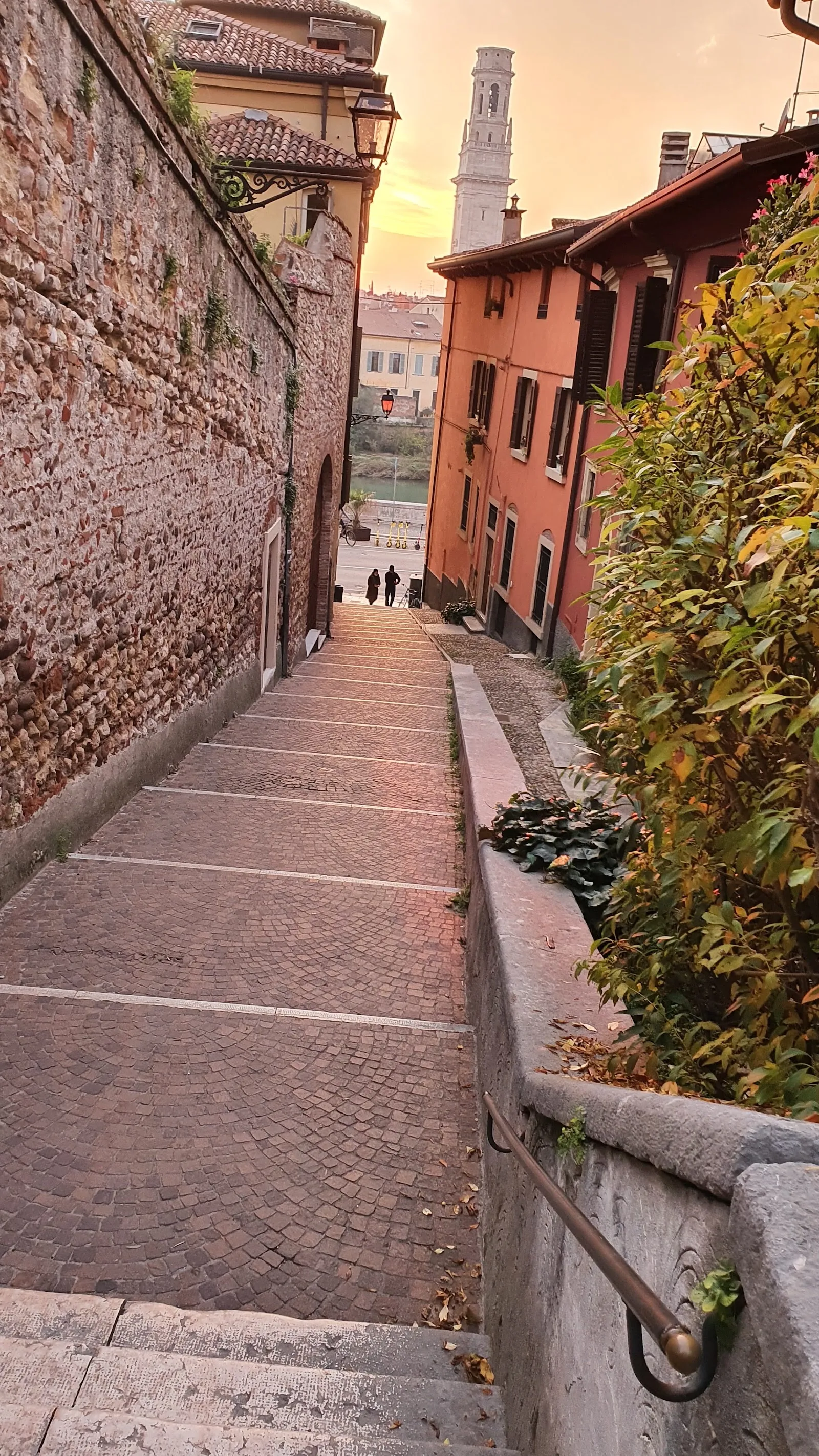
After crossing to the eastern bank, you can visit the Roman Theatre or head uphill towards Castel San Pietro. A staircase begins beyond the bridge; a funicular provides another way to reach the hill. The ascent leads to views over the river and the city, so the bridge can form part of a longer walk rather than a standalone stop.
The bridge is also a useful place to pause before or after exploring the surrounding streets. Look back towards the old centre and along the Adige, where the river bends past buildings in warm shades. From the opposite bank, the bridge’s arches and changing masonry are easier to take in together.
Perguntas frequentes
Is Ponte Pietra Verona’s oldest bridge?
Yes. Ponte Pietra is considered the oldest bridge in Verona, with origins in Roman times.
Is there a fee to cross Ponte Pietra?
No fee is listed for crossing the bridge.
How long should I allow for Ponte Pietra?
Allow around 15 to 30 minutes to walk across and pause for the river views. Add time if you continue to the Roman Theatre or Castel San Pietro.
How do you get from Ponte Pietra to Castel San Pietro?
You can take the stairs uphill or use the funicular.