
Casa di Giulietta, or Juliet’s House, is a medieval building on Via Cappello in central Verona, associated with Shakespeare’s Romeo and Juliet. The story is fictional, but the house’s connection to the Dal Cappello family helped link it to Juliet’s name. From the courtyard, you can see the famous balcony and bronze statue; entry to the courtyard is free. The interior museum has exhibits connected with the play, including Renaissance-era costumes and a bed used in a film adaptation. Go early if you want a better chance of taking photos before the courtyard fills.
A medieval house linked to Shakespeare’s story
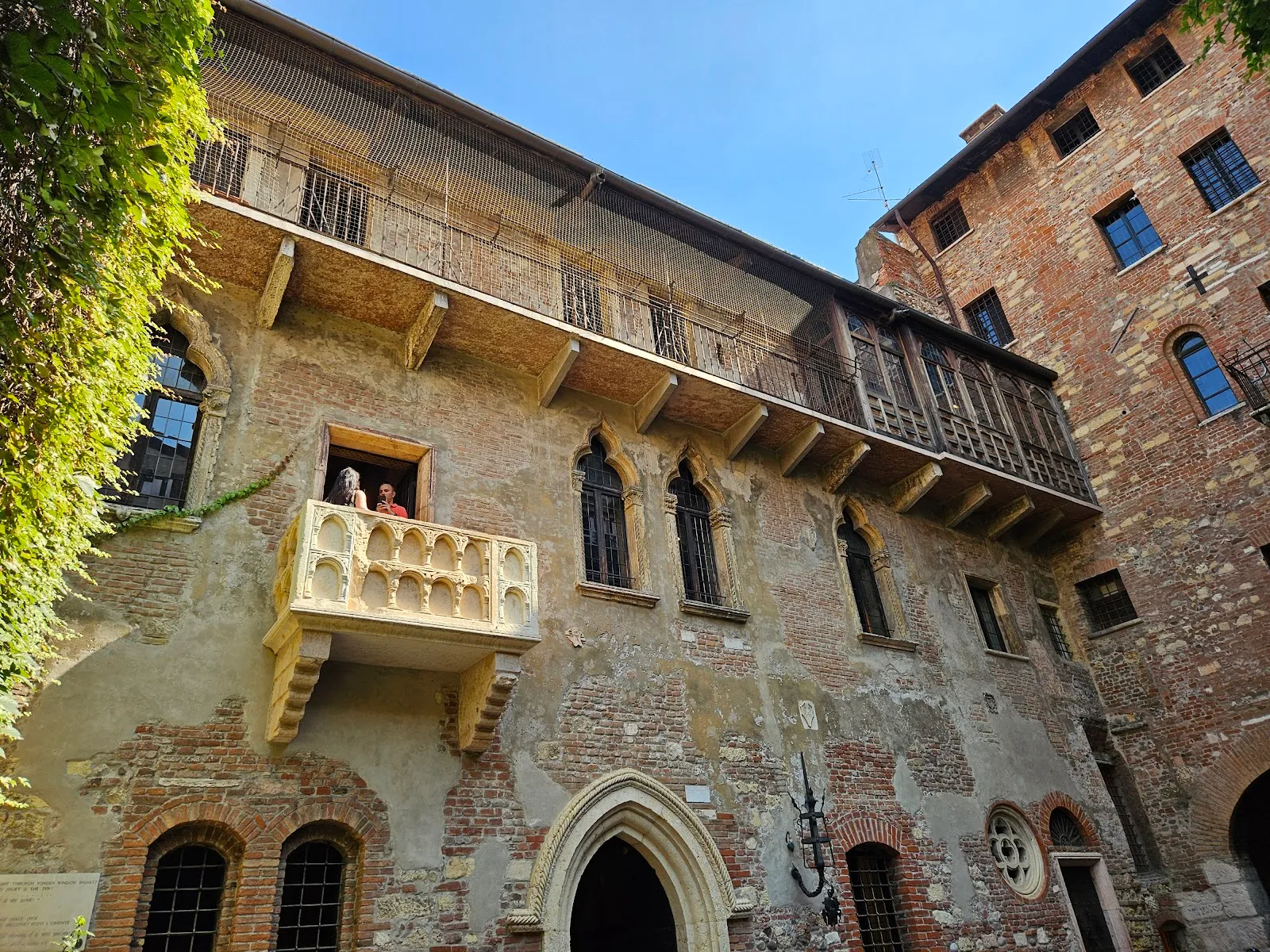
Casa di Giulietta is a 13th-century building on Via Cappello, close to Piazza delle Erbe. Its association with Juliet rests on a link between the Dal Cappello family, who once owned the house, and the name of Shakespeare’s Capulet family. The connection helped turn the building into a place identified with the play, but it does not establish that Juliet lived here.
Romeo and Juliet are fictional characters, and there is no evidence that Shakespeare visited Verona. The city’s association with the tragedy comes from the setting of the play and the names connected with local history. Casa di Giulietta is best understood as a landmark shaped by that literary connection, not as a verified home of Shakespeare’s heroine.
The balcony and courtyard
The balcony is the building’s most recognizable feature, but it was added during restoration work in the early 20th century. It was assembled using material from another medieval palace. Its appearance is closely tied to the balcony scene in the play, even though the structure is not an original part of the house from Juliet’s supposed lifetime.
The courtyard is free to enter and brings together the balcony, a bronze statue of Juliet and the entrance to the house. Love notes and messages have also been associated with the space. The statue is a popular photo stop, so queues can form around it. A superstition holds that touching Juliet’s right breast brings good luck; if you join in, be prepared to wait your turn.
Inside the house museum
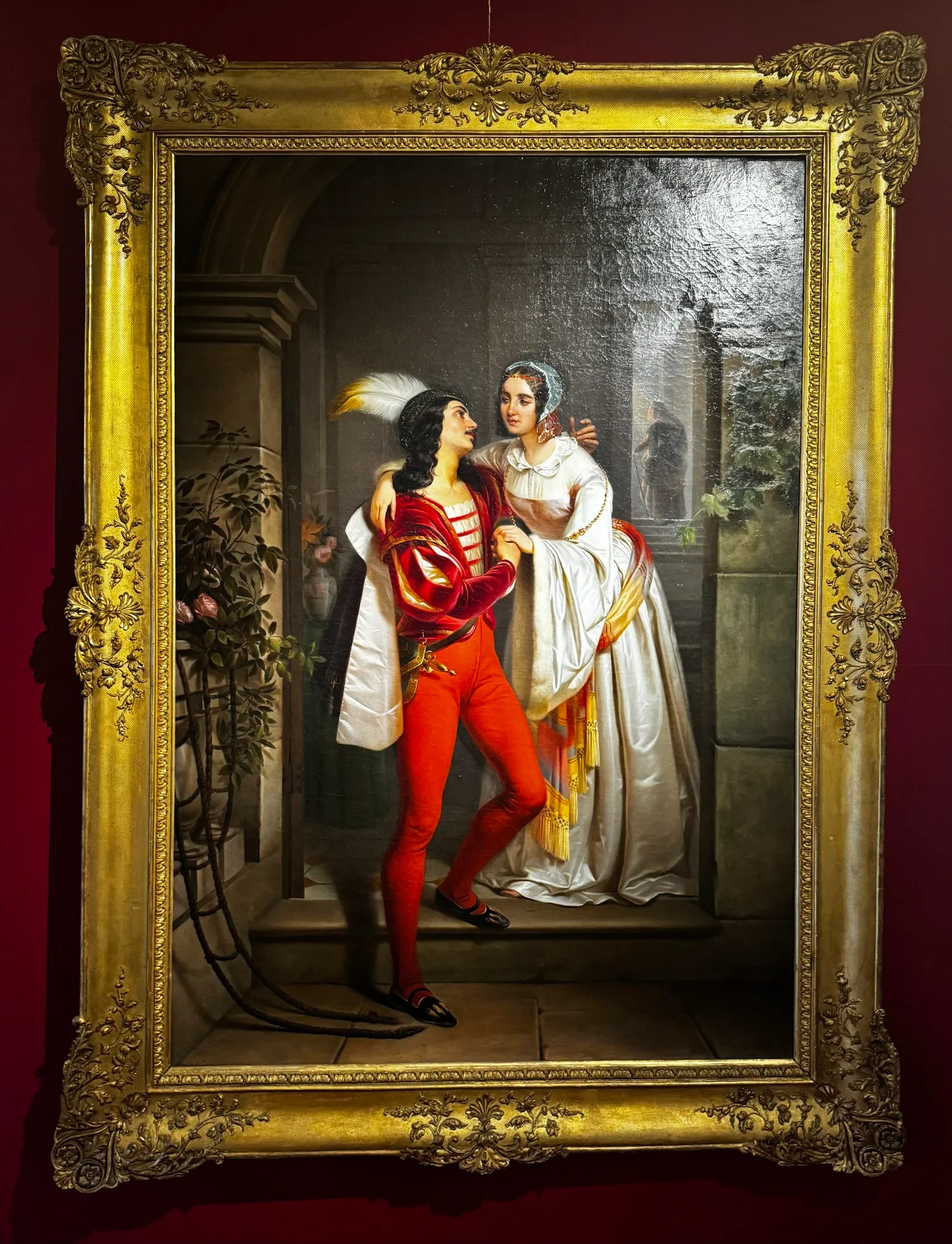
The museum gives the literary landmark an indoor visit beyond the courtyard view. Its exhibits include paintings and Renaissance-era costumes, along with the bed used in Franco Zeffirelli’s 1968 film adaptation of Romeo and Juliet. Other displays connect the building with the play and its screen versions.
Choose the museum if you want more context and exhibits related to the story. If you are mainly interested in seeing the balcony, the free courtyard provides that view without a museum ticket. The courtyard is compact and can get crowded, so an early visit is a practical choice for photography. Check current ticket details before you go, as the information available here does not establish a single admission price.
Perguntas frequentes
Is the courtyard at Casa di Giulietta free?
Yes. The courtyard, including views of the balcony and Juliet’s statue, is free to enter. The house museum requires a ticket.
Did Juliet live at Casa di Giulietta?
There is no evidence that Shakespeare’s fictional character Juliet lived here. The building’s connection to her story is associated with the former Dal Cappello family and its resemblance to the name Capulet.
How long should I spend at Casa di Giulietta?
Allow about 30 to 60 minutes for the courtyard and museum. Queues for photos can affect how long you stay.
When is a good time to visit Casa di Giulietta?
Go early in the day to avoid the busiest crowds and improve your chances of photographing the courtyard.


