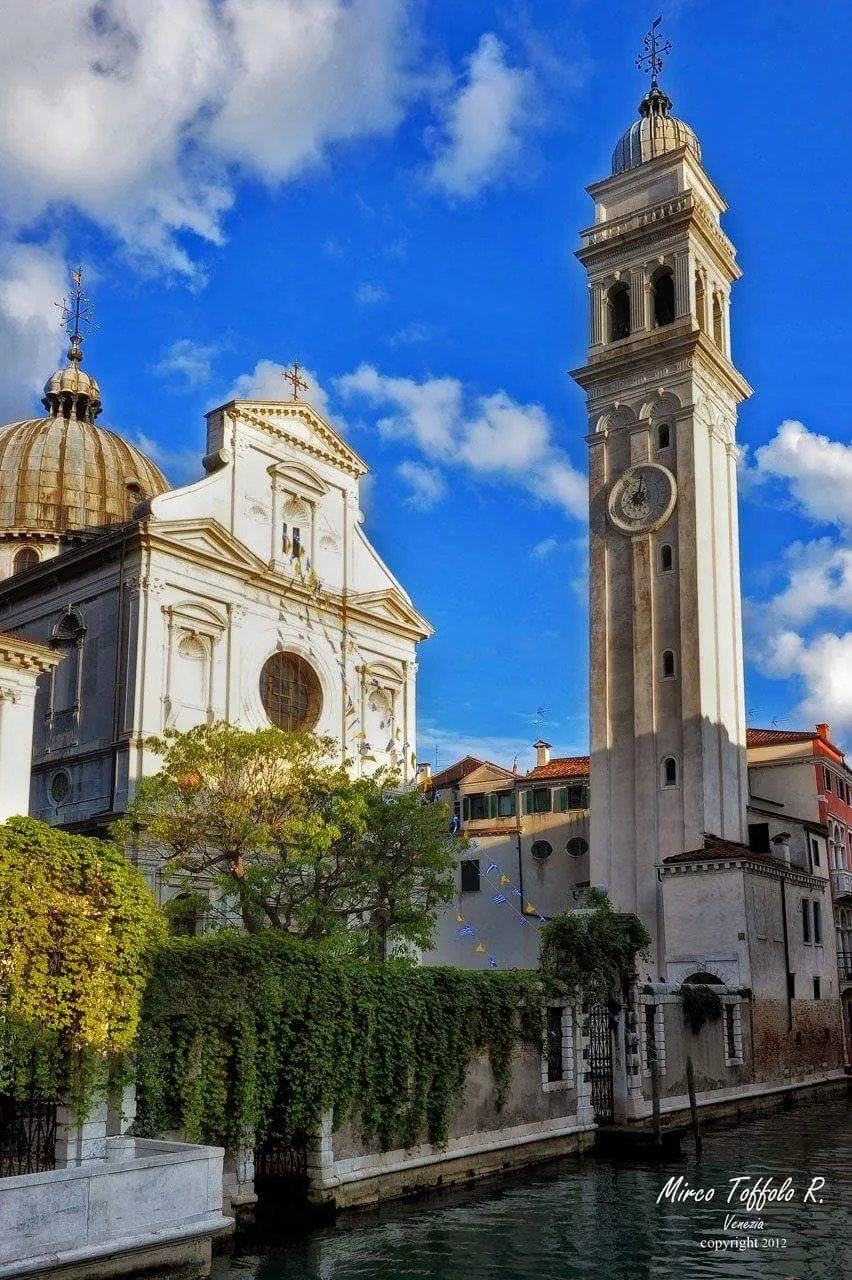
Chiesa di San Giorgio dei Greci is a Greek Orthodox church in Venice’s Castello district, on Calle dei Greci near the Rio dei Greci canal. Built by Venice’s Greek community in the 16th century, it retains an Orthodox interior with a women’s gallery and a gilded iconostasis bearing 46 icons. Look for Byzantine icons brought to Italy before 1453 and the church’s striking sacred art. A museum next door holds a collection of Orthodox Byzantine icons, adding more context to a visit.
A church built by Venice’s Greek community
Chiesa di San Giorgio dei Greci stands in Castello, near the Rio dei Greci and close to Chiesa di San Zaccaria. The church was built by Venice’s Greek community in the 16th century, when Greek Orthodox worship had long faced restrictions in the city. Permission to build was granted after negotiations with the papacy. Construction took place between 1536 and 1577, with funding raised through a tax on incoming Greek ships.
The church was connected with the Scuola dei Greci, the confraternity that supported members of Venice’s Greek community. The community included people who had come to Venice from Byzantine lands, including refugees after the Ottoman conquest of Constantinople in 1453. The church’s history is therefore closely tied to the place of Greek Orthodox life in Venice.
Inside the Orthodox interior
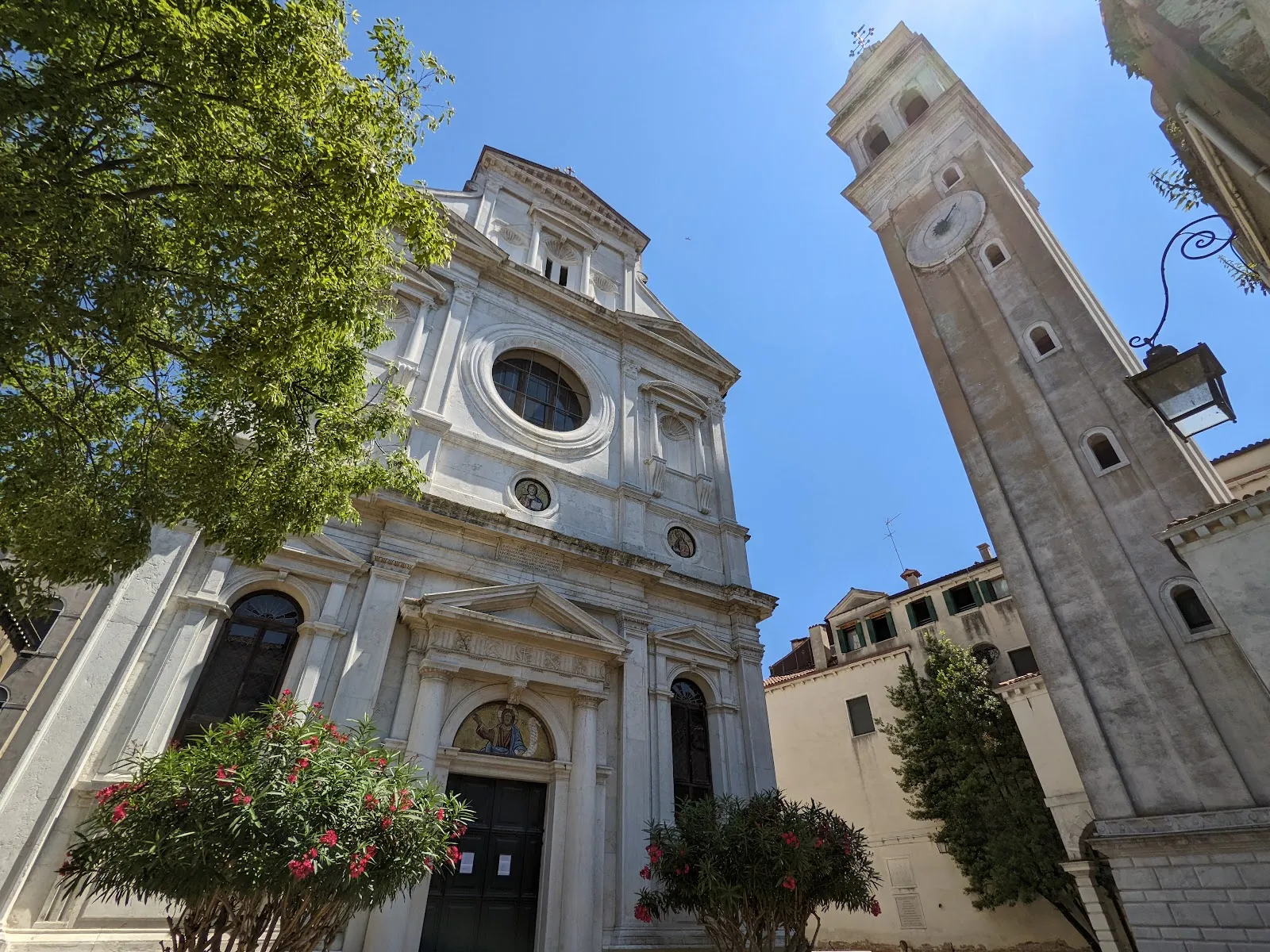
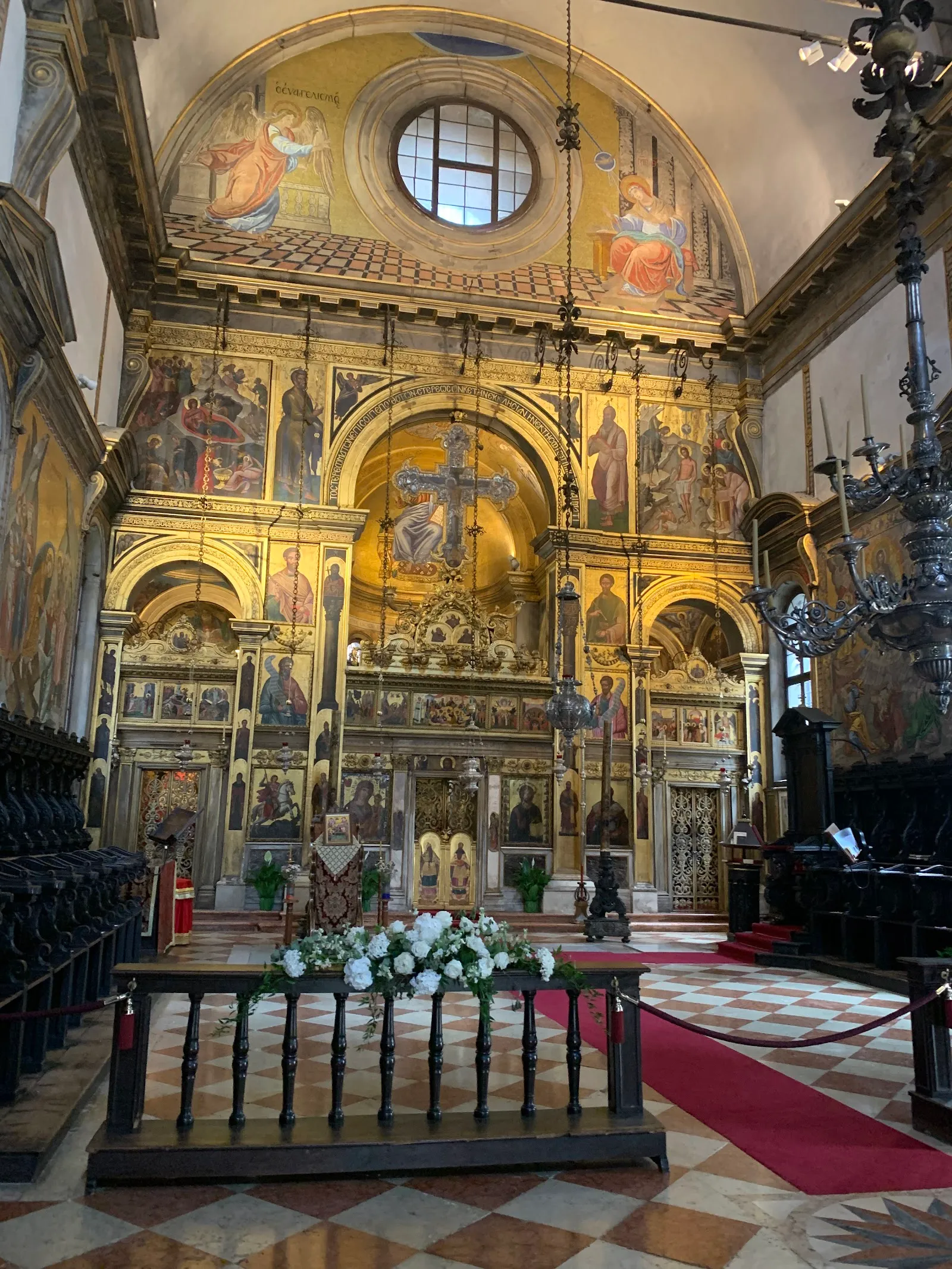
The exterior follows a Venetian style, while the interior is arranged in an Orthodox manner. The aisle-less nave is bordered by wooden stalls, and a matroneo, or women’s gallery, runs around the interior. The gilded iconostasis is the central visual focus. It carries 46 icons, many painted by artists working in the 16th century.
Look up to the dome, where Giovanni Kyprios painted a Last Judgement between 1589 and 1593 under Tintoretto’s direction. The church also contains a 1619 monument to Gabriele Seviros by Baldassarre Longhena. Other artists associated with work here include Markos Bathas, Thomas Bathas, Benedetto Emporios and Michael Damaskinos. Take time to notice individual works rather than viewing the interior only from the entrance.
Icons and worship
Some Byzantine icons in the church were brought to Italy before 1453. Their age and connection to the Byzantine world make them a particular point of interest alongside the later iconostasis and dome paintings.
The church remains an active place of worship. Services have been held in Greek, Italian and Russian, and liturgy can include chanting. If attending a service, treat the church as a religious space: follow the congregation’s lead and observe quietly. The church’s visiting hours differ on Sundays, so check the current schedule before planning a visit around worship.
The icon museum next door
A museum beside the church holds a collection of Orthodox Byzantine icons, including works more than 500 years old. Visiting both gives you more time with the art and its history than a church visit alone. Check whether the museum is open when you go, as access to the church and museum can differ.
Perguntas frequentes
Where is Chiesa di San Giorgio dei Greci?
It is on Calle dei Greci in Venice’s Castello district, near the Rio dei Greci and Chiesa di San Zaccaria.
What should I look for inside the church?
See the gilded iconostasis with 46 icons, the dome’s Last Judgement fresco and the matroneo, or women’s gallery.
Is there a museum beside the church?
Yes. The museum next door has a collection of Orthodox Byzantine icons, including works more than 500 years old.
Can you attend a Greek Orthodox service there?
Services are held at the church, and liturgies have been conducted in Greek, Italian and Russian. Check the schedule before you visit.