Porta Oscura and its Clock Tower stand in Trapani’s historic centre, beside Palazzo Senatorio and near the cathedral. The old city gate is topped by an astronomical clock dating to 1596, with two circular dials: one tracks zodiac signs, seasons, solstices and equinoxes, while the other shows the moon’s phases. Stop to look closely at the clock, then continue on foot through the old town or visit nearby landmarks. Cafes and eateries are close by.
A gate in Trapani’s old town
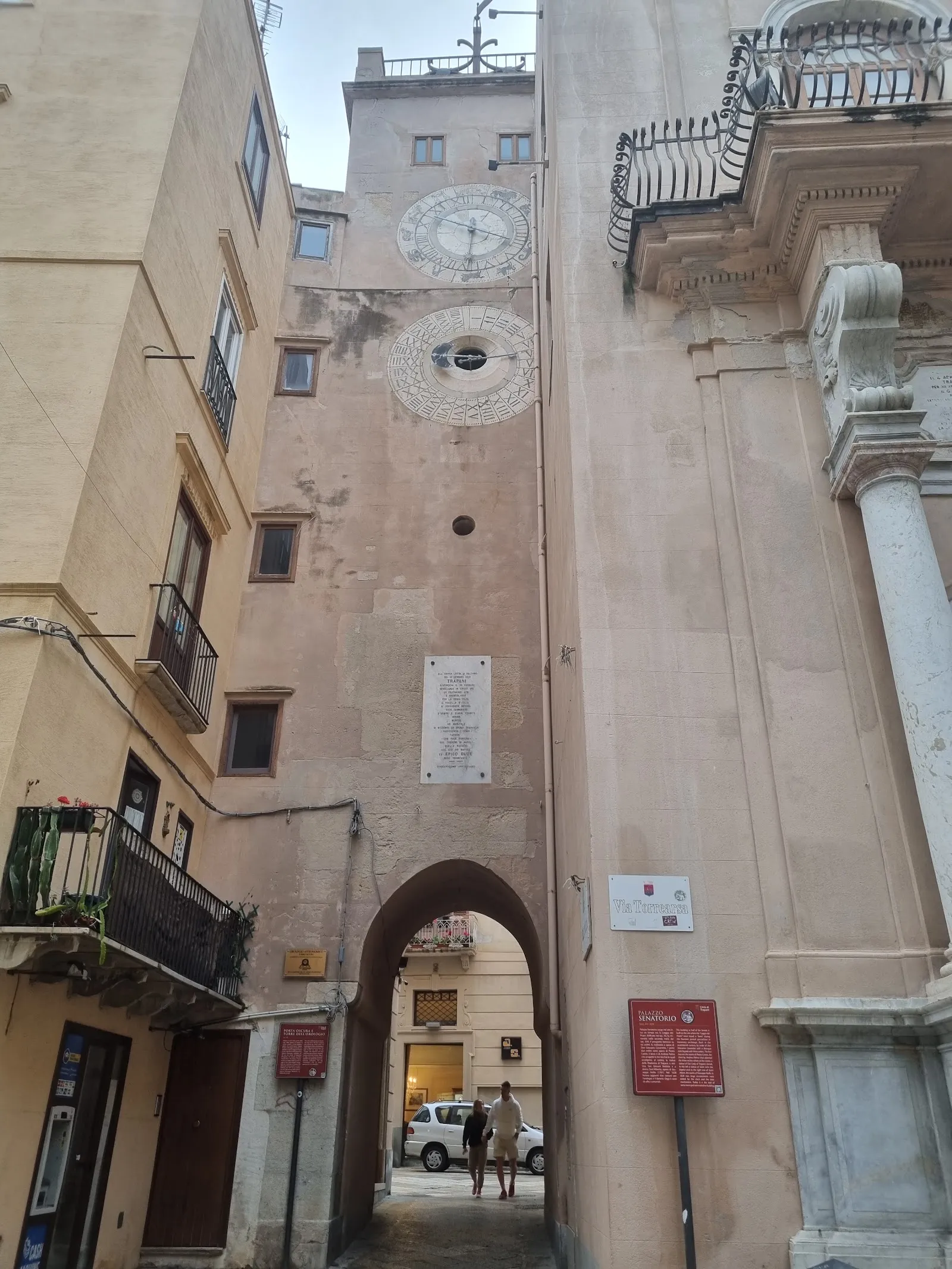
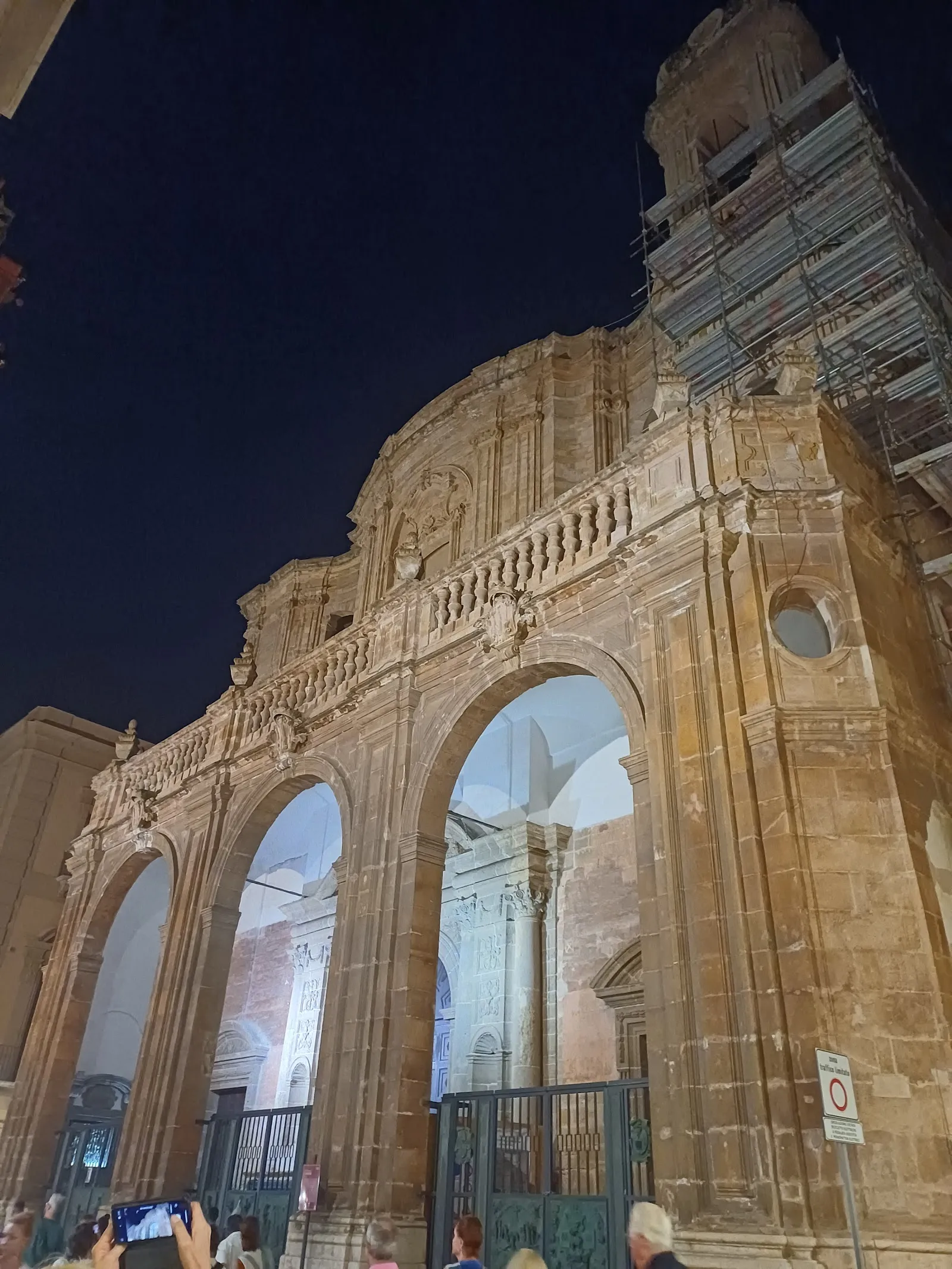
Porta Oscura is part of the historic centre of Trapani, near the cathedral and beside Palazzo Senatorio. The Clock Tower rises above the gate, making the two landmarks easy to see together as you walk through the old town.
Trapani’s early name was Drepana, the Greek word for “sickle,” referring to the shape of its natural harbour. The harbour served the nearby medieval hilltop city of Erice. Porta Oscura belongs to the town’s older history, though the clock itself dates to 1596.
Reading the astronomical clock
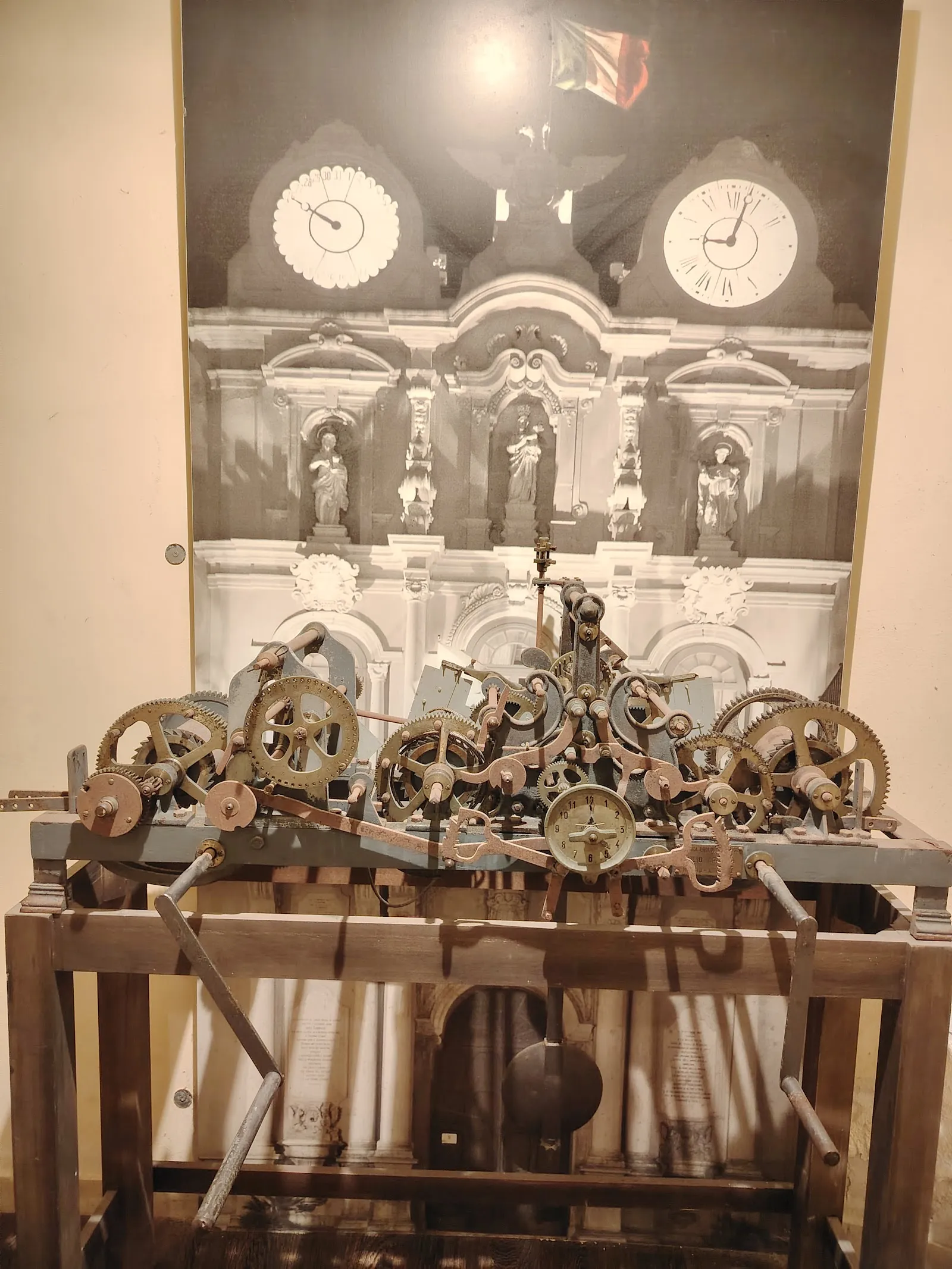
The clock has two circular dials. The sundial indicates zodiac signs, the equinoxes, solstices and seasons. A separate moon dial shows the phases of the moon. These displays make the tower more than a place to check the time: pause close enough to study the different markings.
The clock is described as one of Europe’s oldest astronomical clocks and is still functioning. After looking at the dials, you can continue to Palazzo Senatorio, the cathedral or the surrounding streets, where eateries are nearby.
Perguntas frequentes
Where is Porta Oscura and the Clock Tower?
They are in Trapani’s historic centre, beside Palazzo Senatorio and near the cathedral.
When was the astronomical clock made?
The clock dates to 1596.
What does the astronomical clock show?
Its sundial dial indicates zodiac signs, seasons, solstices and equinoxes. The second dial shows the moon’s phases.