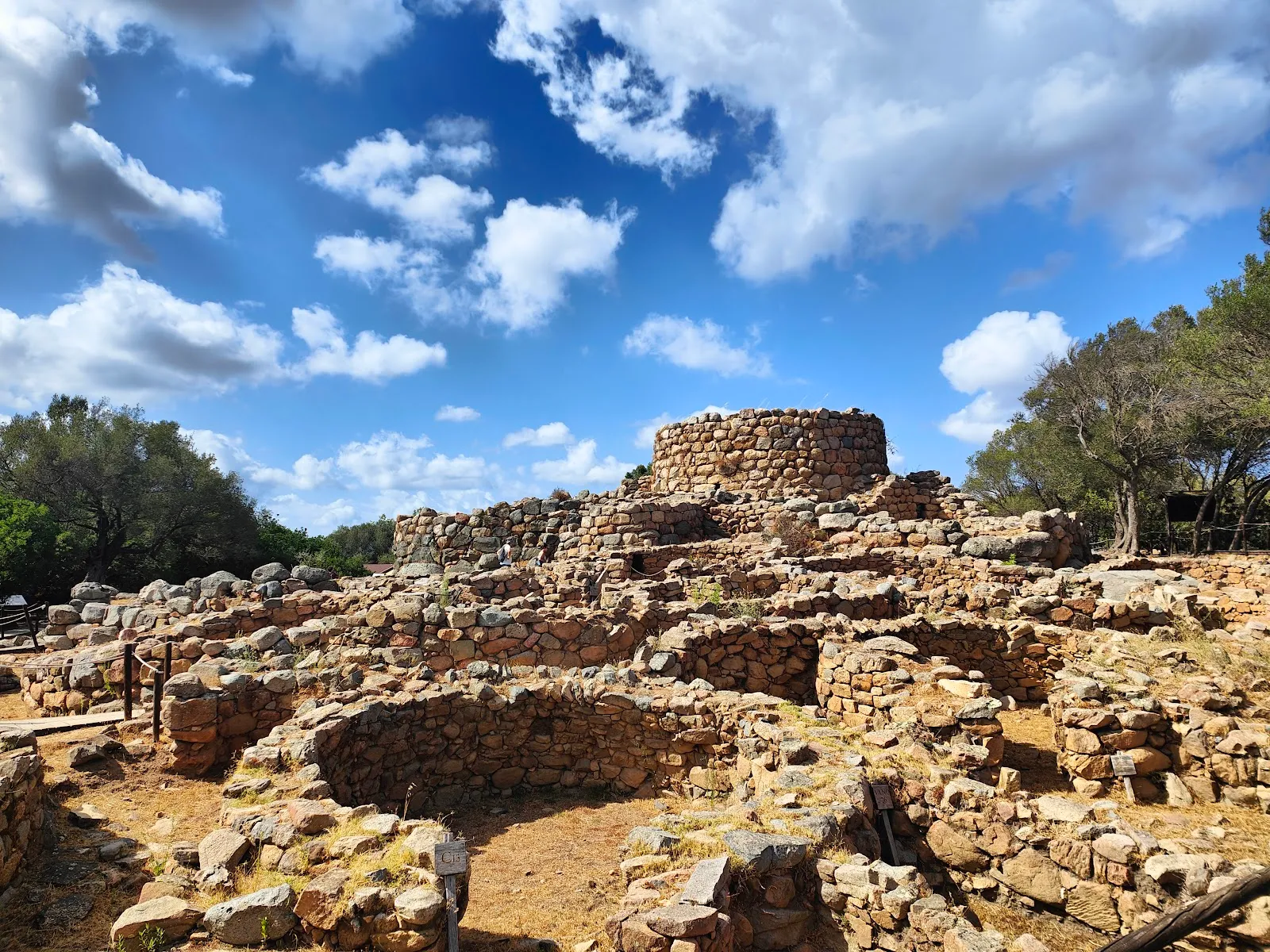
Nuraghe La Prisgiona is a Nuragic village and central tower near Arzachena in Sardinia, dating from the 13th to 8th centuries BC. Walk among the remains of its huts, follow the well-kept paths and use the elevated platforms for views across the site. An audio guide, accessed by QR code, explains the complex’s history and the evidence for craft work in several huts. If you have time for more archaeology, the nearby Giants’ Tomb of Su Coddu Vecchiu can be part of the same outing.
The village and its central tower
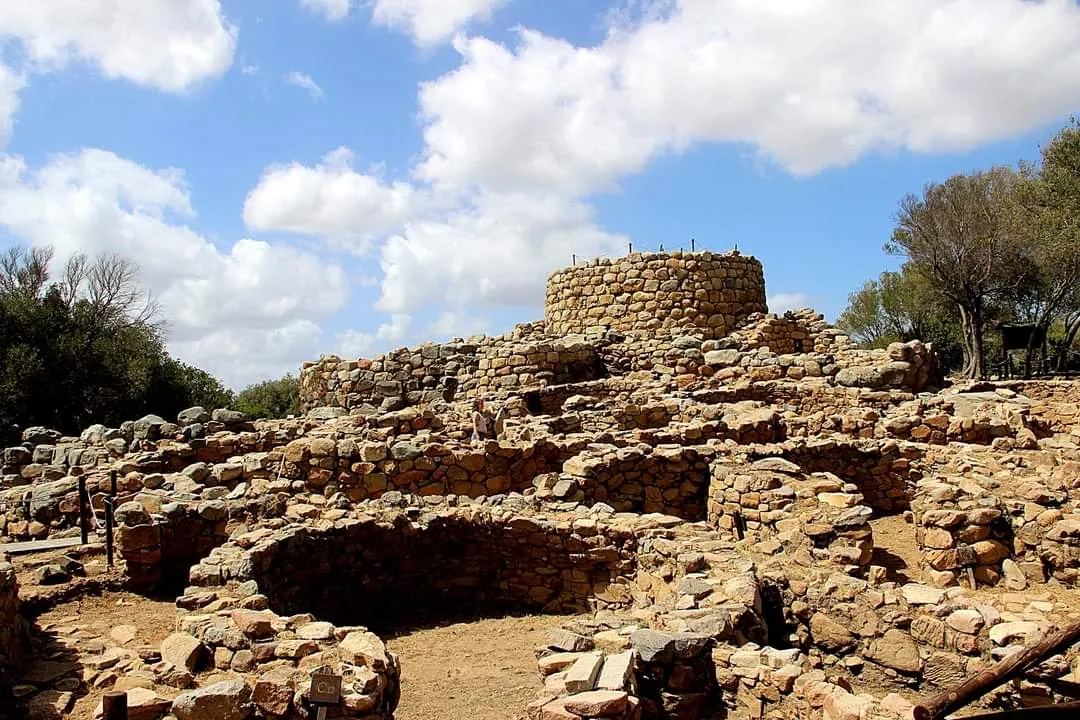
La Prisgiona is a Nuragic settlement near Arzachena, with a central tower and the remains of a village spread across about four hectares. The complex dates from the 13th to 8th centuries BC. Its paths take you between the surviving structures, with small raised platforms that give a better view of the remains.
A cluster of rooms near the outer wall is especially useful for understanding how the village was organised. Five rooms face a cobbled lane, forming a distinct group within the settlement. The layout and the objects found there point to separate craft activities taking place in different huts.
Evidence of craft and daily work
Hut 3 is thought to have been used for firing pottery. Archaeologists found what may be the remains of a large kiln built from mud brick. In Hut 2, a crucible and two lead ingots were found alongside large containers repaired in antiquity. These finds suggest that metalwork included fixing vessels as well as other craft tasks.
Hut 10 appears to have been used to make and bake bread. It contains an oven that was originally domed. Millstones, grindstones and beaters found around the village provide evidence of grain being processed into flour. The craft area was in use between 1260 and 790 BC.
Water and ways to explore
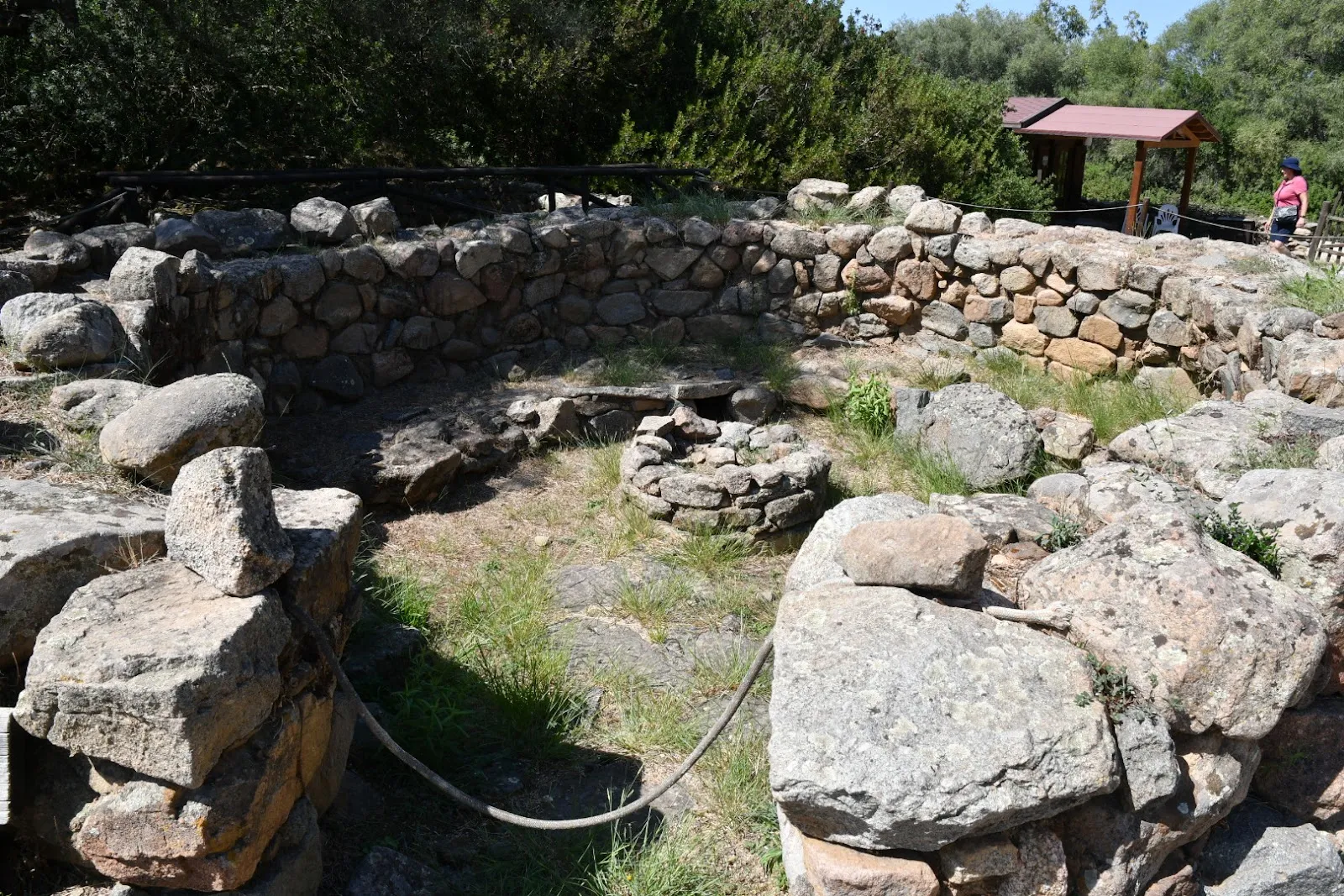
A small cistern with an ogival roof supplied water to the village. It was connected to a system of canals, parts of which are still visible at the site. Following these remains helps show how water was collected and directed through the settlement.
You can explore the complex with information boards, a map or the audio guide available through the ticket’s QR code. The audio commentary is technical, so allow time to pause and look closely at the structures as you listen. Paths are maintained and include some accessible routes, though steps are present in places.
Nuraghe La Prisgiona can also be combined with the nearby Giants’ Tomb of Su Coddu Vecchiu. A walk between the sites is possible, but the forest route calls for sturdy shoes and water. The main road or a car is a more practical choice if you want to save time or energy.
Perguntas frequentes
Where is Nuraghe La Prisgiona?
It is at Coddu Ecchiu, near Arzachena in Sardinia. The nearby Giants’ Tomb of Su Coddu Vecchiu can be included in the same outing.
What can you see at Nuraghe La Prisgiona?
The site includes a central tower, village huts, a cistern and parts of a canal system. Finds from several huts point to pottery firing, metalwork and bread making.
Is there an audio guide?
Yes. The audio guide is accessed on your phone using the QR code on your ticket, and its commentary includes technical historical detail.
Can you walk from Nuraghe La Prisgiona to the Giants’ Tomb?
Yes, but the forest route requires sturdy shoes and water. The main road or driving is an alternative.