
In the gardens of Piazza Vittorio Emanuele II, the Nymphaeum of Alexander Severus is the brick remnant of a monumental Roman fountain built in 226 AD. Its arches, basins and multi-level layout hint at a structure that once marked the end of an aqueduct and helped distribute water. The name “Trophies of Marius” came from a later, mistaken link to the general Gaius Marius. Look closely at the weathered masonry, then explore the surrounding piazza.
A fountain at the end of an aqueduct
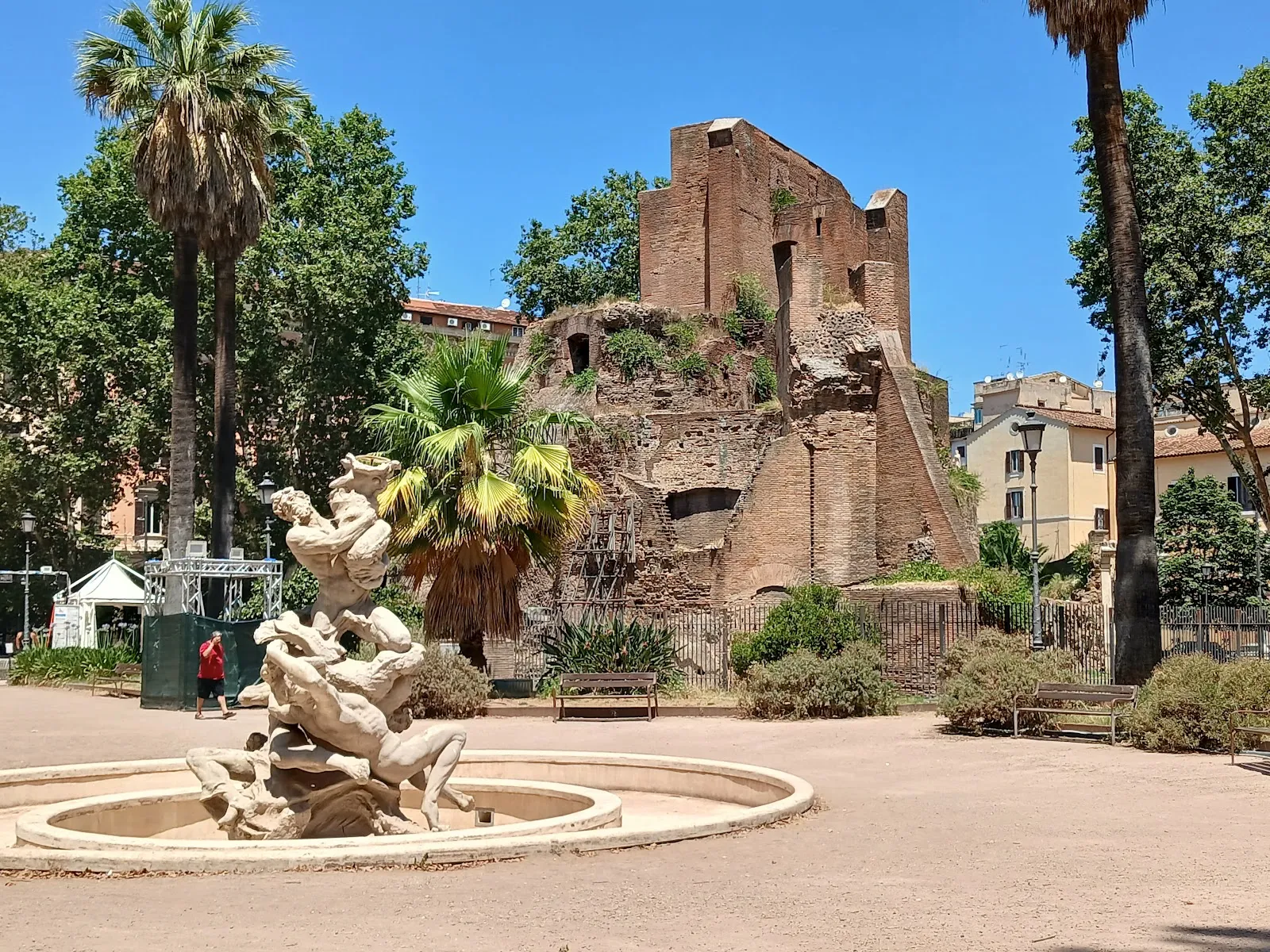
The Nymphaeum of Alexander Severus was built in 226 AD, during the reign of Emperor Alexander Severus. It stood at the end of an aqueduct, probably the Aqua Julia or the Aqua Claudia, and served as a point where water was distributed. The fountain joined a practical role with an imposing public design: its scale made the arrival of water visible as well as useful.
The structure rose across three levels, with rooms and water outlets arranged through the monument. Brick walls, arches and basins remain in Piazza Vittorio Emanuele II. These fragments give a sense of the fountain’s footprint, though the marble cladding and much of its original decoration are gone. Coins from the period show a design with tiers of arches and statues.
Why it is called the Trophies of Marius
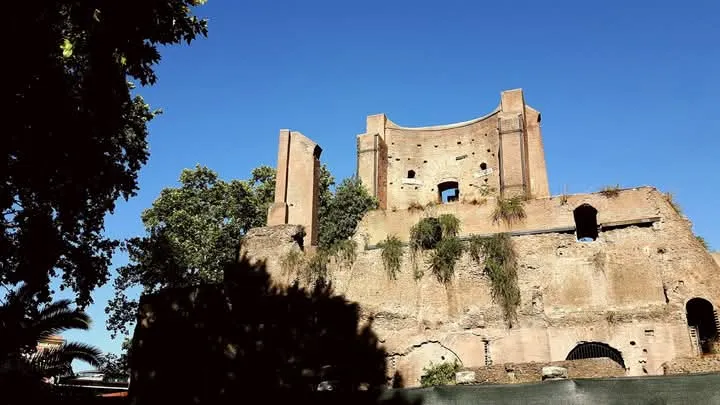
The name “Trophies of Marius” dates to the Middle Ages, when the ruin was incorrectly associated with victories by the Roman general Gaius Marius. Two marble sculptures of captured arms and armour helped fuel the story. They were later removed, in 1590, and placed above the steps of the Capitoline, where they can still be seen.
The sculptures may instead refer to campaigns under Emperor Domitian in 89 AD. Their original association with the fountain is not certain. The familiar name, then, belongs to the monument’s later history, not to the emperor who commissioned it.
What remains in the piazza
The brick core is the main thing to look for today. Follow the surviving arches and the outlines of the basins to picture how the fountain’s different levels worked together. Its location in the gardens makes it easy to include on a walk around Piazza Vittorio Emanuele II.
The ruin has been marked on maps and in guidebooks since the Middle Ages, long after its water supply had stopped. Visit in daylight to see the masonry clearly, and consider using a guide or audio guide if you want more detail about the aqueduct and the monument’s changing name.
Perguntas frequentes
Where is the Nymphaeum of Alexander Severus?
It is in the gardens of Piazza Vittorio Emanuele II in Rome.
When was the fountain built?
It was built in 226 AD, during the reign of Emperor Alexander Severus.
Why is it called the Trophies of Marius?
The medieval name came from a mistaken association with Gaius Marius. Two marble sculptures of arms and armour contributed to the identification; they were moved to the Capitoline in 1590.
What can you see at the site today?
The brick remains include walls, arches and basins from the multi-level fountain. Its marble cladding and much of its decoration are no longer there.


