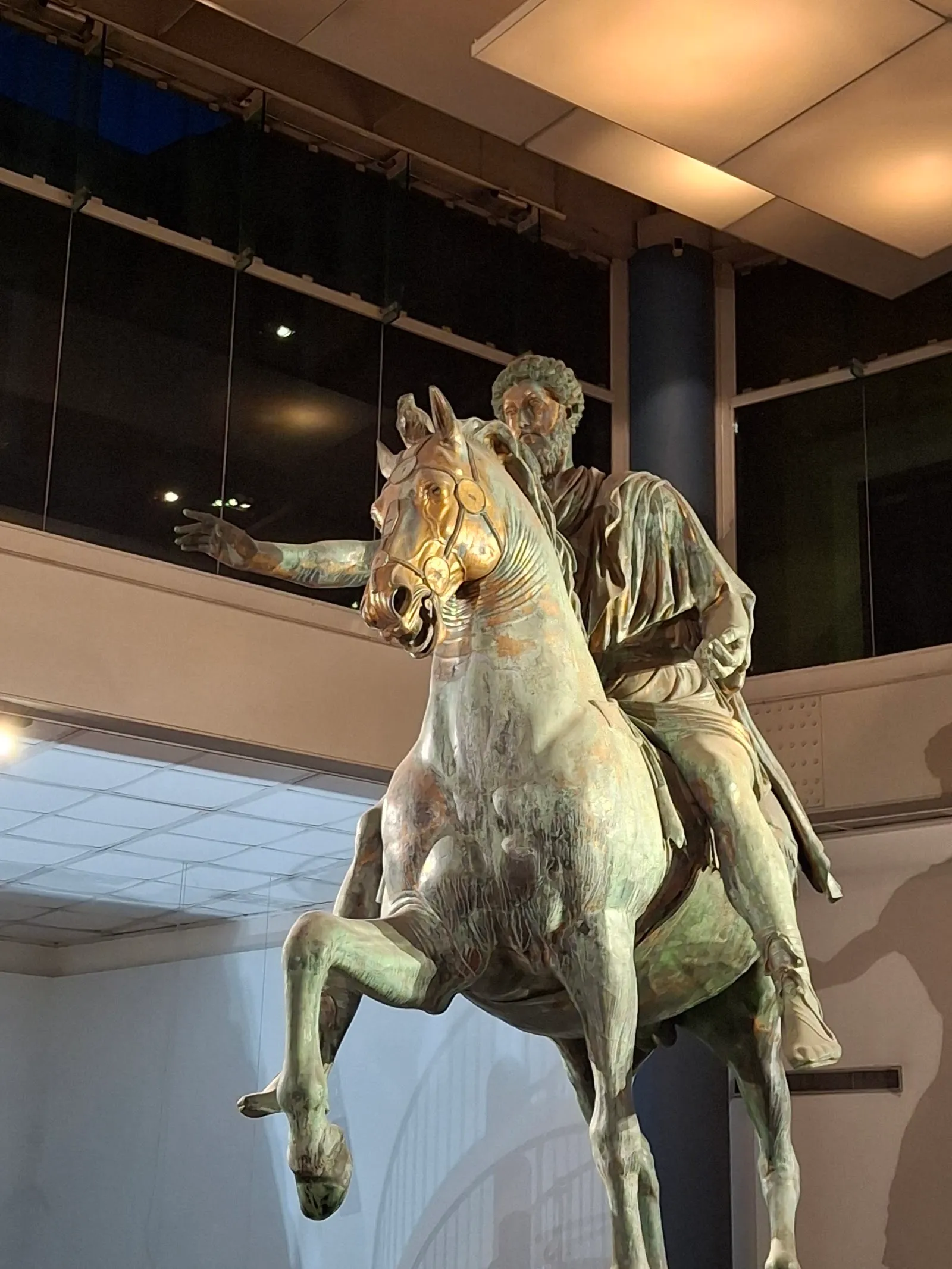
The Equestrian Statue of Marcus Aurelius stands in Piazza del Campidoglio on Rome’s Capitoline Hill. The bronze figure you see outdoors is a replica; the original is kept in the Capitoline Museums. Marcus Aurelius raises his right hand from horseback, while the horse’s lifted leg and finely modelled body suggest movement. Walk around the statue to take in its calm expression and the folds of his robe from different angles. Pair the square with a visit to the museums to see the original bronze.
The statue in the square
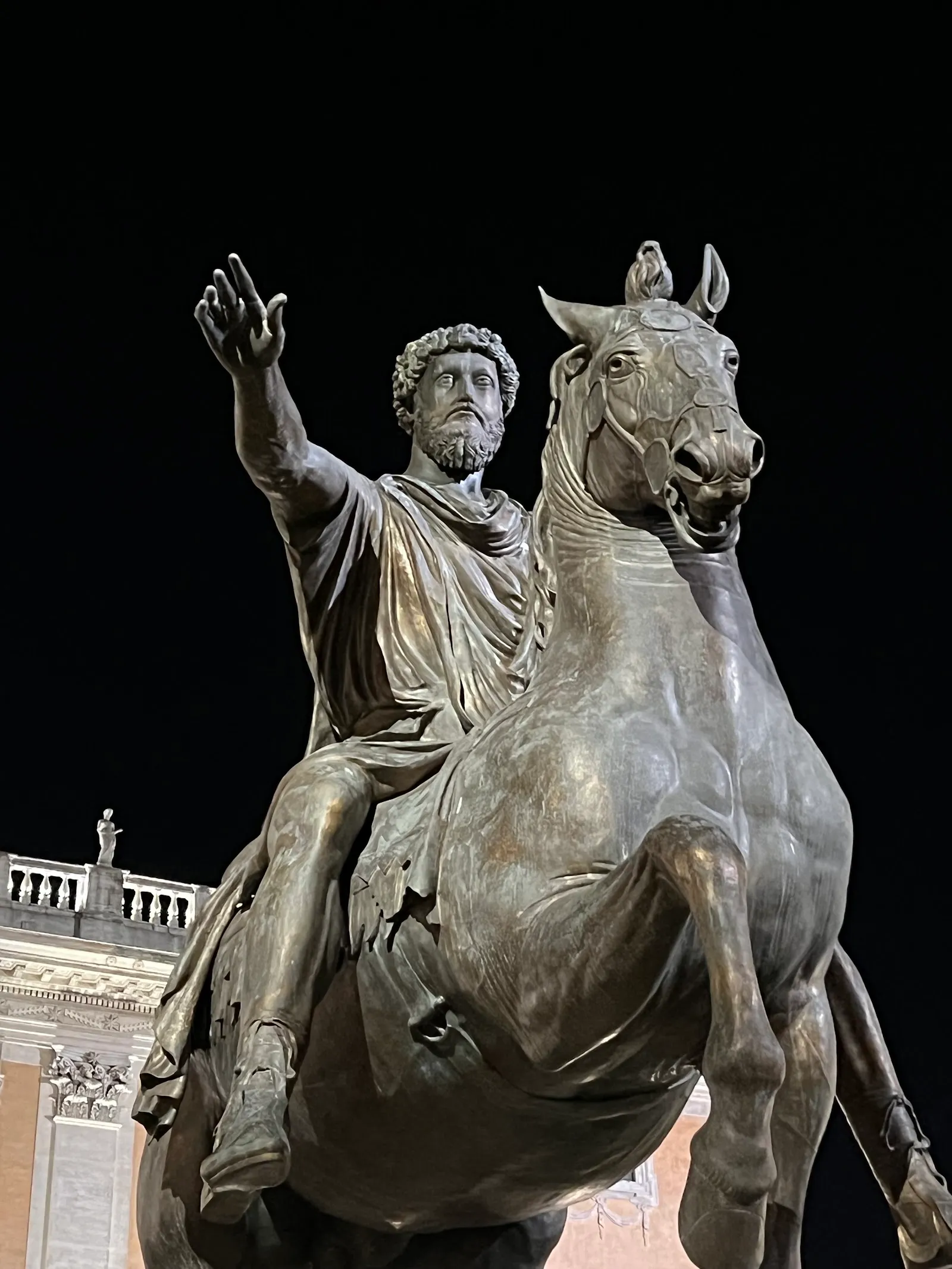
The statue is the centrepiece of Piazza del Campidoglio, the square on the Capitoline Hill. The bronze figure shows Marcus Aurelius on horseback, with his right hand raised. This gesture has been interpreted as a sign of clemency or as an address to troops. He wears no armour, and his calm bearing gives the image a measured quality.
Take a slow circuit around the statue. From different sides, you can see the fall of the emperor’s robe and the horse’s powerful form. The raised hand, the horse’s stance and the emperor’s expression are central to the work’s effect.
Why a replica stands outdoors
The statue in Piazza del Campidoglio is a copy. The original bronze was removed for restoration in 1981 and placed on display in the Palazzo dei Conservatori, part of the Capitoline Museums, in 1990. The replica was installed in the square in 1997. You can therefore see the monument in its outdoor setting and view the original inside the museum.
The ancient bronze survived because it was long believed to depict Constantine, the Christian emperor. That mistaken identification may have spared it from being melted down, as happened to many bronze works in the Middle Ages. It is among the rare surviving bronze equestrian statues of a pre-Christian Roman emperor.
A monument moved to the Capitoline
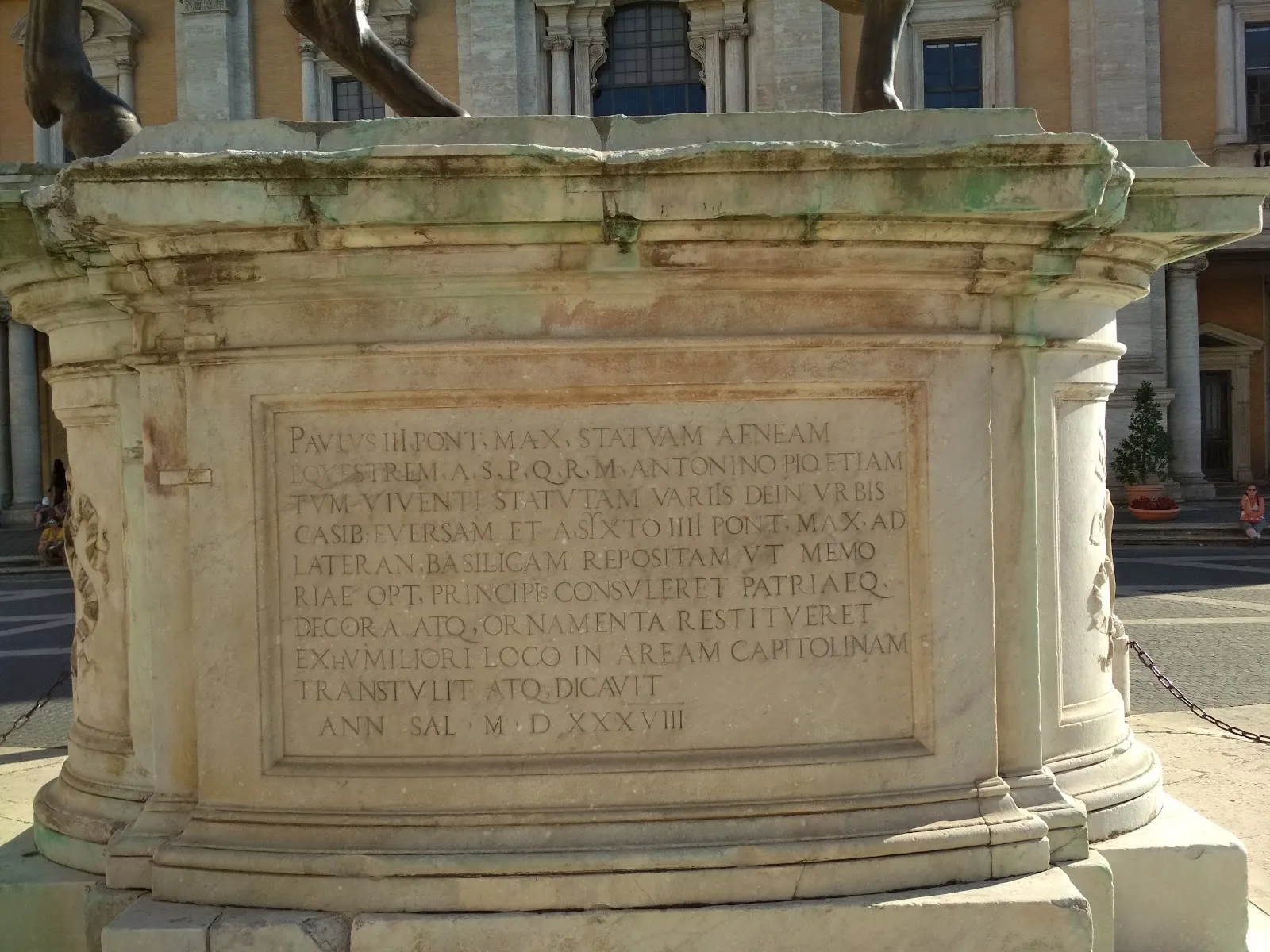
The statue’s original location is uncertain. It was moved to Piazza del Campidoglio in 1538, when Pope Paul III had it placed at the centre of the square, which Michelangelo was redesigning. Its later position helped make it a model for subsequent equestrian monuments.
A visit to the square gives you the setting; the Capitoline Museums provide access to the original. If you have time for both, look first at the replica outdoors, then compare its details with the ancient bronze on display inside the Palazzo dei Conservatori.
Perguntas frequentes
Is the statue in Piazza del Campidoglio the original?
No. The outdoor statue is a replica. The original bronze is displayed in the Palazzo dei Conservatori in the Capitoline Museums.
Where can I see the original statue?
The original is on display in the Palazzo dei Conservatori, part of the Capitoline Museums.
Why did the bronze statue survive?
It was long mistaken for a statue of Constantine, the Christian emperor, which may have saved it from being melted down.
When was the statue moved to Piazza del Campidoglio?
Pope Paul III had it moved to the square in 1538.


