
Casa dello Scheletro, or the House of the Skeleton, is an ancient Roman residence in the Herculaneum archaeological site, at Via Mare 35 in Ercolano near Naples. Buried by the eruption of Vesuvius in 79 AD, it was excavated from 1830 and named after a skeleton found inside. Look for the house’s opus reticulatum walls, surviving frescoes and the nymphaeum, decorated with limestone inlays. An iron framework in the courtyard is another detail to notice as you move through the rooms.
A Roman house in Herculaneum
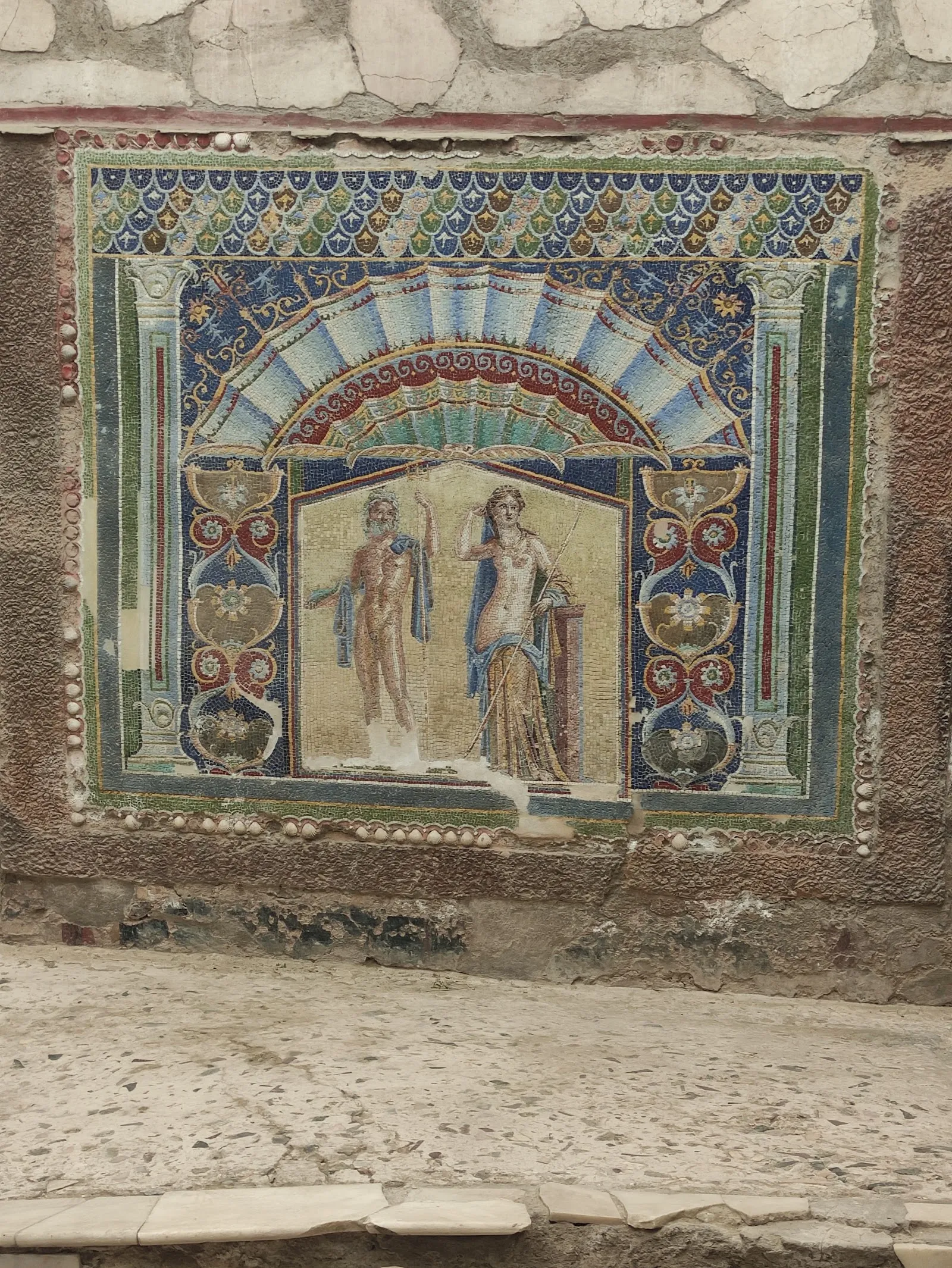
Casa dello Scheletro was buried when Vesuvius erupted in 79 AD. Excavations beginning in 1830 brought the house to light, including the first skeleton found at the site, which gave the residence its name.
The layout visible today joins three houses. Its entrance is on the Cardo III, and the entry area is paved with mosaic. At the back are the atrium and tablinum, while the central house has a covered atrium.
Walls, courtyard and nymphaeum
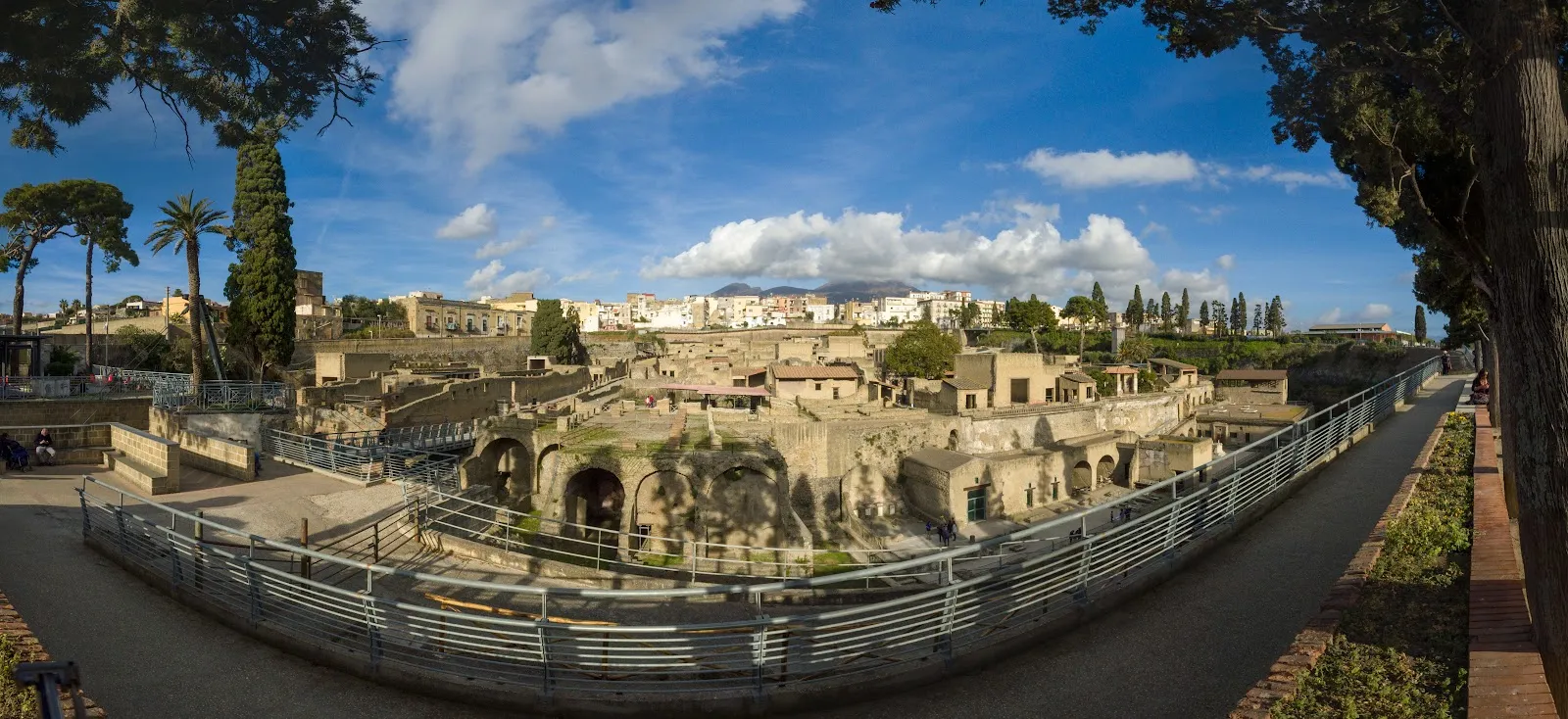
Look at the opus reticulatum, a Roman wall technique in which small blocks of stone are set into mortar with their points facing down. The walls make the building’s construction easy to distinguish as you explore.
The nymphaeum has limestone inlays. Above it, a frieze was made up of seven panels, of which three remain. In the courtyard, an iron framework survives; it was likely used as a protective grille. A lararium, a household shrine, is also located in the courtyard.
Perguntas frequentes
Why is it called the House of the Skeleton?
The name refers to a skeleton found inside the house during the excavations.
Where is Casa dello Scheletro?
It is in the Herculaneum archaeological site at Via Mare 35, Ercolano, near Naples.
When was the house buried and excavated?
The eruption of Vesuvius buried it in 79 AD. Excavations began in 1830.


