Palazzo Vecchio, on Piazza della Signoria in Florence, has served as a seat of civic government and a Medici residence; it still houses the mayor’s office and city council. Its fortress-like exterior gives way to richly decorated halls, with the vast Salone dei Cinquecento, the map room and the Studiolo of Francesco I among the rooms to explore. The Arnolfo Tower rewards the climb with views across Florence. Before or after your visit, see the square’s sculptures, including the copy of Michelangelo’s David and the figures in the Loggia dei Lanzi.
From republic seat to Medici residence
Florence began building Palazzo Vecchio in 1299 to house the republic’s government and represent the authority of the city and its people. The project was designed by Arnolfo di Cambio, also associated with the city’s Duomo and Santa Croce. Work continued across generations, with changes and additions along the way.
The palace became the seat of the city’s magistrates during the Florentine Republic. In 1540, Cosimo I de’ Medici made it his residence and commissioned changes that gave the building the character of a ducal palace. The Medici later moved to Palazzo Pitti, and the old palace returned to civic use. Today the building still houses Florence’s mayor and city council, alongside its museum rooms.
Halls, maps and Medici rooms
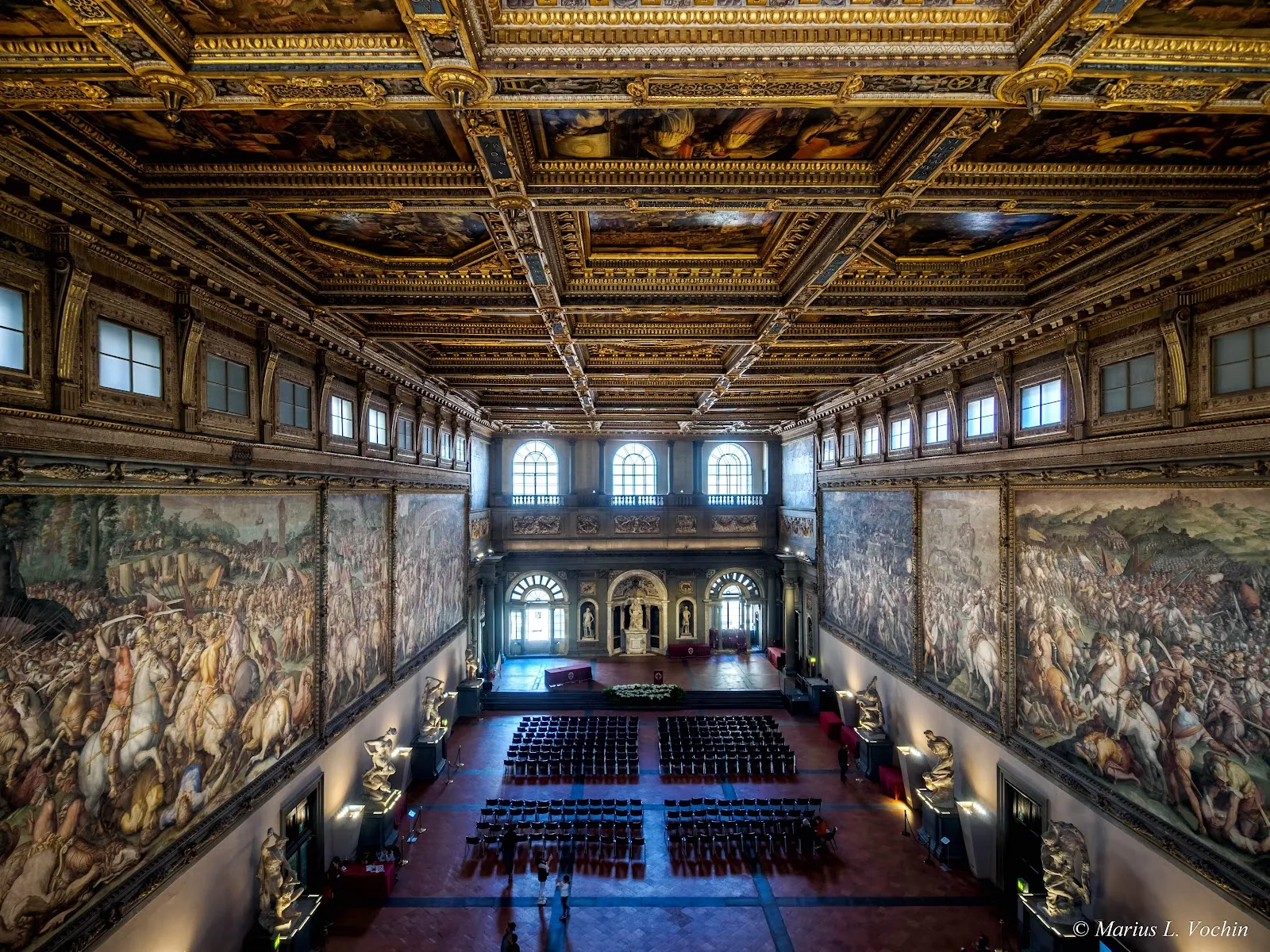
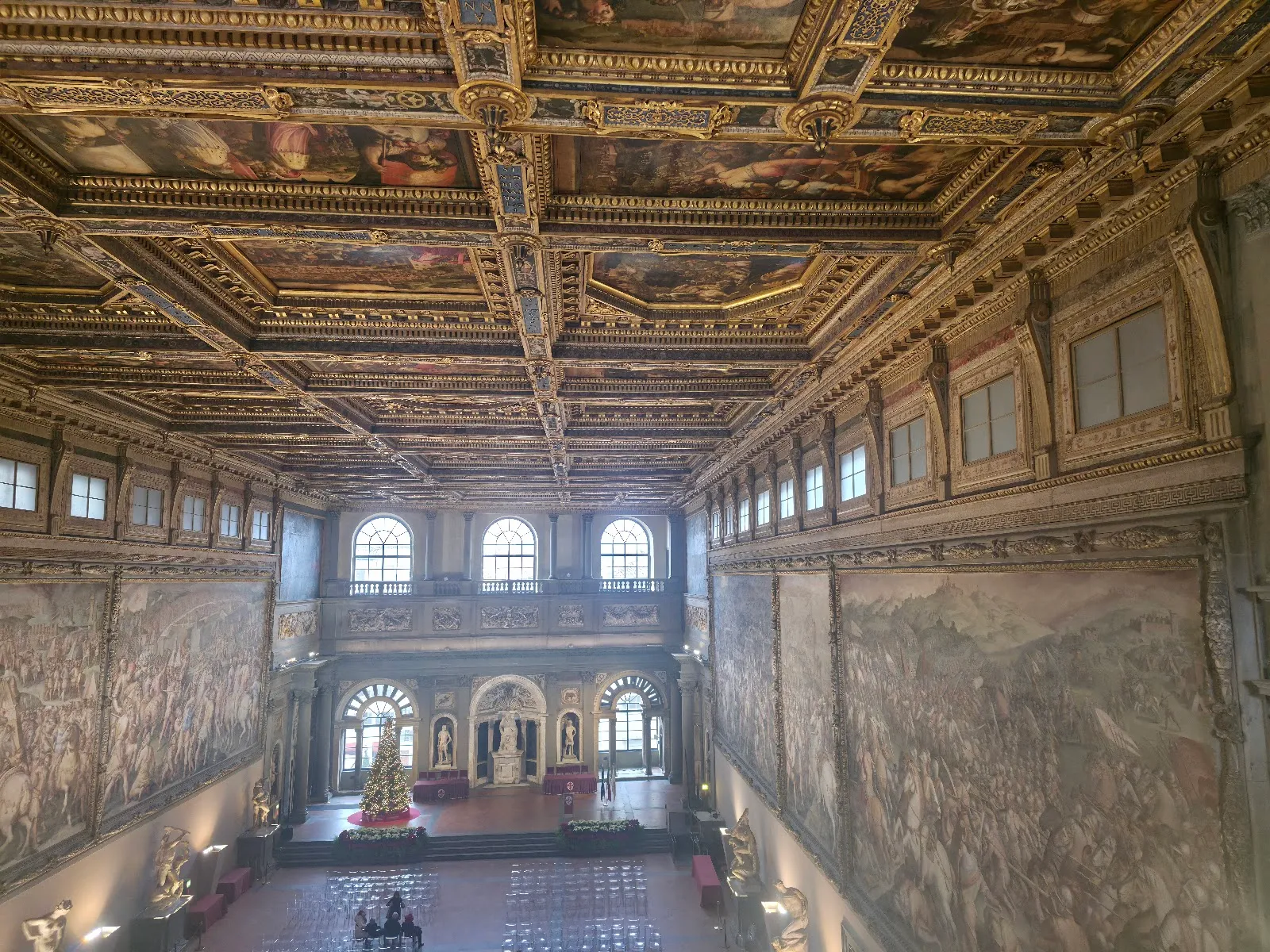
The visit moves through rooms that connect the palace’s political past with its art and decoration. The Salone dei Cinquecento, or Hall of the Five Hundred, was created for Florence’s governing council. It is the largest and most prominent room in the palace, with an expansive decorated interior and works associated with Michelangelo and Vasari. Take time to look across the walls and ceiling rather than passing through quickly.
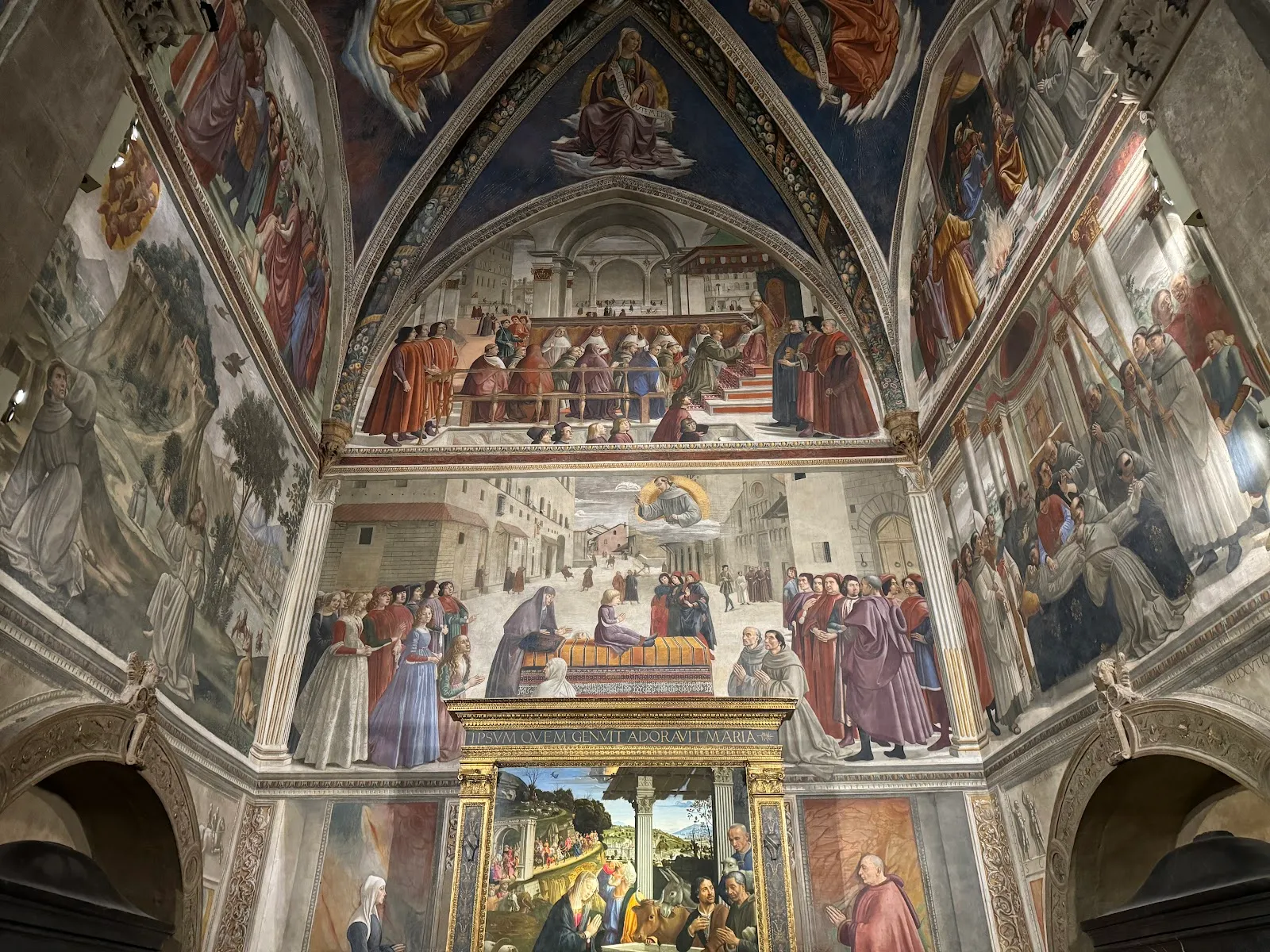
Other rooms offer a more intimate view of palace life and its history. The Hall of Lilies has frescoes by Domenico Ghirlandaio, while the Hall of Geographical Maps contains maps designed by Giorgio Vasari. The Studiolo of Francesco I is a compact room associated with the Medici ruler and known for its intricate decoration. Eleanor’s Chapel is another of the palace’s decorated spaces. Together, these rooms make the building itself as central to the visit as the works of art within it.
The courtyard is another stop inside the palace, with stucco and fresco decoration. You can enter this section without a museum ticket, according to visitor information included in the material for this guide.
The tower and Piazza della Signoria
The Arnolfo Tower is a defining part of the palace’s skyline and can be climbed for a view across Florence, including the Duomo. The climb takes effort, so bring water if the weather is hot. If you are planning to see both the museum and tower, leave enough time for the rooms as well as the ascent.
Outside, Piazza della Signoria extends the visit into the city’s public space. The square has long been tied to Florentine civic life and is lined with sculptures and monuments. Near the palace entrance stands a copy of Michelangelo’s David; the original is now in the Galleria dell’Accademia. The nearby Loggia dei Lanzi displays sculptures outdoors, and the Fountain of Neptune is another landmark in the piazza. You can explore the square before entering or return to it afterward.
Perguntas frequentes
How long should I spend at Palazzo Vecchio?
Set aside at least two hours to explore the palace and its rooms. Allow extra time if you plan to climb the Arnolfo Tower.
Can you climb the Arnolfo Tower?
Yes. The tower is open to visitors and gives views across Florence, including the Duomo. The climb is long, so bring water on hot days.
What should I see inside Palazzo Vecchio?
Prioritize the Salone dei Cinquecento, the Hall of Geographical Maps and the Studiolo of Francesco I. The courtyard has stucco and fresco decoration.
What can you see in Piazza della Signoria?
The square has a copy of Michelangelo’s David, the sculptures in the Loggia dei Lanzi and the Fountain of Neptune.