On Piazza di Santa Croce in Florence, this Franciscan basilica brings together Gothic architecture, Renaissance art and the tombs of prominent Italians. Inside, look for Giotto’s frescoes in the Bardi and Peruzzi chapels, then visit the Pazzi Chapel and the cloisters for a quieter pause. Michelangelo, Galileo, Machiavelli and composer Gioachino Rossini are buried here; Dante has a memorial monument, but his remains are in Ravenna. Set aside at least 1.5 to 2 hours to explore the church and its adjoining spaces.
A Gothic church and its later façade
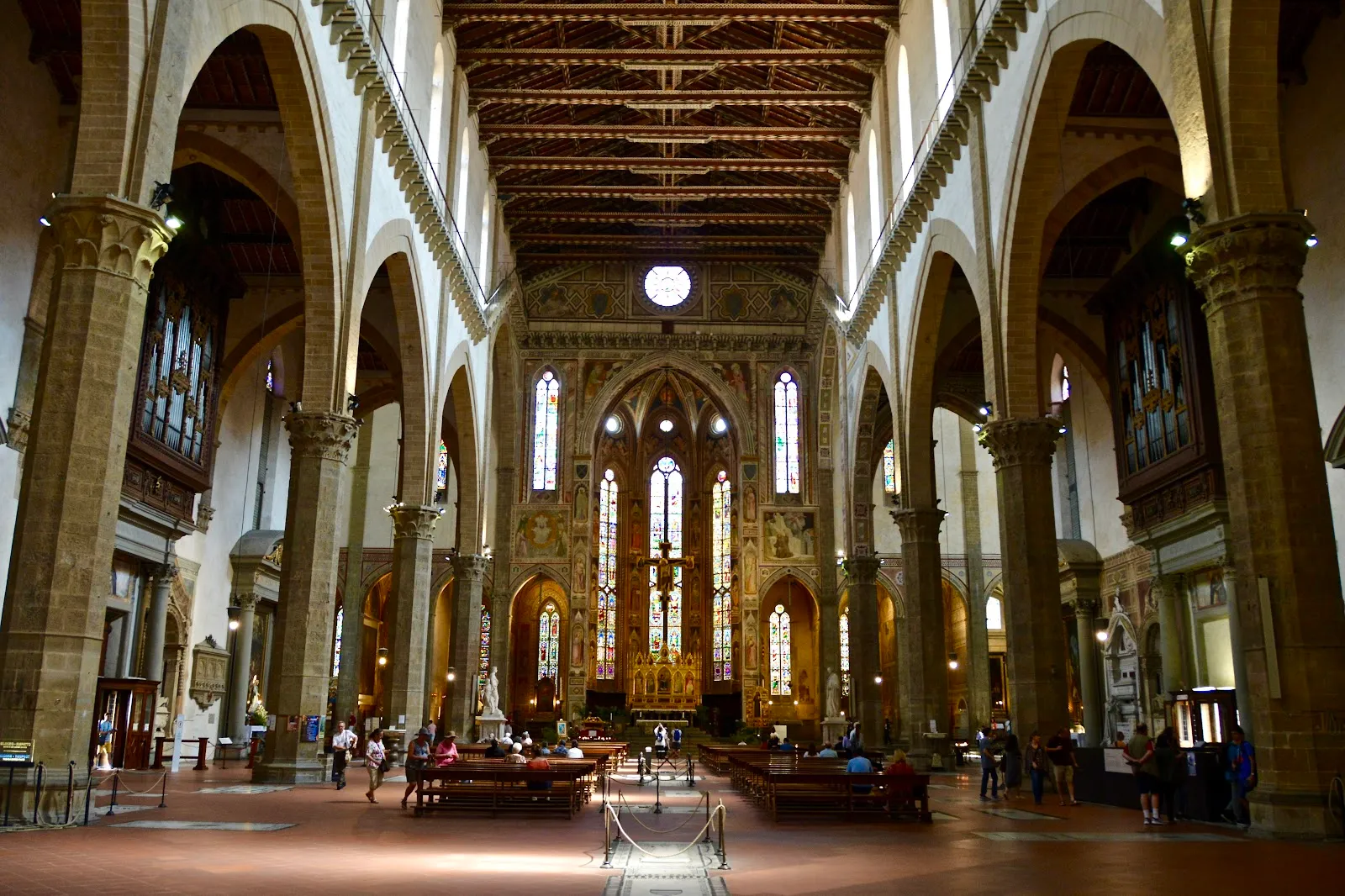
Construction began in 1294 under the direction of Arnolfo di Cambio. The church was completed in the late 14th century, and its façade took a very different form much later: the coloured marble facing was added in the 19th century. Green, pink and red panels set against white marble give the exterior a vivid look that contrasts with the comparatively austere interior.
Santa Croce takes its name from a fragment of the Holy Cross donated by King Louis IX of France in 1258. It is a Franciscan church, and its broad interior is arranged around a central nave and chapels. The original stained-glass windows, dating from between the 14th and 19th centuries, remain in the building.
Giotto and the family chapels
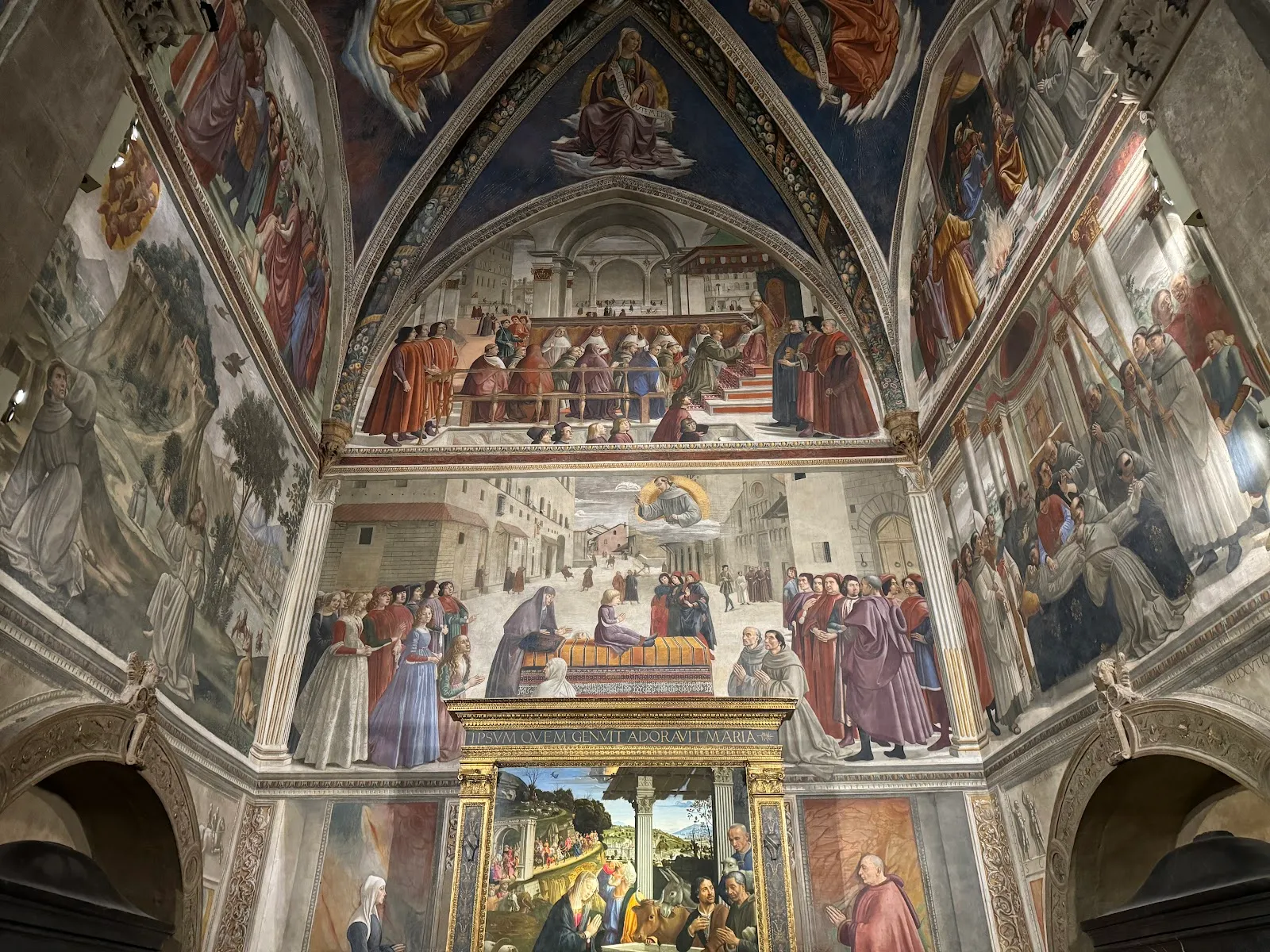
The chapels preserve some of the basilica’s most important paintings. In the Bardi and Peruzzi chapels, Giotto painted scenes linked to the lives of Saint Francis and Saint John the Baptist. The works are worth viewing slowly: their placement in separate chapels gives each painted cycle its own space within the church.
Other works include frescoes by Taddeo and Agnolo Gaddi. Agnolo’s paintings behind the high altar tell the Legend of the True Cross, while the Baroncelli Chapel contains scenes from the life of the Virgin. The church also holds a crucifix by Donatello and a version of the Last Supper associated with Vasari.
The Pazzi Chapel and cloisters
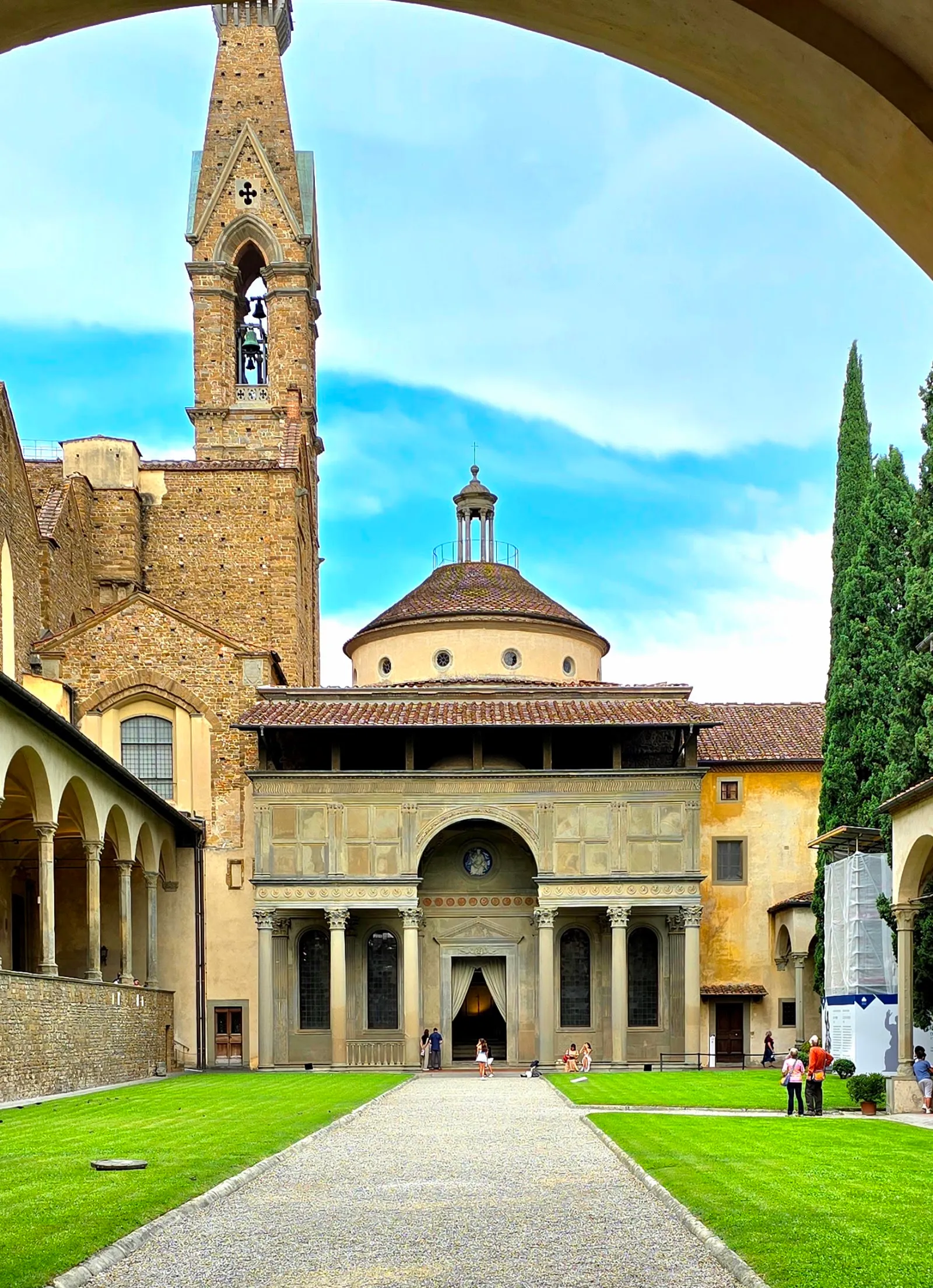
Beyond the main church, the Pazzi Chapel is one of the site’s notable architectural spaces. It is attributed to Filippo Brunelleschi, with decoration connected to Luca della Robbia and Giuliano da Maiano. Its design and materials offer a change of scale from the long nave and its rows of memorials.
The adjoining cloisters provide a calmer route through the complex. Take time to explore them and the other rooms, where artworks extend beyond the main church. The former convent is also home to the Leather School, where leather goods are made by hand.
Tombs, memorials and the 1966 flood
Santa Croce is known for the many notable people commemorated within its walls. Michelangelo, Galileo, Machiavelli and Rossini are buried here. Dante is honoured with a memorial monument, although his body rests in Ravenna. The church also contains numerous tombs and cenotaphs, including floor slabs that mark graves.
The basilica’s art carries traces of later events as well as its medieval and Renaissance history. An exhibition explains the 1966 flood, when the Arno damaged artworks across Florence, and the restoration work that followed. Look for the signs of age in the frescoes and other paintings as you move through the chapels and adjoining spaces.
Perguntas frequentes
How long do you need at the Basilica of Santa Croce?
Plan at least 1.5 to 2 hours to see the church, chapels and cloisters.
Which famous people are buried at Santa Croce?
The basilica contains the tombs of Michelangelo, Galileo, Machiavelli and Gioachino Rossini. Dante has a memorial monument here, but his remains are in Ravenna.
What should you see inside Santa Croce?
Look for Giotto’s frescoes in the Bardi and Peruzzi chapels, the Pazzi Chapel, the cloisters and the tombs and memorials.
What should you wear to Santa Croce?
Dress respectfully because Santa Croce is an active basilica.