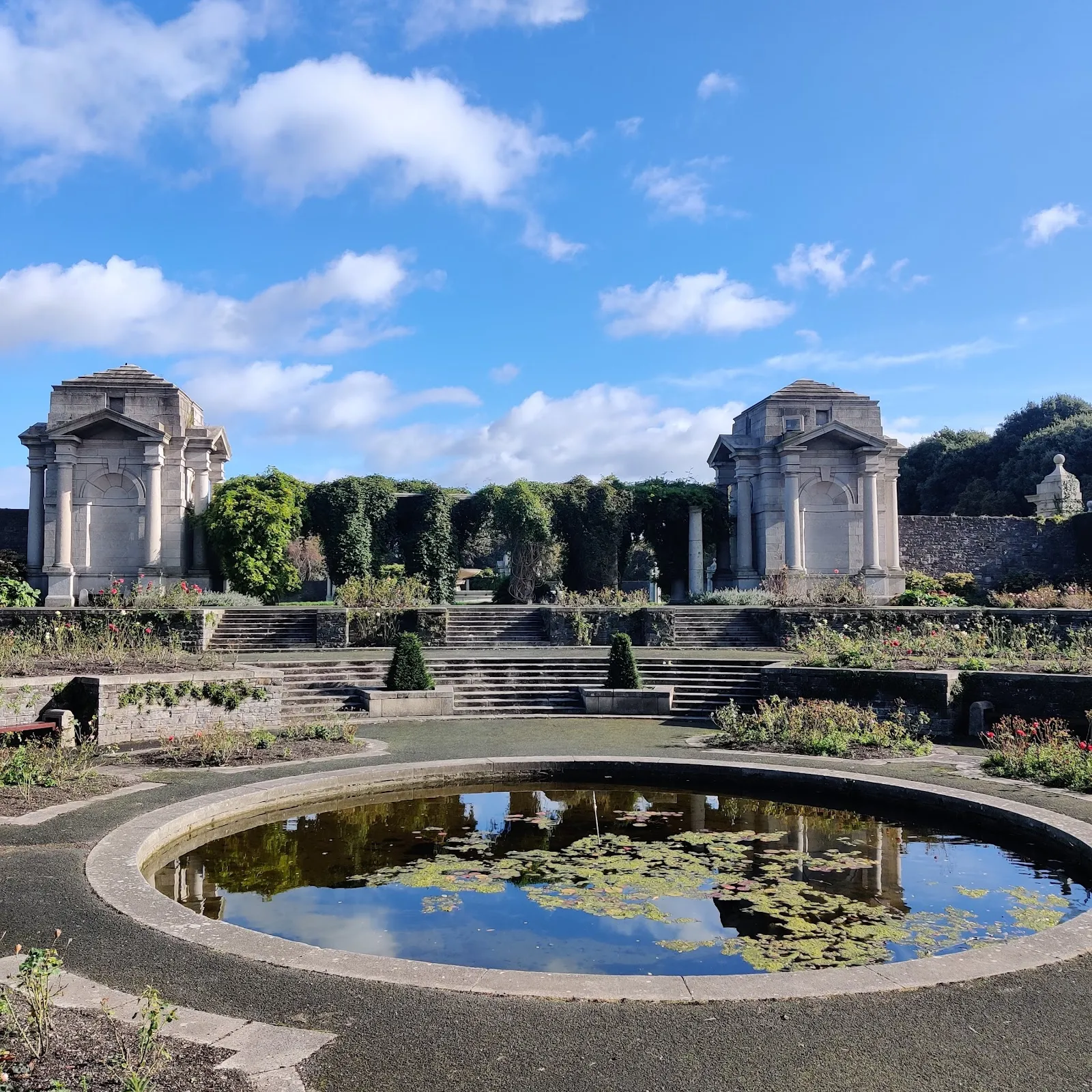
The Irish National War Memorial Gardens are a landscaped memorial in Islandbridge, beside the River Liffey in west Dublin. Designed by Sir Edwin Lutyens, they commemorate 49,400 Irish soldiers who died in the First World War. A central War Stone and fountains sit between formal gardens, with mirrored rose gardens at either end and granite bookrooms bearing the soldiers’ names. Come for a quiet walk, time among the memorials or spring cherry blossom. The main paths make for an easy stroll, though the gardens are a short walk rather than a long route.
A memorial in Islandbridge
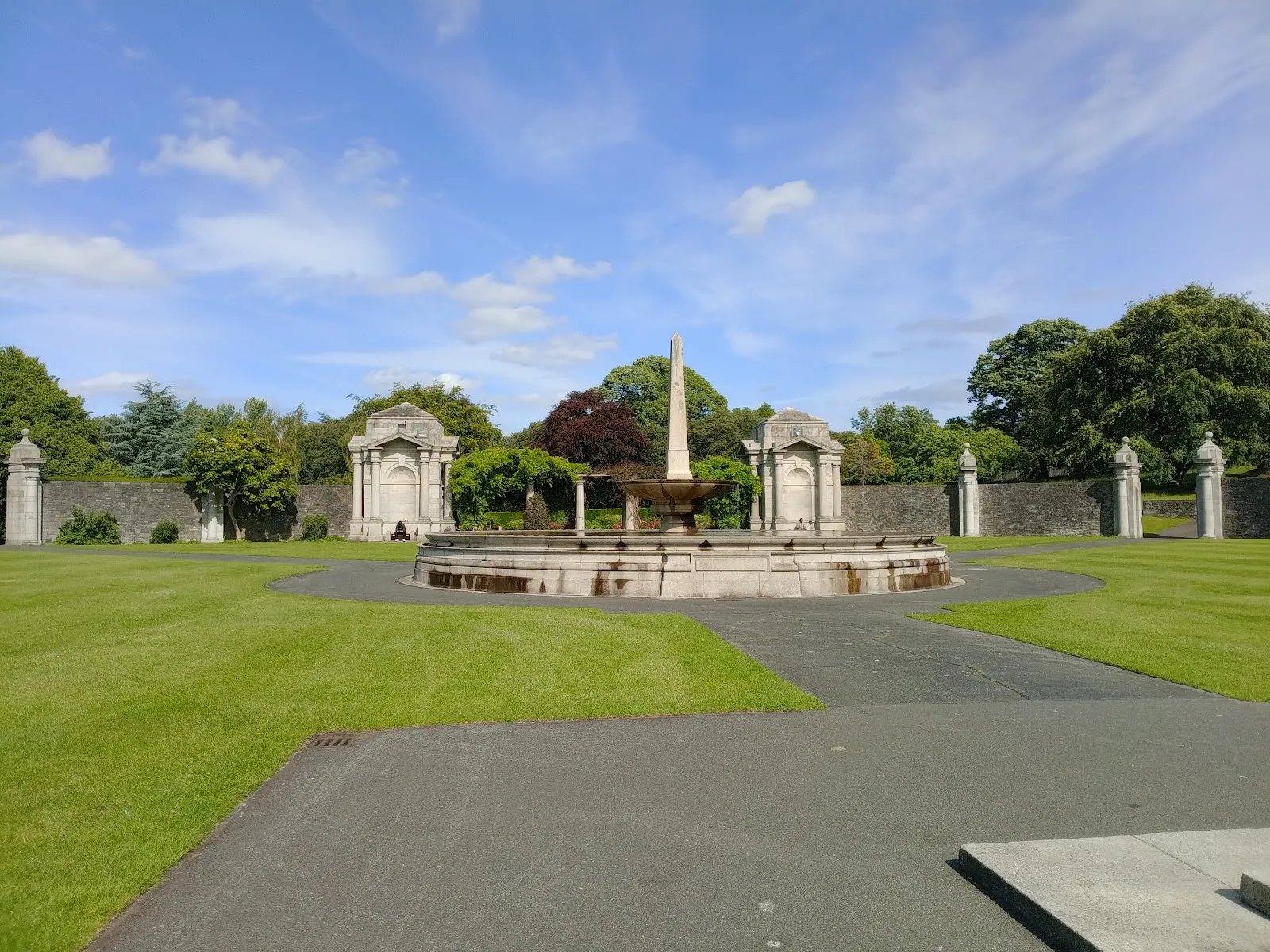
The gardens in Islandbridge commemorate 49,400 Irish soldiers who died in the First World War. Sir Edwin Lutyens designed the grounds, using a formal layout arranged along a central axis. The result is a memorial landscape where paths, fountains and planting are part of the design, not just a setting for the monuments.
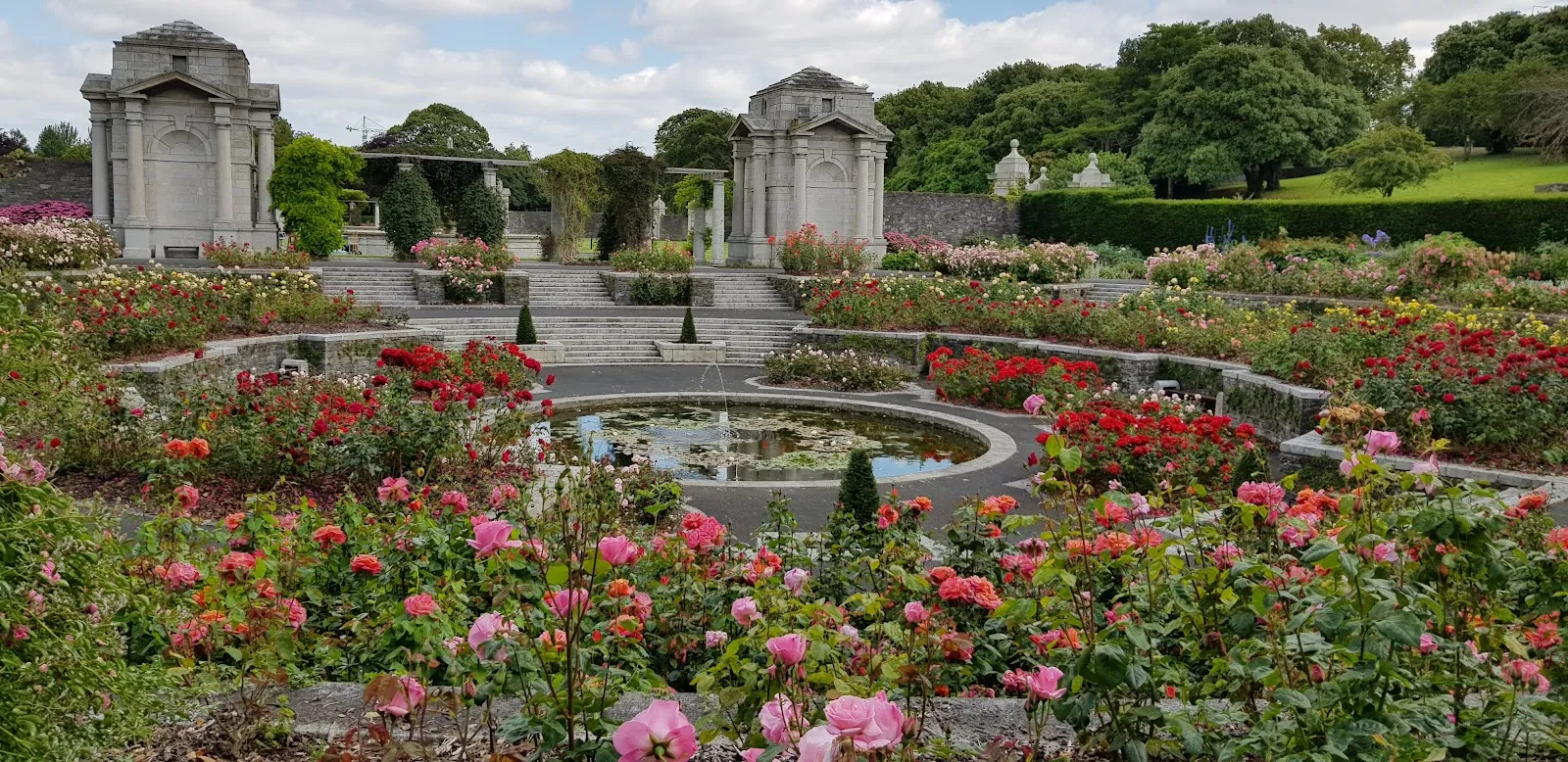
At the centre is the War Stone, flanked by two fountains. The gardens extend from it towards sunken rose gardens at either end. Their mirrored arrangement gives the grounds a clear structure as you walk through them.
The memorial and the names
The granite bookrooms contain the names of the soldiers commemorated here. The memorial’s classical design and carefully ordered grounds invite a quiet visit. Take time to look at the bookrooms as well as the central War Stone; together they connect the garden’s formal layout with its purpose as a place of remembrance.
The gardens were completed in 1937. Irish and British war veterans carried out much of the construction by hand, according to material about the site.
Gardens through the seasons
The planting changes the character of a visit through the year. Cherry blossom is a reason to come in April, though its season is brief. In summer, the formal rose gardens and other flowering plants bring colour to the grounds. Autumn brings amber and rust tones along the tree-lined avenues.
The paths pass lawns, planted borders, fountains and memorial features. The gardens also sit beside the River Liffey, so a walk can continue along the riverbank. If you want a longer outing, the grounds are described as part of a gentle looped walk of about three kilometres.
Planning your visit
The main paths are wheelchair accessible, but not every part of the garden is step-free. Steps lead into the sunken gardens and up to the Great Cross platform. There are no disabled toilets reported at the site, so plan around that if facilities are important to your visit.
Some approaches can be muddy and slippery in winter. Sensible footwear helps, especially if you plan to explore beyond the main paths. A picnic is another option for a quiet pause in the grounds. The gardens are a short walk for anyone expecting a long-distance route, but they can be combined with a walk along the Liffey.
Perguntas frequentes
Who do the Irish National War Memorial Gardens commemorate?
They commemorate 49,400 Irish soldiers who died in the First World War.
What can you see in the gardens?
The grounds include the central War Stone, two fountains, mirrored sunken rose gardens and granite bookrooms containing the soldiers’ names.
When is the best time to see the flowers?
April is the time to look for cherry blossom. Roses and other flowers bloom in summer.
Are the gardens wheelchair accessible?
The main paths are wheelchair accessible. The sunken gardens and Great Cross platform have steps, and no disabled toilets are reported.