Jatiluwih Rice Terraces spread across the hills of Tabanan Regency, with Mount Batukaru rising behind the fields. This UNESCO-listed cultural landscape is known for its broad views and the traditional subak irrigation system, which farmers still use. Walking routes of different lengths cross working rice fields, so you can choose a short stroll or a longer trek. Follow the marked paths, watch the water channels and farming activity, and pause at a local warung or café along the way. The paths can be uneven or muddy, so shoes with grip are useful.
A working rice landscape
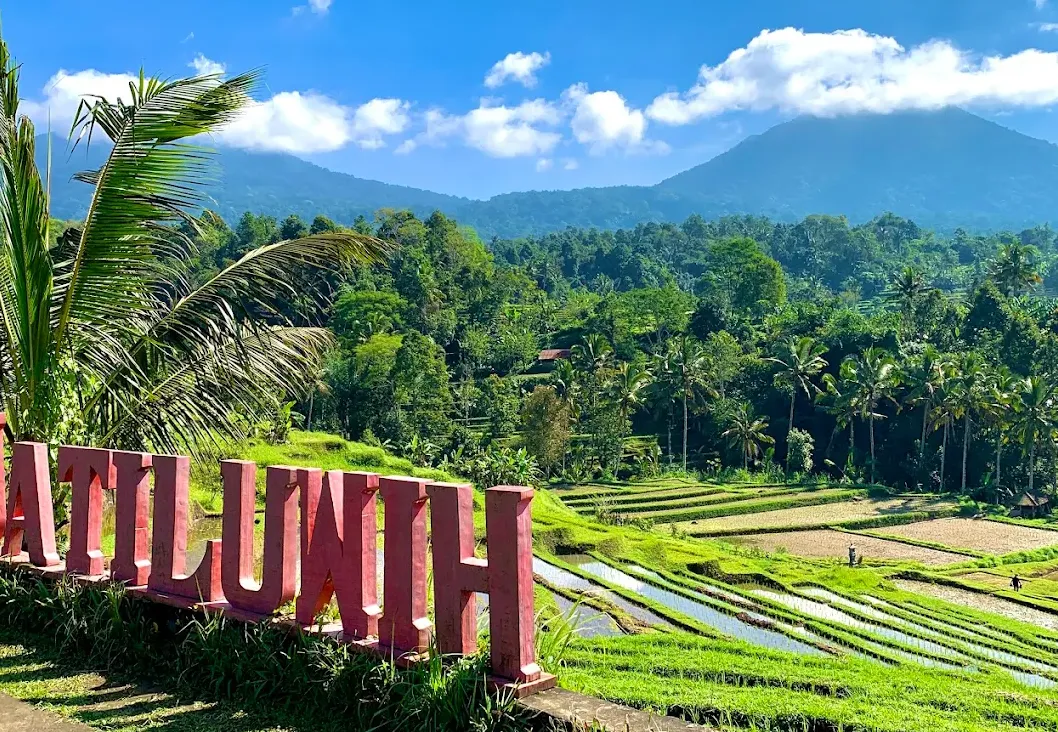
Jatiluwih lies in Penebel, in Tabanan Regency, on the slopes near Mount Batukaru. Its terraces cover a broad area of the countryside, with rice fields following the contours of the hills. The scale becomes clear on foot: the paddies extend across the landscape, and mountain views form a backdrop to the walk.
The terraces are part of a cultural landscape recognised by UNESCO. Their significance is tied to subak, Bali’s community-based system for managing irrigation water. Channels carry water through the fields, and the system links farming with the work of the local community. As you follow the paths, you can see water moving through the landscape and farmers tending the crops.
Choosing a route
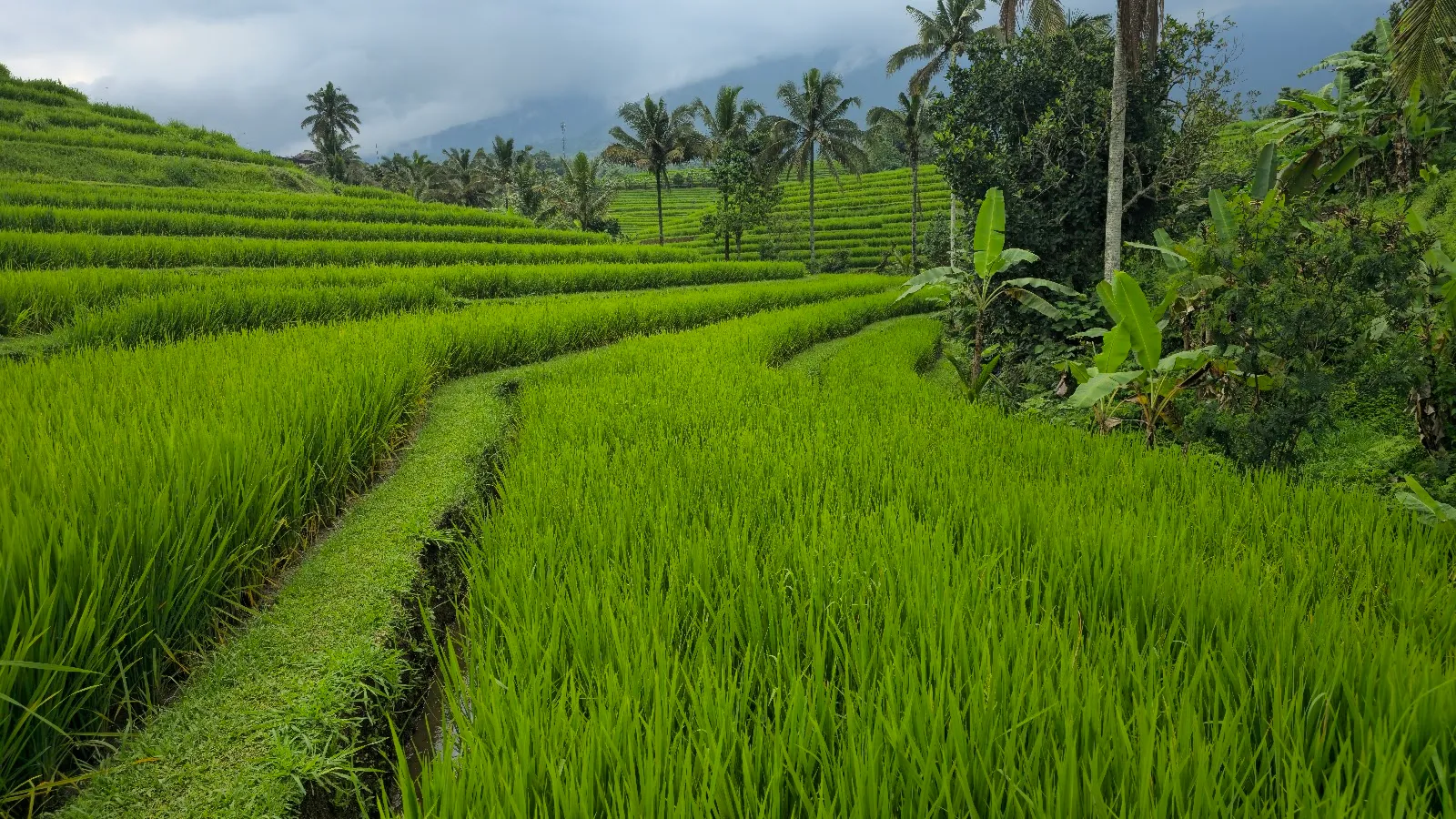
Marked walking routes make it possible to set the length of your visit to your time and energy. Some paths are paved, while others cross dirt or narrow ground between the paddies. Routes vary from shorter walks to longer treks that take a few hours. Follow the signs for your chosen route, and allow extra time if you want to stop for photographs or take in the views.
The terrain is not uniformly smooth. Some sections can be uneven or muddy, especially after rain, so shoes with good grip are a sensible choice. Bring water and sun protection, and carry a raincoat if the forecast calls for showers. A morning start brings cooler conditions and can mean fewer people on the trails.
Local food along the way
Warungs and cafés provide places to pause during a walk. Some are set among the fields, where you can stop for a drink or snack without leaving the landscape. Locally grown brown rice is one way to connect a meal with the farming around you; coconut water and local fruit are also mentioned as refreshments available along the route.
If you are interested in how the terraces are farmed, a respectful conversation with field workers may offer insight into local practices. Remember that these are working fields as well as a place to visit, and stay on the paths rather than disturbing crops or irrigation channels.
Planning your visit
The entrance covers the wider terrace area, rather than a single viewpoint, so you can explore more than one section on foot. Bring cash for entrance and parking. One visitor account reported a 70,000 rupiah entrance fee and a 10 percent surcharge for card payment; check locally for current charges, as those figures may have changed.
Jatiluwih is reached at Jl. Jatiluwih Kawan, in Jatiluwih village. The site has parking, restrooms, restaurants and bicycle rental. If you plan to cycle, ask about rental arrangements on arrival. The landscape can look different with changing weather: clear conditions bring the mountain backdrop into view, while rain can bring mist and wet paths.
Perguntas frequentes
How long should I spend at Jatiluwih Rice Terraces?
Short routes take around 30 minutes, while longer walks can last a few hours. Choose a route based on how much of the terraces you want to explore.
What is the best time to visit Jatiluwih Rice Terraces?
Go in the morning for cooler weather and a quieter walk. Check the forecast, as rain can make some paths muddy.
Can you walk through the rice terraces?
Yes. Marked routes of different lengths cross the terraces, using a mix of paved and dirt paths. Some sections are uneven.
What is the subak system at Jatiluwih?
Subak is Bali’s community-based system for managing irrigation water. Water channels are visible among the working rice fields.