The Treasury of Atreus, also called the Tomb of Agamemnon, is a Bronze Age tholos tomb on Panagitsa Hill, outside the main archaeological site of Mycenae in the Peloponnese. Built around 1250 BCE, its long stone passage leads into a high, beehive-shaped chamber. Look up at the carefully fitted stone courses, then pause in the centre to hear the chamber’s unusual acoustics. The tomb is often linked to Agamemnon, but its name is traditional and the person buried here is not known.
A tomb with a debated name
The Treasury of Atreus is a tholos, or beehive-shaped tomb, built near Mycenae around 1250 BCE. It is also known as the Tomb of Agamemnon, after the legendary king associated with the city and the Trojan War in Homer’s Iliad. Neither name identifies the person buried here with certainty. The tomb had been looted, leaving no reliable information about its burial or grave goods.
The name Treasury of Atreus is also traditional. Atreus is remembered as Agamemnon’s father, and the tomb may have belonged to an earlier ruler. Its construction dates to a period before Agamemnon’s presumed reign, so the familiar connection to him remains a legend rather than a confirmed identification.
The passage and vaulted chamber
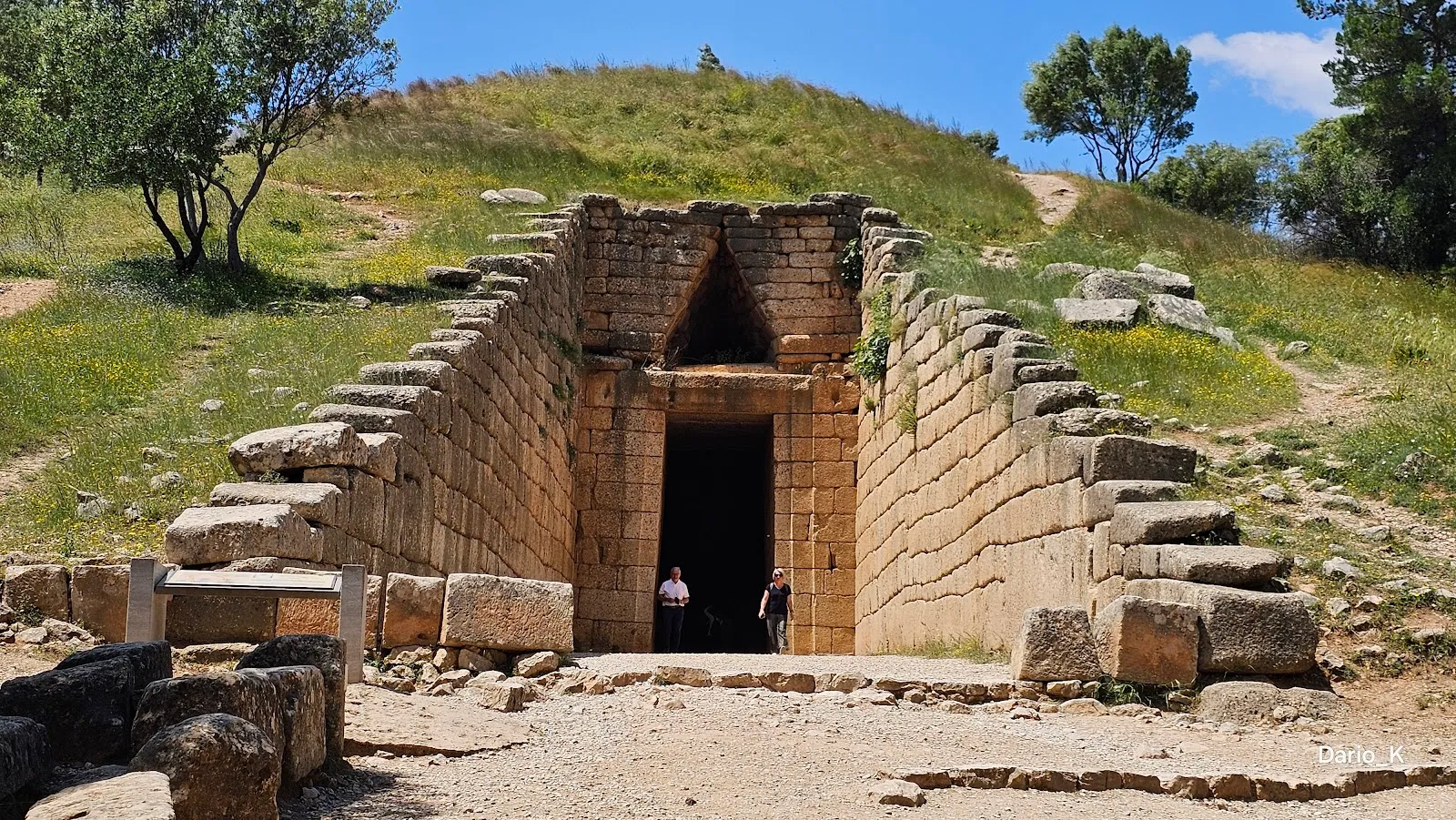
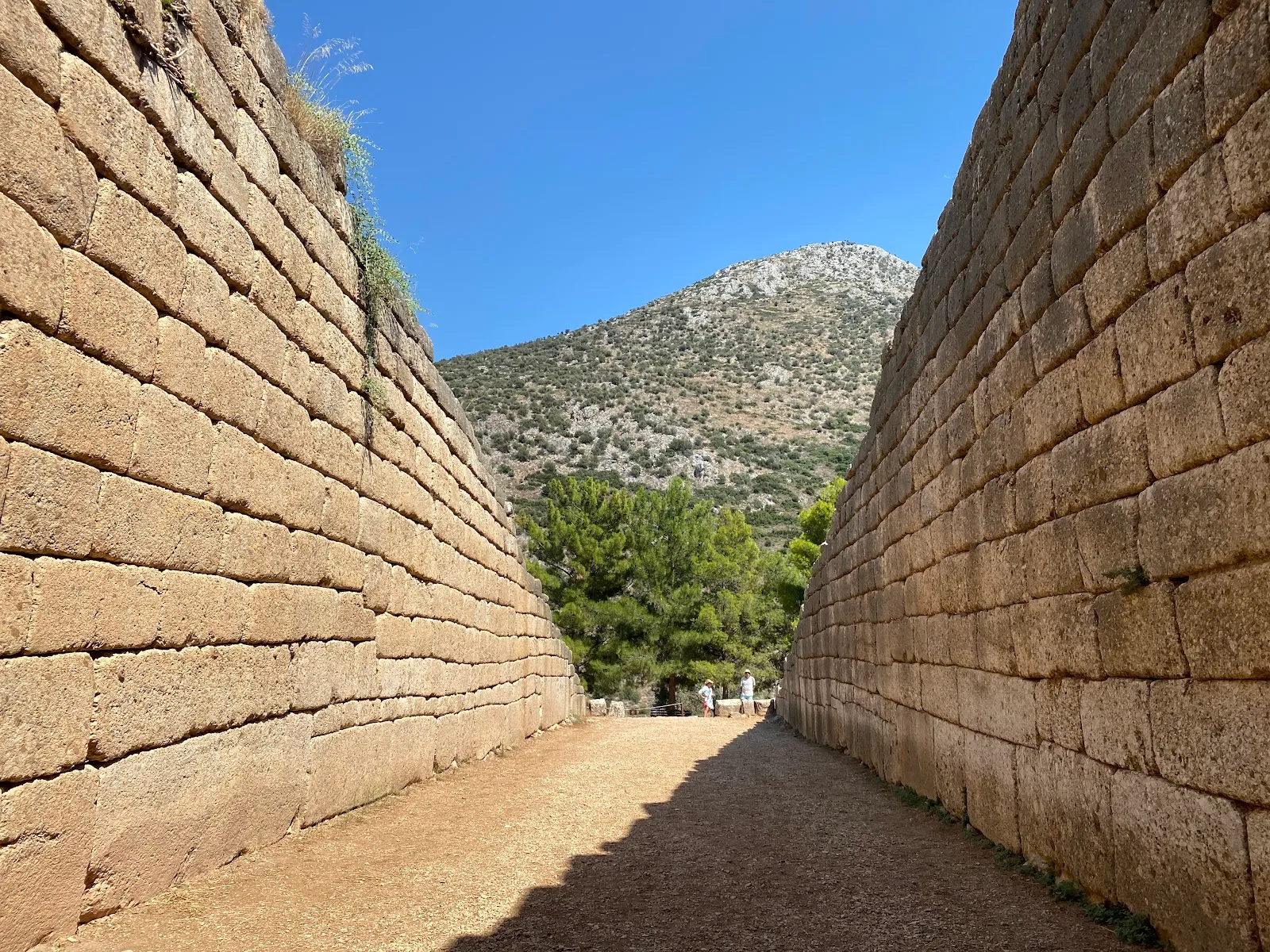
The approach is a long, open passage cut into the hillside and lined with large stone blocks. It leads through a substantial doorway into the circular burial chamber. The chamber rises about 13.5 metres and measures roughly 14.5 metres across. Its dome is built from stone courses that project inward as they rise, forming the tall, enclosed space.
A lintel stone above the entrance weighs more than 120 tonnes. The scale of that block, and the close fit of the masonry, give a clear sense of the building skill involved in moving and setting stone without modern machinery. Inside, take a moment in the middle of the chamber: voices and even light footsteps can sound unusually amplified. The dark interior also makes the curved stonework easier to notice.
Planning a visit with Mycenae
The tomb stands outside the main archaeological site of Mycenae, close enough to combine with the citadel and its museum in one visit. The shared ticket covers the tomb, archaeological site and museum, so there is no need to buy separate admission for each. Check the parking signs on arrival: the tomb and main site have distinct parking areas, and the main-site car park is farther along the road.
Starting or finishing at the tomb can help you avoid the busiest tour-group periods. If you visit the museum as well, its objects and displays add context to the monuments around Mycenae. The original golden mask popularly associated with Agamemnon is held at the National Archaeological Museum in Athens, not at the tomb.
Perguntas frequentes
Is the Treasury of Atreus the Tomb of Agamemnon?
It is commonly called the Tomb of Agamemnon, but the burial has not been identified with certainty. Its date suggests it may belong to an earlier ruler, possibly Atreus.
Is the Treasury of Atreus included in the Mycenae ticket?
Yes. The same ticket covers the tomb, the Mycenae archaeological site and the museum.
How long should I allow for a visit?
Allow about 30 to 60 minutes to see the passage and chamber and take time to listen to the acoustics.
Where is the Treasury of Atreus?
It is on Panagitsa Hill, outside the main archaeological site of Mycenae in the Peloponnese.