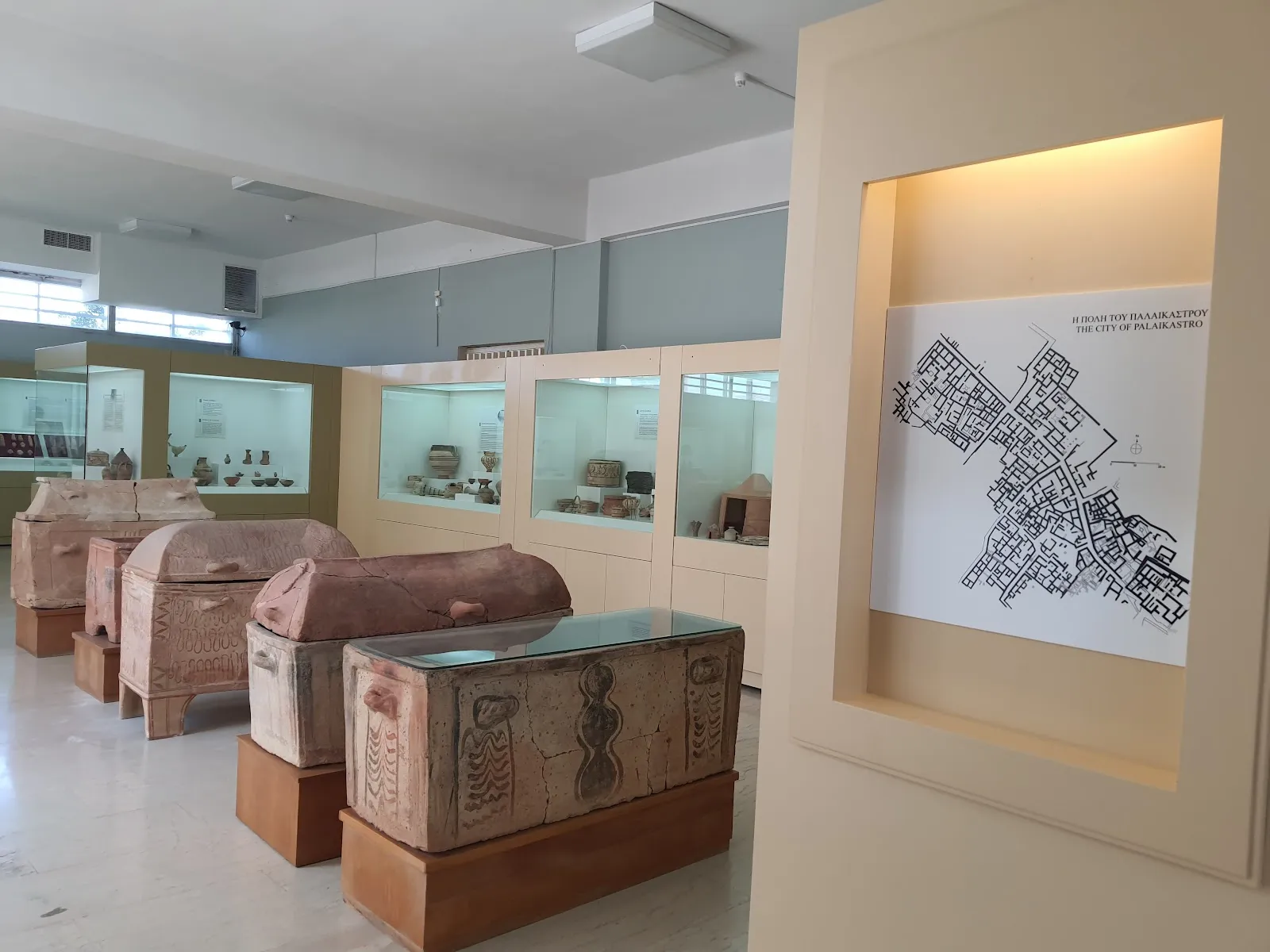
On Ierapetra Street in Sitia, this compact museum brings together archaeological finds from eastern Crete, from the Neolithic era to Roman times. Its collection includes pottery, tools and objects connected with Minoan daily life, alongside Greek and Roman pieces. Look for the Palaikastro Kouros, a finely detailed Minoan figure made of ivory and gold, and notice how some sculptures and pottery show Egyptian influences. Clear labels help explain the objects and their place in the region’s history.
Finds from across eastern Crete
The Archaeological Museum of Sitia opened to the public in 1984. Its collection brings together discoveries from sites across eastern Crete, including the palace of Zakros, Palekastro, Mochlos and Psira. Finds from the area’s settlements and burial grounds help place the objects within the region where they were uncovered.
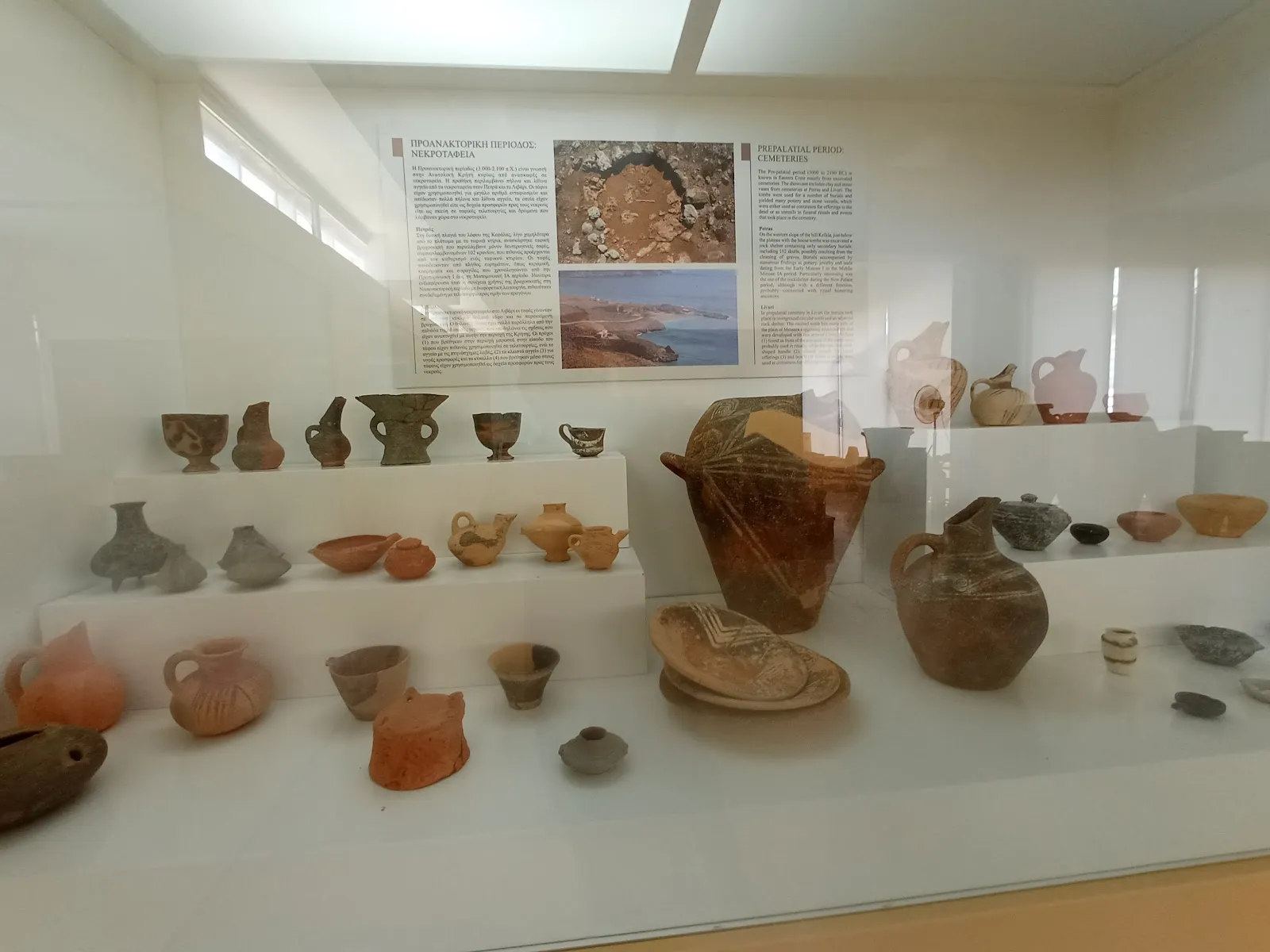
The displays cover a long span of history, from the Neolithic era to the Roman period. Minoan material forms a central part of the collection, with Greek and Roman objects extending the story into later centuries. Pottery, tools and ceremonial objects give a sense of the activities and practices that shaped life in the region.
The Palaikastro Kouros
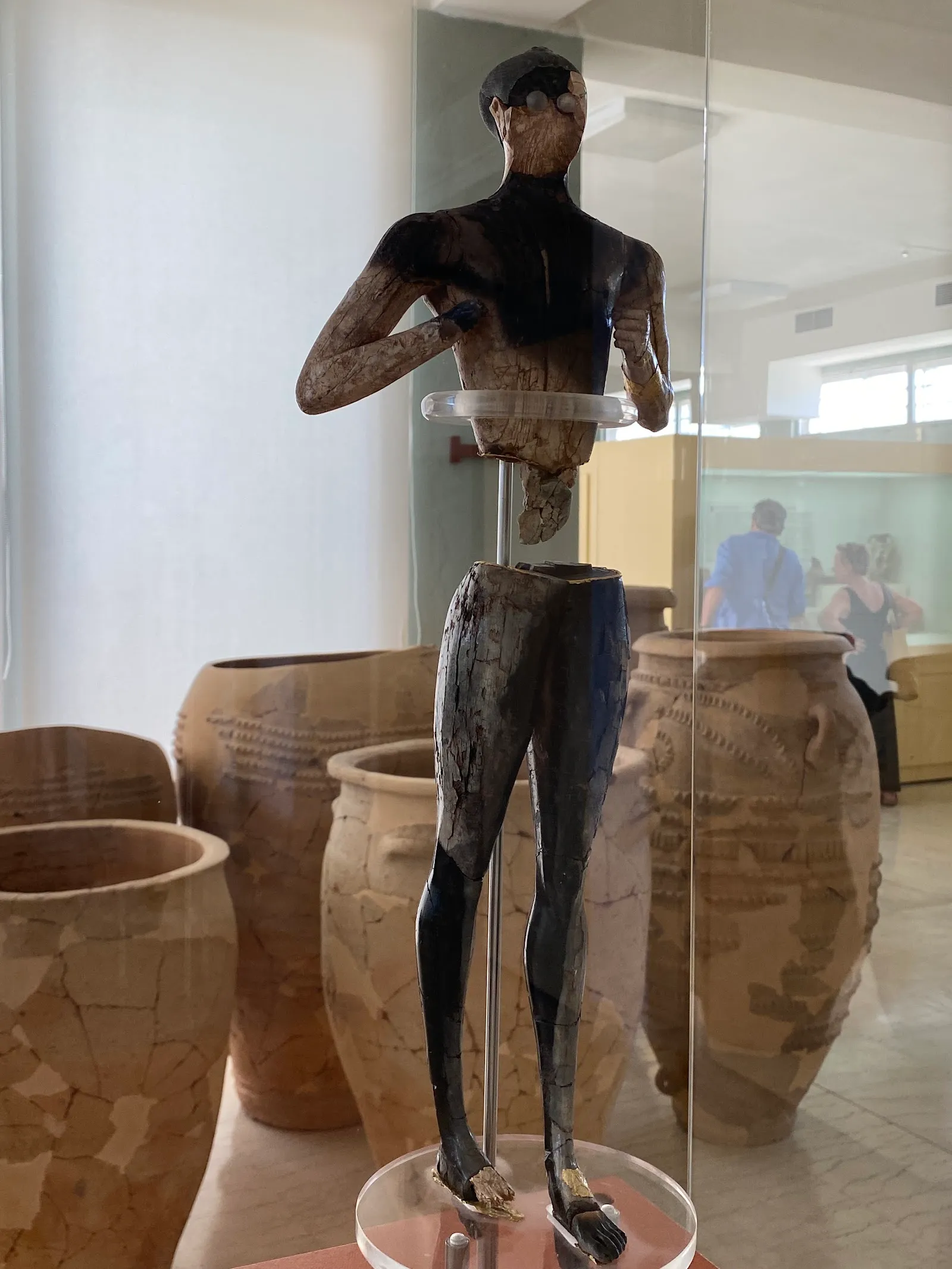
The museum’s standout object is the Palaikastro Kouros, a Minoan figure made from ivory and gold. Its detailed craftsmanship makes it one of the collection’s most distinctive works. The figure was found at Palaikastro, an important archaeological site in eastern Crete.
As you look around the galleries, notice how the objects connect local life with wider Mediterranean exchange. Some sculptures and pottery show Egyptian influences, while finds from the region also point to contacts with places such as Rhodes and Cyprus. These details give the collection a wider context without taking it away from its focus on eastern Crete.
Reading the displays
The museum is modest in scale, and labels provide useful context for objects associated with Minoan daily life. Some groups of similar items can feel repetitive, so focus on pieces that show a different material, use or artistic influence. The collection also includes examples of Linear A, the undeciphered writing system used by the Minoans.
Many of the objects came from excavations at nearby sites, including the palace of Zakros. Seeing them here can add context to a visit to the archaeological parks of eastern Crete: the museum gathers finds from across the area, while the sites show where they were discovered. The museum is at 18 Papandreou Karolos Street in Sitia.
Perguntas frequentes
What is the highlight of the Archaeological Museum of Sitia?
The Palaikastro Kouros is the collection’s standout: a finely detailed Minoan figure made of ivory and gold.
What periods does the museum cover?
The collection spans from the Neolithic era to the Roman period, with a strong emphasis on Minoan finds.
Where is the Archaeological Museum of Sitia?
It is at 18 Papandreou Karolos Street in Sitia, Crete.
When did the museum open?
The Archaeological Museum of Sitia opened to the public in 1984.