Athens’ National Archaeological Museum brings together finds from across Greece, from prehistoric objects to antiquities of the Roman period. Its galleries cover sculpture, metalwork, vases and smaller objects, with an Egyptian and Near Eastern collection too. Look for the gold Mask of Agamemnon, the Artemision bronze and the Antikythera Mechanism, then take time with everyday objects that show how people lived. The collection is extensive, so this suits a visit of several hours, especially if ancient art and history are your focus.
A collection spanning Greek antiquity
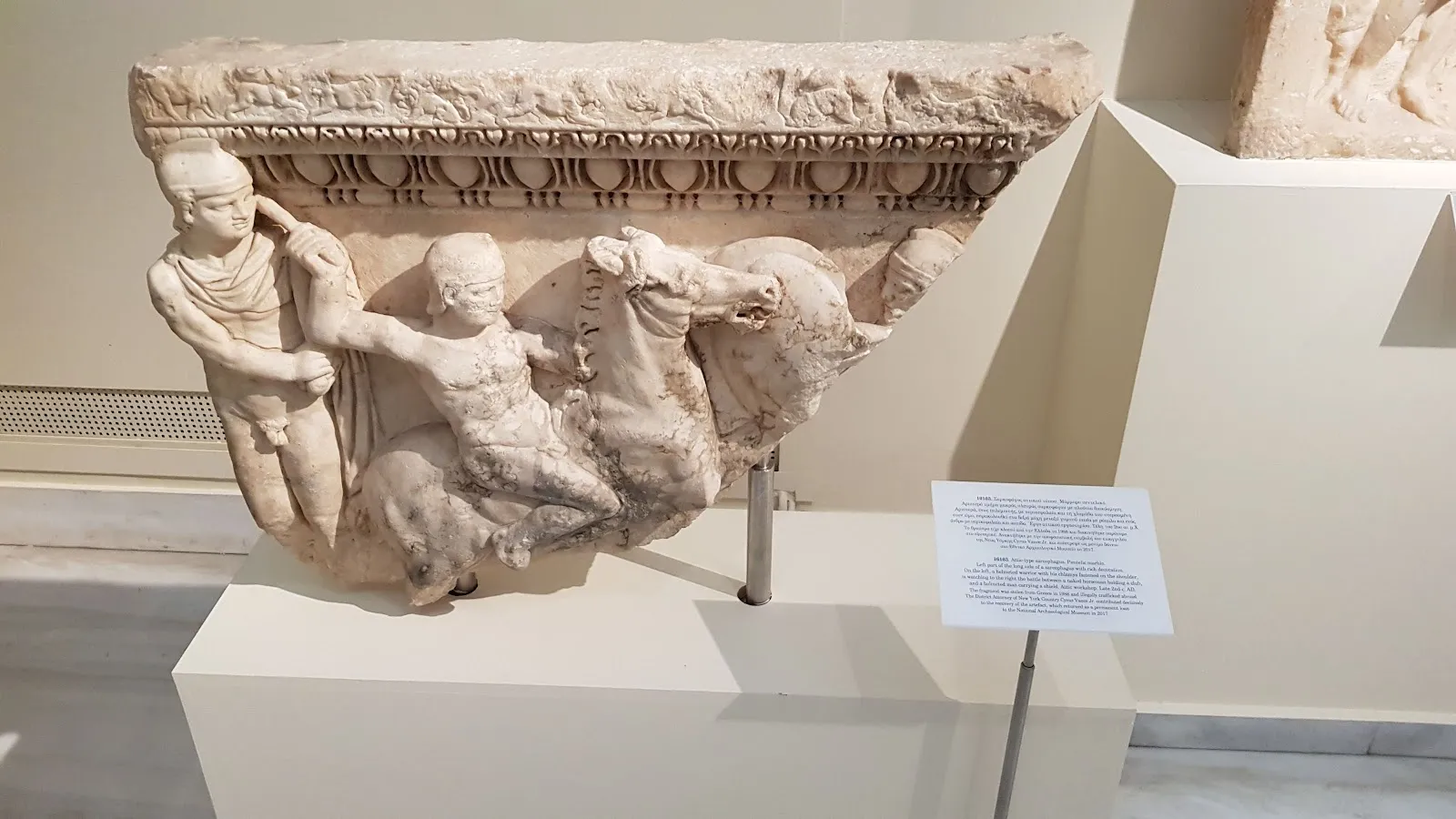
The National Archaeological Museum was established to house antiquities found across Greece. Its collection ranges from prehistoric periods to late antiquity, with objects from sites and cultures including Neolithic, Cycladic and Mycenaean Greece. Rather than focusing on one excavation or era, the galleries bring together material from many places and periods.
The museum’s permanent collections cover prehistoric antiquities, sculpture, vases and minor objects, and metalwork. There is also a collection of Egyptian and Near Eastern antiquities. Together, they give you several ways into the past: through large public sculptures, finely made vessels and smaller objects connected with everyday life.
Highlights to look for
The gold Mask of Agamemnon is among the museum’s best-known Mycenaean objects. The Mycenaean collection also includes gold finds, while material connected with Nestor’s Palace introduces visitors to Linear B, an early form of written Greek.
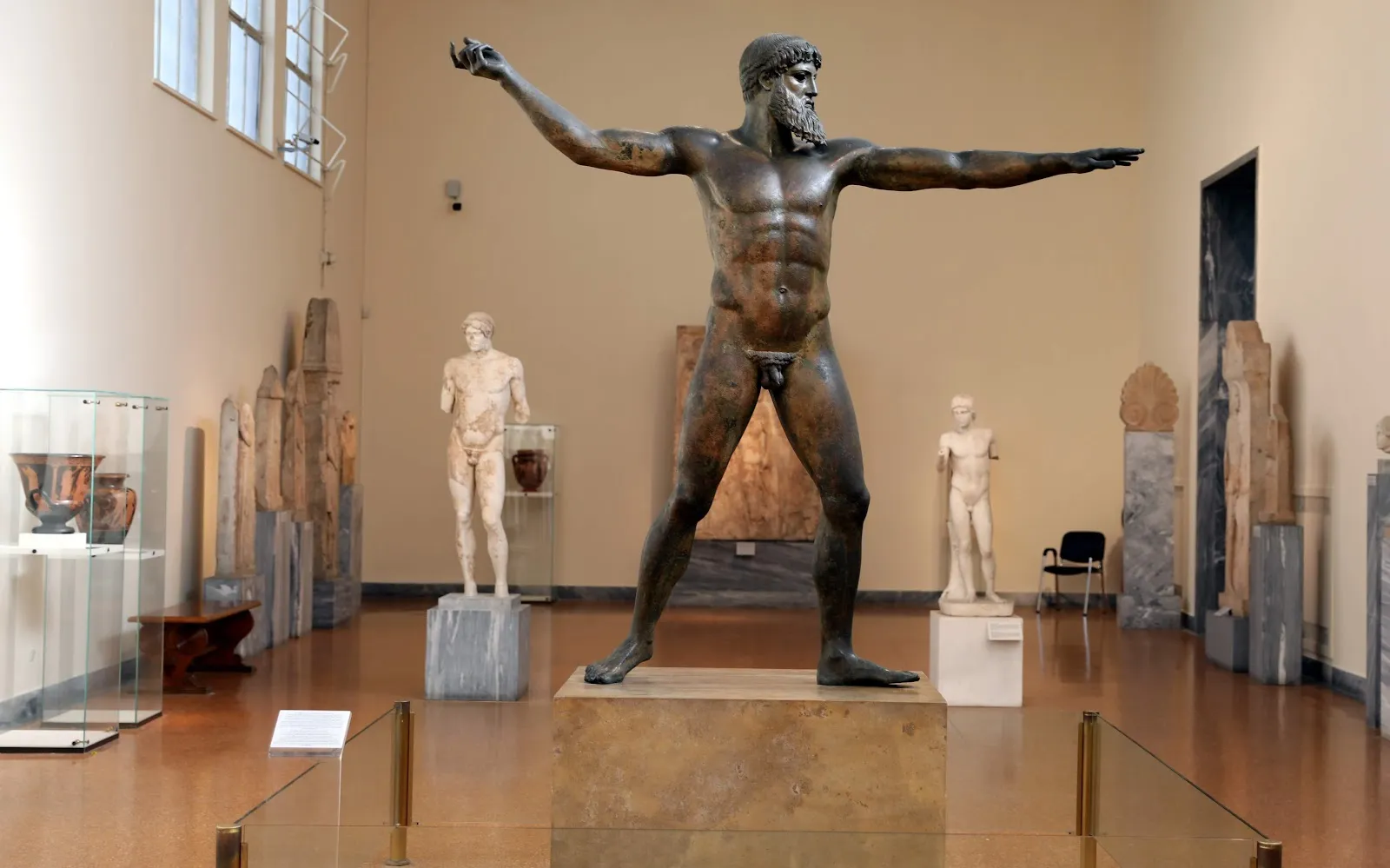
In the sculpture galleries, look for the Artemision bronze, identified as a figure of Zeus or Poseidon, and the Jockey of Artemision. The museum’s sculptures trace changes in ancient Greek art, while funerary objects and grave steles offer a different view of how the dead were commemorated.
The Antikythera Mechanism has a gallery devoted to the object and its engineering. Recovered from a shipwreck near Antikythera, it is often described as an ancient analogue computing device. Its display explains what it was used for and how it worked, though the dark glass protecting the mechanism can make details difficult to see.
How to explore the galleries
The museum is large, with many rooms and additional spaces for special exhibitions. You can follow your interests rather than trying to see every object: choose a period or collection, then pause for pieces that catch your attention. If you want context as you go, audio tours are available, and guided tours are also mentioned among the ways to explore.
Set aside a few hours, and consider breaking the visit with a stop at the museum café. A first-Saturday free-entry suggestion appears in visitor information, but check current admission details before planning around it. Ticket booking in advance is recommended, and it is sensible to confirm which galleries are open before your visit.
Perguntas frequentes
How long should I spend at the National Archaeological Museum?
Allow several hours for its extensive galleries. The time needed depends on how closely you want to explore the collections.
What are the museum’s main highlights?
Look for the Mask of Agamemnon, the Artemision bronze, the Jockey of Artemision and the Antikythera Mechanism.
Does the museum have an Egyptian collection?
Yes. It has galleries of Egyptian and Near Eastern antiquities alongside its collections of Greek finds.
Can I get a break during my visit?
Yes. The museum has an onsite café.