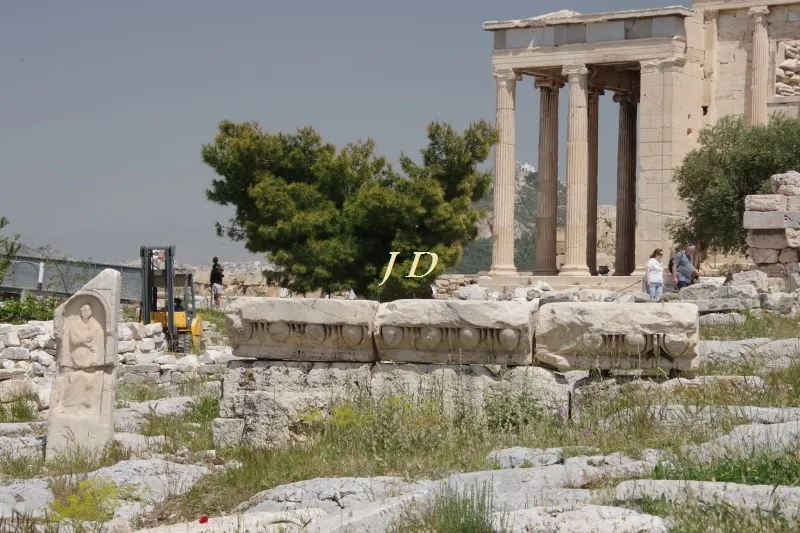
At the western approach to the Acropolis in Athens, Beulé Gate is a Roman-era entrance built in the 3rd century AD as part of the hill’s fortifications. Its marble blocks include pieces reused from earlier monuments, among them inscribed slabs from the Choregic Monument of Nikias. Walk through the gate on your way toward the Propylaea, and look for an inscribed slab above the outer western doorway. The gate’s sturdy construction offers a clear contrast with the classical architecture farther up the route.
A Roman entrance on the Acropolis route
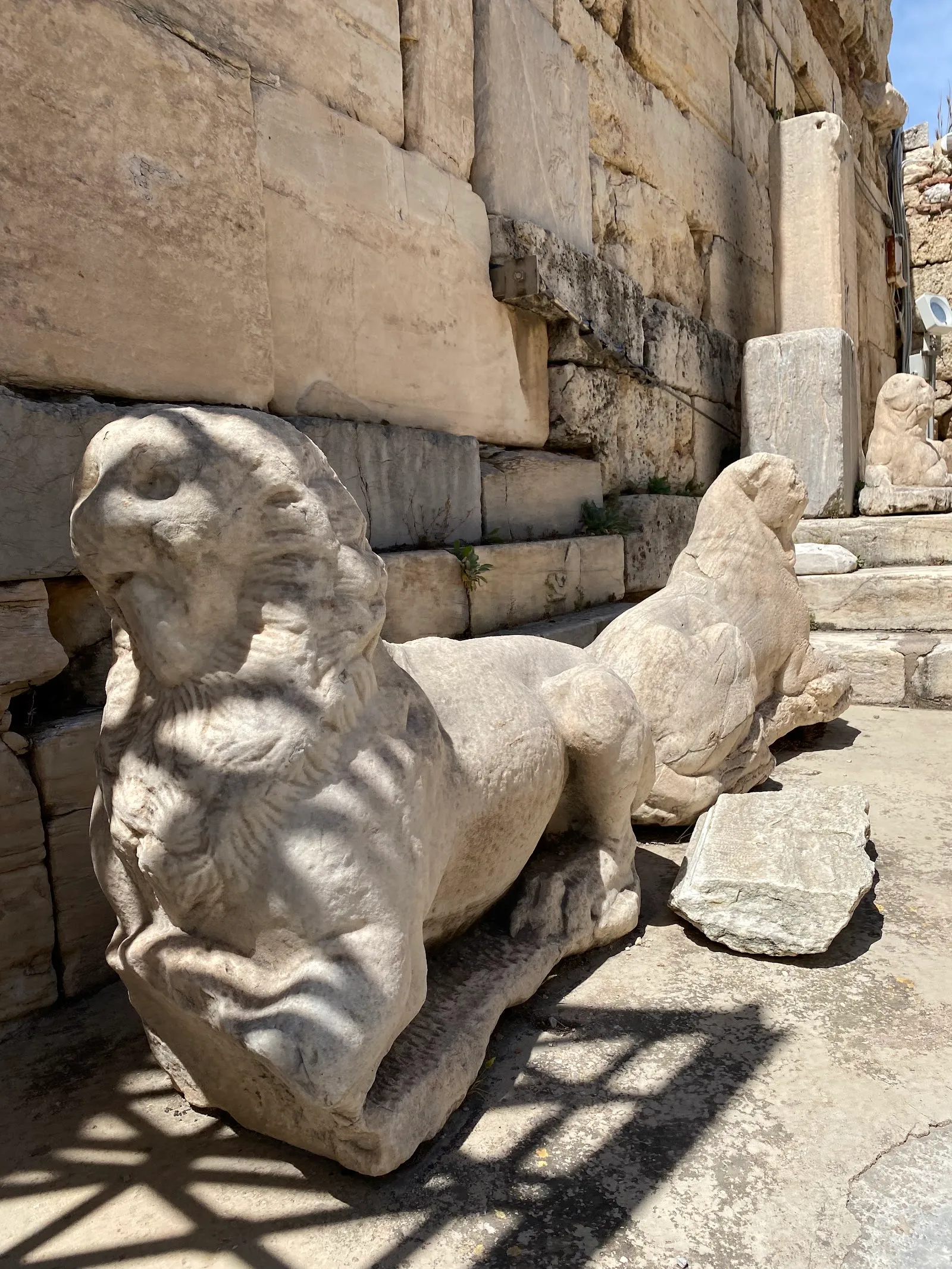
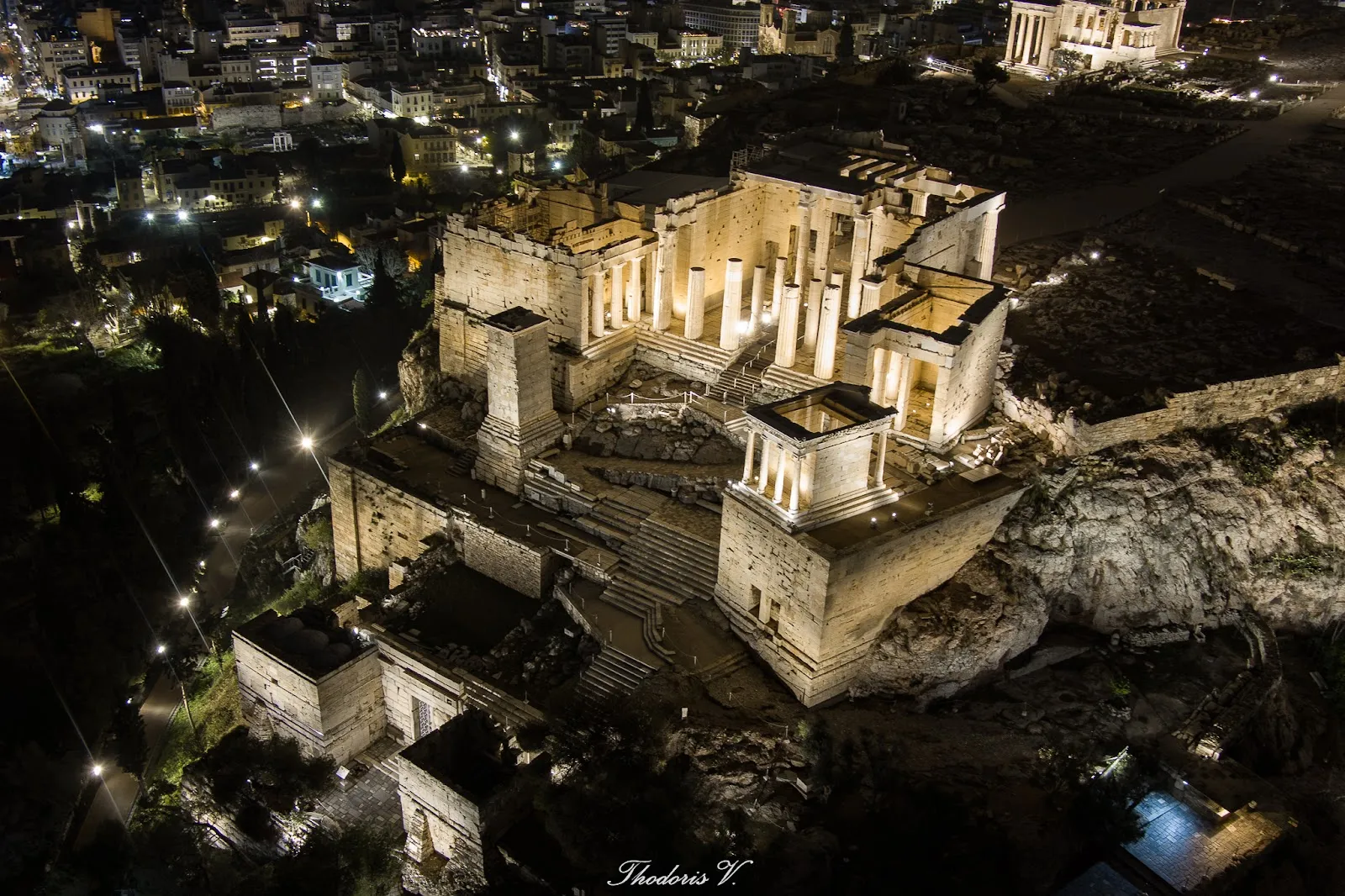
Beulé Gate stands at the western approach to the Acropolis, below the Propylaea. Built in the 3rd century AD, it formed part of a defensive system added during the Roman period. The entrance and its flanking rectangular towers were constructed from reused architectural pieces, including marble blocks taken from earlier monuments.
Its position makes the gate part of the route into the Acropolis complex. As you walk through, you pass a later layer of the site’s history before reaching the classical buildings farther uphill. The gate’s sturdy appearance differs from the more refined forms beyond it, reflecting the defensive role it served.
Reused stone and an inscribed slab
Look above the lintel of the outer, western doorway for an inscribed slab. It came from the Choregic Monument of Nikias, which stood on the Acropolis’s southern slope from 319 BC before its materials were reused. The slab is one example of how older architectural elements became part of the later fortification.
The gate takes its name from Charles-Ernest Beulé, the French archaeologist who uncovered it in 1852 while investigating the approach to the Propylaea. Work to clear the Acropolis monuments after the Greek War of Independence had drawn attention to a lower route. Auguste Titeux began exposing the staircase in 1846, and Kyriakos Pittakis later continued clearing it and partly reconstructed the steps.
What the gate tells you about the site
The Acropolis did not retain a single purpose or appearance across the centuries. Beulé Gate is evidence of its later use as a fortified place, and of the changes made to its access after the classical building period. The Roman entrance stands alongside structures from other periods, so the approach itself shows how the hill was adapted over time.
For more context while walking through the complex, a guided tour or audio guide can help connect the gate with the monuments ahead. The route includes stairs and a great deal of walking. Marble surfaces can be slick underfoot, so shoes with good grip are a practical choice.
Perguntas frequentes
When was Beulé Gate built?
It dates to the 3rd century AD, during the Roman period, when it formed part of a defensive system on the Acropolis.
Where is Beulé Gate?
It is at the western approach to the Acropolis in Athens, below the Propylaea.
What should I look for at Beulé Gate?
Look for the inscribed slab above the outer western doorway. It came from the Choregic Monument of Nikias, an earlier monument on the Acropolis’s southern slope.
What should I wear to visit the Acropolis?
Wear sneakers or other shoes with good grip. The marble is polished and can be slippery, and the site involves stairs and substantial walking.