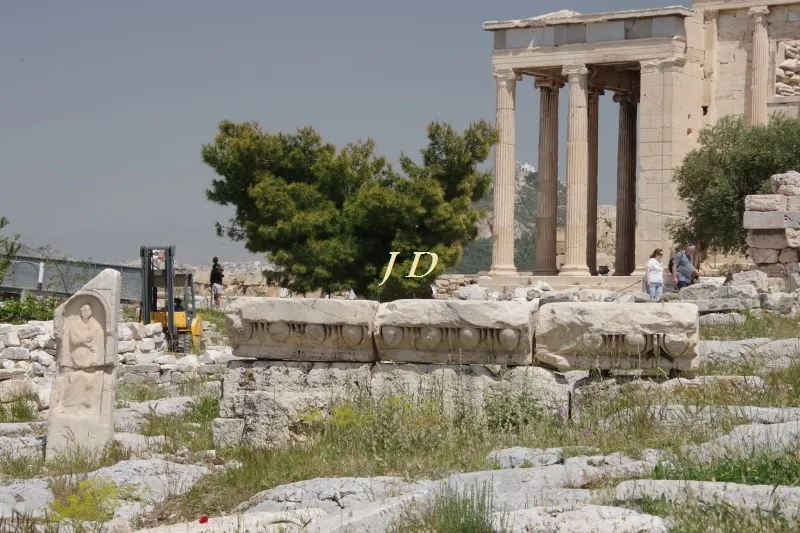
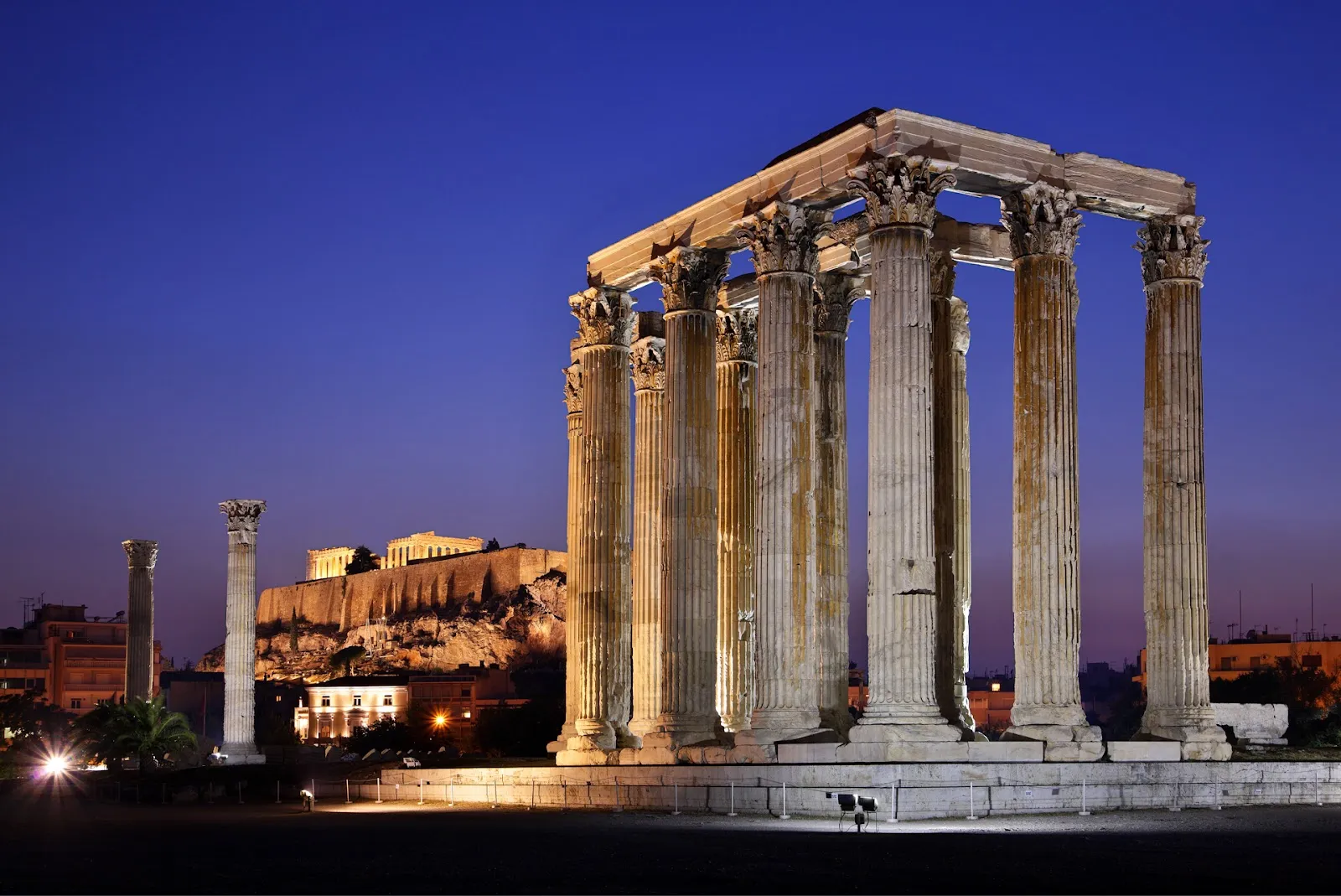
At the foot of the Acropolis, the Ancient Agora was the centre of public life in Athens, with spaces for trade, politics, worship and gathering. Today, paths lead among the remains of temples and civic buildings, with the Temple of Hephaestus among the best-preserved sights. The reconstructed Stoa of Attalos holds a museum of objects found at the site, including sculptures, pottery and inscriptions. Allow time to explore both the open-air ruins and the museum, and look up for views of the Acropolis.
A centre of ancient Athenian life
Set below the northwest side of the Acropolis, the Ancient Agora was the city’s public centre. Its open space and surrounding buildings served commercial, political, administrative, social and religious life. Athenians came to trade, meet, discuss public matters and take part in civic activities.
The area became a public gathering place in the 6th century BC. Its buildings changed over time, and the remains visible today belong to a site shaped by many periods of use. The Agora’s significance is not limited to its temples: the ruins also mark the setting of everyday civic life, from courts and government to commerce and conversation.
The Temple of Hephaestus and other remains
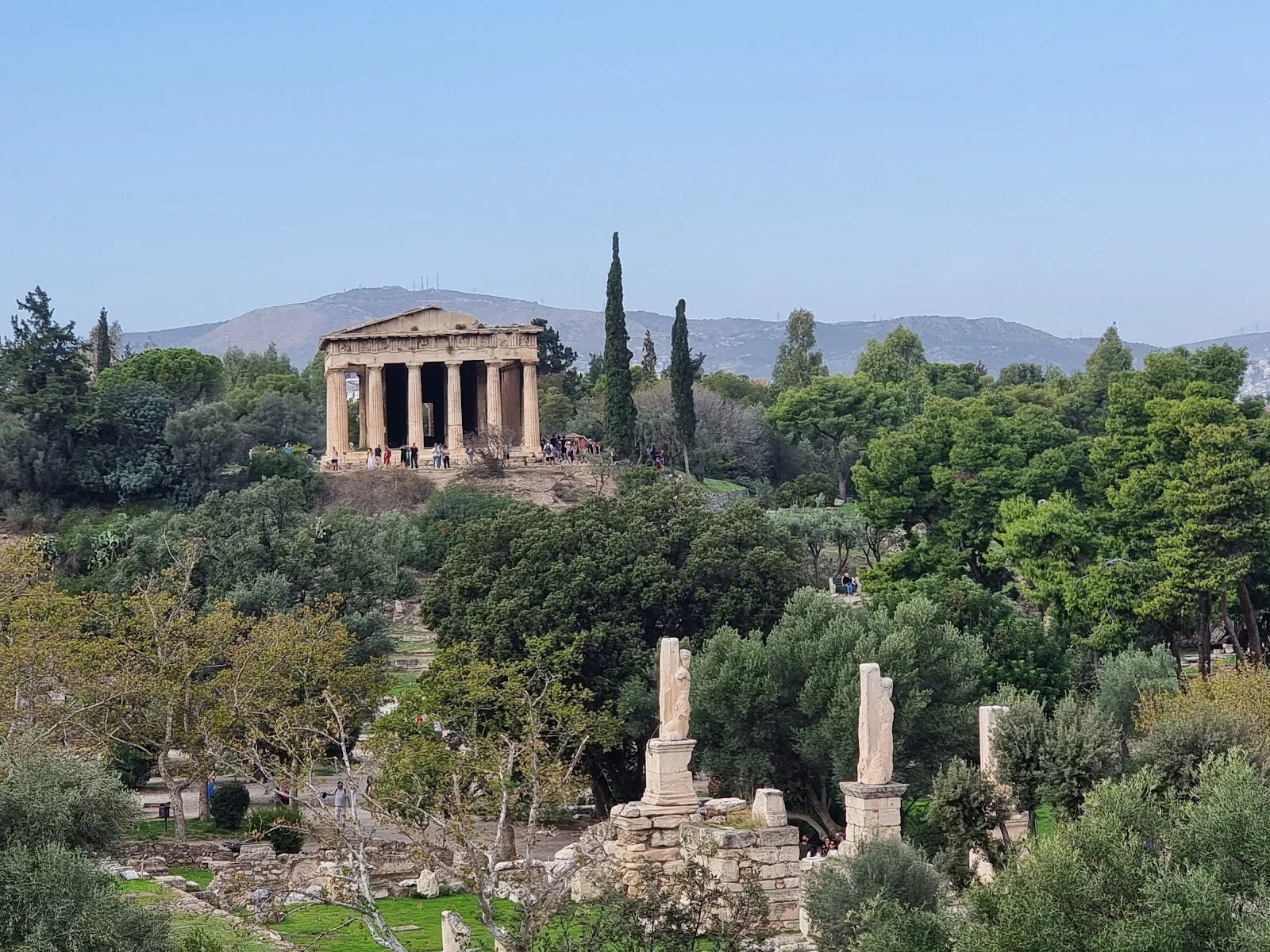
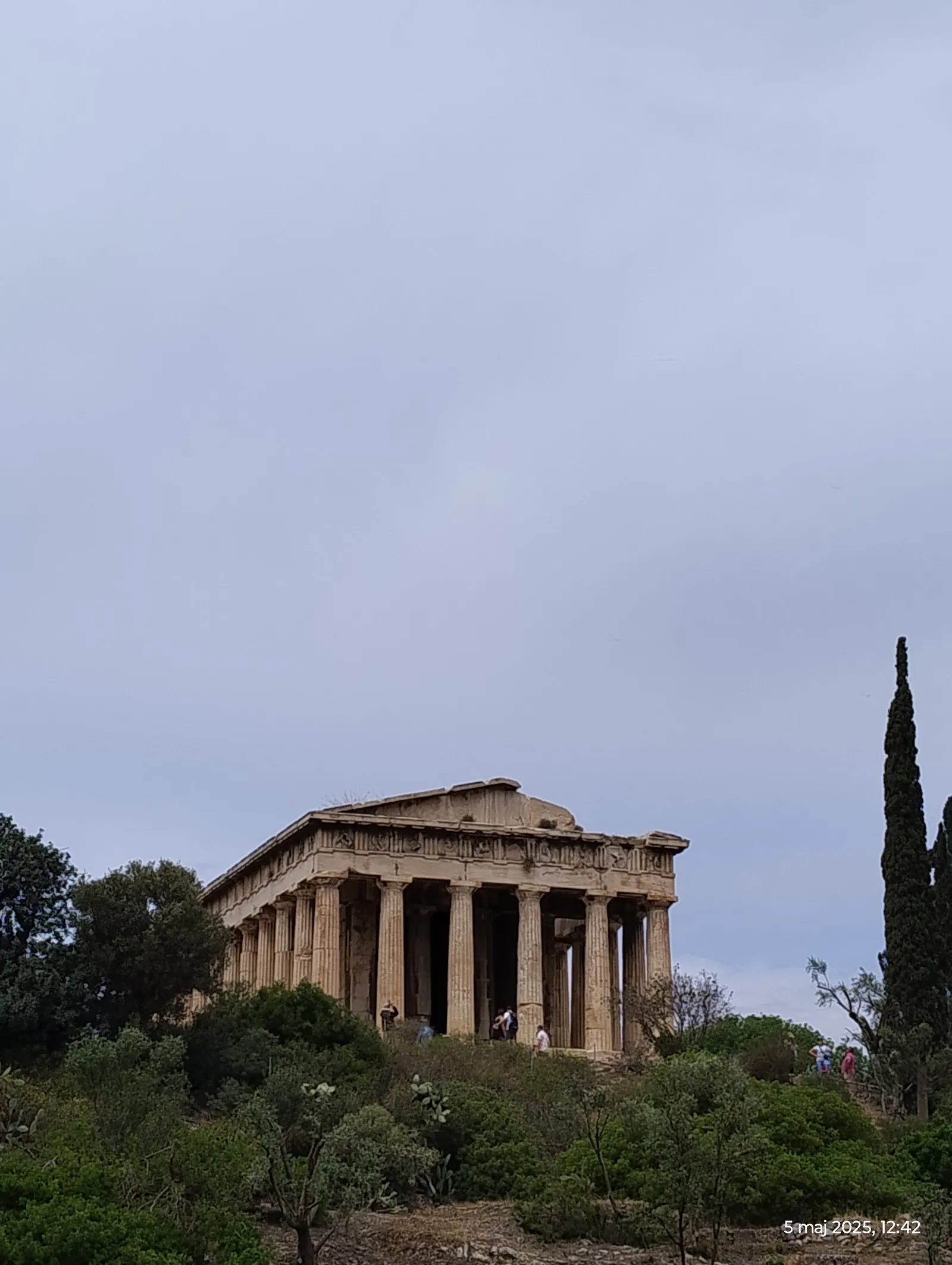
The Temple of Hephaestus is the clearest surviving landmark in the grounds. Its preservation is linked to its continued use after its completion, around 440 BC, which helped protect it from the removal of stone. From different points on the paths, the temple rises above the lower remains and greenery.
Other structures recall the Agora’s practical and political roles. The site included meeting places, a law court and a mint, along with temples and monuments. The Tholos was associated with the city’s officials, while the Bouleuterion served as a council building. Not every ruin is easy to identify at a glance, so the museum helps connect the scattered remains to the activities once carried out here.
The museum in the Stoa of Attalos
The long, reconstructed Stoa of Attalos houses the Museum of the Ancient Agora. The original building was excavated between 1859 and 1902, then restored in the 1950s to accommodate finds from the site. Its galleries contain objects such as sculptures, pottery, inscriptions and everyday items.
These exhibits give context to the Agora’s political and social history, as well as the objects used in daily life. Allow time to visit the museum as part of your walk: it adds detail to the buildings outside and provides shelter from the sun. The grounds also contain the Byzantine Church of the Holy Apostles, a surviving monument with patterned brickwork on its exterior.
Perguntas frequentes
How long should I spend at the Ancient Agora?
Allow about two hours to walk through the archaeological site and visit the museum in the Stoa of Attalos.
What are the main sights at the Ancient Agora?
The Temple of Hephaestus and the Stoa of Attalos, which houses the site’s museum, are the main highlights. The Byzantine Church of the Holy Apostles is also within the grounds.
Is there a museum at the Ancient Agora?
Yes. The Museum of the Ancient Agora is inside the reconstructed Stoa of Attalos. Its collection includes sculptures, pottery, inscriptions and everyday objects found at the site.