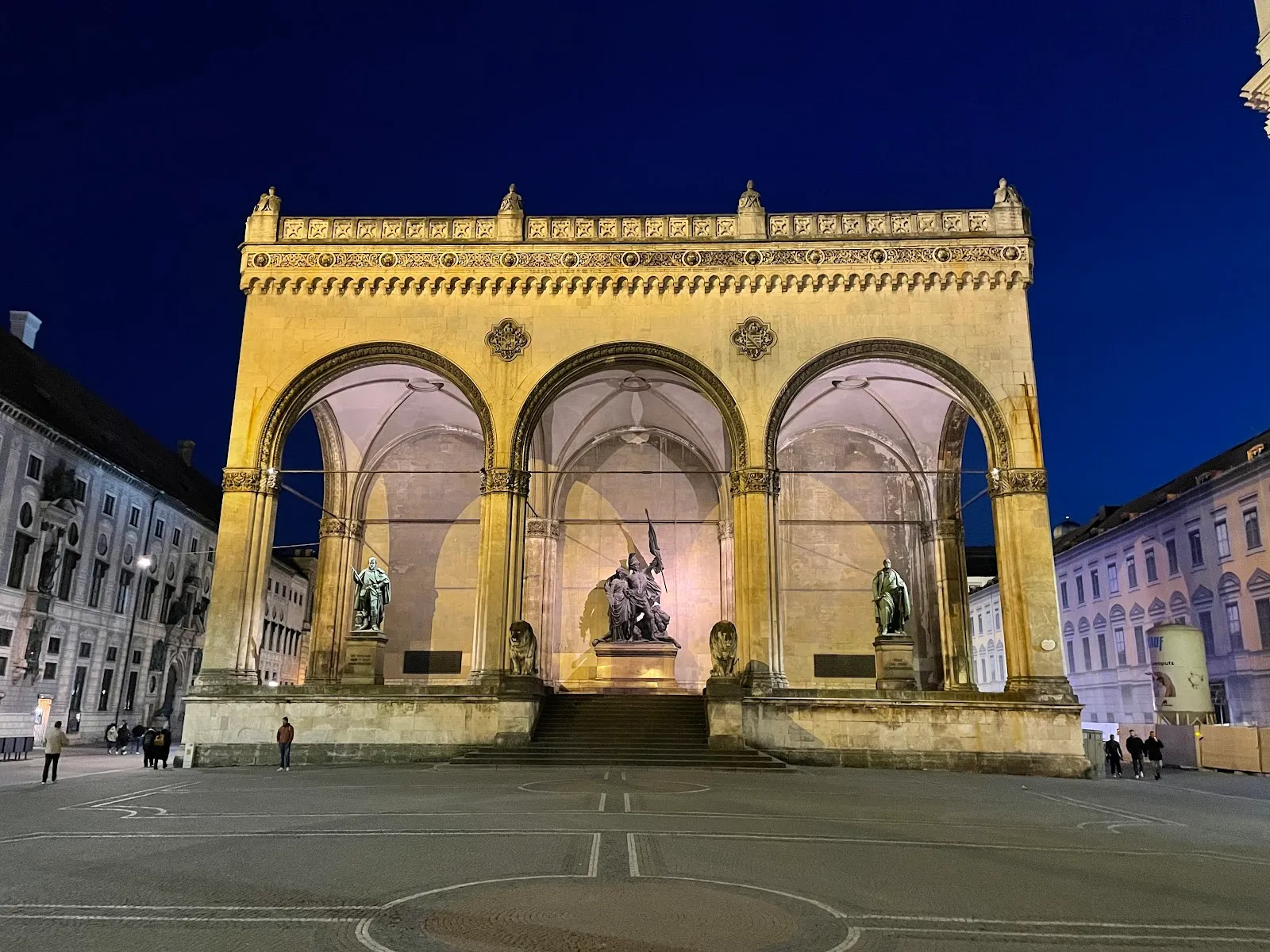
Feldherrnhalle is an open-air monument at Odeonsplatz in Munich, beside the Residenz. Commissioned by King Ludwig I to honour the Bavarian army, it was built between 1841 and 1844 with three large arches inspired by Florence’s Loggia dei Lanzi. Look for the statues of military leaders Count of Tilly and General von Wrede, along with the central army memorial. You can take in the architecture from the square, though restoration work or events may partly block the view.
A loggia inspired by Florence
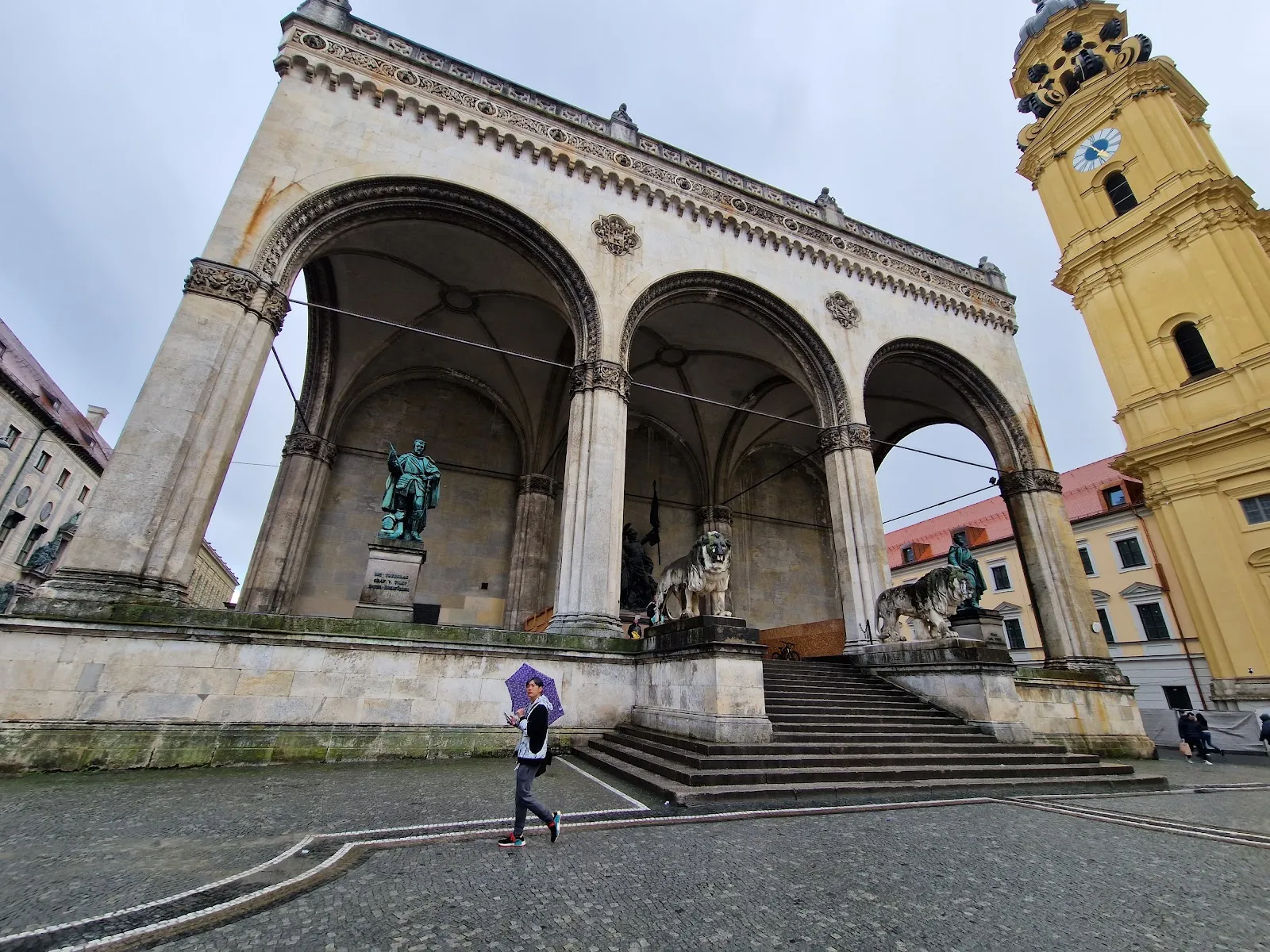
Feldherrnhalle stands at the southern end of Odeonsplatz, beside the Munich Residenz. King Ludwig I commissioned the monument to honour the Bavarian army. Friedrich von Gärtner designed it after Florence’s Loggia dei Lanzi, giving this Munich square an Italian-inspired architectural landmark.
The structure was built between 1841 and 1844. Its three broad arches open onto a covered gallery, and its form is a loggia: a roofed, open-sided space. The design recalls the Florentine model without changing the monument’s purpose as a memorial to Bavaria’s military past.
The statues and memorial
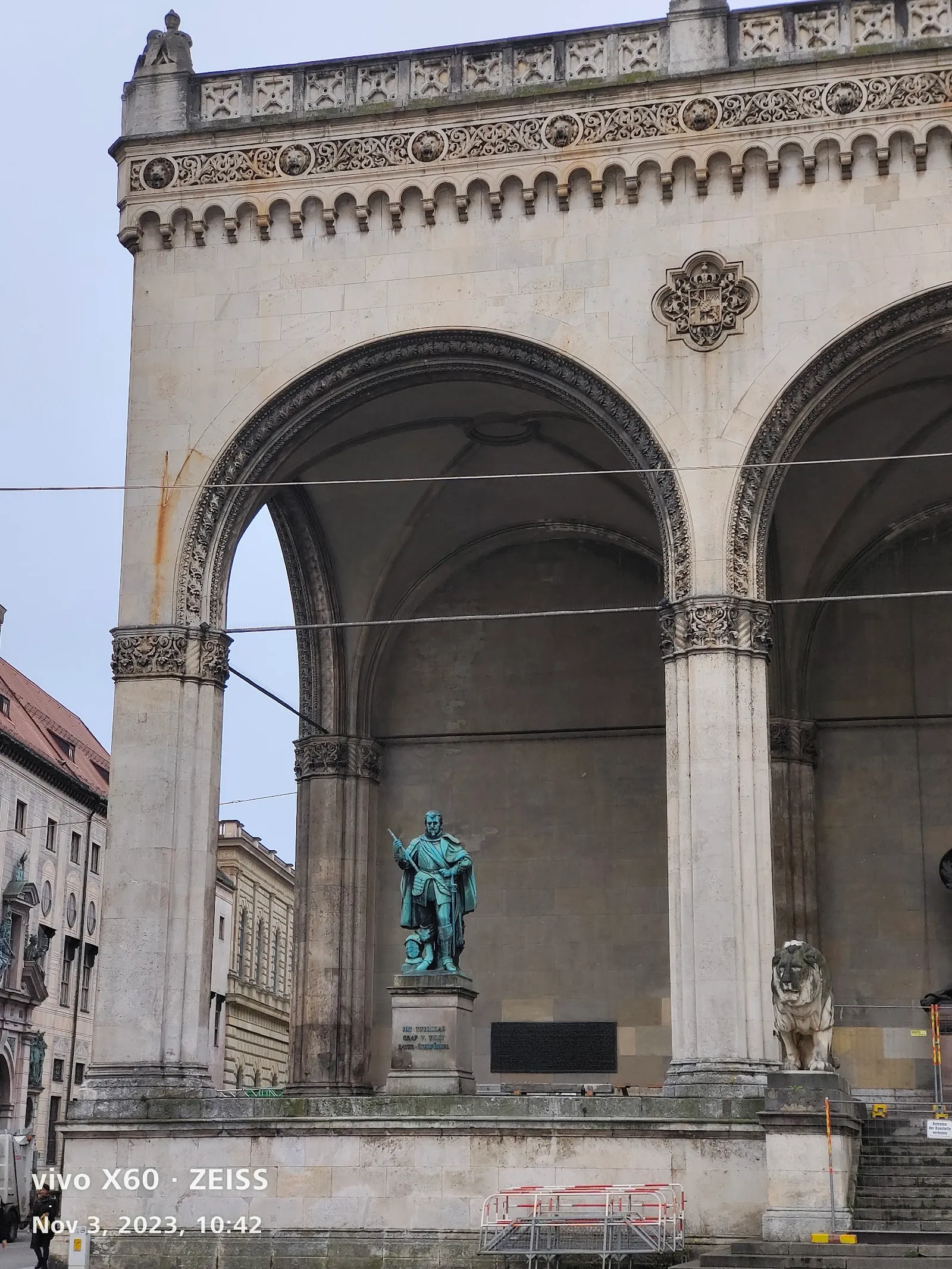
The arches frame sculptures associated with Bavarian military history. Among the figures commemorated are Count of Tilly and General von Wrede. A central monument honours the Bavarian army, while lions stand guard at the structure. Take time to look at the figures and the arrangement of the arches from Odeonsplatz; the monument is often viewed from outside, and fencing can limit how close you get.
The hall was built to commemorate the army and its leaders, including soldiers who died in the Franco-Prussian War. Its open design makes the statues visible from the square, though restoration work or events may partly obscure them.
Odeonsplatz and the events of 1923
Feldherrnhalle is also tied to a difficult chapter in German history. On November 8, 1923, Hitler and around 2,000 followers attempted a coup, known as the Beer Hall Putsch. Police stopped the group in front of the monument. The failed revolt later became a central episode in Nazi Party history.
The site has also been associated with efforts to treat it as a place of National Socialist commemoration. Its military memorial and architecture should be understood alongside this later history, rather than viewed only as a decorative backdrop.
What to see nearby
Odeonsplatz brings several historic landmarks together. The Theatinerkirche stands beside the square, and the Residenz is next to Feldherrnhalle. The Hofgarten, the Residenz’s courtyard and Ludwigstraße are also within walking distance. These nearby stops make it easy to see the monument as part of Munich’s historic centre rather than as a standalone visit.
The square can draw crowds later in the day, and temporary events or restoration may affect the view. If the arches are partly screened, you can still see the monument’s overall form from the surrounding square.
Perguntas frequentes
Where is Feldherrnhalle?
It is on Odeonsplatz in Munich’s old town, beside the Residenz.
What is Feldherrnhalle?
It is an open-air loggia commissioned by King Ludwig I to honour the Bavarian army. The design was inspired by Florence’s Loggia dei Lanzi.
Can you go inside Feldherrnhalle?
The monument may be fenced off, so visitors often view it from Odeonsplatz rather than entering or getting close to the arches.
How long should I spend at Feldherrnhalle?
Allow about 15 to 30 minutes to view the monument and its sculptures. Nearby sights include the Residenz, Hofgarten and Theatinerkirche.


