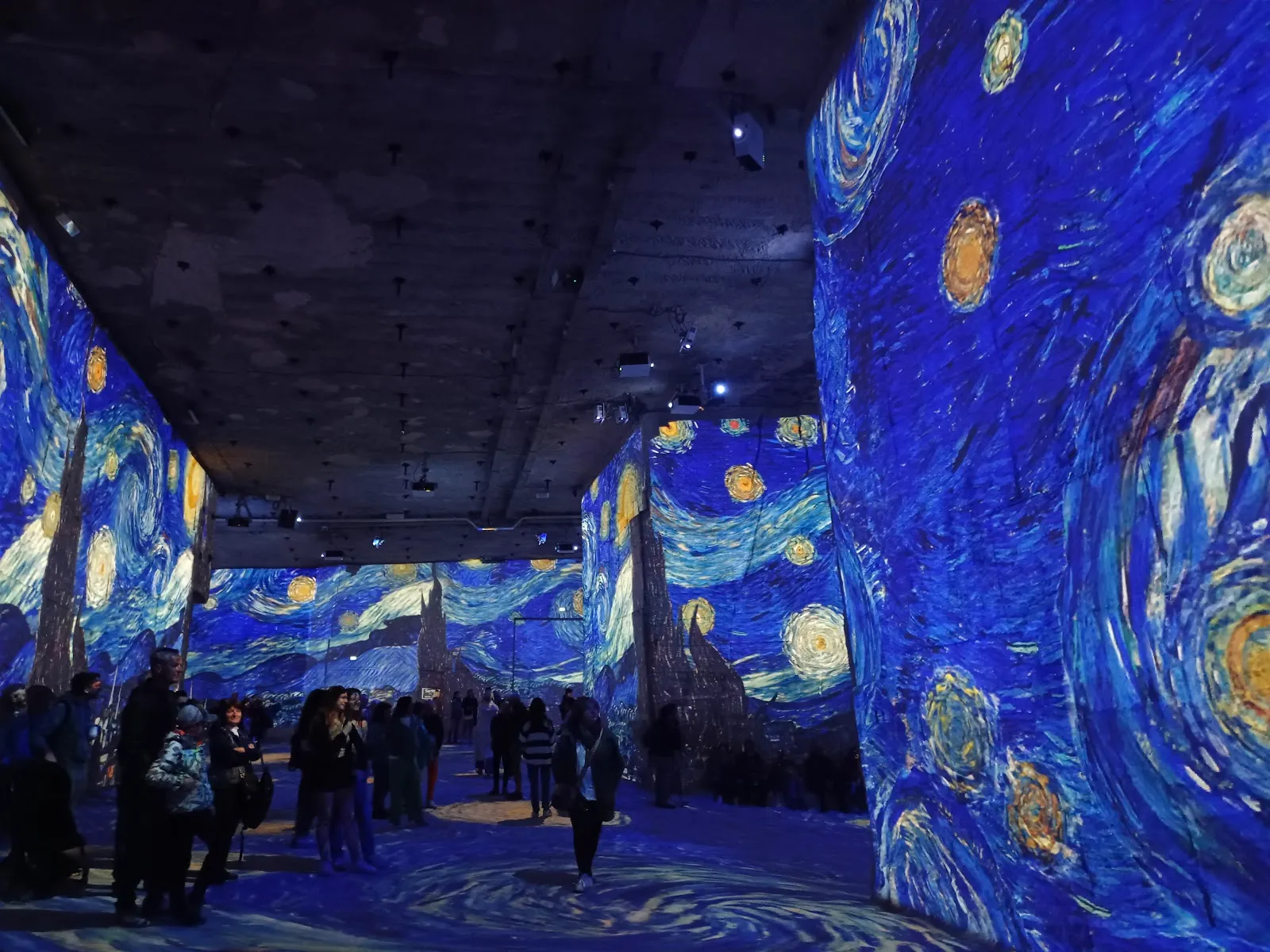
Carrières des Lumières is a digital art venue inside a former limestone quarry on the Route de Maillane, at the foot of Les Baux-de-Provence. Famous paintings are projected over the stone walls, pillars and floor, with music timed to the images. Each year's programme centres on one artist or movement, and past shows have covered Van Gogh, Monet and Picasso. The space is cool and quiet inside, with stone benches for sitting and room to walk. The village and its castle are close by, so most people pair the two in a single day.
From limestone quarry to art venue
The quarry lies in the Val d'Enfer, at the foot of Les Baux-de-Provence. It was first known as the Grands Fonts quarry. Its limestone built the medieval village and the castle of Les Baux. Work stopped in 1935, when the site was no longer profitable.
In 1959 Jean Cocteau used the empty quarry to film The Testament of Orpheus. In the late 1970s it was reopened as a cultural venue with sound and light shows on the rock walls, first under the name Cathédrale d'Images. Since 2012 the shows have been digital and immersive, produced by Culturespaces. The site is a listed natural site.
Inside the show
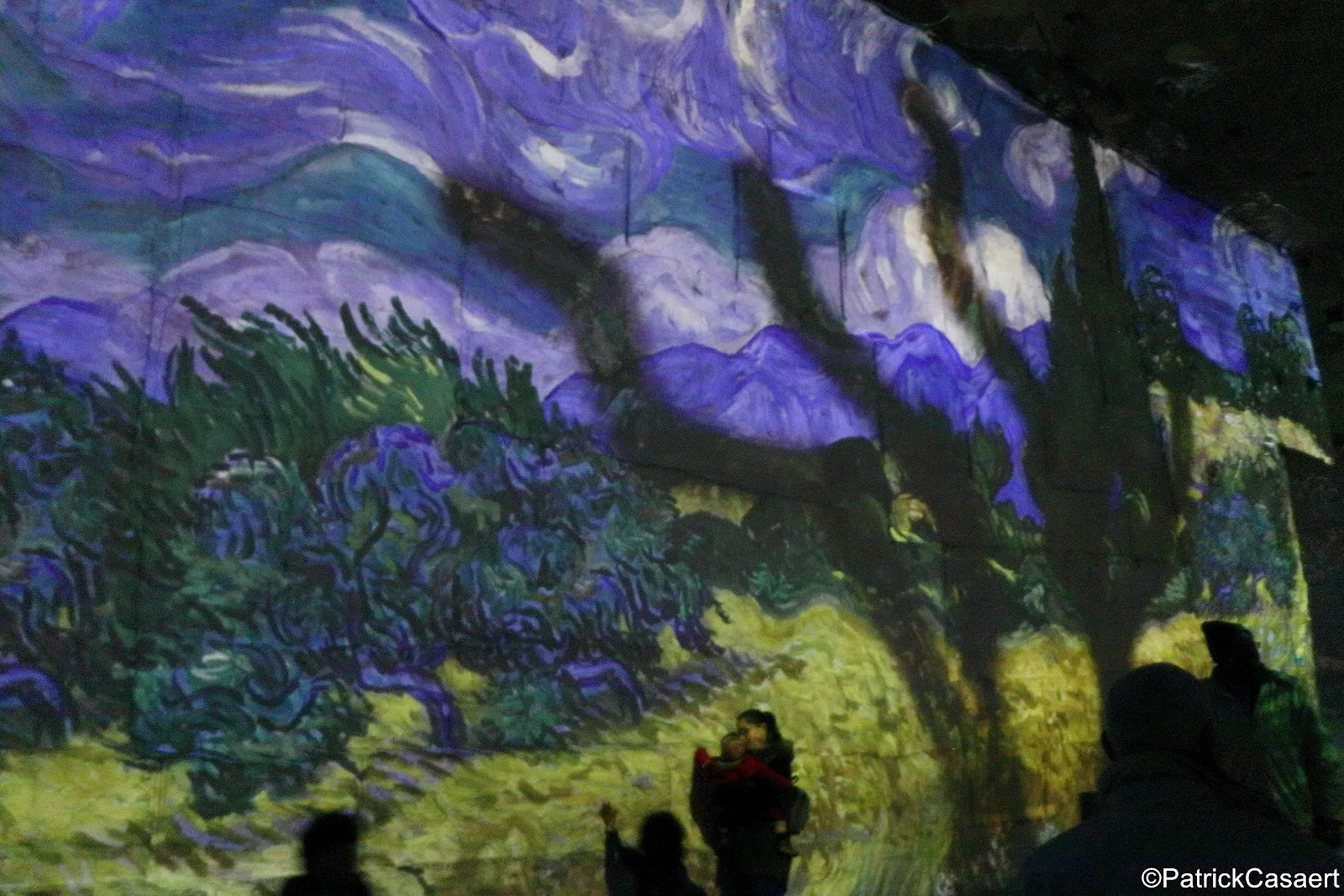
The projections cover more than 7,000 square metres. A hundred or more video projectors cast images onto the walls, ceiling, pillars and floor, and music runs through the whole programme. A single show lasts about 40 minutes, and visitors often stay for an hour, because there is no fixed route. You can walk through the galleries or sit on the stone benches while the images change.
The quarry stays cool, which is welcome on a hot summer day. It is also a former mountain quarry, so there is dust in the air. Children can move around freely during the show. There is a small café inside for a snack or a drink before or after.
The entrance, restrooms and seating are wheelchair accessible, and the venue has a hearing loop.
A different artist each year
Each year the programme is built around one artist or movement, and the walls and floor become the canvas for their work. Past programmes include Van Gogh, Dalí, Cézanne in 2021, the Dutch masters from Vermeer to Van Gogh in 2023, and Monet in 2025. Recent programmes have also covered Picasso and Frida Kahlo, with Le Petit Prince alternating with them from April. A new creation called Océan, about the underwater world and built from more than 800 video sequences, was announced from 4 July 2026.
Because the line-up changes, check the official website for what is on the day you plan to visit.
Combining it with Les Baux-de-Provence
The village of Les Baux-de-Provence is a short walk up the road from the quarry. Many visitors park at the quarry, see the show, then walk up to the village. The Pass Baux-de-Provence covers the Carrières des Lumières, the Château des Baux and the Yves Brayer Museum.
One suggested full-day order is the village in the morning, lunch, the castle, then the quarry in the late afternoon. Walkers can use the parking area as a starting point for trails with views of the village. A circuit of about 2 hours 30 minutes starts next to the tourist office and passes through the quarry area.
Perguntas frequentes
How long does a visit to Carrières des Lumières take?
A show lasts about 40 minutes, and most visits run to about an hour, since you can walk around and sit as you like.
Is Carrières des Lumières accessible for wheelchair users?
Yes. The entrance, restrooms, seating and parking lot are wheelchair accessible, and there is a hearing loop.
Is there parking at Carrières des Lumières?
Yes. There is a paid parking lot, which has been charged at 5 euros an hour, plus street parking, some of it free. The lot can be busy, so allow extra time.
What is shown at Carrières des Lumières?
Famous artworks are projected onto the quarry walls, pillars and floor with music. The programme changes yearly and has covered Van Gogh, Monet, Picasso and Frida Kahlo, among others. The official website lists the current shows.
Can I visit Les Baux-de-Provence on the same day?
Yes. The village is a short walk up the road. The Pass Baux-de-Provence includes the quarry, the castle and the Yves Brayer Museum.