Amalienborg is the Danish royal family’s Copenhagen residence, a group of four 18th-century palaces arranged around an octagonal square in Frederiksstaden. Walk into the square to see the balanced palace façades and King Frederik V’s equestrian statue, then watch the Royal Life Guard’s change of watch at noon. The Amalienborg Museum, inside Christian VIII’s Palace, traces royal life through historic rooms and family treasures. The complex remains a working royal residence, so the museum is the way to see its interiors open to visitors.
Four palaces around the square
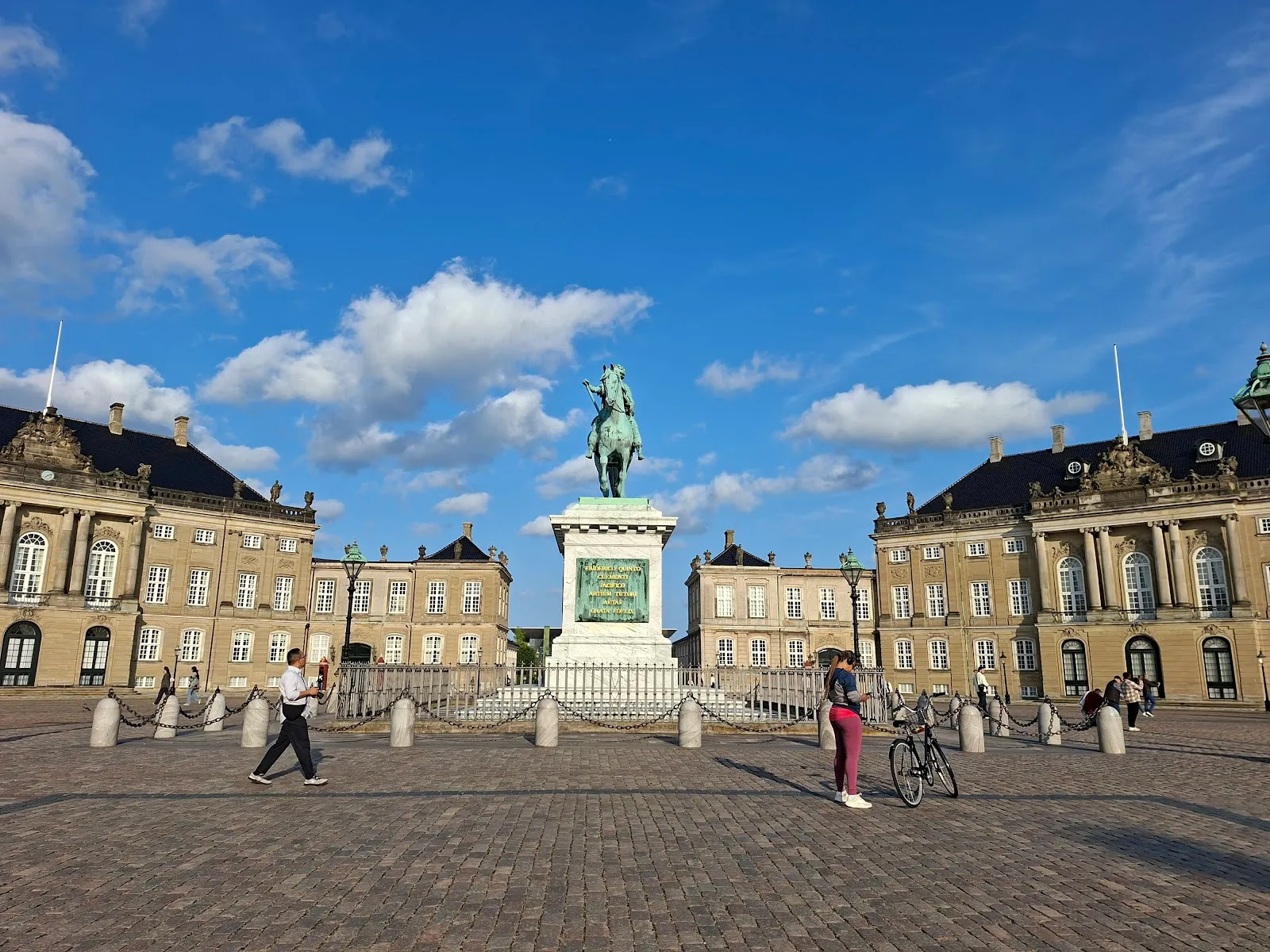
Amalienborg is a royal residence made up of four palaces facing a central square. Architect Nicolai Eigtved designed the complex in the 1750s for four noble families, as part of the new Frederiksstaden district. Its even façades and Rococo details give the buildings a unified appearance.
The palaces became a royal home in 1794, after a fire badly damaged Christiansborg Palace. The open square remains the centre of the complex. At its centre stands an equestrian statue of King Frederik V, who founded Amalienborg.
The Royal Life Guard
The Royal Life Guard changes watch at Amalienborg at noon each day. The guards march through Copenhagen to reach the square; on some days, a military band accompanies them. The ceremony’s form can depend on whether a royal is in residence.
The square is free to enter, so you can watch the ceremony without buying a museum ticket. It attracts spectators, and there is little shelter from the weather while you wait. Arriving before midday gives you time to find a viewing spot and take in the palace façades.
Inside the Amalienborg Museum
The museum is in Christian VIII’s Palace and focuses on the Danish monarchy and royal life across roughly 150 years. Its rooms include royal reception spaces such as the Gala Hall and Apartment Hall, as well as private interiors associated with earlier kings and queens.
Exhibits include royal objects, paintings and furnishings. The rooms give context to the palace’s continuing role as a royal residence, while showing how earlier members of the family lived and received guests. Some parts of the complex remain in private use, so the museum provides access to the interiors open to visitors.
A view toward the Marble Church
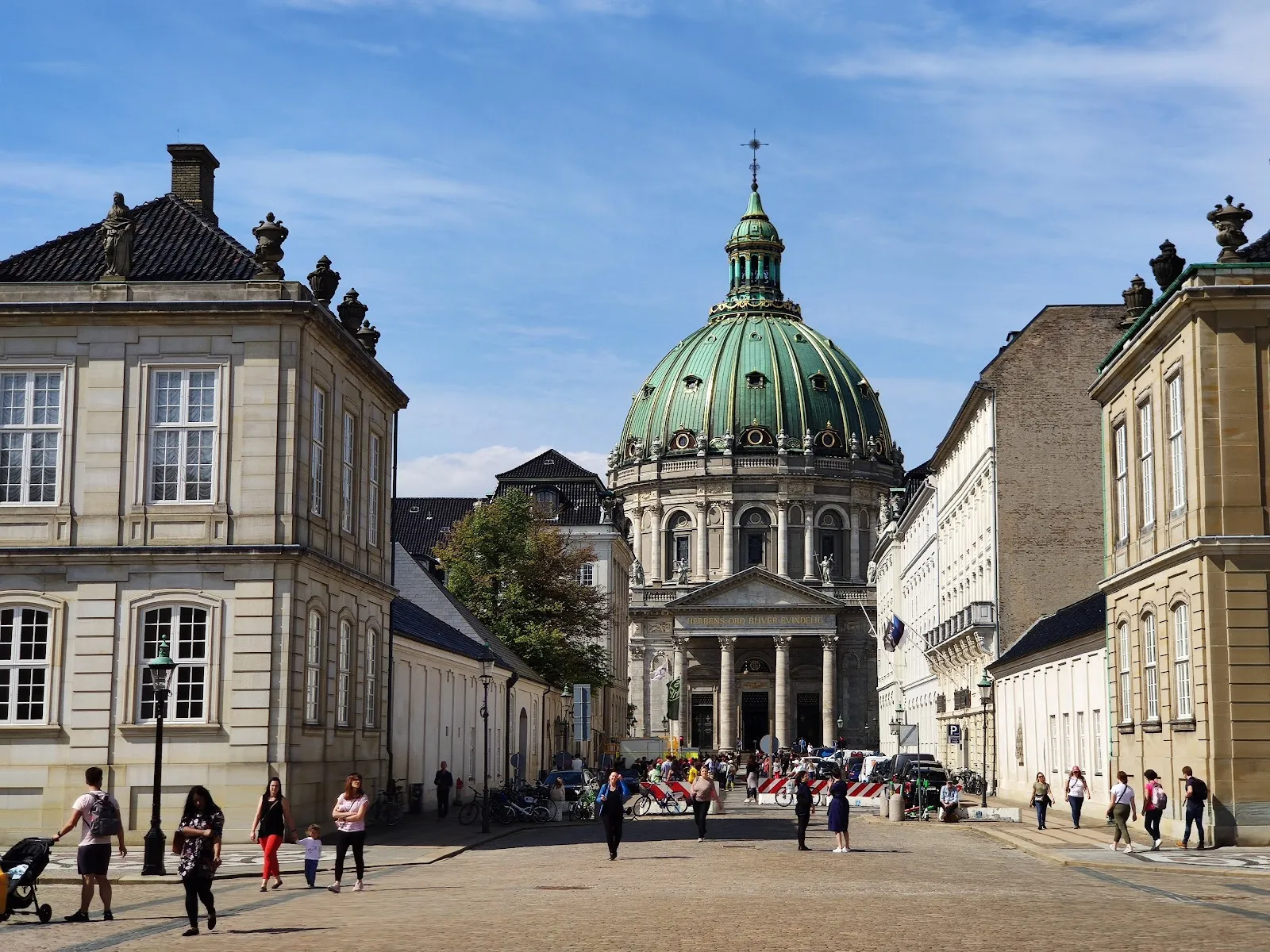
Frederik’s Church, commonly called the Marble Church, stands close to Amalienborg. Its large green copper dome is visible from the palace square and makes a striking point of reference when looking beyond the surrounding façades. The church was completed in the 19th century and is closely associated with the Frederiksstaden district.
From the square, you can take in both the royal complex and the nearby church without leaving the area. If you plan to watch the guard change, use the time before noon to look around the square and note the details of the buildings.
Perguntas frequentes
Is it free to visit Amalienborg Palace?
The palace square and the noon guard change are free to visit. The museum inside Christian VIII’s Palace requires a ticket.
When does the changing of the guard take place?
The Royal Life Guard changes watch at noon each day. Arrive around 11:30 if you want time to find a viewing spot.
What can you see inside Amalienborg?
The Amalienborg Museum in Christian VIII’s Palace has historic royal rooms, reception spaces, paintings and family treasures.
How long should you spend at Amalienborg Palace?
Allow around 30 to 60 minutes for the square and guard ceremony. Add time if you plan to visit the museum.