Olšany Cemetery is a large burial ground in Prague’s Žižkov district, at Vinohradská 1835/153. Established in 1680 for plague victims, it later became the city’s main cemetery. Shaded paths lead past ivy-covered mausoleums, sculpted monuments and graves in a range of styles, including tombs shaped like small houses. Look for portraits on headstones and plaques marking notable people such as Jan Palach. The grounds are close to busy streets and the Flora shopping mall, yet offer a quiet place to walk and reflect.
From plague burial ground to city cemetery
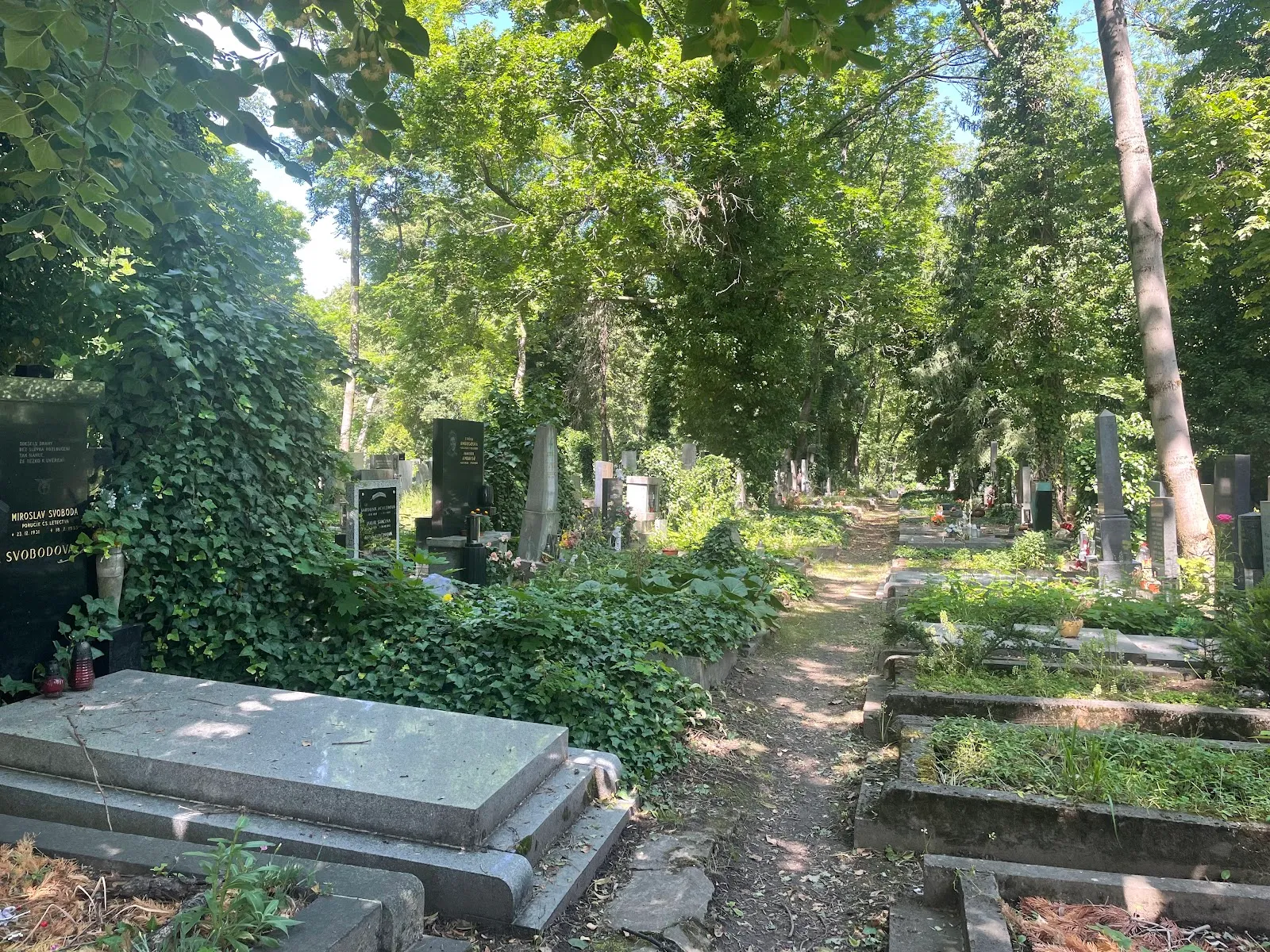
Olšany Cemetery was established in 1680 to bury people who died in a plague. It later developed into Prague’s main burial ground and continued to grow over the centuries. Its sections reflect different periods and changing approaches to remembrance, from older stone monuments to more modern graves.
The cemetery is extensive, and its paths pass through areas with distinct character. Some sections have grand mausoleums and elaborate memorials; others have simpler graves and urn boxes. The oldest burial places and plague pits are no longer easy to identify, as many have been covered over or lost to time.
Memorials and notable graves
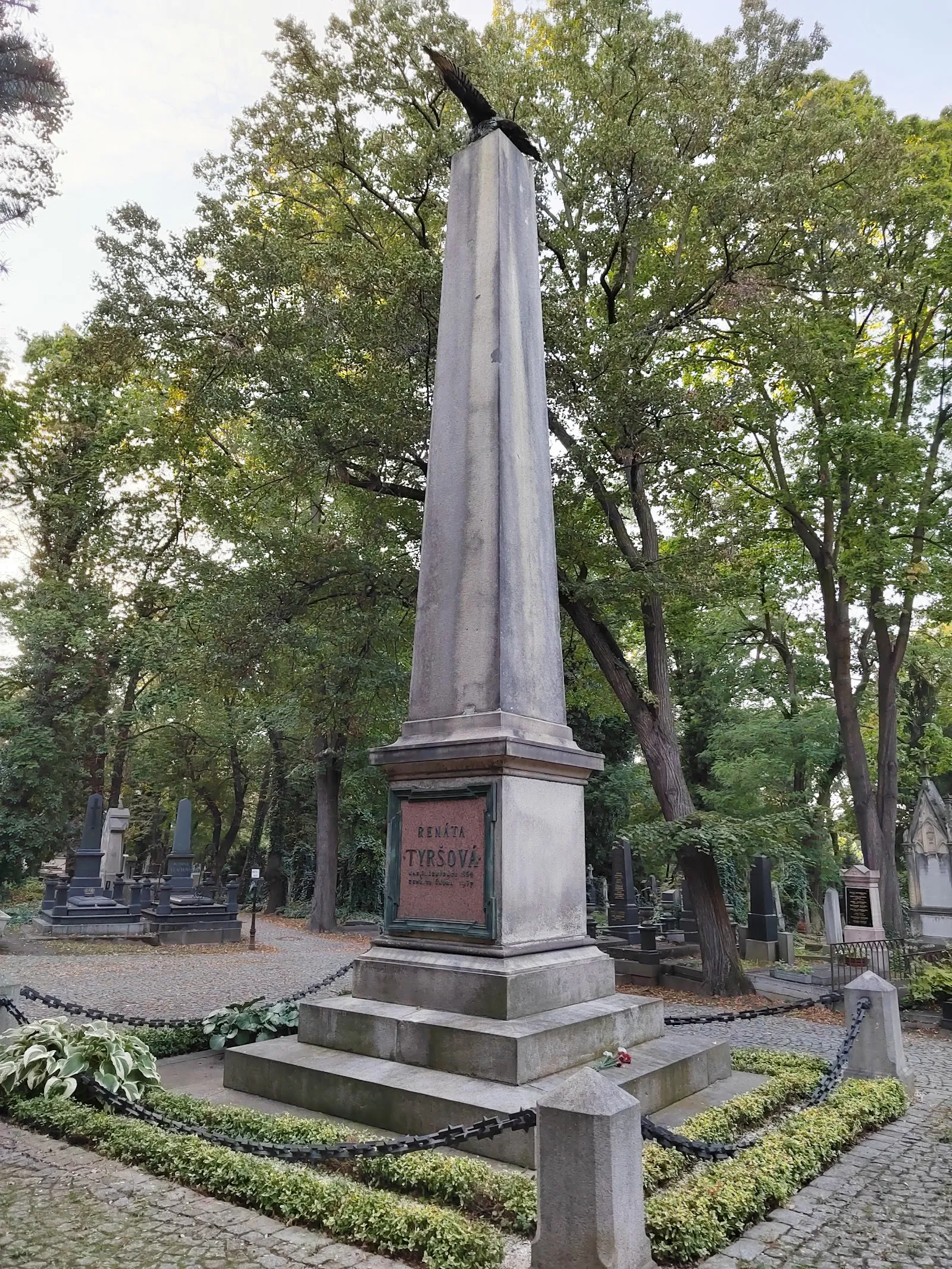
Look closely at the variety of forms across the grounds. Some headstones bear portraits of the people buried there, while other memorials are decorated with statues or shaped like miniature houses. Ivy and trees soften the appearance of many older monuments, creating a contrast with newer sections.
Plaques beside some graves provide information about notable people. They are written in Czech, so a translation app can help if you want to read them during your walk. Jan Palach, a Czech student who set himself on fire in 1968 to protest the Soviet invasion, is among the people commemorated here. His coffin was returned to Olšany in 1990 after being removed in 1973 to prevent his grave from becoming a site for organized protests. The cemetery complex also includes a Jewish cemetery with the grave of writer Franz Kafka.
A quiet walk through the grounds
The trees shade many of the paths, and the cemetery’s size makes it possible to leave the nearby city bustle behind as you explore. It is close to the Flora shopping mall and accessible from nearby tram and metro stops, but the grounds remain a place of burial and remembrance. Walk on the paths and take care around graves and memorials.
Olšany has also appeared on screen. Filming locations here were used in Nosferatu and Hellboy, including a cemetery setting in Hellboy. If you are interested in the films, keep an eye out as you walk, while treating the site with the same care as its other visitors and mourners.
Perguntas frequentes
Is entry to Olšany Cemetery free?
Yes. Entry is free.
How do you get to Olšany Cemetery?
The cemetery is accessible by tram and is near two metro stops. One entrance is a short walk from the Flora shopping mall.
Can you read the grave plaques in English?
The informational plaques are in Czech. A translation app can help you read them.
Is Jan Palach buried at Olšany Cemetery?
Jan Palach is commemorated at the cemetery. His coffin was returned there in 1990 after being removed in 1973.