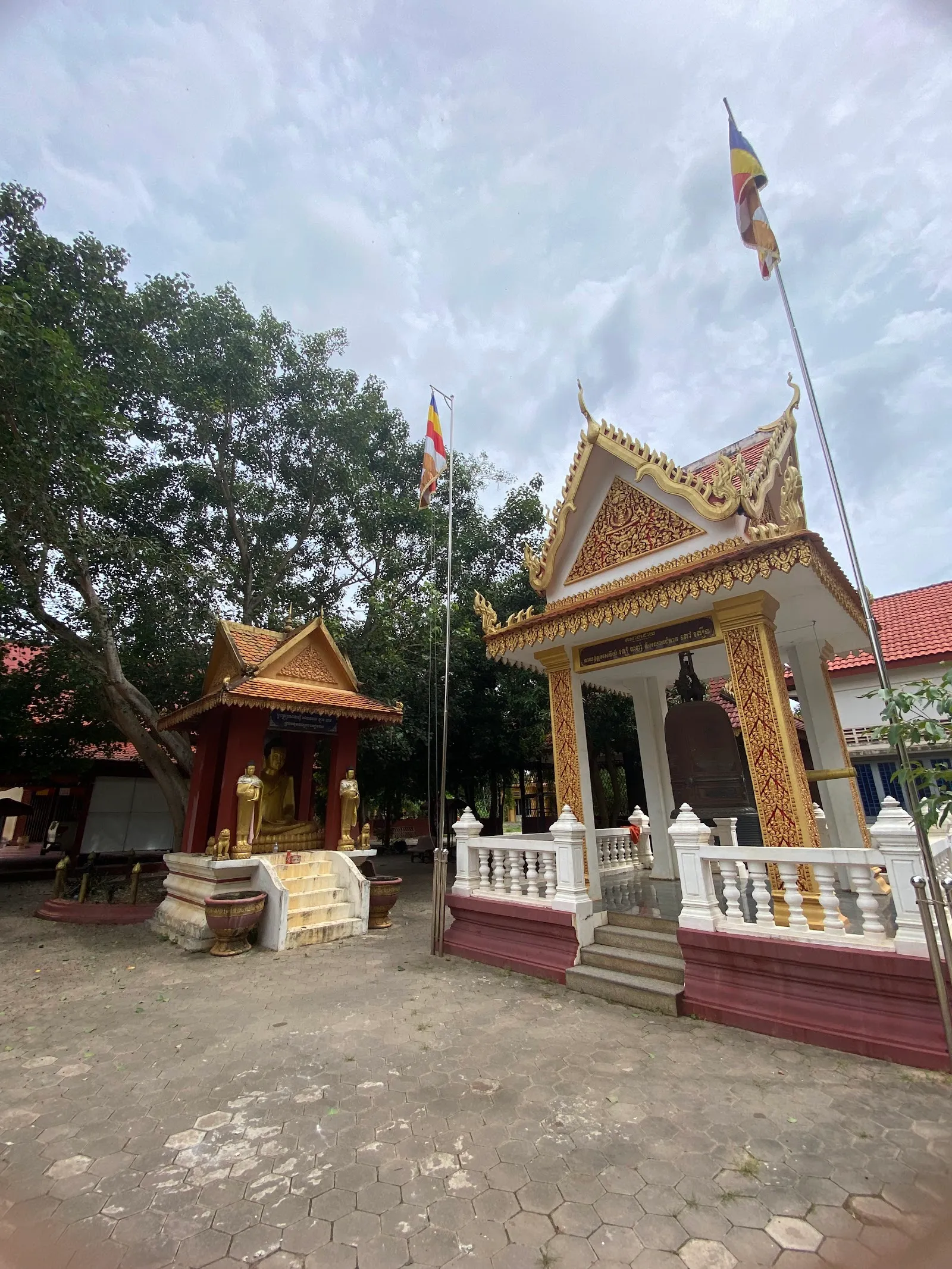
North of the Terrace of the Elephants in Angkor Thom, the Terrace of the Leper King is a late-12th-century, roughly seven-metre-high platform covered in detailed Khmer carvings. The upper walls show mythological beings, nagas, courtly figures and animals across several carved tiers. Look beyond the front of the terrace: a narrow inner corridor protects another stretch of reliefs, including a five-headed horse. A statue associated with the terrace’s name stands above; it is believed to represent Yama, the god of death.
A carved terrace in Angkor Thom
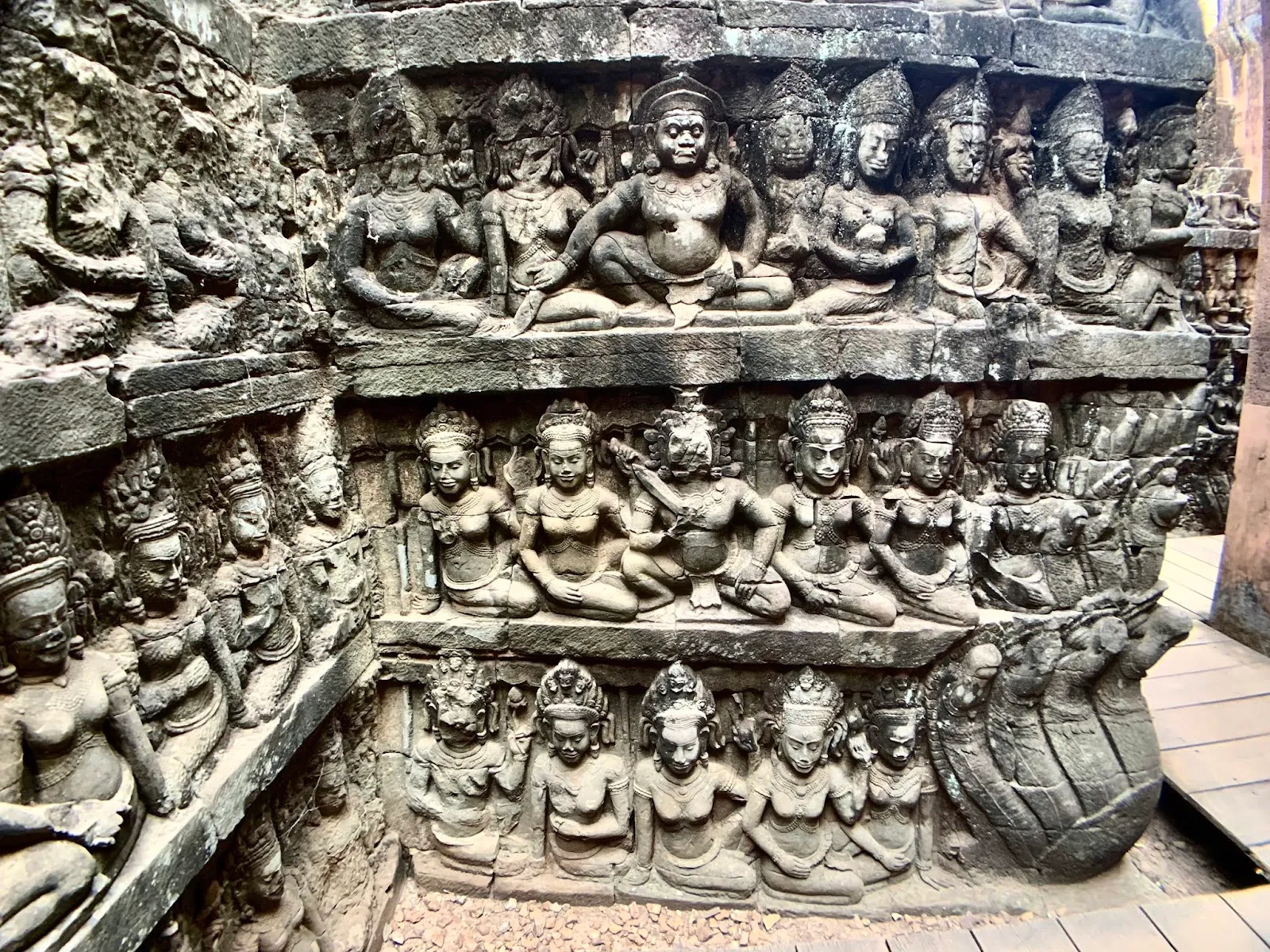
The Terrace of the Leper King stands just north of the Terrace of the Elephants, at the northwestern end of Angkor Thom’s parade ground. Dating to the late 12th century, the sandstone platform rises about seven metres. Its retaining walls carry multiple tiers of carved figures, packed closely across the surface.
The reliefs include mythological beings, nagas, courtly figures and animals. Look along the walls rather than only at the summit: much of the detail sits at eye level, where the rows of figures and their ornament are easier to study. The terrace is compact, but the carved surfaces give you plenty to look for during a short stop.
Find the inner corridor
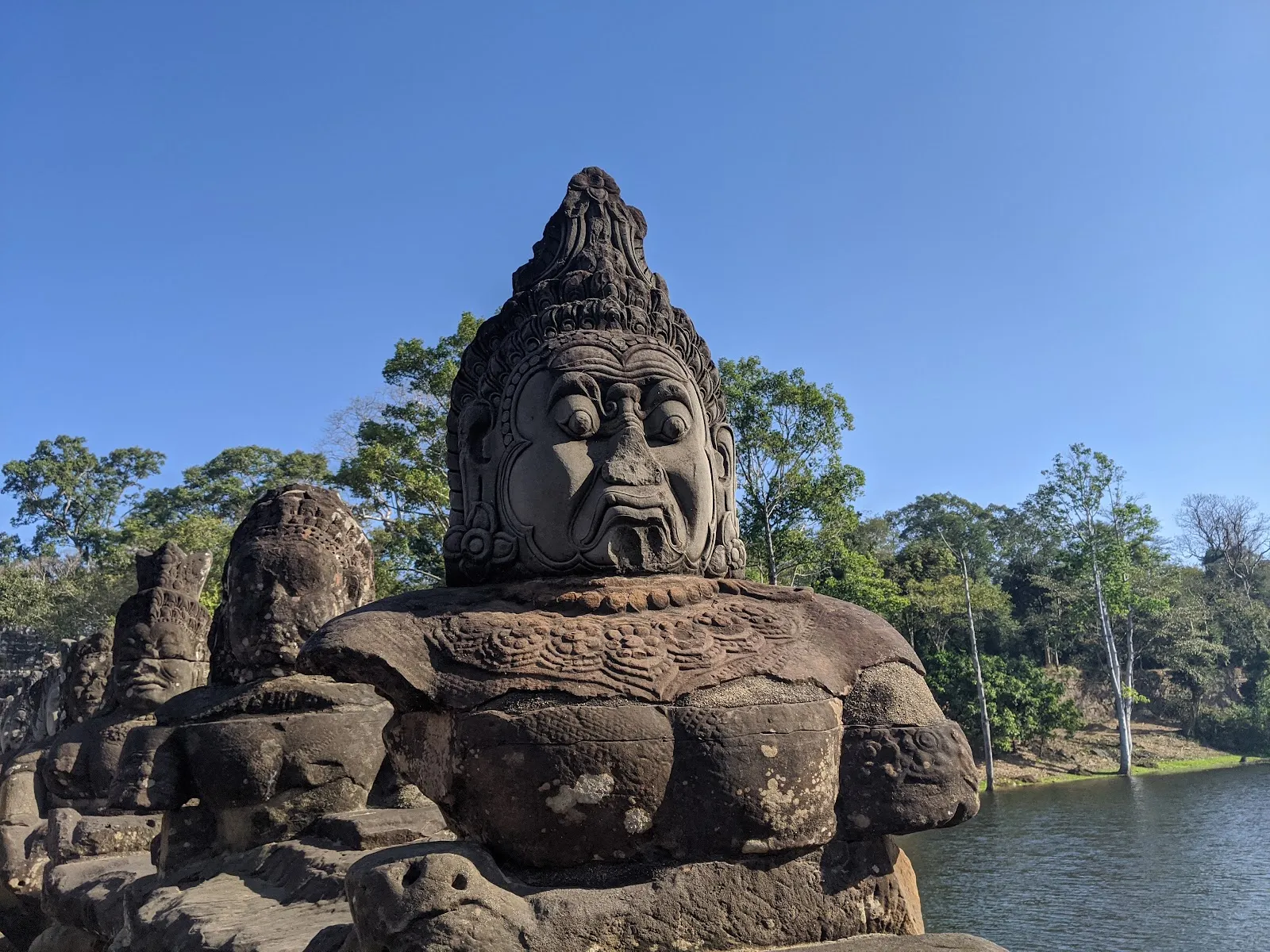
The most sheltered carvings are inside a narrow corridor behind the outer wall. Access is easy to miss from the front, so look for the stairs leading down into the structure near the north end. The enclosed passage reveals another set of reliefs, including a horse with five heads. Its position behind the outer wall helped protect the carvings from the elements.
The western-facing wall also has a maze-like arrangement of carved reliefs. Take time to follow the figures across the surface instead of treating the terrace as a single viewpoint. The repeated tiers and the concealed passage make the site’s details part of the visit, not just its overall shape.
The statue and the terrace’s name
A statue stands on the platform and gives the terrace its familiar name. The figure is believed to represent Yama, the god of death, though the terrace’s original name and purpose are not known with certainty. The name “Leper King” is associated with the statue and the appearance of moss on its surface; it should not be taken as a settled identification of the figure.
The terrace is commonly linked with royal cremation, but its history remains uncertain. Treat the statue and the structure as clues to the site’s religious and royal associations, rather than as a complete explanation of how the terrace was used.
Planning a visit
The Terrace of the Elephants is immediately to the south, so the two can be visited together. Bayon is another nearby stop within Angkor Thom. Early morning or late afternoon brings softer light for photographing the reliefs and can mean fewer people around the terrace.
Tickets in advance are recommended. Allow time to inspect both the outer walls and the inner passage; the corridor and details at the north end are easy to overlook if you only pause in front of the platform.
Perguntas frequentes
Where is the Terrace of the Leper King?
It is in Angkor Thom, just north of the Terrace of the Elephants in Siem Reap.
What should I look for at the terrace?
Look for the carved tiers, the narrow inner corridor, the five-headed horse relief and the statue on the platform.
How long should I allow for a visit?
Allow about 30 to 60 minutes to see the outer carvings and explore the inner corridor.
Is the statue really a leper king?
The statue is believed to represent Yama, the god of death. The terrace’s original name and the figure’s identity are not certain.