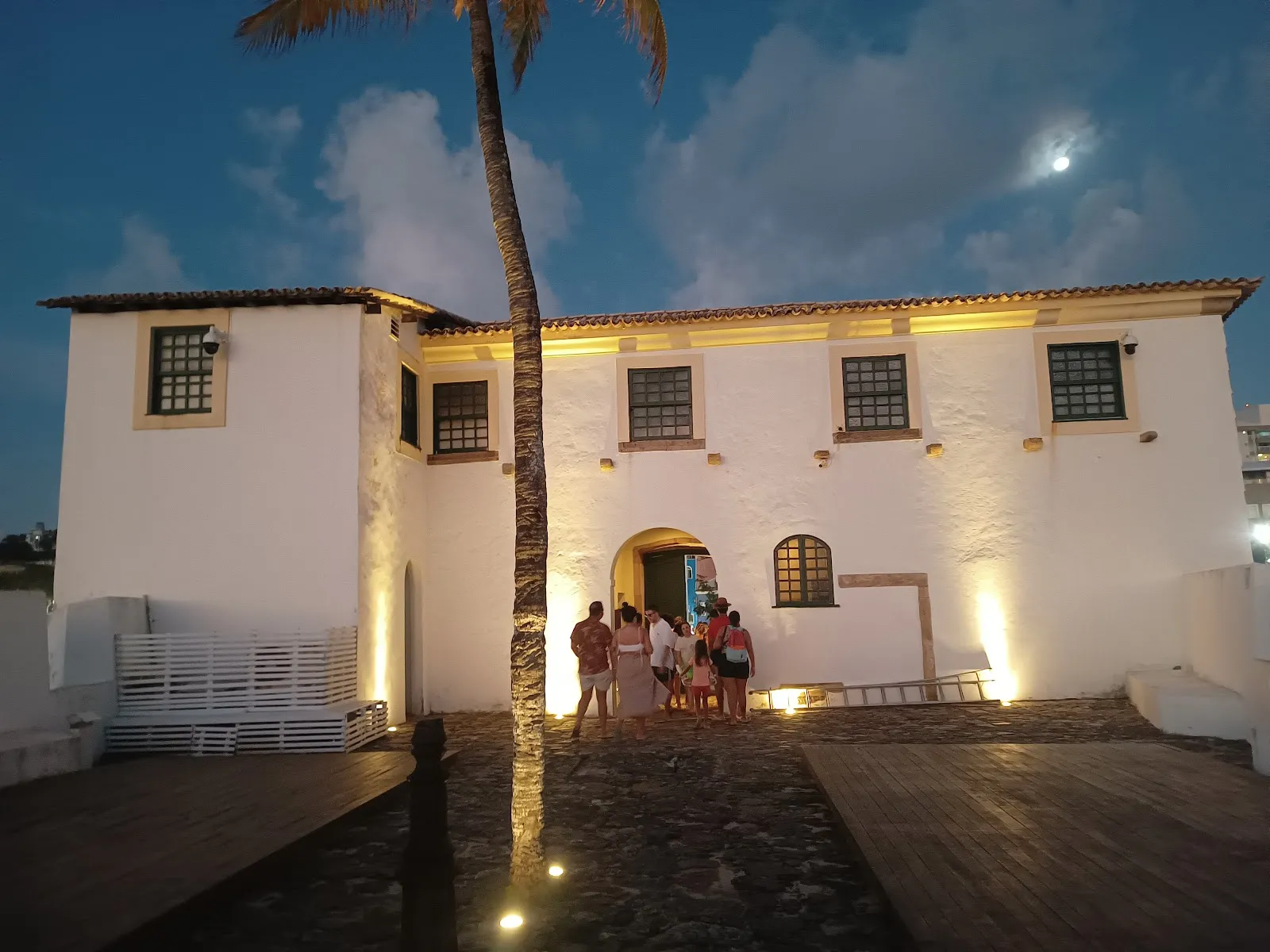
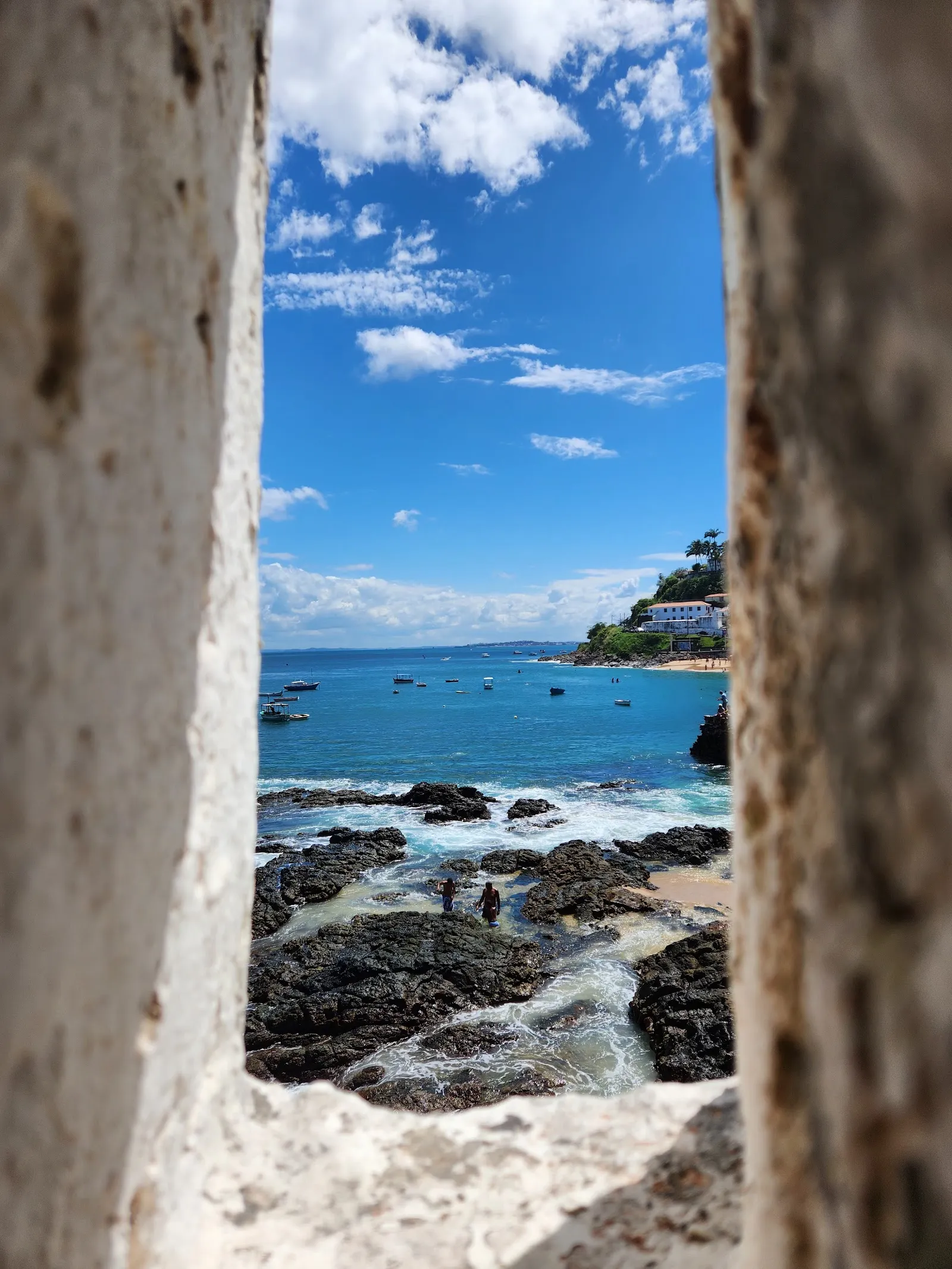
Forte de Santa Maria stands beside Porto da Barra beach in Salvador’s Barra neighborhood. Built from 1614, the military fort now houses a nautical museum with archaeological finds, nautical instruments and vessel replicas, alongside the Pierre Verger da Fotografia space. Its heptagonal plan reflects Italian architectural influence, and views over the sea are a highlight from both the exhibition areas and the fort’s free area. Visit for a compact mix of military history, photography and coastal scenery; sunset brings the shoreline into view in a different light.
A fort beside Porto da Barra
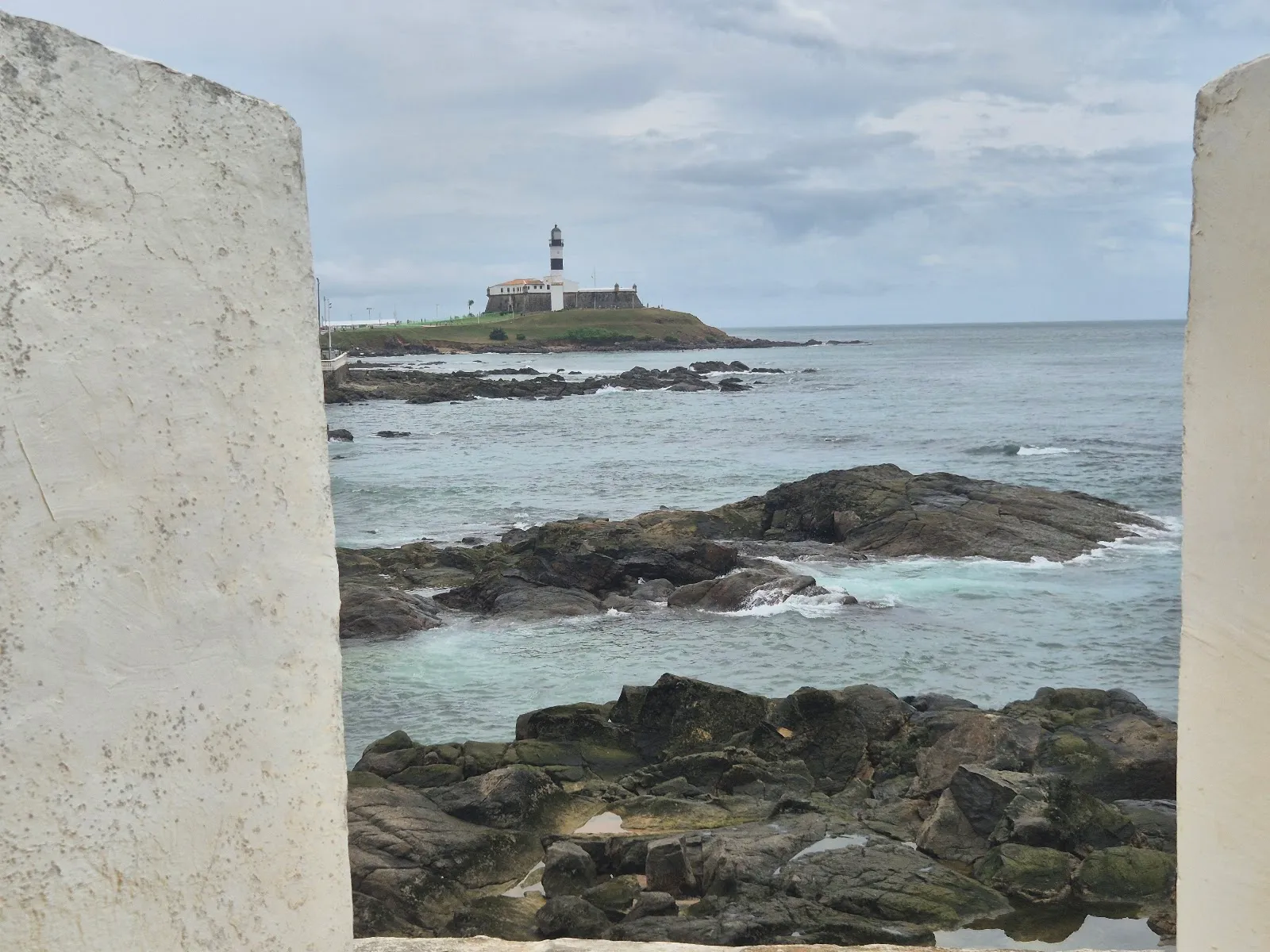
Forte de Santa Maria is in the Barra neighborhood, beside Porto da Barra beach. Construction began in 1614, and the fort formed part of Salvador’s coastal defences. The Portuguese established forts around the cove to help guard against further landings after the Dutch invasion of 1624.
The building’s plan is heptagonal and shaped by Italian architectural influence. Its position by the water gives the site a direct connection to the coastline it was built to defend. The fort is administered by the Brazilian Navy, and its façade still bears the emblem of the Empire of Brazil.
Nautical objects and photography
Inside, the nautical museum displays archaeological finds, navigation instruments and replicas of vessels. The exhibits give the fort a museum role alongside its military history. There is also a photography space, with displays on the upper floor.
The exhibition text is in Portuguese. Staff who speak English can give a brief overview and answer questions, which can help visitors who do not read Portuguese. Guided visits provide an opportunity to hear more about the fort and Salvador’s history.
Perguntas frequentes
Where is Forte de Santa Maria?
It is in Salvador’s Barra neighborhood, beside Porto da Barra beach.
What can you see inside Forte de Santa Maria?
The nautical museum has archaeological finds, nautical instruments and vessel replicas. The fort also has a photography space, including displays on the upper floor.
Are the exhibits in English?
The displays are in Portuguese. English-speaking staff can give a brief overview and answer questions.


