On Avenue Palmerston in Brussels, Hôtel van Eetvelde is an Art Nouveau house designed by Victor Horta for diplomat Edmond van Eetvelde. Its exterior is relatively restrained; inside, a stained-glass dome, central lightwell and ironwork draw the eye upward and bring daylight into the rooms. Look for the skylights, decorative tiles and plant-inspired motifs as you explore. The house is a focused stop for architecture and art history, and a useful starting point for seeing Horta’s distinctive use of steel, glass and light.
A house designed around light
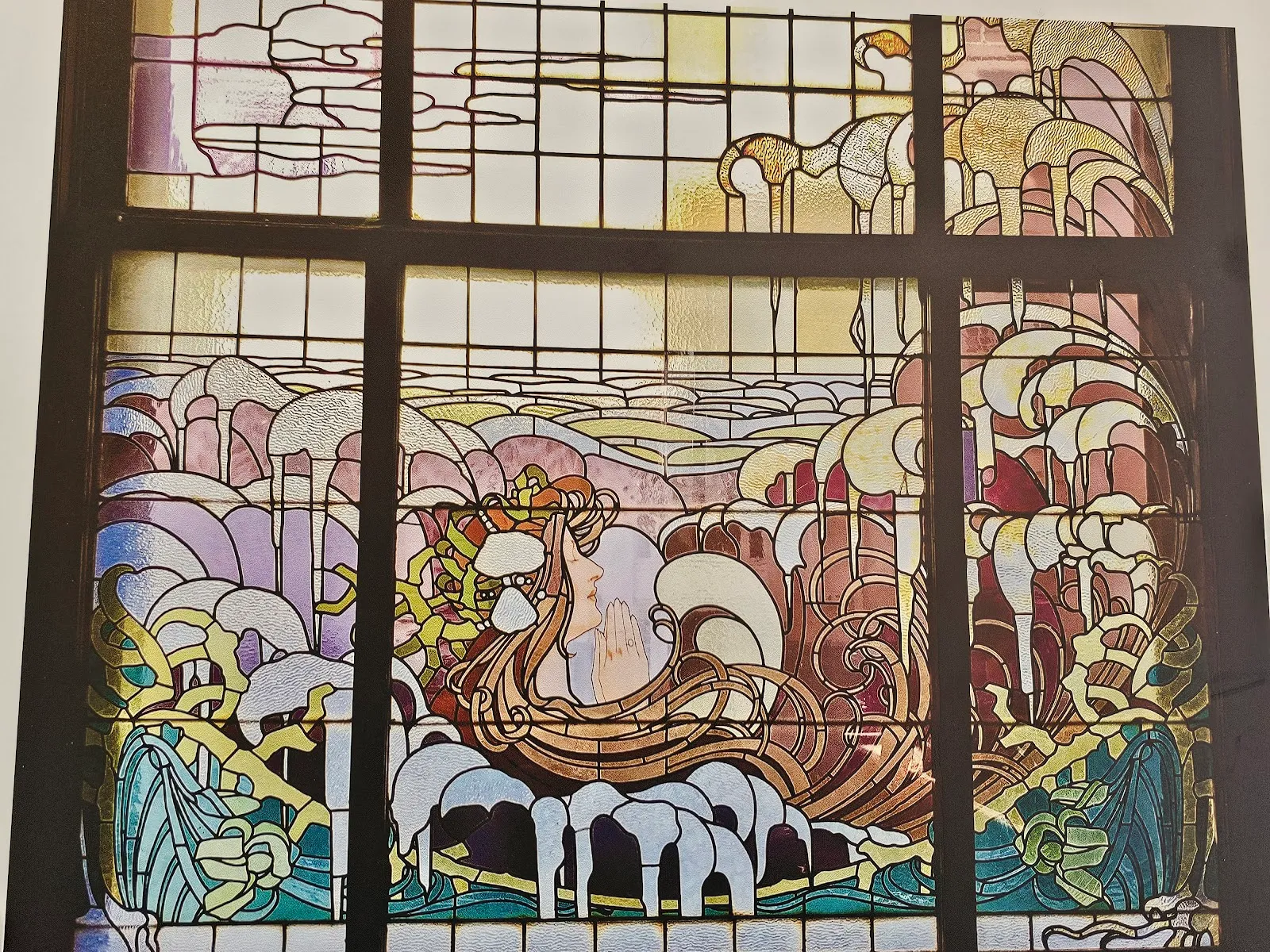
Victor Horta designed Hôtel van Eetvelde in the 1890s for Edmond van Eetvelde, a diplomat and a prominent figure in the Independent State of the Congo. The house was intended for family life, with generous living and dining rooms for social gatherings. Horta’s plans, conceived in 1895, brought together domestic rooms and an ambitious architectural structure.
The building is arranged around a central lightwell. Above it, a stained-glass dome sits over a winter garden, allowing daylight to reach into the interior. This arrangement makes the space above the rooms as important to notice as the furnishings and decoration at eye level.
Iron, glass and Art Nouveau detail
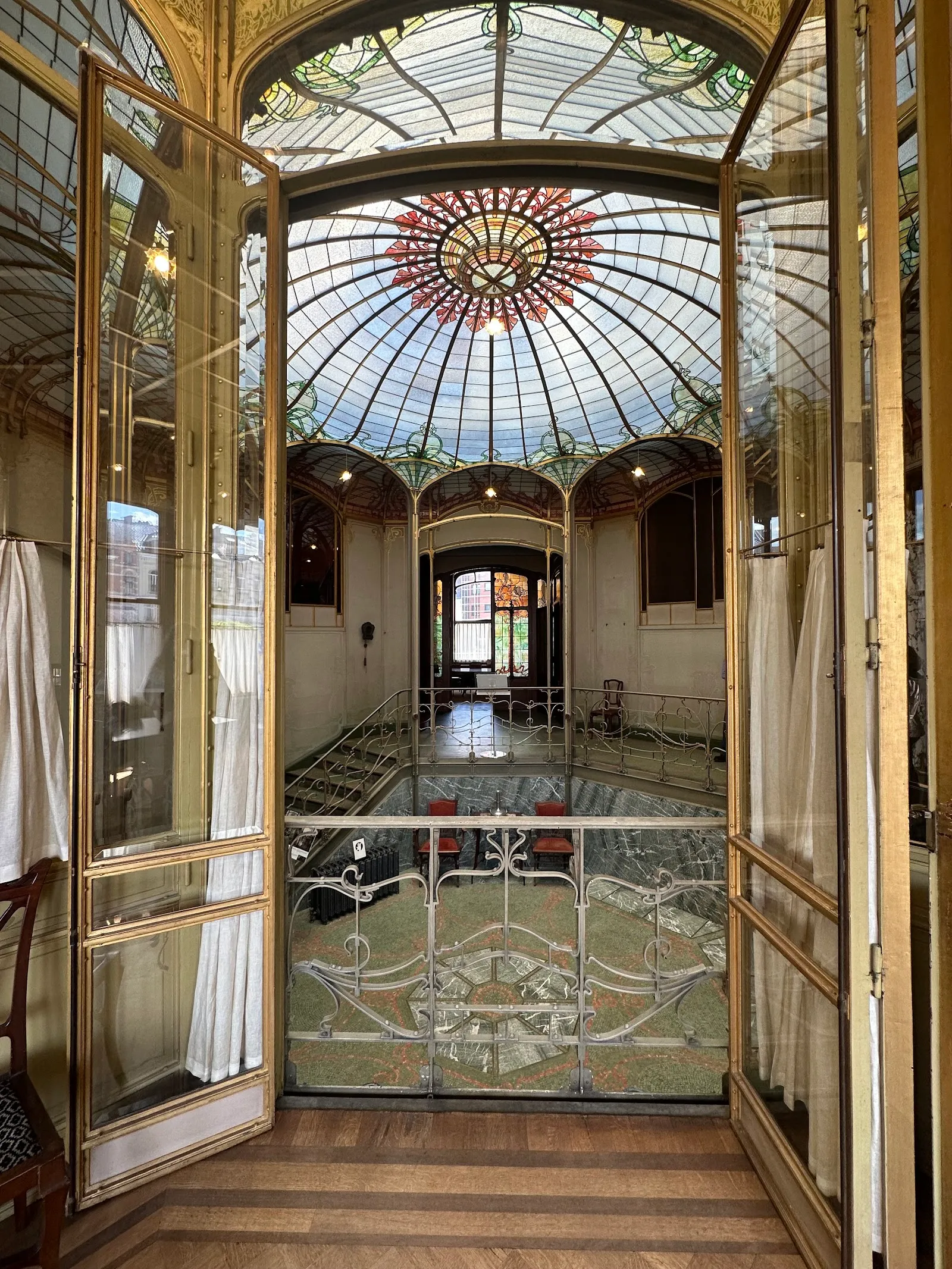
The exterior is relatively simple compared with the interior. Its use of steel and glass was considered revolutionary, and inside Horta’s ironwork becomes part of the decoration. Look for the fine metal tracery, filigreed forms, skylights and decorative tiles. Plant-inspired motifs add organic shapes to the house’s carefully worked surfaces.
The dome and lightwell are the clearest way to understand how the design joins structure and ornament. Rather than treating the metalwork as a hidden support, Horta made it visible within the rooms. The resulting interior is a concentrated example of Brussels Art Nouveau, with natural light shaping how the details are seen.
The house and its context
Hôtel van Eetvelde stands at Avenue Palmerston 4, beside LAB-An, the Art Nouveau interpretation centre. It is one of the Brussels town houses by Horta included on the UNESCO World Heritage list. The building connects its architectural history with the life of its original client, Edmond van Eetvelde, who held a senior position in the Independent State of the Congo and was closely associated with King Leopold II.
A visit works best as an architecture-focused stop: give yourself time to look across the rooms and then return your attention to the dome, skylights and iron details. If you want to continue exploring Horta’s work, a map of Art Nouveau buildings can help you trace other examples around Brussels. Public access may be tied to particular visiting arrangements, so check current ticket information before setting out.
Perguntas frequentes
Who designed Hôtel van Eetvelde?
Victor Horta designed the house for Edmond van Eetvelde, a diplomat and senior official of the Independent State of the Congo.
What should I look for inside Hôtel van Eetvelde?
Look for the stained-glass dome above the central lightwell, along with the iron tracery, skylights, decorative tiles and plant-inspired motifs.
Where is Hôtel van Eetvelde?
It is at Avenue Palmerston 4 in Brussels, beside LAB-An, the Art Nouveau interpretation centre.
Should I book tickets in advance?
Advance ticket booking is recommended.