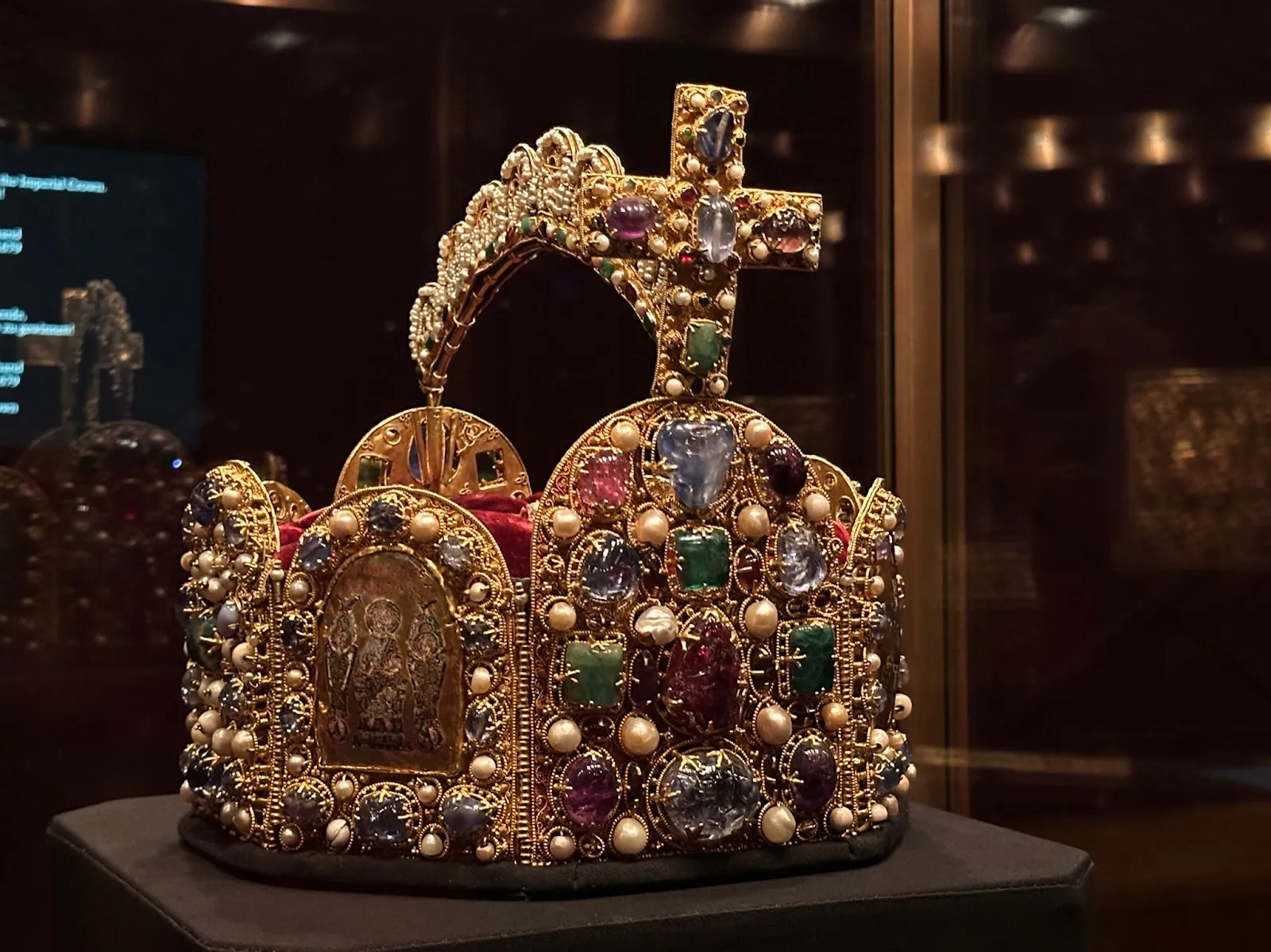
Inside the Hofburg’s Schweizerhof in central Vienna, the Imperial Treasury displays secular and religious treasures collected by the Habsburgs and the Holy Roman emperors. The 21 rooms span about 1,000 years of European history, with imperial crowns, ceremonial robes, jewels and relics among the highlights. Look for the Imperial Crown of the Holy Roman Empire, the Holy Lance, a large agate bowl associated with the Holy Grail legend and a narwhal tooth once thought to be a unicorn’s horn. Dim lighting protects the objects but can make labels harder to read.
Treasures from two imperial collections
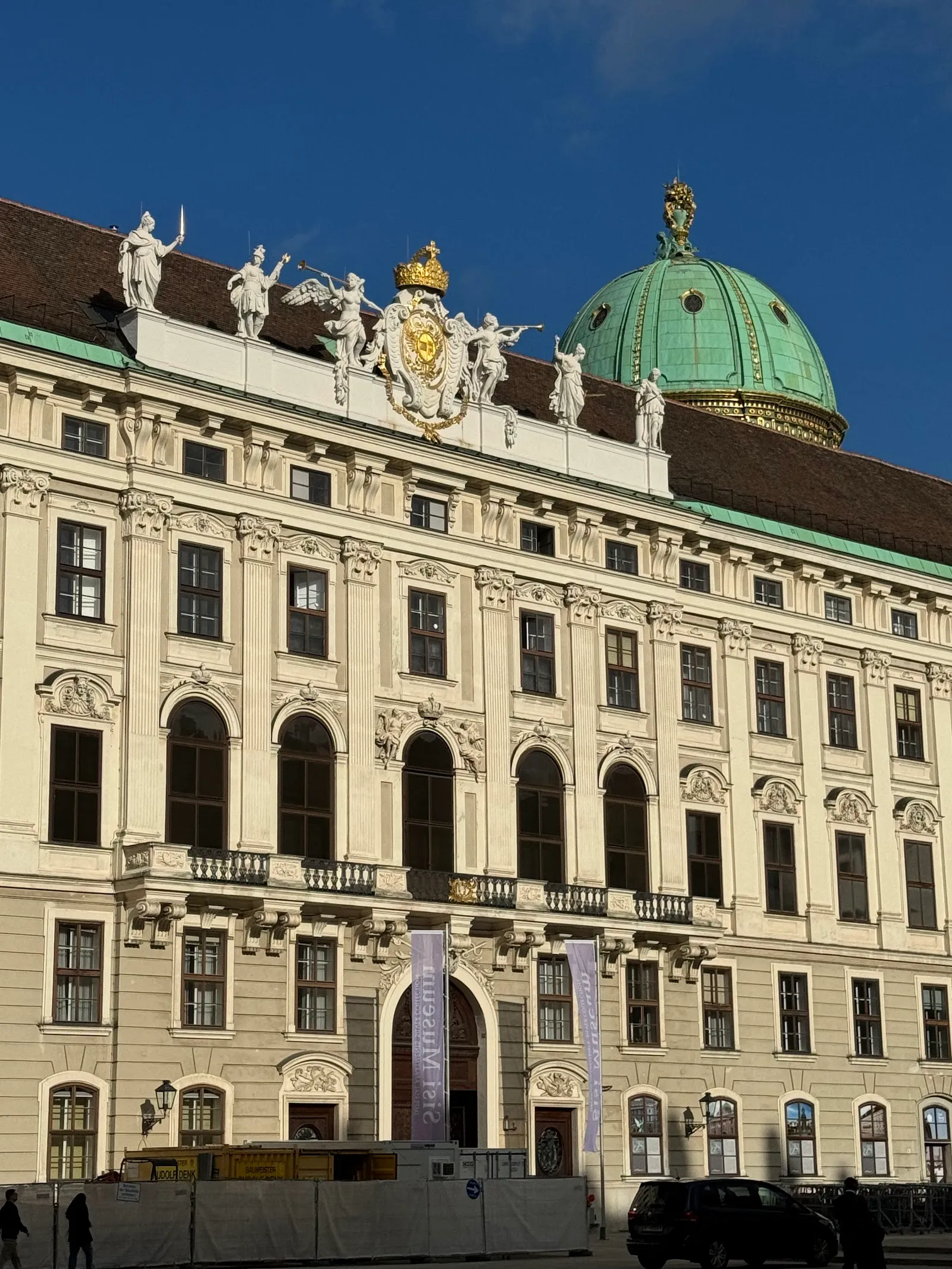
The Imperial Treasury is in the Schweizerhof, the oldest part of the Hofburg. Its objects come from the Habsburg dynasty and the Holy Roman Empire, and together cover roughly a millennium of European history. The collection is divided into secular and spiritual treasuries.
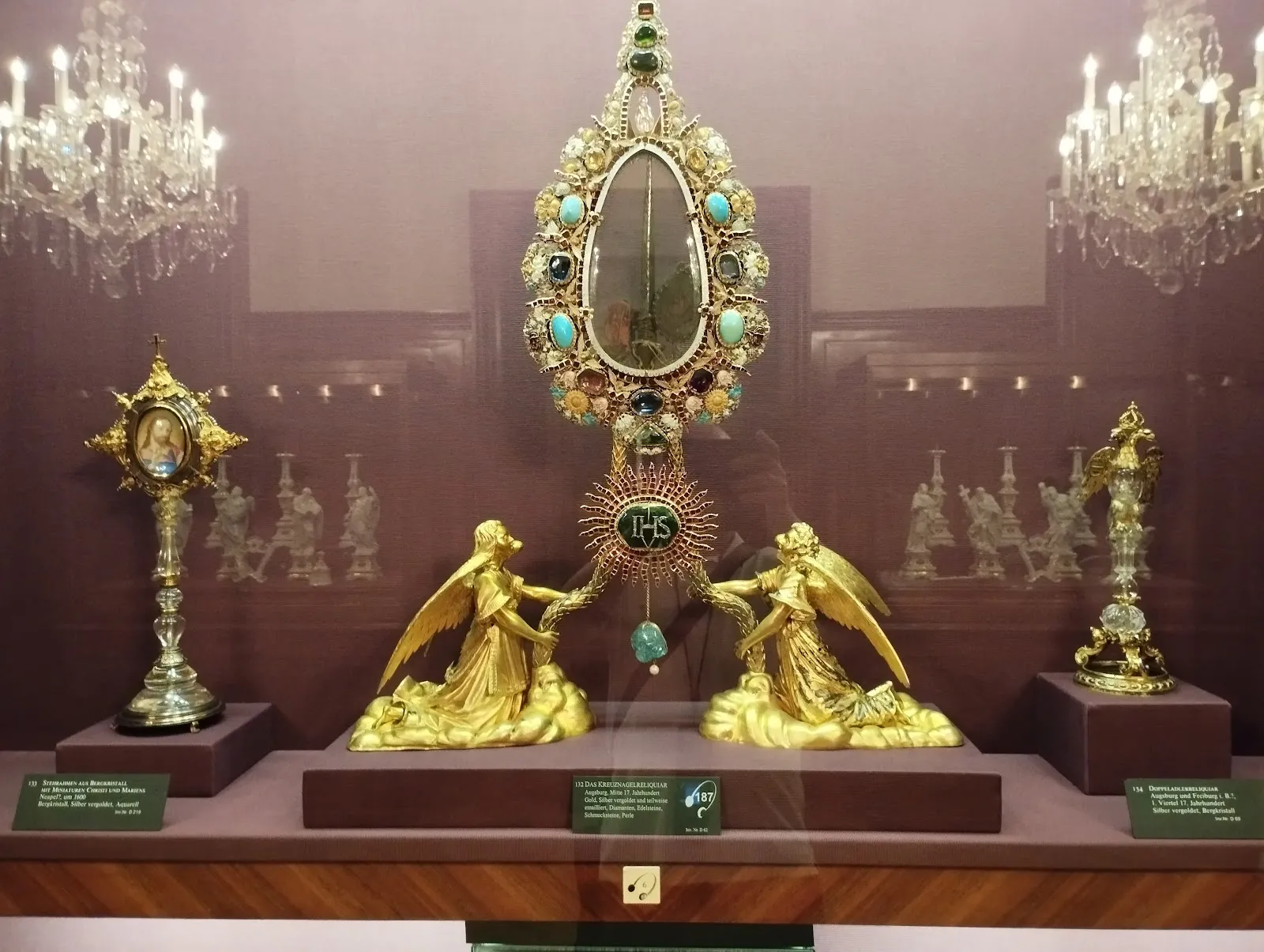
These objects were made for worship, ceremony and the display of authority. Crowns, swords, scepters, robes and religious relics offer a close look at how rulers and religious institutions presented power. The collection also includes pieces linked to the Order of the Golden Fleece and objects from the Duke of Burgundy’s collection.
Crowns, jewels and ceremonial robes
The Imperial Crown of the Holy Roman Empire is one of the central objects, alongside the Austrian Imperial Crown. The latter began as the crown of Emperor Rudolf II. The Holy Lance and other insignia of the empire are also on display.
Look closely at the textiles as well as the jewels. Embroidered garments, tabards, standards and copes show the work that went into ceremonial dress. Large gemstones and precious objects add another dimension to the collection, including an emerald and elaborate pieces of jewellery.
Relics and objects with legends
The treasury’s religious collection includes relics and devotional objects, among them a golden rose and objects associated with the Passion of Christ. The displays also include a large agate bowl linked by legend to the Holy Grail. The bowl’s association is a tradition, not a confirmed identification.
A narwhal tooth was once presented as a unicorn’s horn. Other unusual objects include bones and horns attributed to unfamiliar animals. These pieces sit alongside the regalia, showing the range of objects gathered into the imperial collections.
Making sense of the displays
The museum’s 21 rooms contain many small details, from gemstone settings to embroidery. An audio guide gives further information about selected objects and can help explain the historical context. Some displays also have explanatory material on particular features, such as the construction of a crown.
The rooms are kept dark to protect the historic objects. This can make some labels difficult to read, and photographs may not capture the exhibits clearly. Give yourself time to look closely rather than relying on photographs to remember each piece.
Perguntas frequentes
How long does a visit to the Imperial Treasury take?
Plan for about 1 to 1.5 hours to see the collection at a comfortable pace.
What are the main highlights of the Imperial Treasury?
Look for the Imperial Crown of the Holy Roman Empire, the Austrian Imperial Crown, the Holy Lance, ceremonial robes and jewels. The agate bowl and narwhal tooth are also notable objects.
Can you buy tickets at the door?
Yes. Tickets are available at the door, though advance purchase is recommended.
Is there an audio guide?
Yes. An audio guide provides more information about objects in the collection.