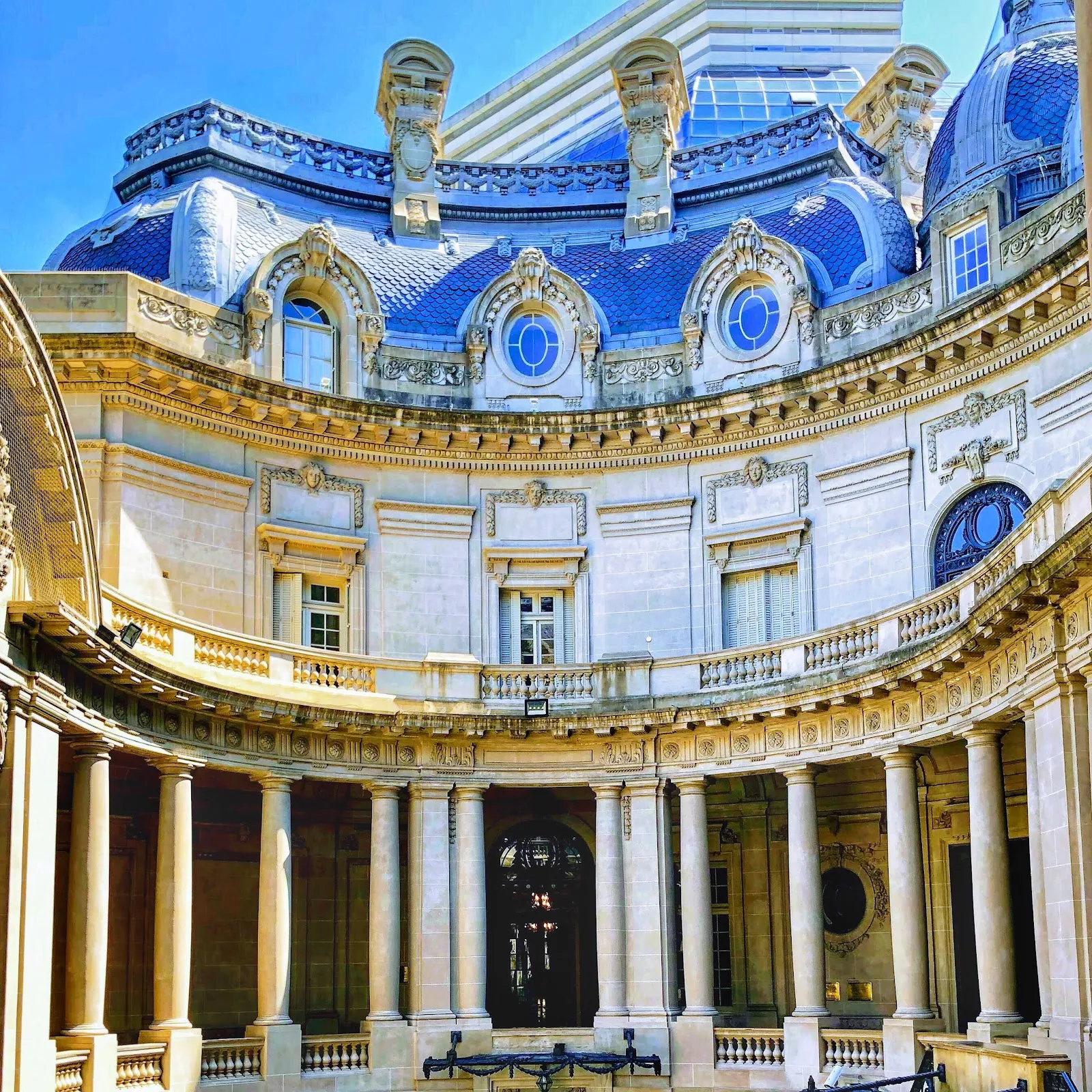
Palacio San Martín stands opposite Plaza San Martín in Buenos Aires’s Retiro district. Built for the Anchorena family, it is now the ceremonial headquarters of Argentina’s Foreign Ministry. The Beaux-Arts palace is made up of three connected residences, with a central courtyard, reception rooms, marble staircases, balconies, sculptures and paintings. Its collection includes works by Argentine artist Antonio Berni and Chilean artist Roberto Matta. Public access can be limited, so check whether a guided visit is available before making the trip.
A family residence with three homes
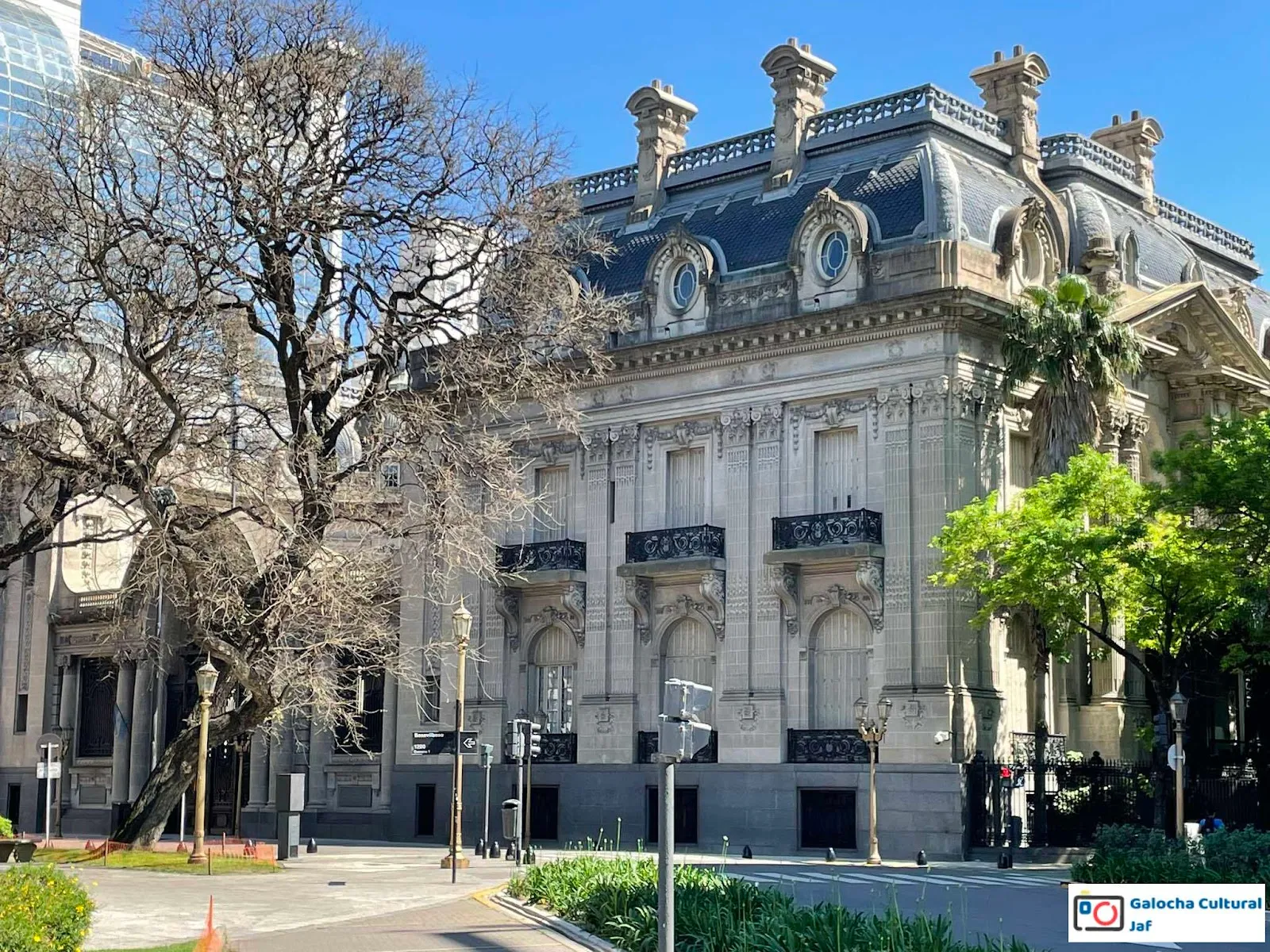
Palacio San Martín was built for Mercedes Castellanos de Anchorena and her family. Construction began in 1905, and architect Alejandro Christophersen planned the building in detail. Rather than one residence, the palace consists of three connected houses arranged around a central courtyard.
The layout reflected the family’s household: Mercedes and one of her sons occupied one residence, while her two married sons had separate homes. The building’s Beaux-Arts design drew on the classic styles of the period. Its reception hall and paired staircases lead to the raised main floor, known as the piano nobile.
From private home to Foreign Ministry headquarters
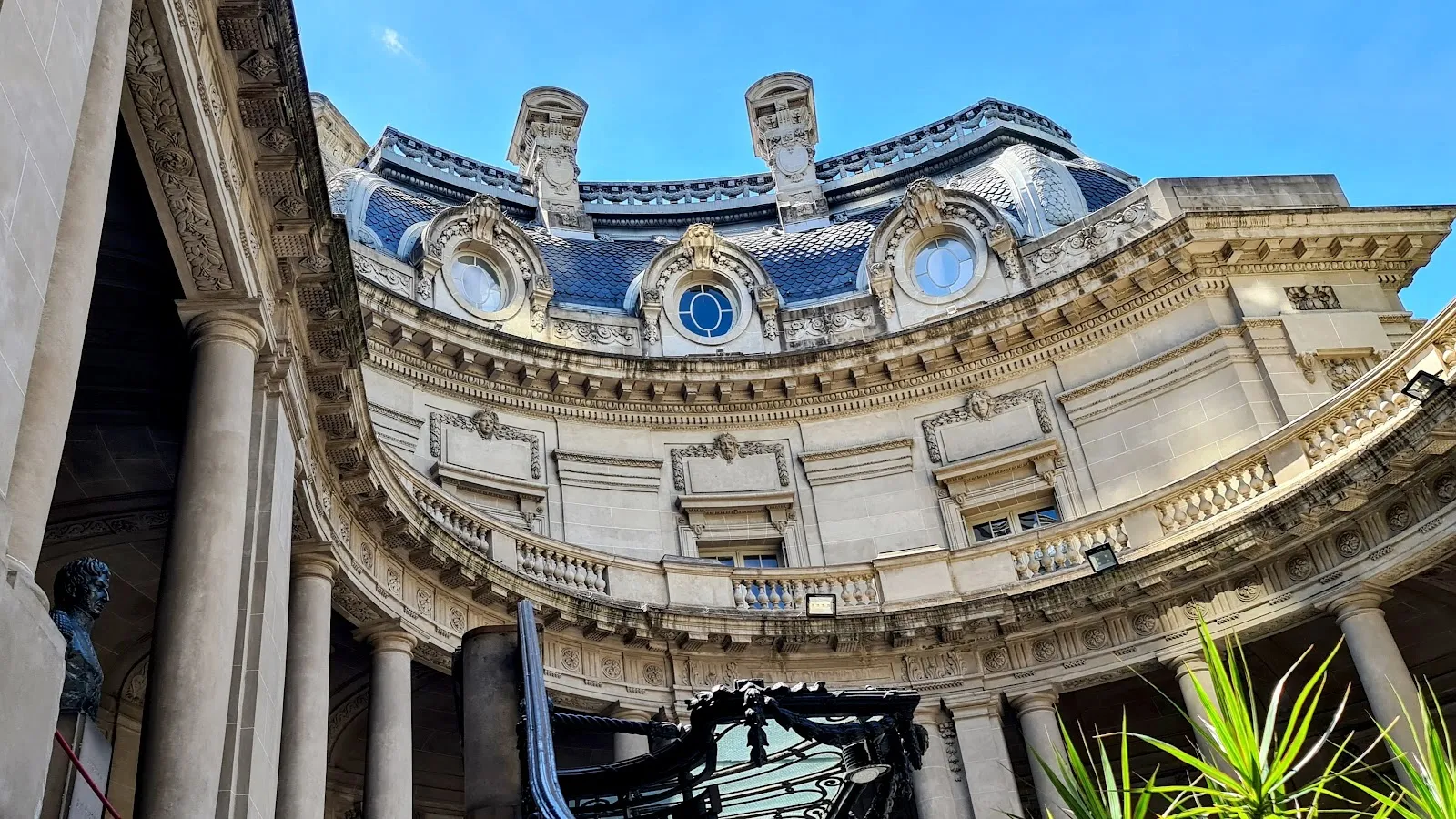
The Argentine state acquired the palace in 1936. It now serves as the ceremonial headquarters of Argentina’s Foreign Ministry, where its rooms are used for official visits and meetings with Argentine and foreign authorities. The Foreign Ministry’s main headquarters moved elsewhere in 1993, but Palacio San Martín remains associated with the ministry’s ceremonial work.
Its history as a family residence is still legible in the arrangement of three houses, the courtyard and the formal rooms. The palace is also known as Anchorena Palace, after the family for whom it was built.
What to see inside
When access is available, look for the courtyard, reception rooms, marble staircases, balconies, sculptures and paintings. The art collection includes 20th-century works, among them paintings by Argentine artist Antonio Berni and Chilean artist Roberto Matta. Ceramics, stone and metal pieces are also part of the collection.
The palace is a working ceremonial site, not a museum with guaranteed public entry. Public guided visits may not be offered, and access can depend on scheduling and preservation needs. Confirm the current arrangements before setting out. Plaza San Martín lies opposite the palace and is an easy addition to a visit.
Perguntas frequentes
Can you visit Palacio San Martín?
Public access is limited, and guided tours may not be available. Check in advance whether a visit is scheduled.
Where is Palacio San Martín?
It is at Arenales 761 in Buenos Aires’s Retiro district, opposite Plaza San Martín.
What can you see inside Palacio San Martín?
When access is available, the palace has reception rooms, a central courtyard, marble staircases, balconies, sculptures and paintings, including works by Antonio Berni and Roberto Matta.