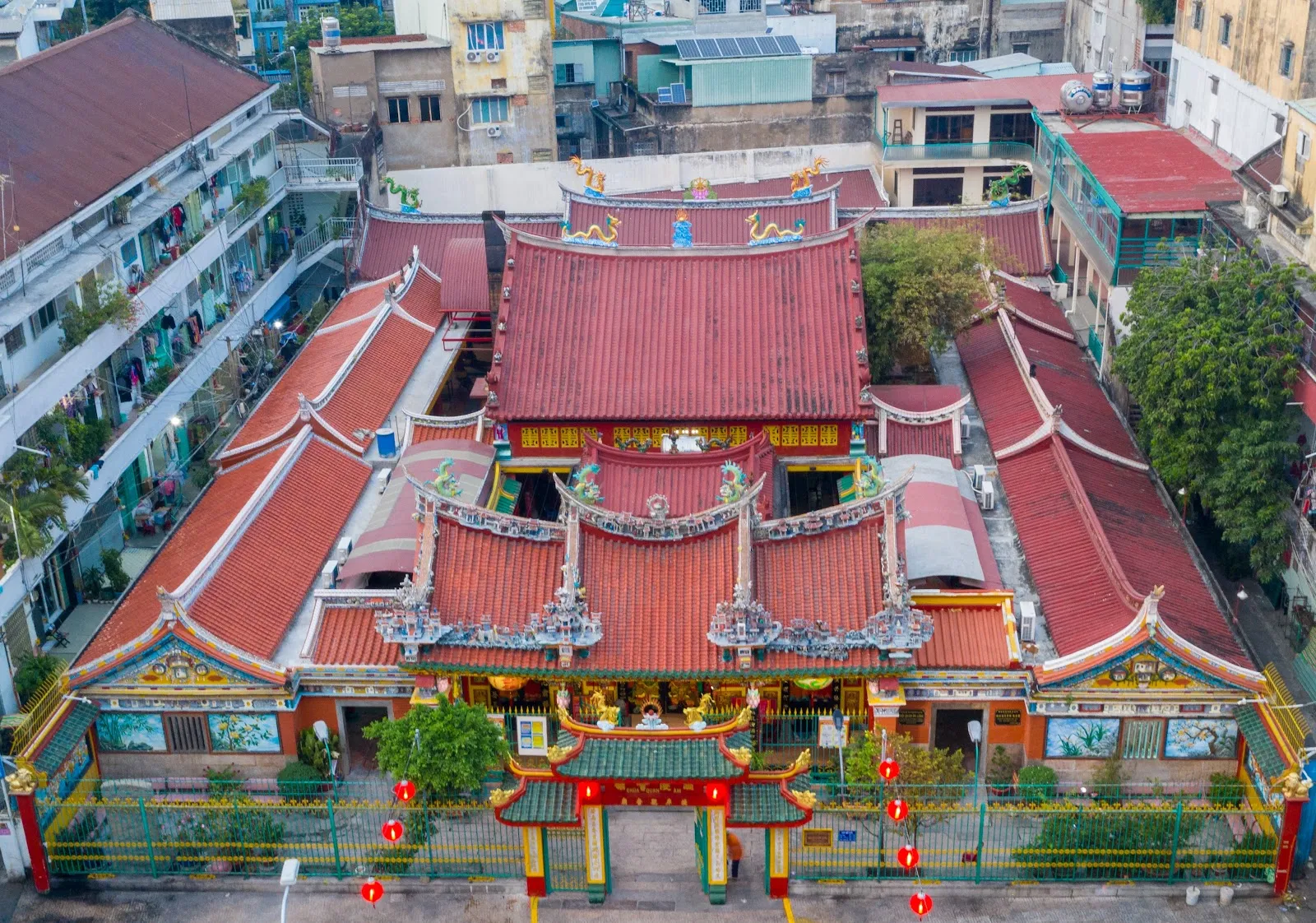
Quan Am Pagoda is a Chinese-style Buddhist temple at 12 Đ. Lão Tử in Chợ Lớn, Ho Chi Minh City. Dedicated to Quan Am, the Goddess of Mercy and Compassion, it is known for colorful motifs, detailed carvings and a courtyard with a small pond. Inside, altars honor Quan Am, the sea goddess Mazu and the Jade Emperor. Local worshippers come to pray and make offerings, giving the temple a quiet, lived-in feel. It is free to enter and makes a thoughtful stop while exploring Chinatown.
A temple in Chợ Lớn
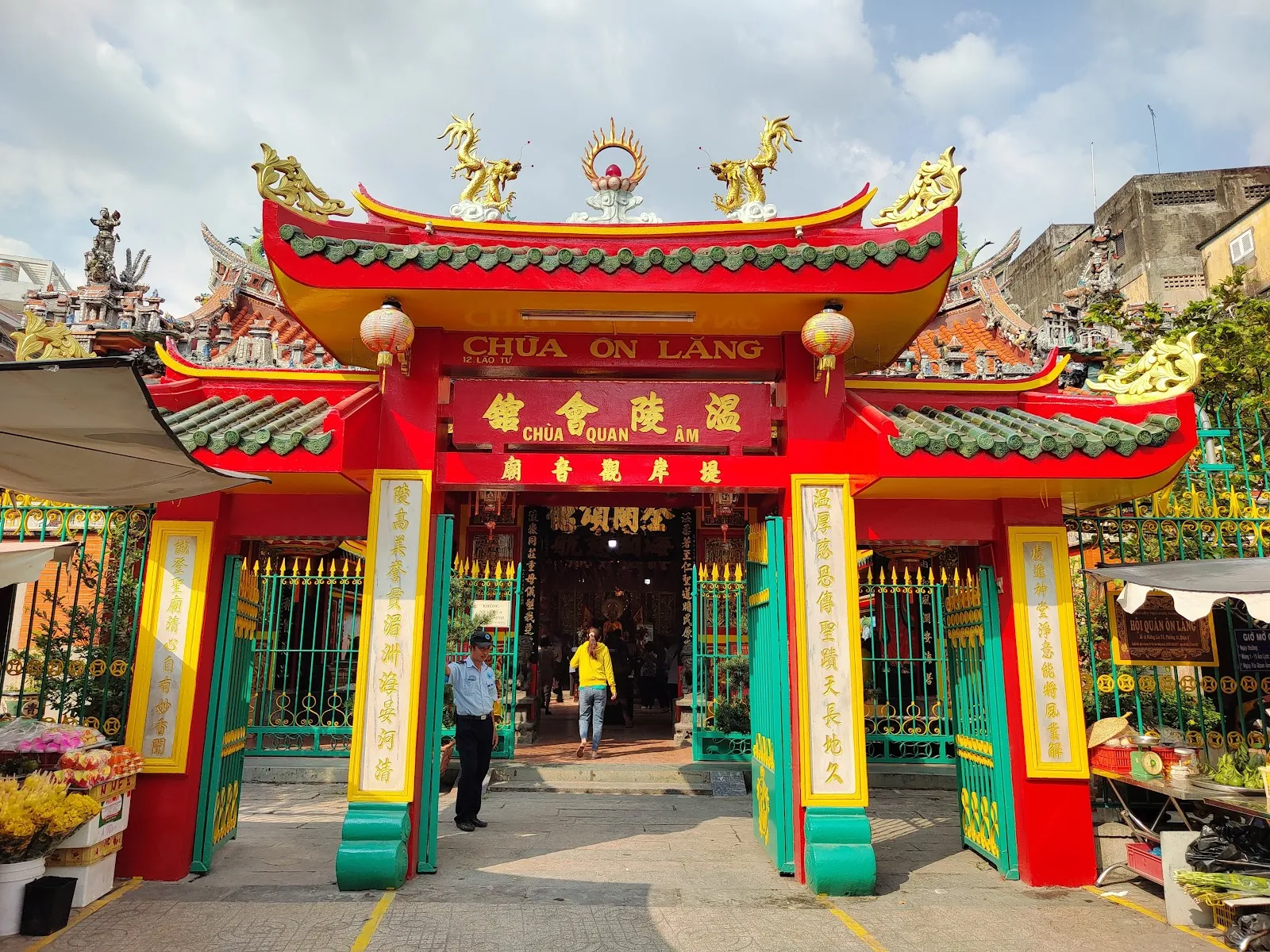
Quan Am Pagoda stands in Ho Chi Minh City’s Chợ Lớn, the city’s Chinatown. The temple is dedicated to Quan Am, the Goddess of Mercy and Compassion. It is a place of worship as well as a stop for visitors exploring the district, and entry is free.
The complex has several areas with altars to Quan Am, Mazu, the sea goddess, and the Jade Emperor. A courtyard with a small pond leads toward the temple. Colorful motifs and sculpted details make the approach and interior worth taking time to look at.
Visiting respectfully
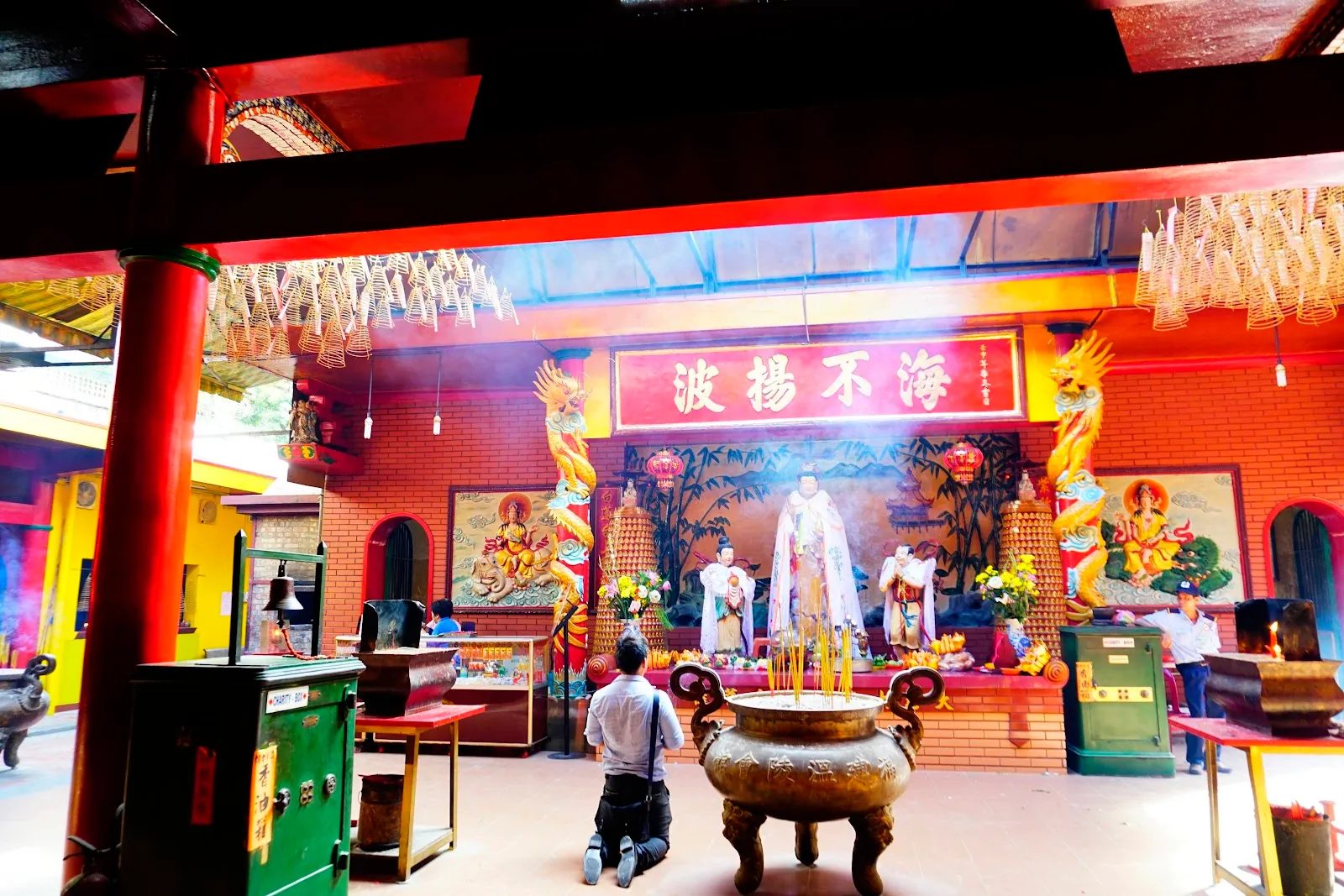
Local worshippers come to pray and make offerings. Give them space, keep your voice low and treat the temple as an active religious site. Modest clothing that covers the shoulders and knees is appropriate.
Street vendors outside sell items that visitors can bring in as offerings. You can also simply walk around quietly. An early weekday visit is a good choice if you would prefer fewer people around. The pagoda is at 12 Đ. Lão Tử; buses and private transport services can reach the area.
Häufige Fragen
Is there an entry fee for Quan Am Pagoda?
No. Entry is free.
What should I wear to Quan Am Pagoda?
Wear modest clothing that covers your shoulders and knees.
What is Quan Am Pagoda dedicated to?
The temple is dedicated to Quan Am, the Goddess of Mercy and Compassion. Its altars also honor Mazu and the Jade Emperor.
When is a quieter time to visit?
Early morning on a weekday is a good time to avoid larger crowds.