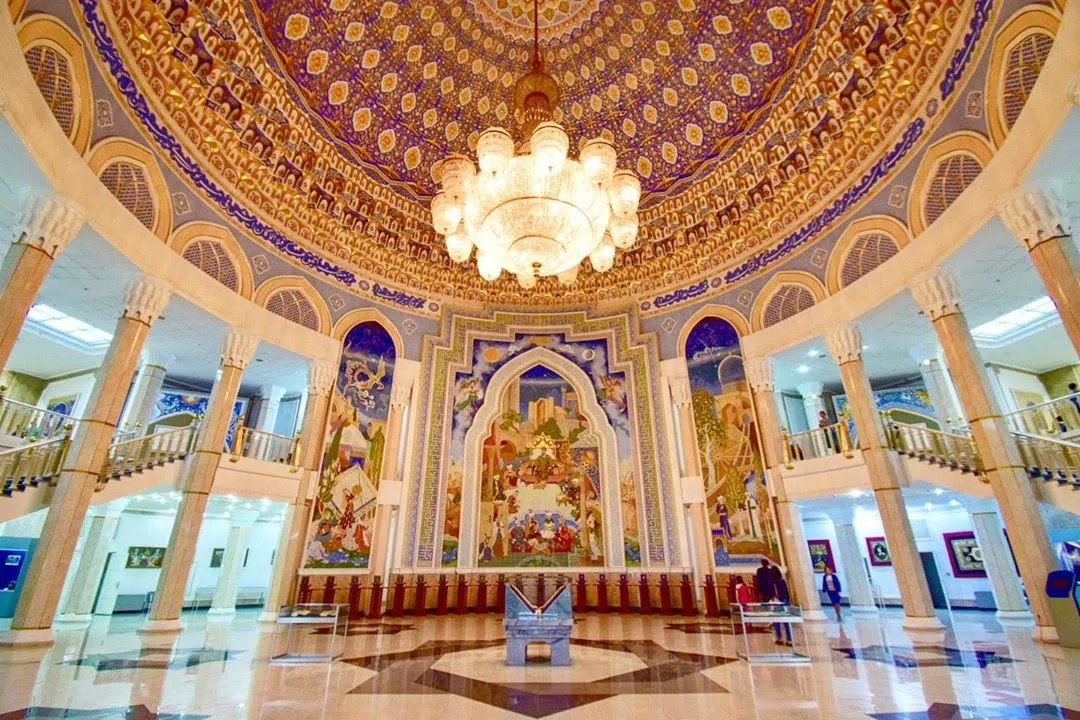
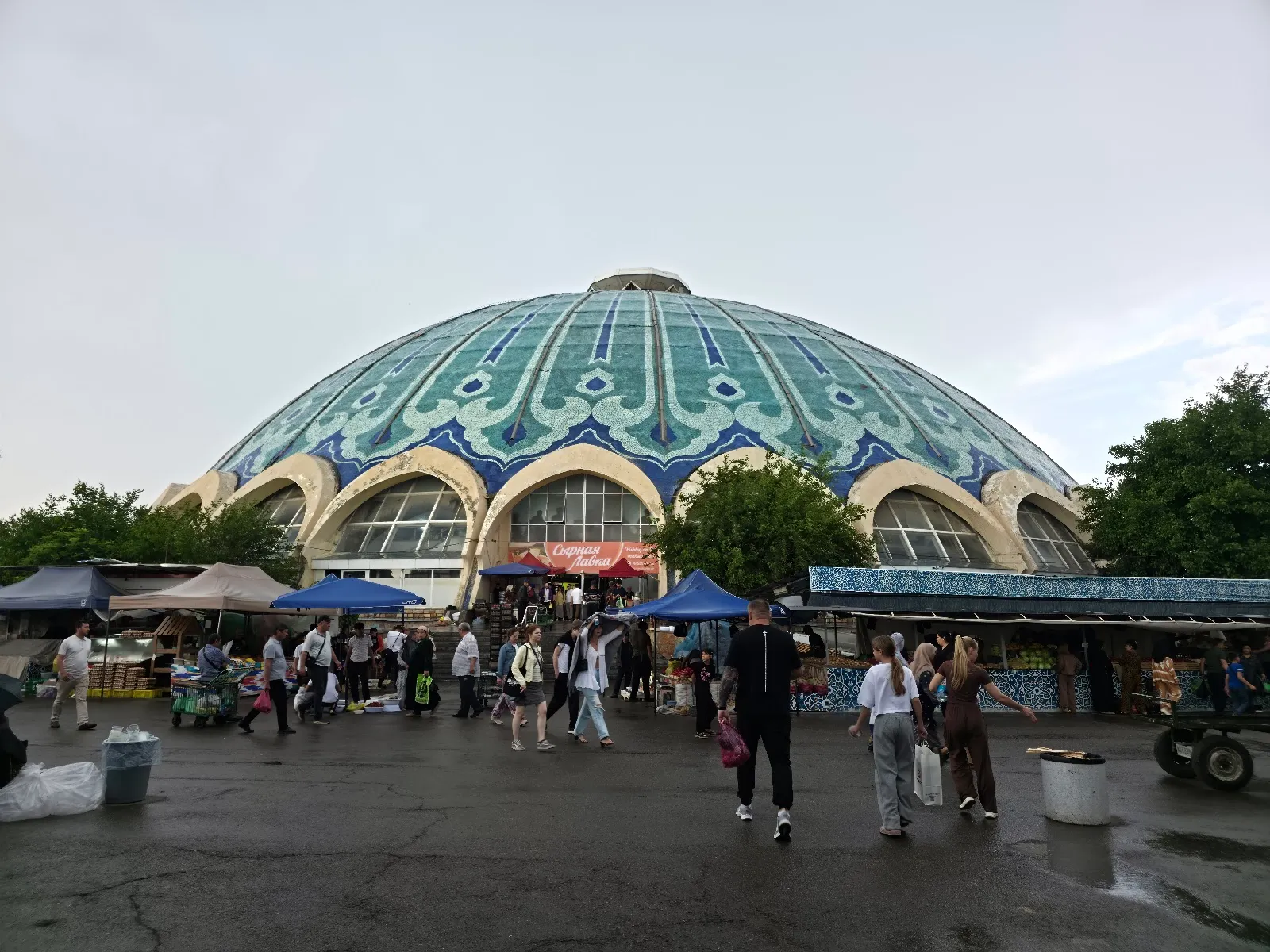
Chorsu Bazaar is one of Tashkent's largest markets, set in the old town near the Kukeldash Madrasah. Stalls fill the streets around a blue-domed hall, and the upper floors hold spices, teas, nuts, dried fruit and baked goods. Watch bakers press rounds of dough onto the walls of tandoor ovens, then buy warm bread for the walk. Tea, halva, ceramics and other souvenirs are easy to find, and entry is free.
History and the blue domes
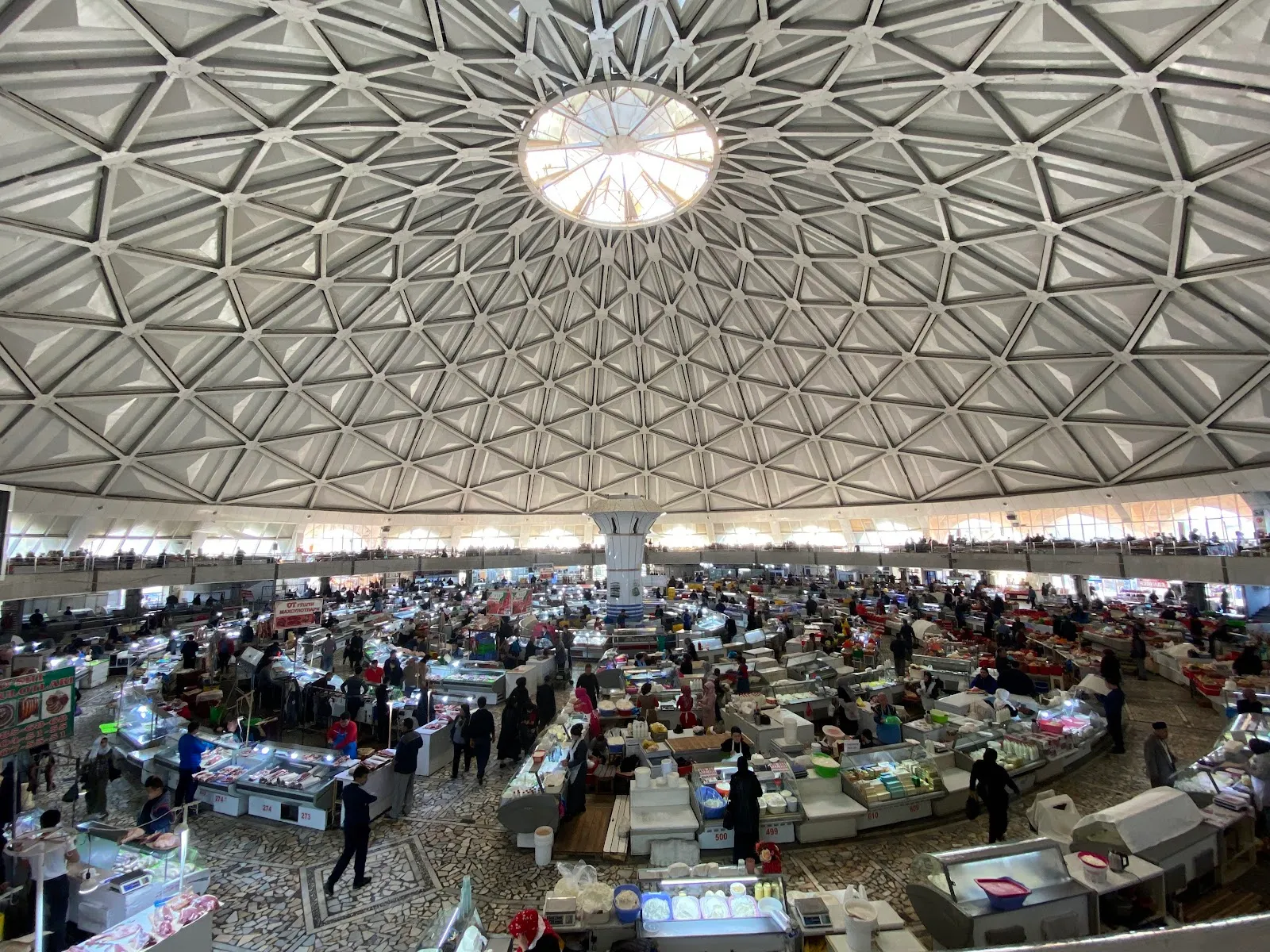
The market has traded on this spot since medieval times, when it was a stop on the Silk Road. The blue domes that define it today are a 20th-century addition. The current hall was designed in 1980 by Vladimir Azimov and Sabir Adylov, so the building you see is Soviet-era, while the trade behind it is far older.
The market spreads beyond the hall into surrounding streets and alleys, so the domed building is only part of the visit.
Inside the market
The hall is spread over several levels. The upper floors hold spices, teas, nuts, dried fruit and baked goods. The ground floor and outer streets have fresh produce, meat, clothes, kitchenware, handicrafts and household goods.
Some sections are grouped by product, so spice sellers, bread sellers and sweet sellers each have their own area. Walking the whole market takes a while, and it is easy to lose your way, which is part of the experience.
Bread, tea and food
The bread section is the easiest place to watch the bakers work. They shape each piece of dough into a round, then set it against the inside of the oven, where it bakes. Fresh bread from the market makes a good snack for the walk.
Local food includes kazi, a horsemeat sausage, and pickled vegetables. Meat sold here includes lamb, beef and horse. A food stall inside the market serves plov and shishlik at modest prices. Some bakers invite visitors to try making bread themselves.
Pistachios here are imported from Iran and cost more than the other nuts. Raisins, walnuts and apricot kernels are cheaper, so buy those for the trip home.
Buying souvenirs
Look for tea leaves, halva, ceramics, skullcaps, kurpacha (colorful sitting mattresses), chapan (heavy quilted cloaks) and knives. The market is a common place to buy gifts before leaving Uzbekistan.
Ask the price before you pick up an item, and compare two or three stalls for the same product. Negotiation is expected, so a calm, friendly offer works better than a firm refusal to talk.
Getting there and nearby
The market is about two kilometres northwest of the town centre. Chorsu station on the metro has two entrances inside the bazaar, which makes it easy to reach by train.
The Kukeldash Madrasah stands nearby in the old town, and a medieval Dzhuma mosque is close to the market. Combine the market with those two sights in one walk. Paid parking is available in a lot and on nearby streets.
Häufige Fragen
Is there an entry fee?
No, entry is free. You pay sellers only for what you buy.
How do I get to Chorsu Bazaar?
Take the metro to Chorsu station, which has two entrances inside the bazaar. Ride apps such as Yandex Go can also take you to the market.
When is the best time to visit?
Go early in the morning, before the heat and the crowds. Fresh bread is being made then, and the tea sellers are set up.
Are prices fixed?
No. Prices vary between sellers, so compare stalls and negotiate before you pay.
Is it safe to exchange money there?
Use official exchange offices. Be cautious of people who approach you about currency in the market and do not trust them completely.