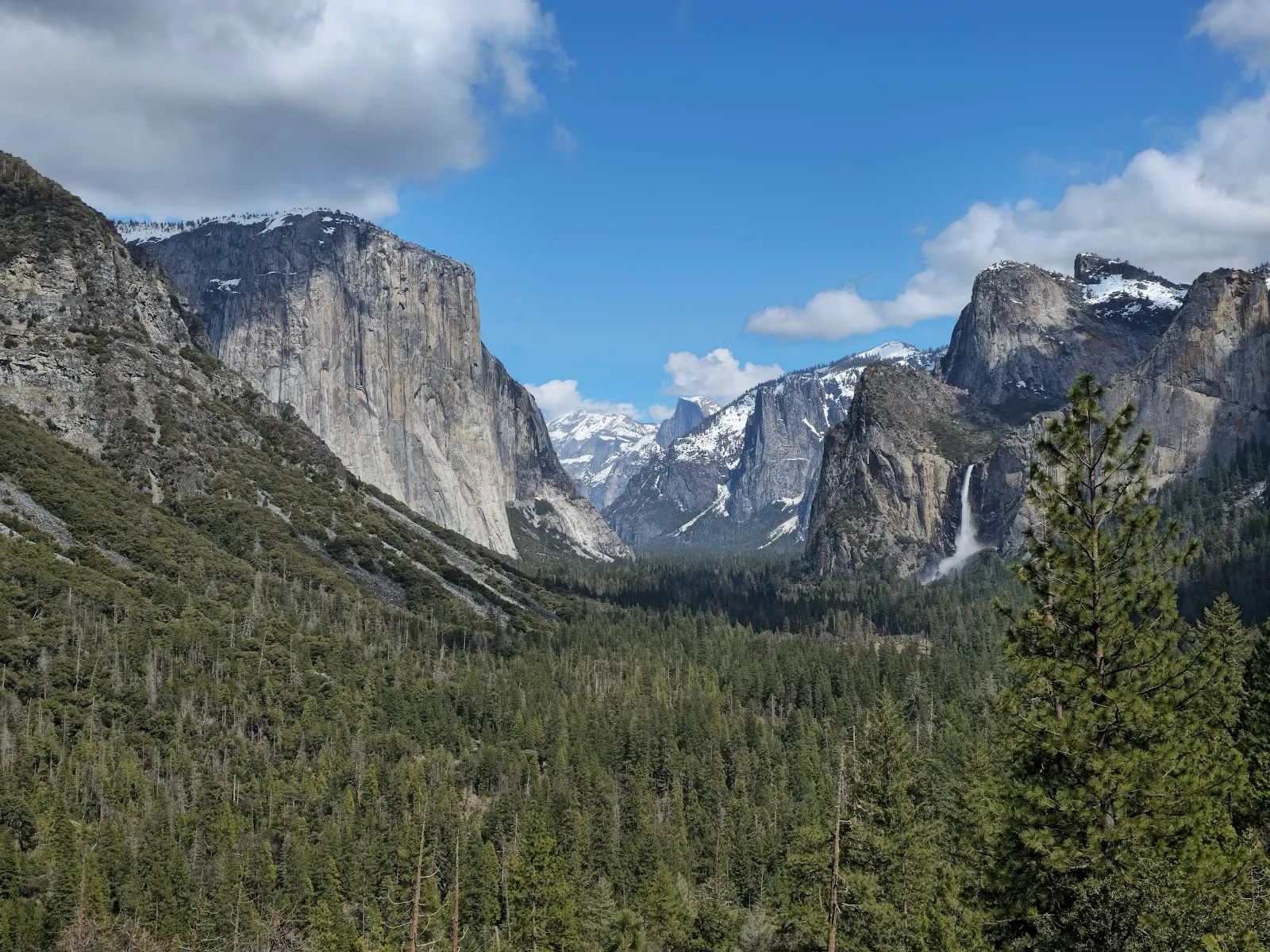
Yosemite National Park in California’s Sierra Nevada is known for its granite cliffs, waterfalls, forests and wide meadows. Yosemite Valley is a natural starting point, with landmarks such as El Capitan and Half Dome framed by steep rock walls. Stop at Tunnel View for a broad look into the valley, or choose a trail for closer views of waterfalls and riverbanks. The park also has giant sequoia groves and quieter high-country scenery. Its scale rewards more than a quick drive-through, so allow time to walk and explore.
A landscape shaped by glaciers
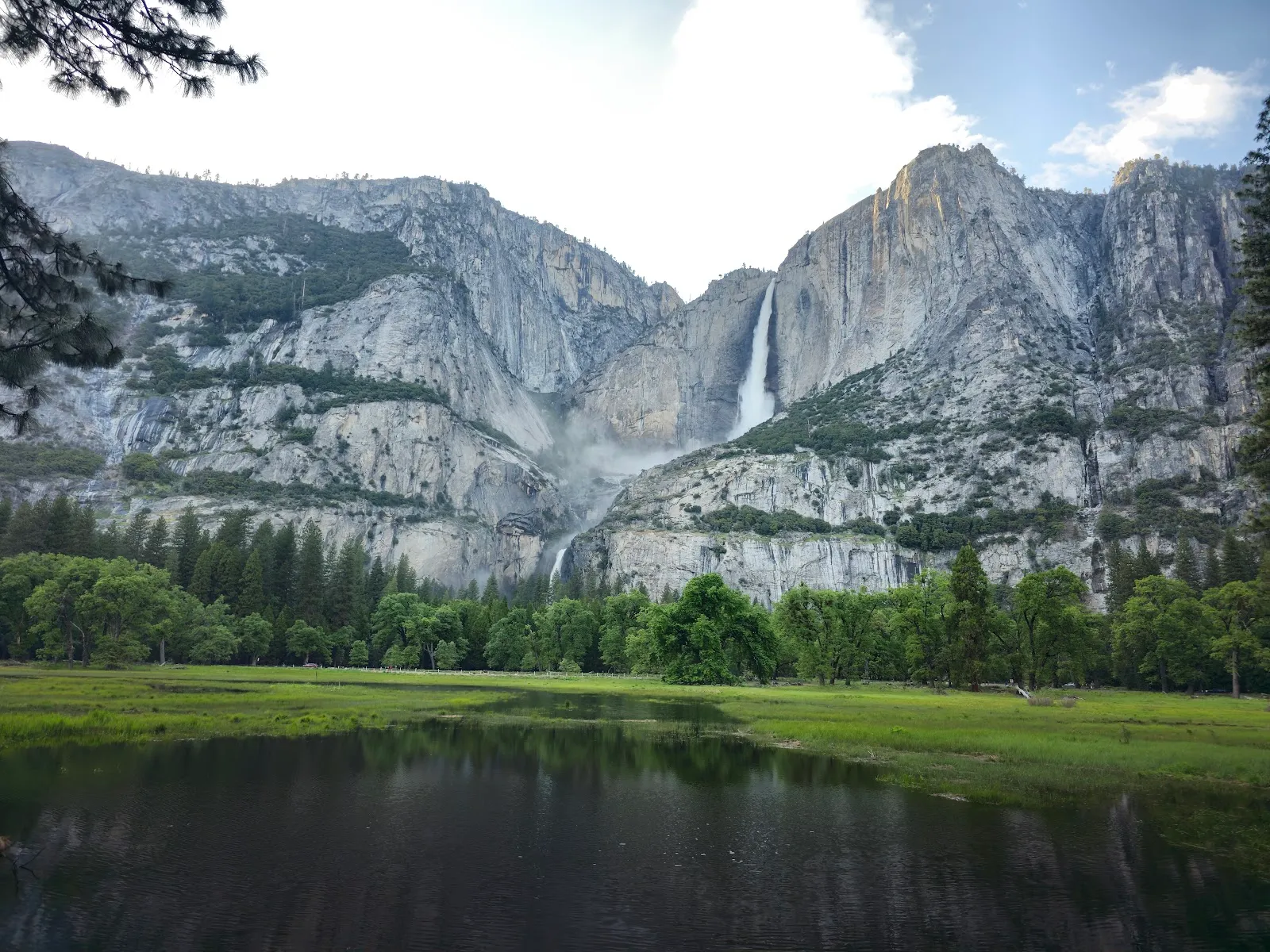
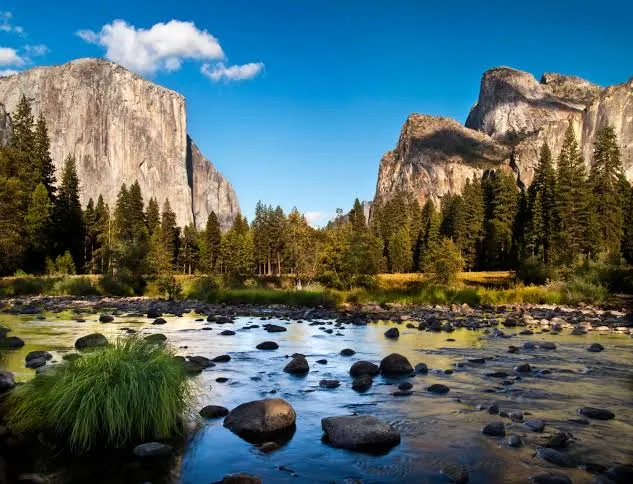
Yosemite lies in California’s Sierra Nevada and covers nearly 1,200 square miles of mountains, valleys, rivers, lakes and wilderness. Its best-known scenery is concentrated in Yosemite Valley, a glacier-carved trough lined with steep granite walls. The Merced River runs through its meadows, beneath landmarks including El Capitan, Half Dome and Yosemite Falls.
The valley is only a small part of the park, but it holds many of the sights visitors come to see. Outside it, the park includes giant sequoia groves and high-country trails. That scale matters when planning a visit: a drive through the valley cannot show all the landscapes the park contains.
Yosemite’s human history
The Ahwahneechee and other Native American people lived in the Yosemite area for thousands of years. During the gold-rush era, conflict between miners and Native communities escalated. In 1851, the Mariposa Battalion was sent into the area, and Chief Tenaya and his people were eventually forced to capitulate.
The area was first protected as a state park in 1864. Yosemite became a national park in 1890, following efforts to preserve its landscapes. Naturalist John Muir was among the conservationists who helped draw attention to the region. Its history includes both the work to protect the land and the people who lived there long before it became a park.
Choose a walk to suit your day
Short walks lead to viewpoints, while longer hikes take visitors closer to waterfalls and into the park’s forests and high country. The Upper Yosemite Falls Trail is a strenuous option: the route climbs 2,700 feet and reaches the top of the falls. Hikers who take it can see Yosemite Valley from above and Yosemite Creek as it flows over the cliff edge.
Conditions affect what you can do. Winter brings opportunities for snowshoeing and cross-country skiing, as well as ice skating and snow tubing in designated areas. Some routes and roads are affected by weather, so check current conditions before choosing a trail or planning a drive.
Häufige Fragen
How long should you spend in Yosemite National Park?
The park is large, and the material supports spending multiple days to explore its sights and trails. A short visit can focus on Yosemite Valley, but it will cover less of the park.
When is a good time to visit Yosemite?
May through October is suggested for a visit in warmer months. Winter brings different activities, including snowshoeing, cross-country skiing and ice skating.
What should you bring for a Yosemite visit?
Bring layers for changing weather, comfortable shoes and water. Cell service is spotty in some parts of the park.
Is parking difficult in Yosemite?
Parking fills quickly, especially on summer days and holiday weekends. Arrive early to improve your chances of finding a space.