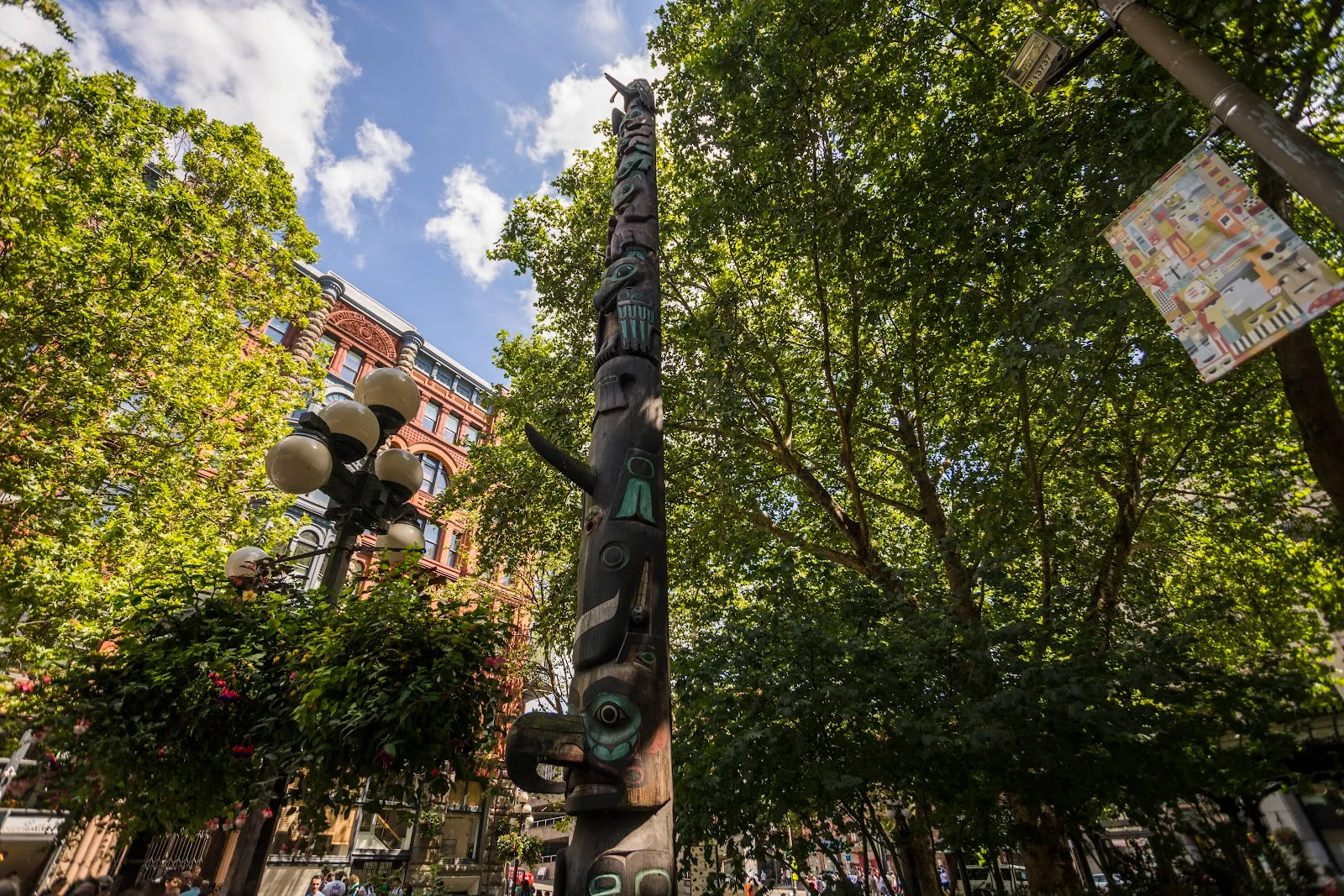
Volunteer Park is a 48-acre green space in Seattle’s Capitol Hill neighborhood, with gardens, open lawns and cultural sights. Climb the brick water tower for views across the city, or look through the center of Isamu Noguchi’s Black Sun sculpture toward the Space Needle. The Seattle Asian Art Museum and Volunteer Park Conservatory are also here, alongside a playground, duck pond and paths for an easy stroll. In late summer, the dahlia garden adds another reason to visit; families can also cool off at the shallow wading pool when it is open.
A park shaped by its hilltop setting
Volunteer Park occupies a high point in Capitol Hill, where Seattle’s early water system made use of gravity. The brick water tower recalls that history and remains a landmark in the park. The grounds were designed by the Olmsted Brothers, and much of the park took shape by 1912. The city bought the land in 1876; it had previously been used as a cemetery.
The park was called City Park before being renamed in 1901 in honor of local volunteers who served in the Spanish-American War. Its lawns, paths and established trees give the grounds room for both quiet walks and open-air activities.
The water tower and Black Sun
The water tower’s observation deck is reached by a spiral staircase. From the top, visitors can look out across Seattle and toward the surrounding mountains and Eastside. Informational panels inside explain the tower’s history. The climb involves stairs, so allow for that when planning a visit.
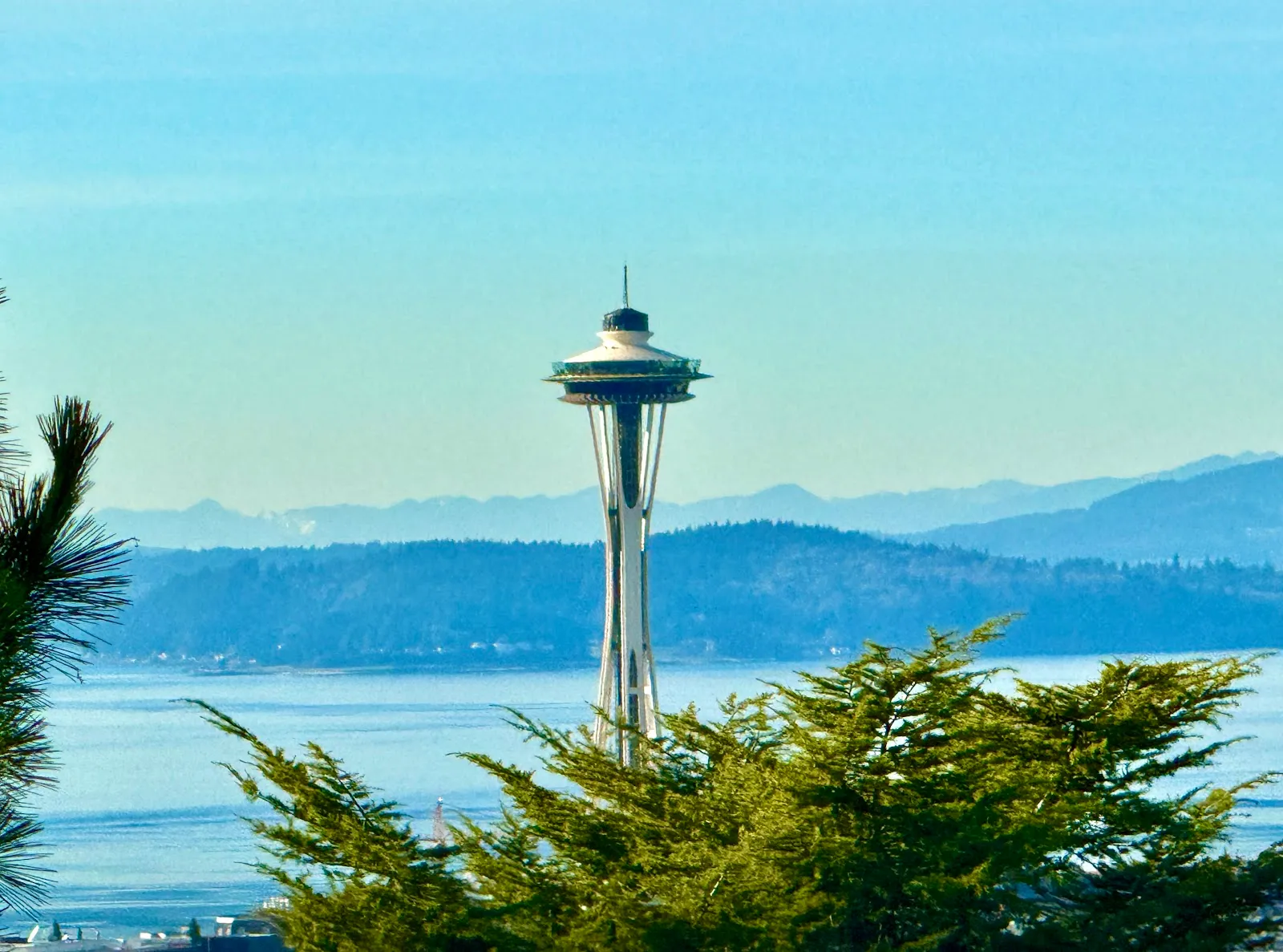
Near the Seattle Asian Art Museum, Isamu Noguchi’s circular Black Sun sculpture creates a distinctive view of the Space Needle through its center. The museum entrance, with stone camel figures beside the doorway, faces the sculpture. The reservoir nearby adds another waterside view within the park.
Gardens, glasshouses and family space
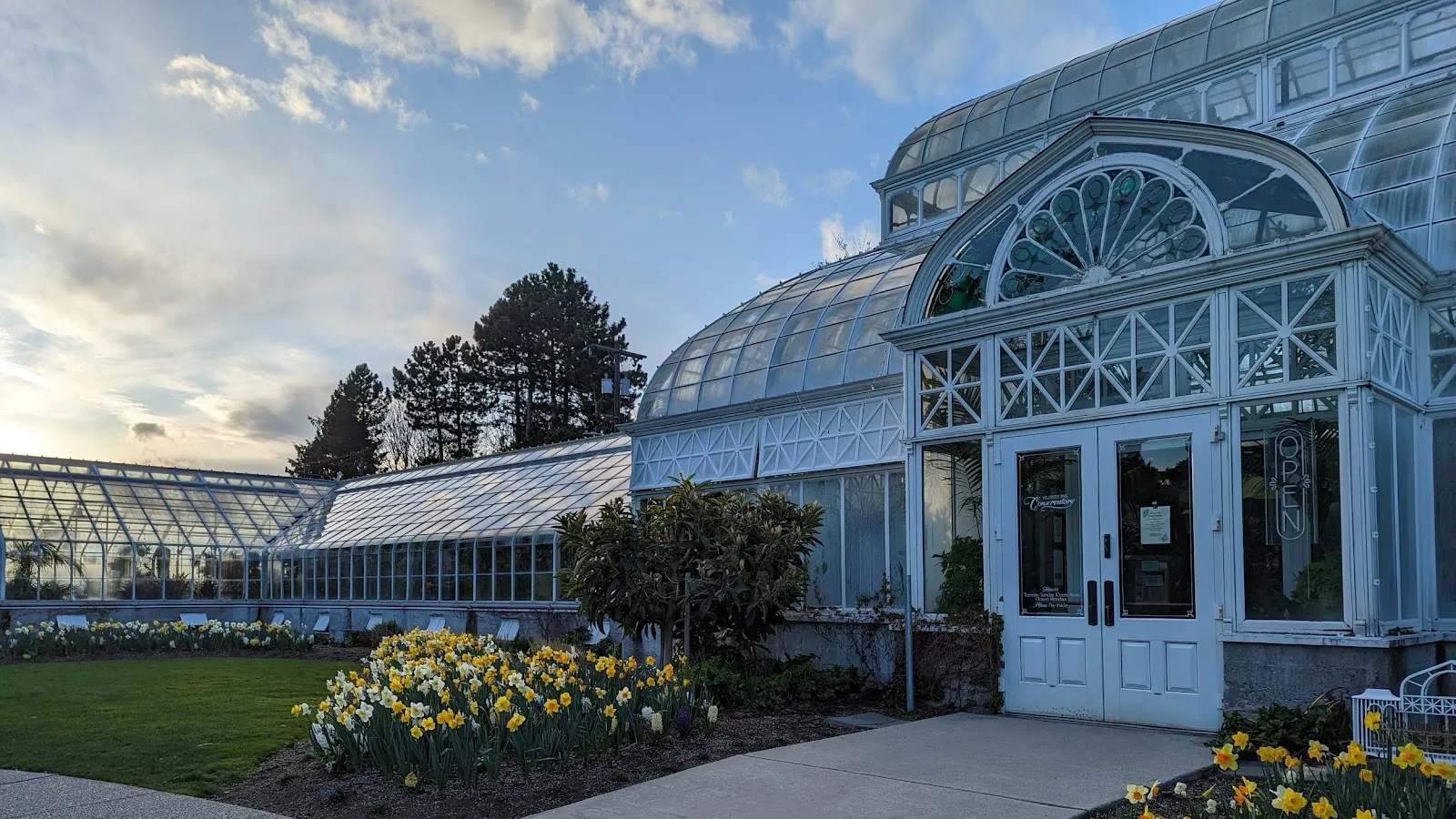
Volunteer Park Conservatory occupies the park’s north end. Its glass structure dates to 1912 and was modeled on London’s Crystal Palace. Inside, five greenhouses contain a range of plants, including tropical varieties. It is a useful stop when rain makes an outdoor walk less appealing.
The dahlia garden is a small patch, but its flowers are a seasonal draw. They bloom in late August and early September, with a variety of forms and colors. Elsewhere, walking paths pass open grass, ponds and mature trees. The park also has picnic areas, tennis courts and a playground. In summer, children can play in the shallow wading pool.
Planning a visit with children or a dog
The park’s paths and open lawns suit a relaxed walk, while the playground and seasonal wading pool give children space to play. Ducks and other birds gather around the pond. Free parking has been noted near the Asian Art Museum, though check the posted signs when you arrive.
Dogs are welcome in the park, but they cannot enter the conservatory or Seattle Asian Art Museum. Keep them on the park paths and plan a separate visit if you want to go inside either attraction. The grounds also host events, including Pride in the Park and seasonal orchid sales.
Häufige Fragen
Is Volunteer Park free to visit?
The park and its water tower are free to visit. The Seattle Asian Art Museum is not free; no admission details for the conservatory are provided here.
Can you climb the Volunteer Park water tower?
Yes. A spiral staircase leads to the observation deck, where you can look across Seattle and the surrounding area.
When do the dahlias bloom at Volunteer Park?
The dahlias are in bloom in late August and early September.
Are dogs allowed at Volunteer Park?
Dogs can visit the park, but they are not allowed inside the conservatory or Seattle Asian Art Museum.