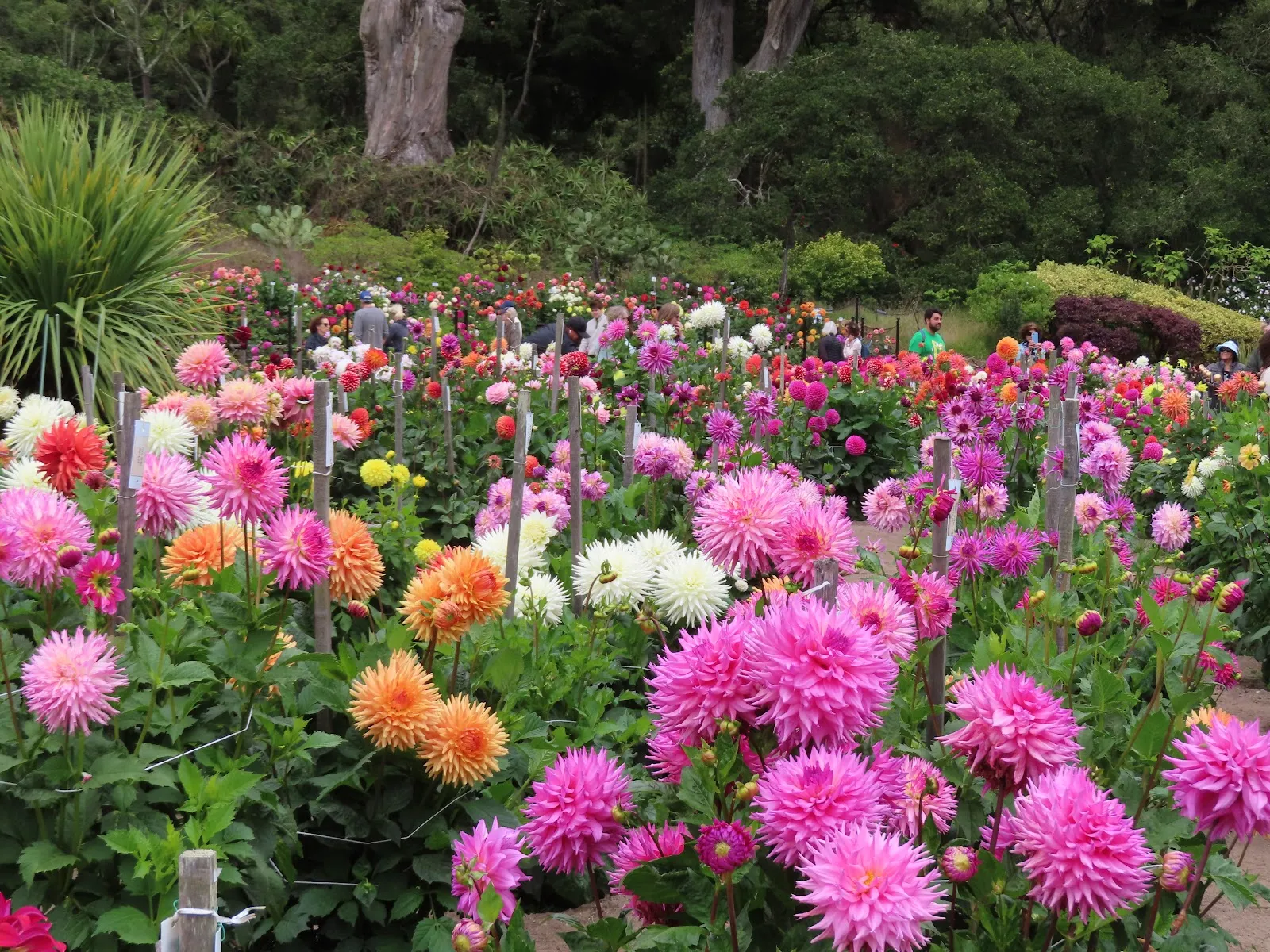
Golden Gate Park is a vast public park in San Francisco, stretching from Haight-Ashbury to Ocean Beach. Its gardens, lakes, meadows and wooded paths make it easy to trade city streets for a few hours outdoors. Choose a short walk around Stow Lake, visit the Japanese Tea Garden, or plan a longer route that takes in the de Young Museum and Conservatory of Flowers. The park also has playgrounds, sports facilities and quiet corners such as Shakespeare Garden and the AIDS Memorial Grove.
From dunes to public park
Golden Gate Park occupies land that was once a stretch of sand dunes. Development began in the 1870s, turning the area into public parkland. Today, the park covers more than 1,000 acres and runs west from Haight-Ashbury toward the Pacific at Ocean Beach.
Its scale shapes the visit. Gardens, lakes, meadows, sports fields and cultural institutions sit across a long expanse, so seeing everything in one outing is difficult. Pick a part of the park that suits your plans, or set aside several hours to link a few stops on foot or by bike.
Gardens, lakes and wildlife
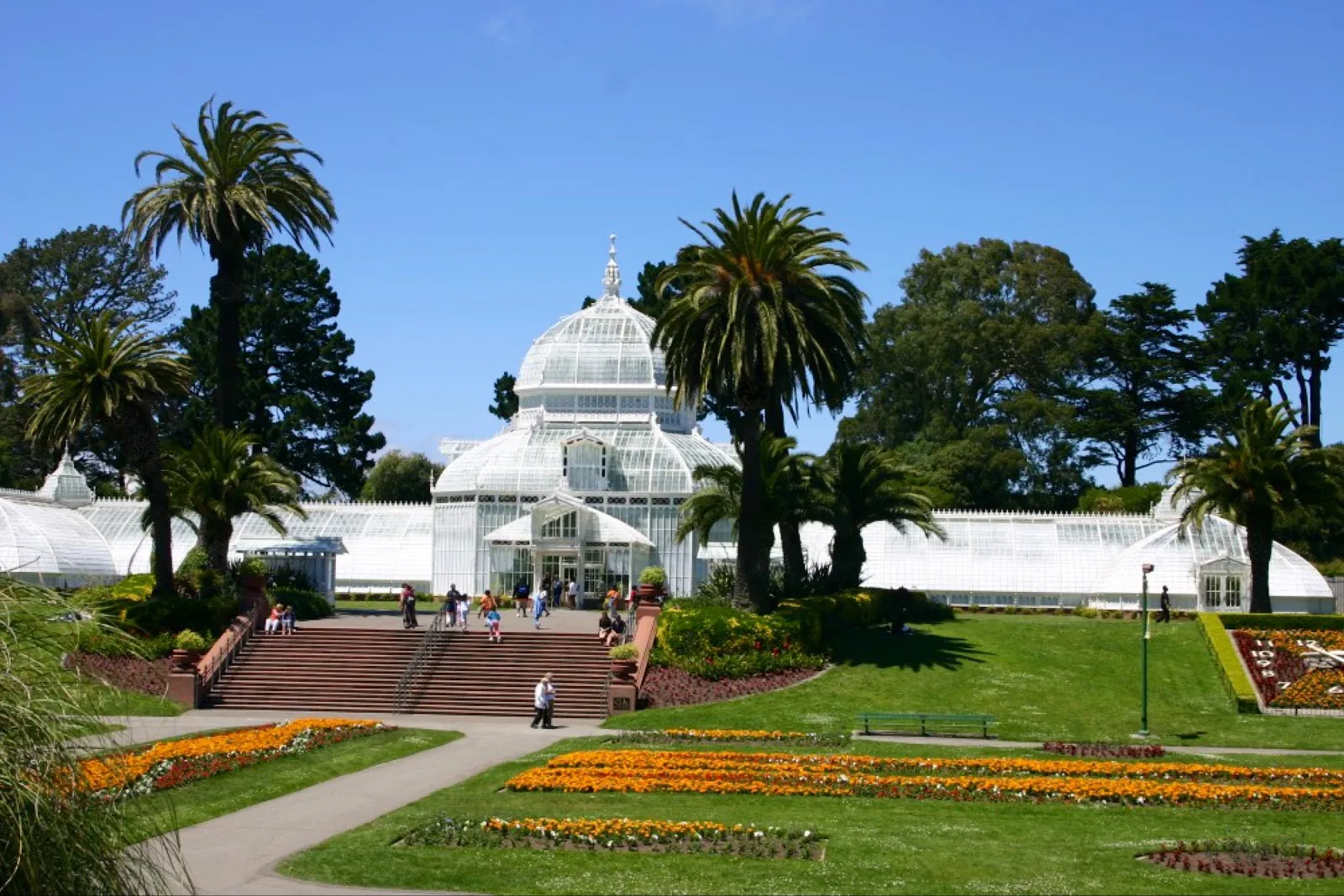
The Japanese Tea Garden has pagodas, stone bridges and a teahouse where you can order matcha tea and fortune cookies. The curved Drum Bridge arches over a pool; its reflection forms a circle below. The San Francisco Botanical Garden and the Conservatory of Flowers add more places to see plants from around the world. The Conservatory is a Victorian building with tropical and aquatic plants.
Stow Lake, also known as Blue Heron Lake, is a popular place to pause or get out on the water. The park’s Bison Paddock is home to a herd of bison. Other stops include Shakespeare Garden, the National AIDS Memorial Grove, the Dutch Windmill and Huntington Falls, a man-made waterfall fed by a pond at the top of the hill.
Museums and family stops
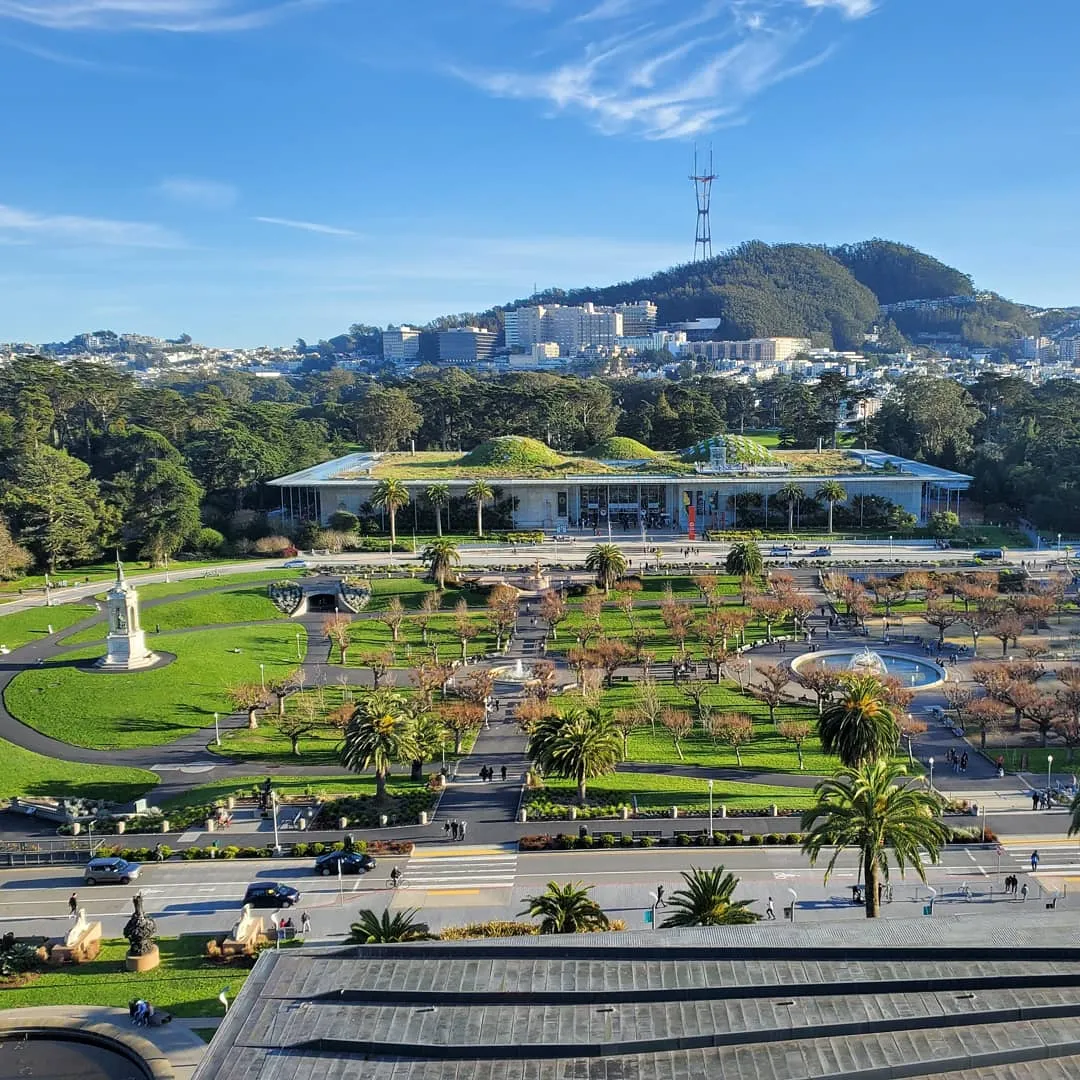
The de Young Museum and California Academy of Sciences are among the park’s major cultural attractions. The de Young’s collections include American art from the 17th through the 20th centuries, as well as textiles and art from Africa, Oceania and the Americas. Its modern building was designed by Herzog & de Meuron and Fong & Chan Architects.
Families can make time for Koret Children’s Quarter, which has a playground, a carousel and concrete slides. The park also has sports courts and fields, picnic areas and play spaces, so a visit can include more than a walk through the gardens.
Planning a route
The park is large enough that a route matters. A walk from one end to the other can take about half a day, while a visit focused on a garden, lake or museum will be shorter. Comfortable shoes help on the trails and paths. Bring water and dress for the weather if you plan to stay outdoors for hours.
Cycling is another way to cover more ground, and shuttle rides can help you get between stops. If you want a quieter pause, Shakespeare Garden and the AIDS Memorial Grove are among the calmer areas mentioned in the park. Sunday swing dancing at the Music Concourse gives the visit a different focus; check ahead for event details.
Häufige Fragen
Is Golden Gate Park free to visit?
The park itself is free to access. Some attractions inside it charge admission.
How long should I spend in Golden Gate Park?
Allow at least half a day for a longer walk or several stops. The park is extensive, with gardens, lakes, museums and trails.
What are some highlights in Golden Gate Park?
Highlights include the Japanese Tea Garden, Stow Lake, the Bison Paddock, the de Young Museum and the Conservatory of Flowers.
Can you cycle in Golden Gate Park?
Yes. The park has cycling paths, and cycling is one way to cover more ground.