In San Francisco’s Golden Gate Park, the California Academy of Sciences brings an aquarium, planetarium, natural history museum and indoor rainforest together beneath one living roof. Follow the four-story rainforest habitat, look for Claude, the albino alligator, and explore marine life at the Steinhart Aquarium. The Kimball Natural History Museum adds fossils, gems and minerals, while planetarium shows turn your visit toward space. With several major exhibits in one building, there is plenty to see; allow much of a day if you want to explore at an unhurried pace.
Four collections under one roof
The Academy began in 1853 as a research society and has continued its scientific work alongside its public exhibits. Its home in Golden Gate Park combines four main areas: the Kimball Natural History Museum, the Morrison Planetarium, the rainforest exhibit and the Steinhart Aquarium. That mix lets you move from preserved specimens to living habitats and astronomy without changing venues.
The current building, designed by Renzo Piano, opened in 2008. Native plants cover its living roof, whose rolling contours echo the surrounding park. The roof is part of the building’s sustainable design, and the Academy connects its public role with research, education and community programs.
Rainforest and aquarium habitats
The Osher Rainforest rises through four indoor levels beneath a dome. A spiral route takes you through a warm, planted habitat where birds and butterflies move freely, alongside fish, ants and other tropical species. Butterflies can emerge from their cocoons in the exhibit, and the changing levels give you different views into the habitat.
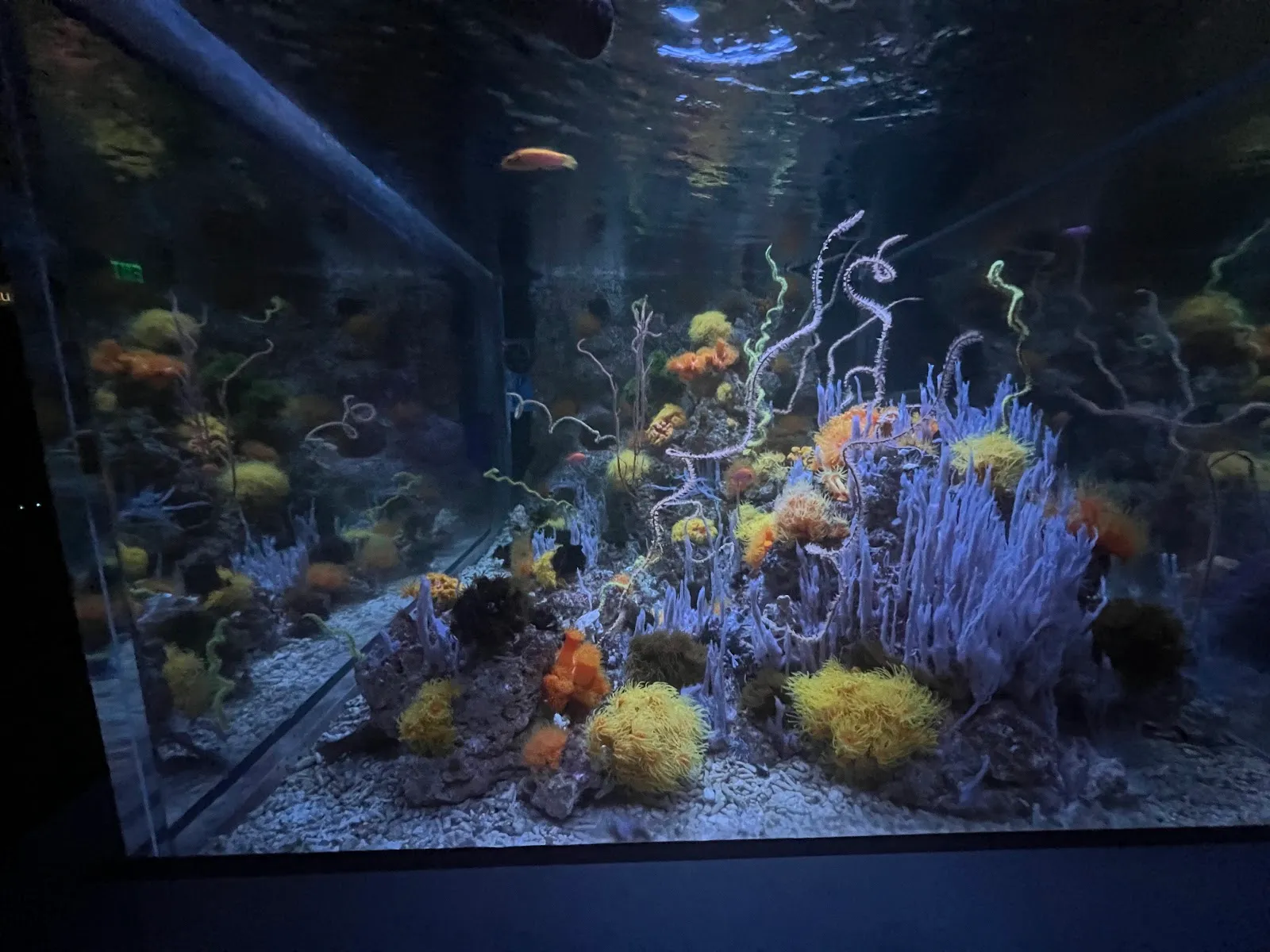
At the Steinhart Aquarium, displays range from California coastal life to tropical marine environments. Look for the living coral reef, jellyfish, penguins and Claude, the alligator with albinism. The collection also includes seadragons and an Australian lungfish named Methuselah. The African penguin colony has feeding times at 10:30 a.m. and 3 p.m., a useful detail if you want to plan that stop around a scheduled activity.
Natural history and the planetarium
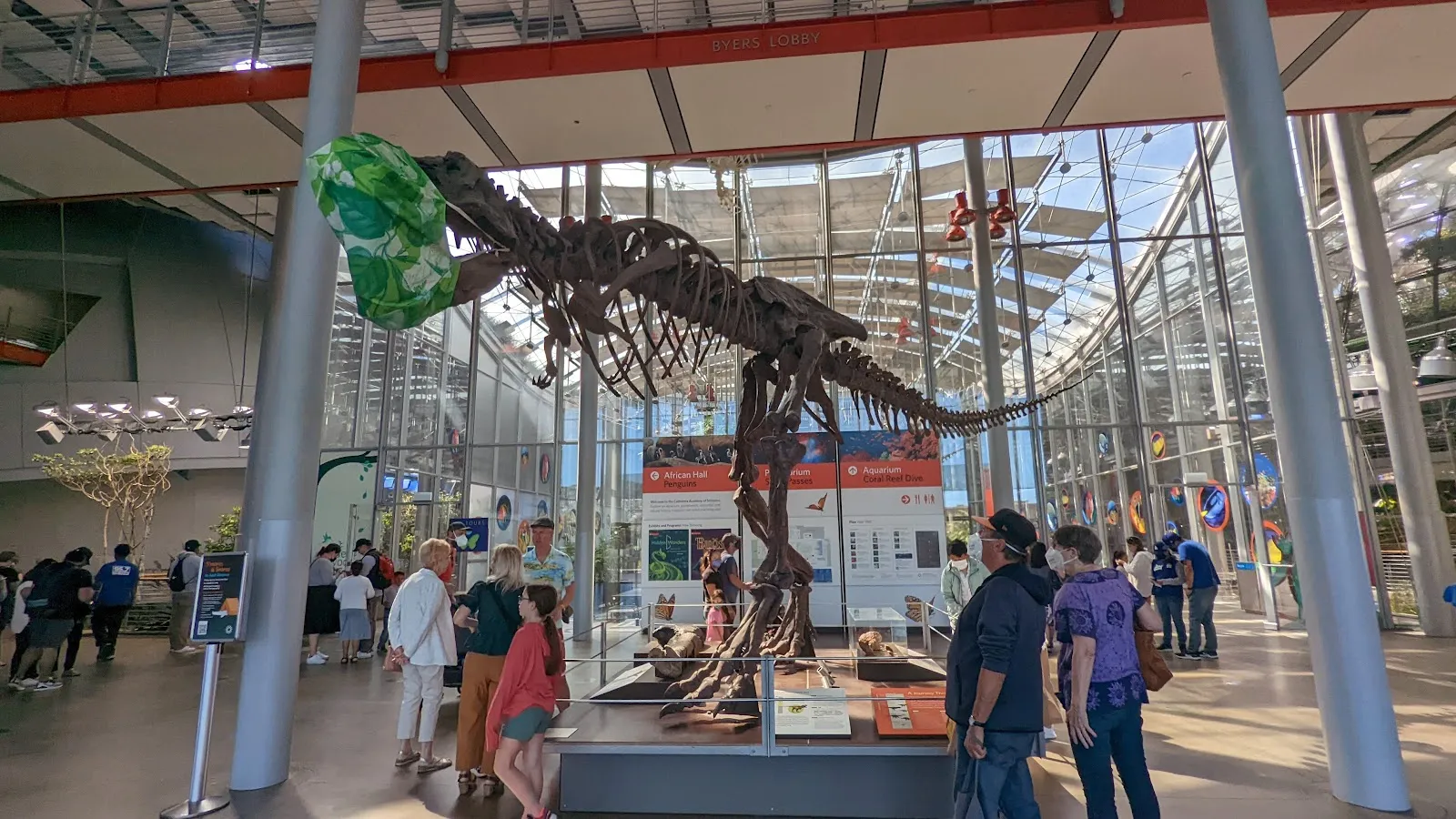
The Kimball Natural History Museum brings together specimens and displays on the natural world. Among its large-scale pieces are a blue whale skeleton and a cross-section of a redwood tree; galleries also present gems and minerals. An earthquake simulator gives visitors a physical way to engage with the subject of major California earthquakes.
For a change of scale, the Morrison Planetarium uses a large projection dome for shows about astronomy and space. The program can add a timed element to a visit, so check the current schedule when planning your route. The Academy also runs special events, including children’s overnight programs and evening events for adults; availability and details depend on the event schedule.
Häufige Fragen
How long should you spend at the California Academy of Sciences?
Allow about 6 to 8 hours to explore the exhibits at a leisurely pace.
What can you see inside the Academy?
The building contains the Steinhart Aquarium, Morrison Planetarium, Kimball Natural History Museum and a four-story indoor rainforest.
When are the African penguin feedings?
The supplied information lists feeding times at 10:30 a.m. and 3 p.m.
When is a quieter time to visit?
Weekdays and off-peak times are suggested for a visit with fewer children around.