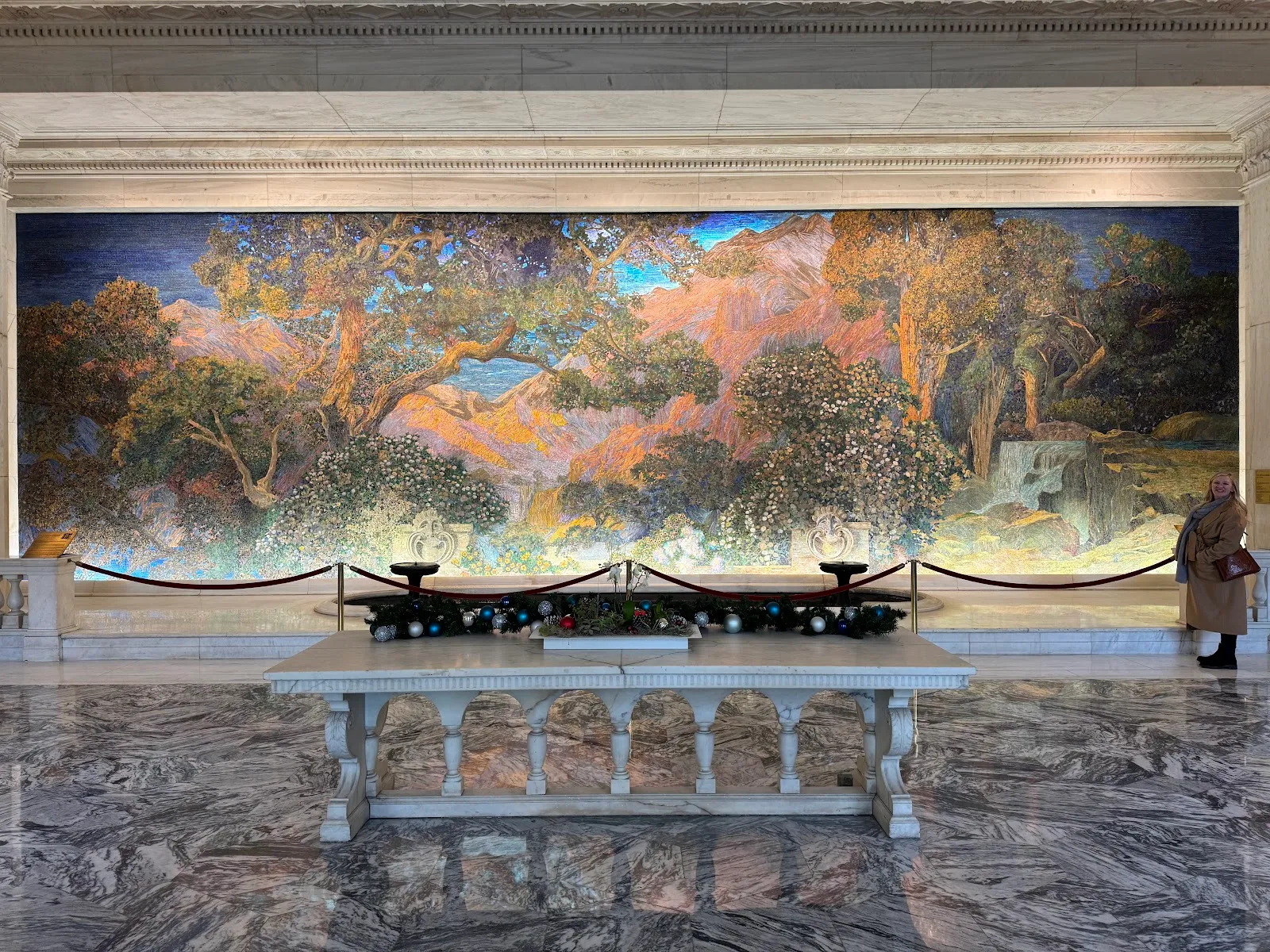
The Dream Garden is a large glass mosaic in the lobby of the Curtis Center at 601 Walnut St in Philadelphia. Designed by Maxfield Parrish and made by Louis Comfort Tiffany’s studio, it depicts a landscape inspired by Parrish’s gardens in New Hampshire. More than 100,000 pieces of hand-fired glass, in over 260 colors, give the scene its depth and detail. Read the plaque to learn about its history, then look for the fountain in the atrium. The lobby is a public viewing spot, close to Washington Square.
A landscape made of glass
The Dream Garden fills a 15-by-49-foot space in the Curtis Center lobby. Maxfield Parrish designed the landscape, drawing inspiration from his gardens in New Hampshire. Louis Comfort Tiffany’s studio made the mosaic, which was completed in 1915. It is their only collaborative work.
More than 100,000 hand-fired pieces of glass form the scene, with over 260 colors recorded in descriptions of the mural. Look closely at the shifts in color and the fine details across the landscape. The glass gives Parrish’s design the quality of a painting, built from individual pieces rather than brushstrokes.
In the Curtis Center lobby
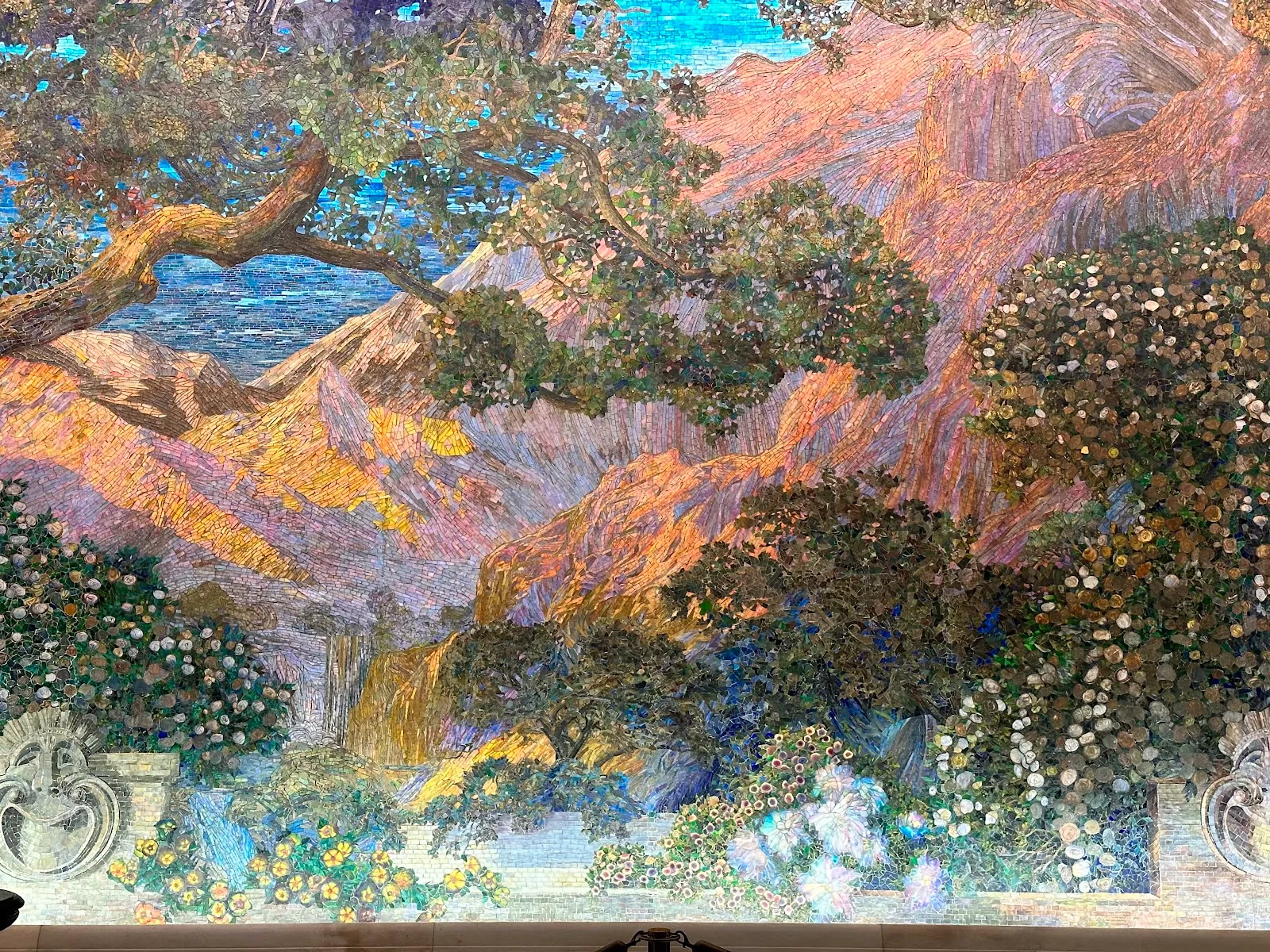
The mural is inside the Curtis Center at 601 Walnut St, in a 12-story atrium. The building once housed The Saturday Evening Post and Ladies’ Home Journal. A plaque in front of the mosaic gives visitors a place to start; take time to read it before looking for details in the glass.
A fountain sits in the atrium near the mural. The lobby is also a working business and residential space, so treat it as a public interior: keep your visit considerate and follow any directions from staff. Guards can point out useful viewing spots and share information about the artwork.
How the mural was protected
In 1998, a proposed sale raised concern that The Dream Garden could be removed. Public protest and legal action helped stop the sale, and the Philadelphia Historical Commission designated the mosaic the city’s first historic object. That status protected it from removal and sale.
The preservation effort involved the Fairmount Park Art Association, now known as the Association for Public Art, as well as members of the public. The story is part of what visitors can take away from the mural: it is both an artwork in a public lobby and an object whose protection drew the community into action.
Häufige Fragen
Where is The Dream Garden?
It is in the lobby of the Curtis Center at 601 Walnut St in Philadelphia, near Washington Square.
Is The Dream Garden free to see?
The mural is described as free to view in the Curtis Center lobby.
Who designed and made The Dream Garden?
Maxfield Parrish designed the landscape, and Louis Comfort Tiffany’s studio made the glass mosaic. It was completed in 1915.
How large is The Dream Garden?
The mosaic measures 15 by 49 feet and contains more than 100,000 pieces of glass.